

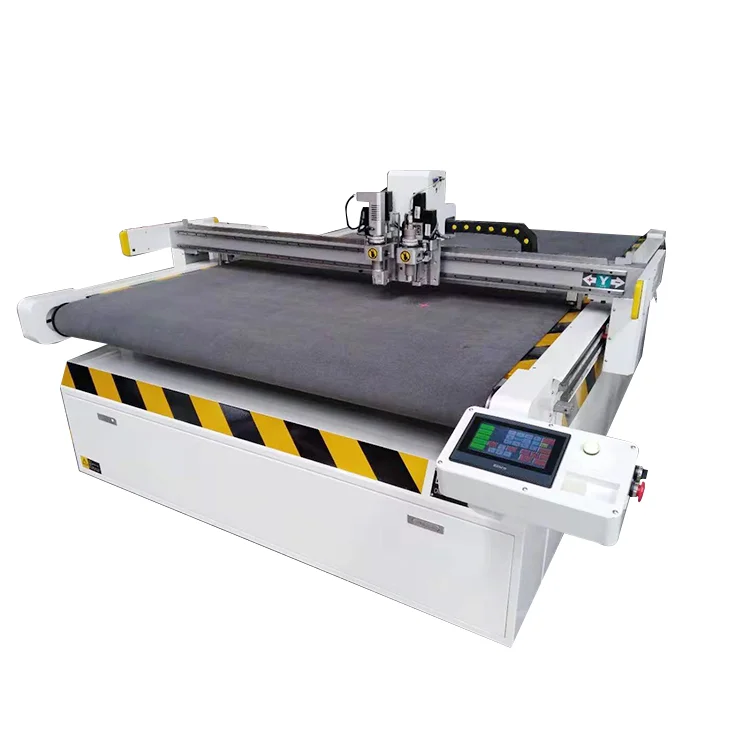
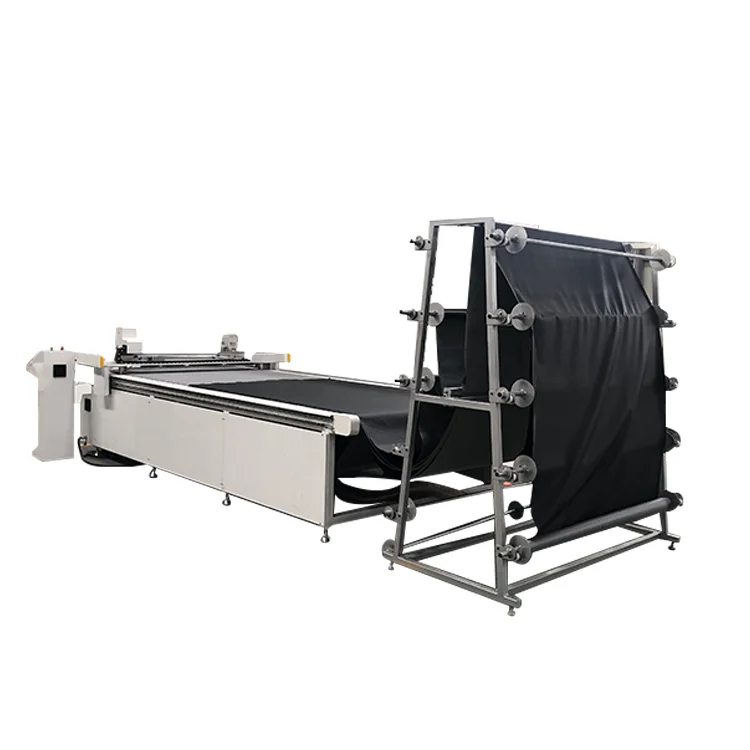
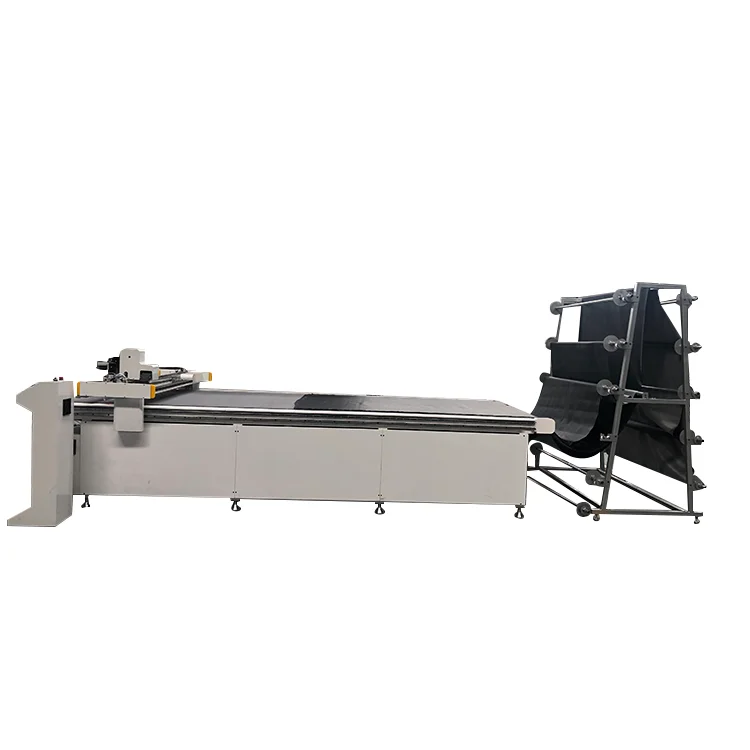
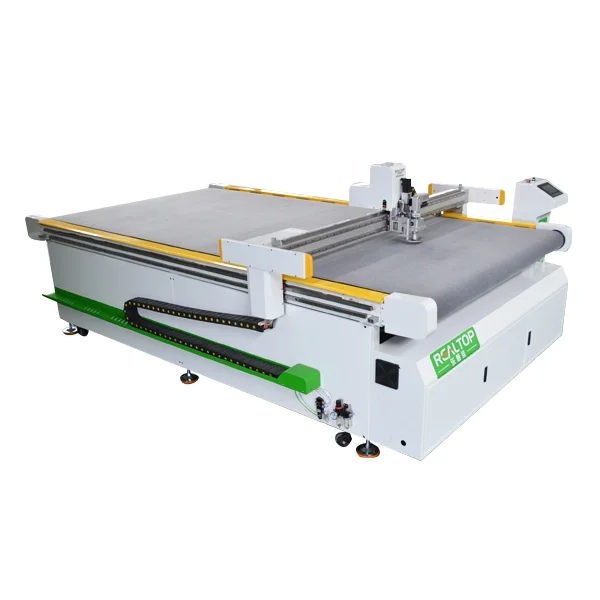


Multi-Layer CNC Cutting Machine with Swiss Knife – Factory Direct
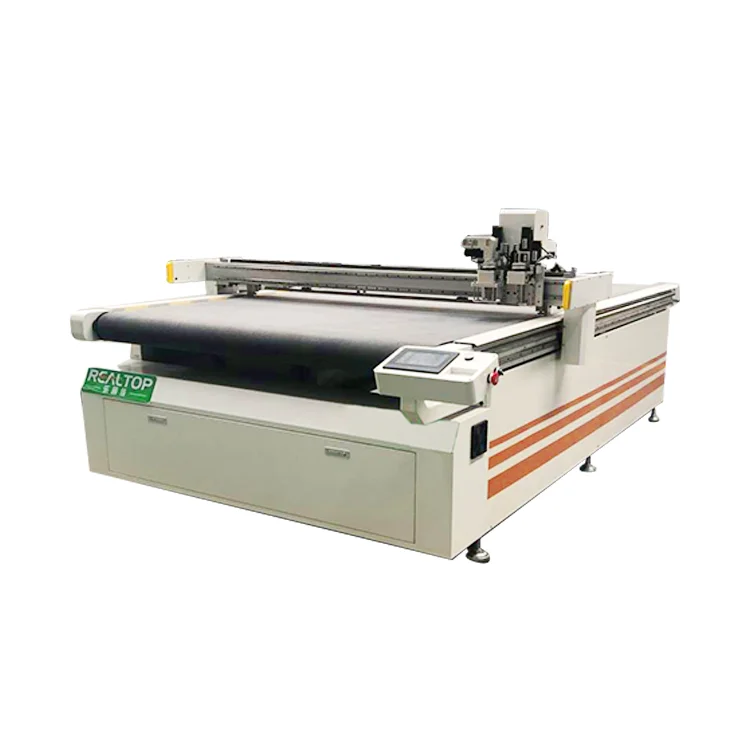
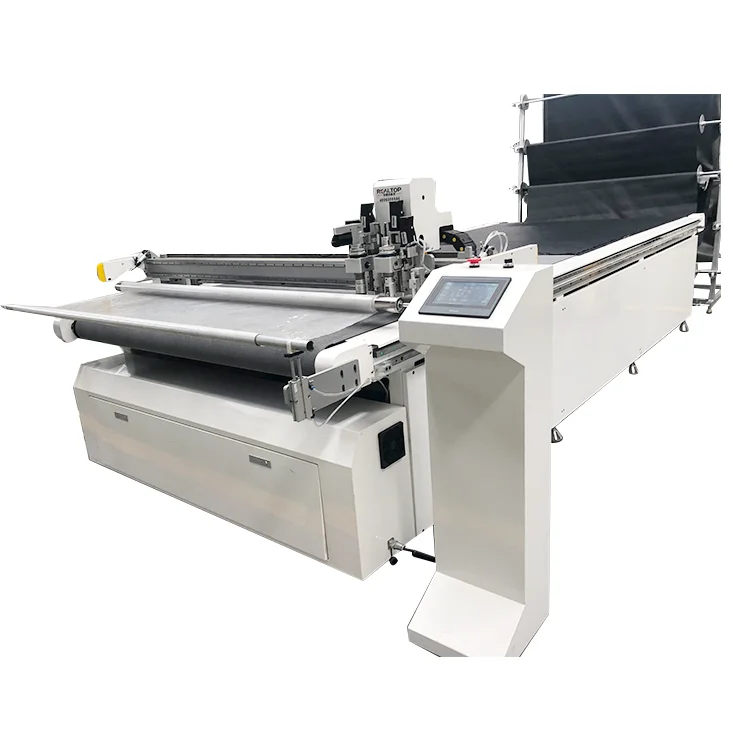
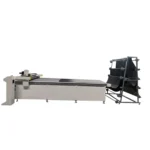
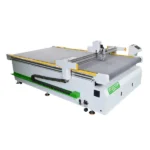
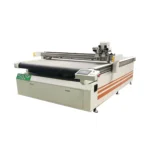
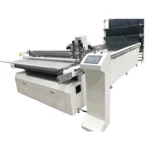
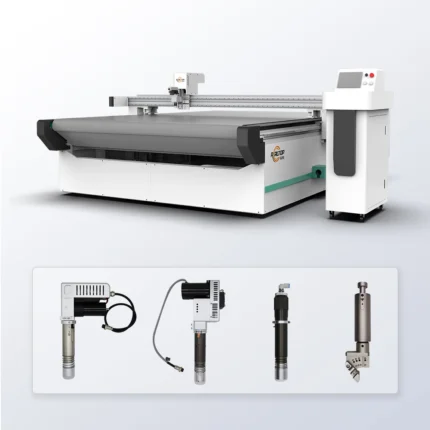
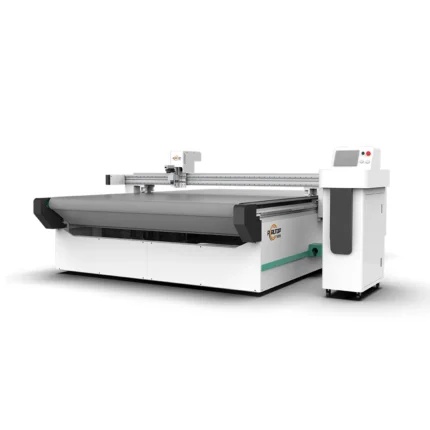
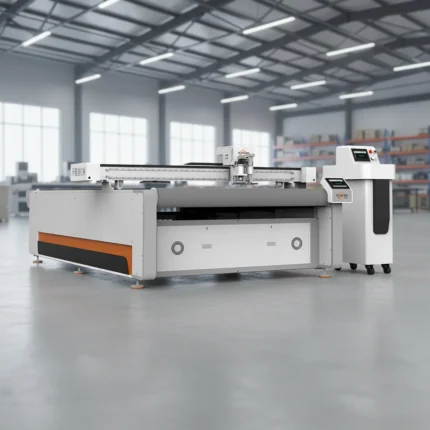
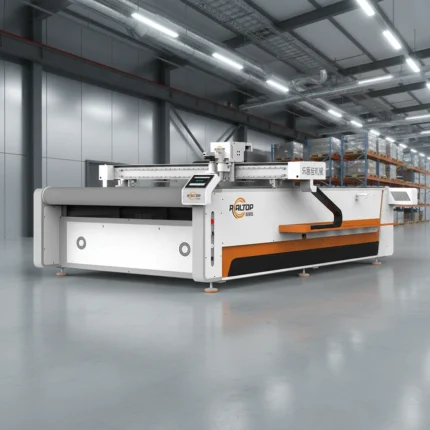
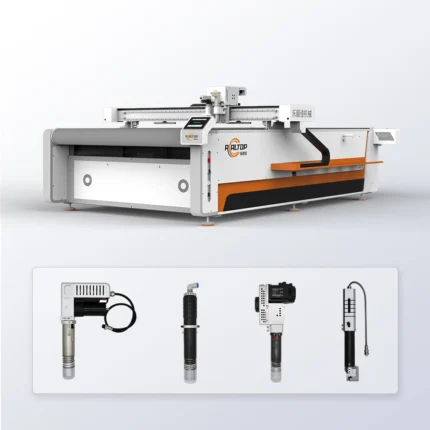
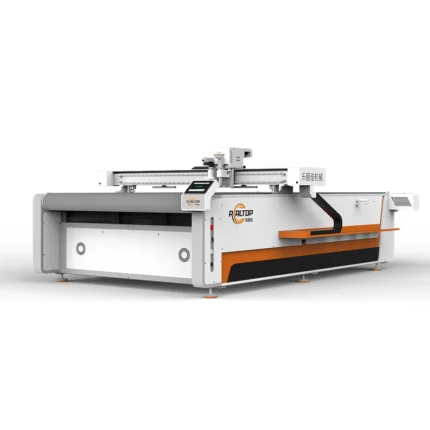
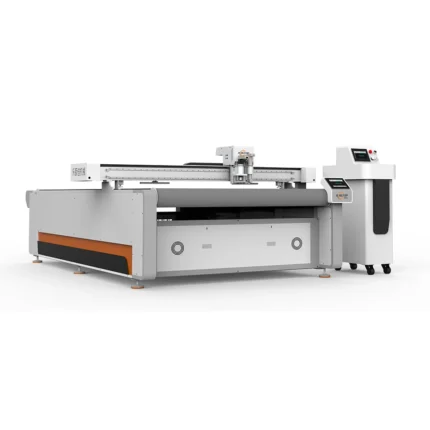
RT-D2516/RT-S2516 Multi-Layer CNC Oscillating Knife Cutting Machine, 1600×2500mm Working Area, Swiss Knife Head, 9kW — configured for high-volume fabric, leather and composite material cutting with auto-feeding conveyor and 7.5kW vacuum table.
Japanese Yaskawa servo motors paired with Taiwan Hiwin linear guides deliver ≤0.1mm repeatability across multi-layer stacks. Cutting method, tool head and vacuum zoning are specified per your material type and layer count before order confirmation.
Sample cutting on your own material with documented edge quality and layer performance report provided before commitment.
In-house cutting method matching — The RT-D2516/RT-S2516 multi-layer CNC oscillating knife cutting machine is configured per your exact fabric type, layer stack height and daily volume rather than sold on working area alone.
Technical Specifications
| Parameter | Value |
|---|---|
| Product Type | Multi-Layer CNC Oscillating Knife Cutting Machine |
| Model | RT-D2516/RT-S2516 |
| Working Area | 1600×2500 mm |
| Overall Dimensions (L×W×H) | 3450×2300×1250 mm |
| Rated Power | 9 kW |
| Voltage | 380V ±10% |
| Tool Head | Swiss imported oscillating knife with vibration full/half cutting |
| Translational Speed | 800–1200 mm/s |
| Material Feed Speed | 200–800 mm/s (basis to be confirmed per material) |
| Repeatability | ≤0.1 mm |
| Servo Motor | Japanese Yaskawa |
| Linear Guide | Taiwan Hiwin rail |
| Transmission | Digital servo motor, synchronous belt, imported ball screw |
| Conveyor Belt | Germany imported |
| Vacuum Pump | 7.5 kW |
| Working Table | Flat table with vacuum and auto feeding |
| Control System | CNC (HP-GL compatible format) |
| Safety Device | Infrared sensors |
Application Suitability
| Application | Material or Output |
|---|---|
| High-volume garment fabric cutting | Multi-layer woven, knitted and technical textiles for shirts, trousers, jackets and sportswear |
| Footwear and leather goods production | Natural leather, synthetic PU, sponge composite leather and PVC uppers |
| Flexible material fabrication | Soft glass, silicon sheets, rubber gaskets and flexible composites |
Why a Multi-Layer CNC Cutting Machine Fails on the Wrong Fabric Stack
A multi-layer CNC cutting machine specified only by its 1600×2500 mm bed size often disappoints when the buyer’s actual fabric stack is too thick, too slippery or too coated for the default tool head. The cutting result depends on matching the knife oscillation frequency, vacuum zoning and feed rate to the material, not on the frame dimensions.
I have seen garment factories in Latin America receive machines that cut standard cotton perfectly during the factory test, then struggle immediately on coated windbreaker fabrics or laminated technical textiles. The blade skids, layers shift, and an entire roll is ruined before anyone adjusts the configuration [NEED_CITE: fabric cutting failures caused by tool-material mismatch]. The solution is never more vacuum power alone; it is correct tool head selection, verified on the buyer’s own material stack before the order is confirmed.
Laser Cutting Versus Knife Cutting for Garment Fabrics
For synthetic and blended textiles, a multi-layer CNC cutting machine with an oscillating knife avoids the melted or fused edges that CO2 lasers produce on polyester and nylon blends. The RT-D2516/RT-S2516 uses a Swiss imported oscillating knife head with both vibration full cutting and half cutting modes, which separates fibers cleanly across stacks of woven and knitted cloth without thermal distortion.
Continuous Auto-Feeding for Uninterrupted Lay Cutting
The 7.5 kW vacuum pump combined with a Germany-imported conveyor belt allows the RT-D2516/RT-S2516 to hold multi-layer fabric firmly during cutting and advance the next lay without manual repositioning. This continuous workflow is critical in garment plants running hundreds of lays per shift, where every manual reset introduces alignment errors and downtime [NEED_CITE: garment cutting line throughput and lay handling].
What the Specification Numbers Actually Mean for Fabric Cutting
The Japanese Yaskawa servo motors paired with Taiwan Hiwin linear rails deliver a repeatability of ≤0.1 mm across the full 1600×2500 mm working area, which matters directly when cutting nested pattern pieces for tailored garments where seam allowances are narrow. The translational speed of 800–1200 mm/s defines how fast the head moves between cuts, while the material feed speed of 200–800 mm/s varies with fabric weight and layer count — a heavy denim stack feeds slower than a lightweight lining fabric. The HP-GL compatible control system accepts pattern files from most nesting software used in apparel production, reducing the risk of format incompatibility at commissioning. The 9 kW rated power covers the servo drives, vacuum pump and conveyor simultaneously without requiring a separate auxiliary circuit for feeding [NEED_CITE: servo drive accuracy and fabric cutting tolerance requirements].
The Hidden Cost of a Misconfigured Vacuum Table
When vacuum zoning is not matched to the pattern layout, small pieces such as collar stays, pocket flaps or shoe upper components can lift during cutting, producing ragged edges and wasted material. This problem is invisible in the factory test if the test pattern uses only large pieces. Buyers should request a sample cut on their actual production nest, including the smallest piece in their marker, before signing off on the configuration.
Why This Multi-Layer CNC Cutting Machine Is Built In-House
Realtop designs and produces both knife and laser cutting systems under one roof, so the RT-D2516/RT-S2516 configuration is selected based on fabric behavior rather than defaulting to whatever platform is in stock. The tool head, vacuum zoning and conveyor settings are specified per the buyer’s material sample. Voltage and control language are confirmed for the destination market before the machine enters assembly. Every unit undergoes a factory test on the buyer’s own fabric before crating, with a written report covering edge quality, layer alignment and dimensional accuracy. Software license and file format compatibility are documented so the buyer’s existing nesting workflow transfers without re-engineering.
Documentation & Verification
- Factory test record on the buyer’s actual fabric type and layer count before dispatch
- Tool head and vacuum table configuration list matched to the specified material
- Electrical schematic with 380V ±10% voltage and plug type confirmed for the destination market
- Software license and HP-GL file format compatibility note for nesting workflow transfer
- Sample cutting report documenting edge quality, layer shift and piece dimensions
Installation, Commissioning & Support
- Requires a leveled floor area exceeding 3450×2300 mm with clearance for conveyor feed and discharge
- Dedicated 380V ±10% circuit rated for 9 kW plus vacuum pump startup surge
- Conveyor belt and vacuum table assembled and tensioned on site by commissioning engineers
- First-run parameter tuning of oscillation frequency and feed rate on buyer’s production fabric
- Operator training on HP-GL file loading, nest positioning and knife blade replacement
- Spare oscillating knife blades and belt wear parts list provided at handover
What to Include in Your Inquiry
Send your fabric type, weight per square meter, maximum layer stack height and daily cutting volume so the tool head and vacuum configuration can be specified correctly. Confirm your workshop voltage and frequency, and whether your existing nesting software exports HP-GL or DXF format. If you require a sample cut on your own material before commitment, ship a fabric roll sample with your inquiry.
Frequently Asked Questions
Q: How is the cutting speed verified for my specific fabric type and layer stack?
A: We run a sample cut on your actual material at your target layer count, measuring feed speed, edge quality and dimensional accuracy. The results are documented in a cutting report so you can evaluate performance before committing to the order. Translational and feed speeds are then locked to your specific fabric.
Q: What voltage and control language options are confirmed before shipment?
A: The RT-D2516/RT-S2516 operates on 380V ±10% as standard. Voltage, plug type and control interface language are confirmed in writing before production begins, ensuring the machine matches your local electrical standards and operator requirements upon arrival.
Q: How does the vacuum table handle small pattern pieces without lifting?
A: The 7.5 kW vacuum system is zoned to match your nest layout. During the sample cut we include your smallest production pieces to verify hold-down. If zoning adjustments are needed, they are documented and configured before the machine leaves the factory.
Q: Can the machine run a sample cut on my material before I commit?
A: Yes. We require a fabric sample shipped to our facility or provided at your site. The sample cut covers your full layer stack, and the report documents edge quality, layer alignment and cutting speed. Configuration changes are made based on this test before the order is finalized.
Q: What file formats does the software accept from my existing nesting workflow?
A: The control system is HP-GL compatible, which covers most apparel nesting software outputs. We confirm file format compatibility during the pre-order technical review and include a compatibility note with the documentation so your existing workflow transfers without modification.


Related products
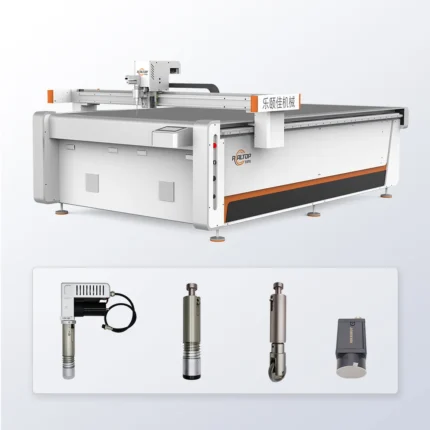
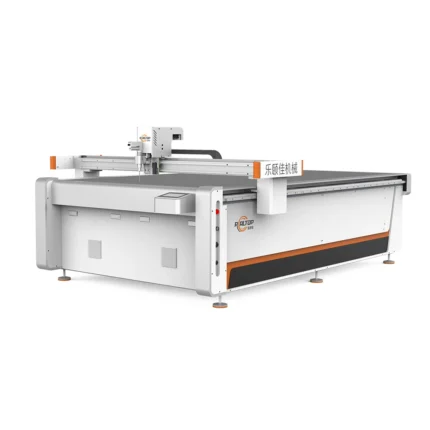
2026 Auto Fabric Cutter Round Knife High Efficiency
Product Introduction
High Efficiency 2026 Auto Fabric Cutter with Round Knife is a professional cutting equipment designed for fabric processing. It features advanced automation and high cutting efficiency, suitable for various fabric materials in industrial production.Product Parameters
| Model | 2026 |
| Type | Auto Fabric Cutter |
| Blade Type | Round Knife |
| Feature | High Efficiency |
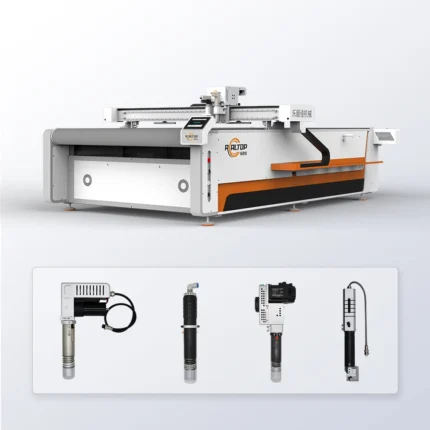
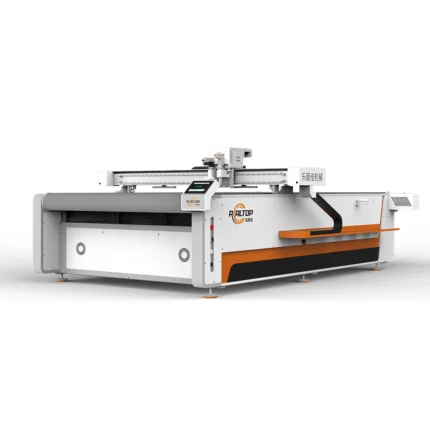
2026 Flatbed Oscillating Knife Cutter 1600x3500mm Auto-Feeding Textile
Product Overview
Flatbed Oscillating Knife Cutting Machine 2026 is a high-precision textile fabric cutter with auto-feeding function, ideal for efficient and accurate cutting tasks in textile manufacturing. It combines advanced oscillating knife technology with a large working area to meet industrial production needs.Key Specifications
| Model | 2026 |
| Working Area | 1600x3500mm |
| Feeding System | Auto-Feeding |
| Cutting Type | Oscillating Knife |
| Application | Textile Fabric |
Jinan Realtop CNC Fabric Slitting Cutter 2026: Advanced Flexible Material Cutter
Product Introduction
Jinan Realtop CNC Fabric Slitting Cutter 2026 is a high-performance cutting equipment designed for precise fabric processing, ideal for industrial manufacturing needs with reliable CNC technology.Specifications
| Model | 2026 |
| Type | CNC Fabric Slitting Cutter |
| Manufacturer | Jinan Realtop |
| Application | Fabric Processing |
| Control System | CNC |
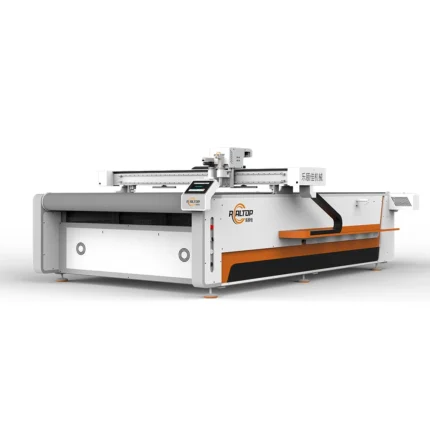
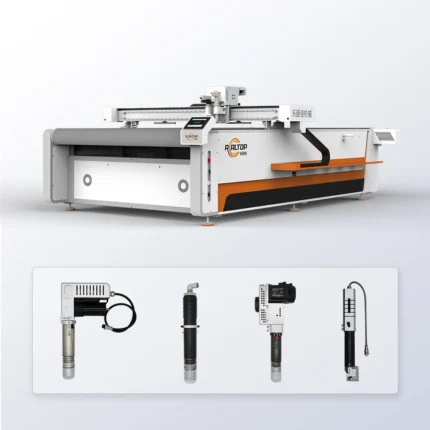
Jinan Realtop CNC Oscillating Knife Cutter 2026
Product Introduction
Jinan Realtop CNC Oscillating Knife Cutter 2026, a precision cutting solution from China's leading welding & cutting equipment manufacturer, ideal for efficient material processing with advanced CNC technology.
Key Specifications
| Model | 2026 |
| Type | CNC Oscillating Knife Cutter |
| Manufacturer | Jinan Realtop |

Jinan Realtop PVC Cutting Machine 2026 CE Certified
Product Introduction
Jinan Realtop PVC Cutting Machine 2026 is a CE-certified cutting solution, ideal for precise PVC material processing. Designed for efficiency and reliability in industrial applications.Product Parameters
| Model | 2026 |
| Certification | CE Certified |
| Application | PVC Cutting |
| Manufacturer | Jinan Realtop |
商品评价
There are no reviews yet.