




Multipurpose V-Cut Cardboard Sticker CNC Cutting Machine – OEM Available
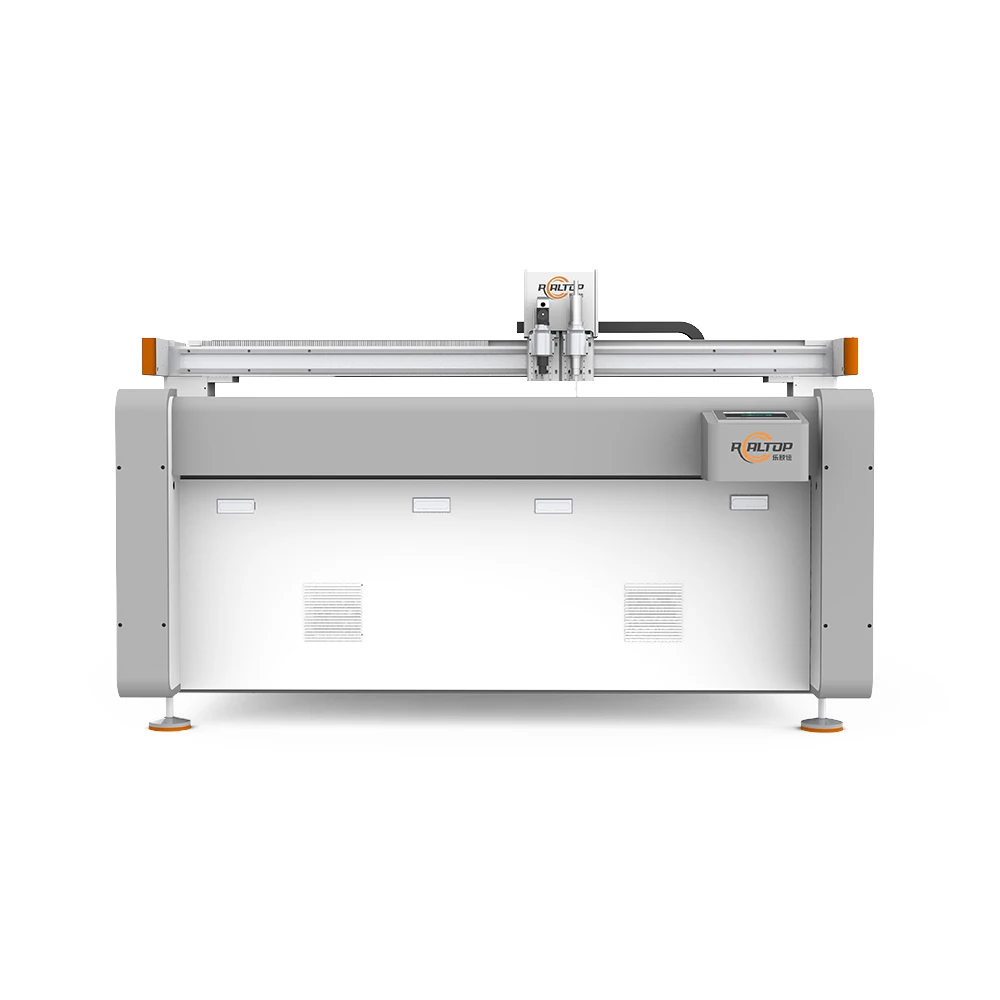
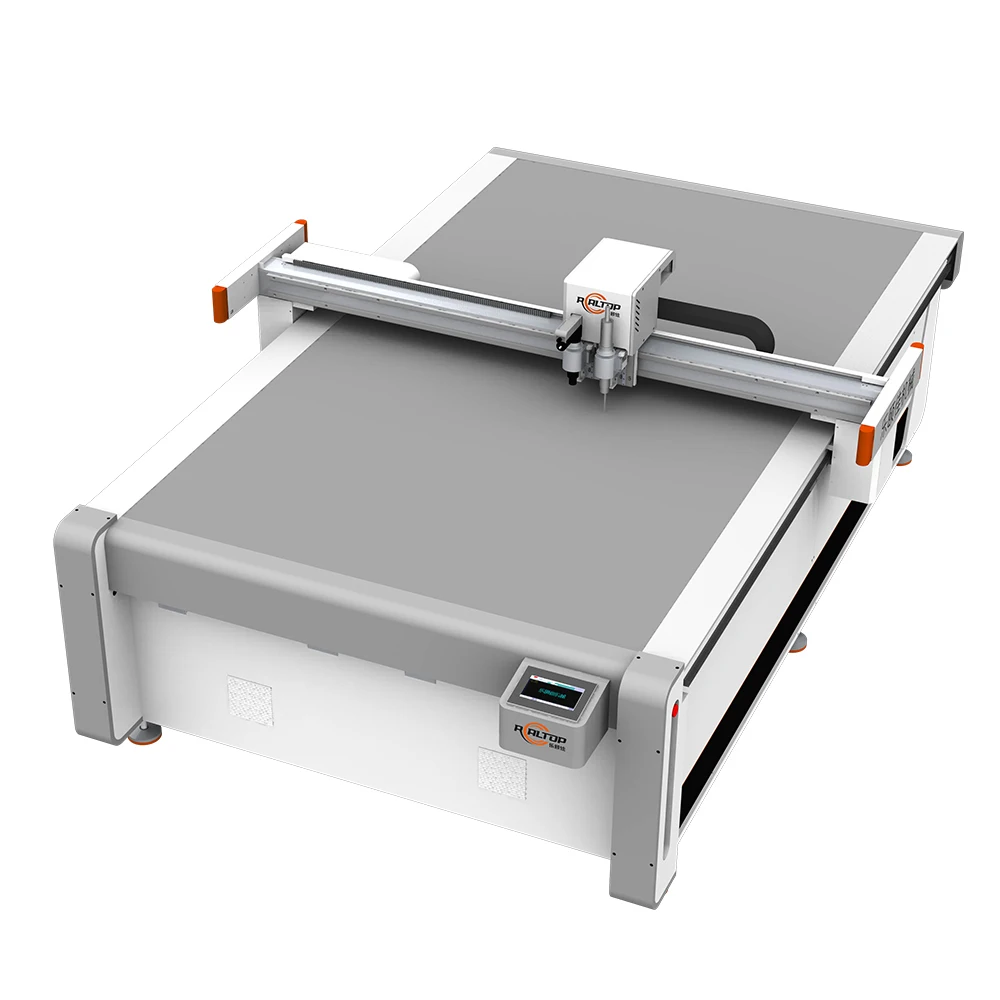
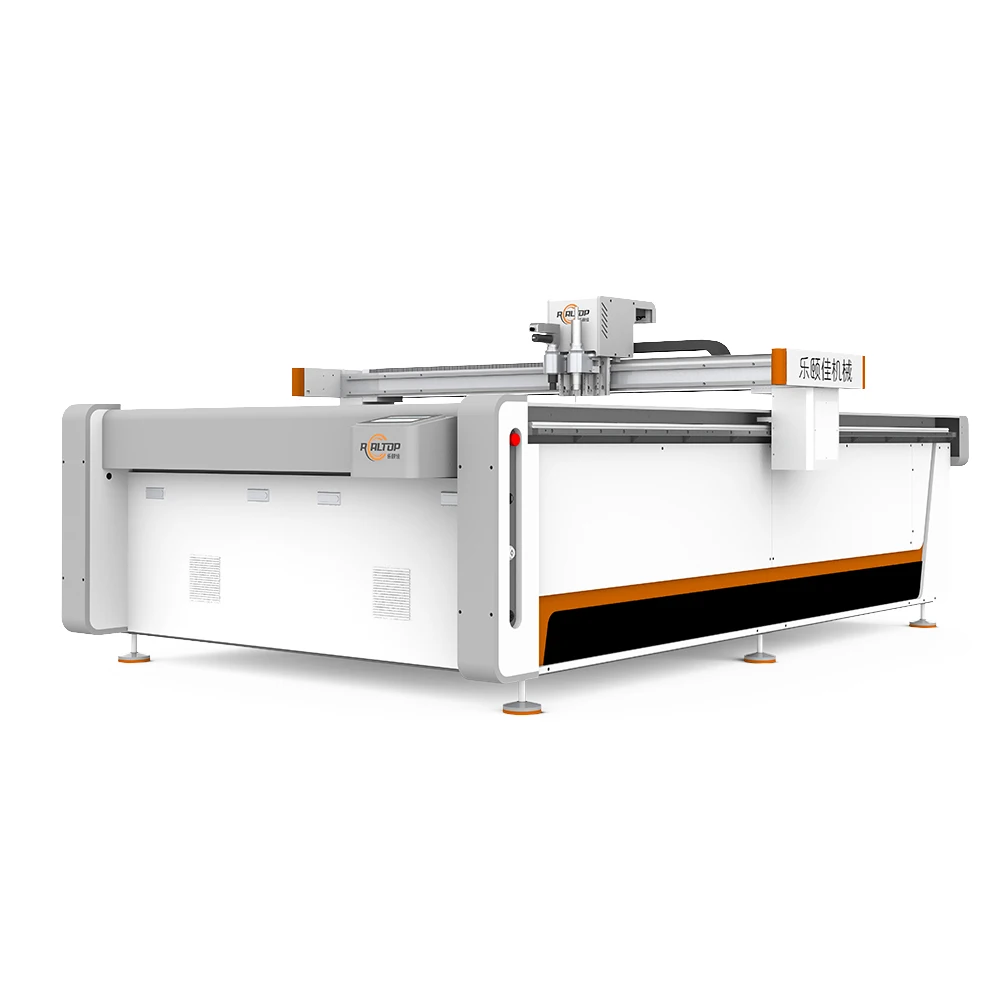
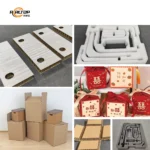
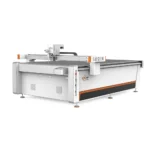
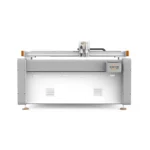
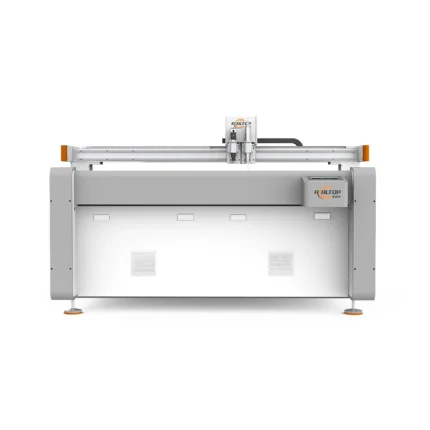
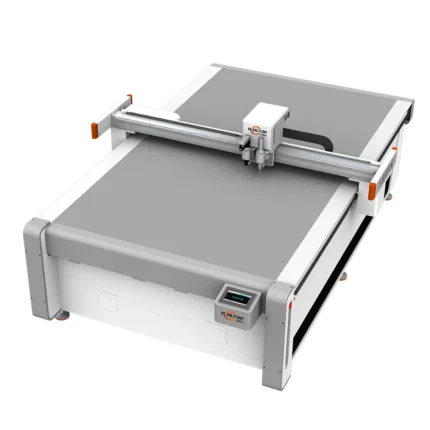
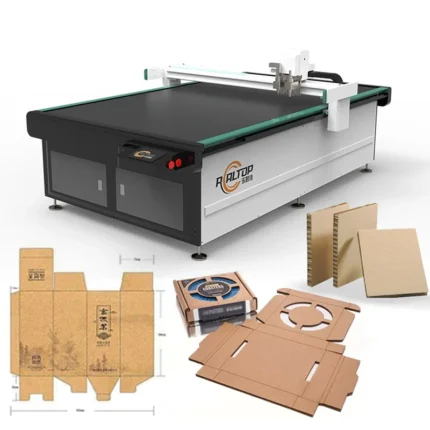
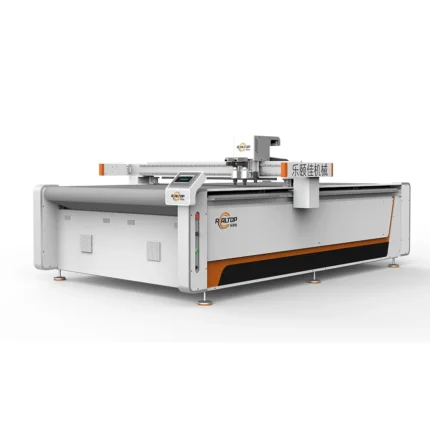
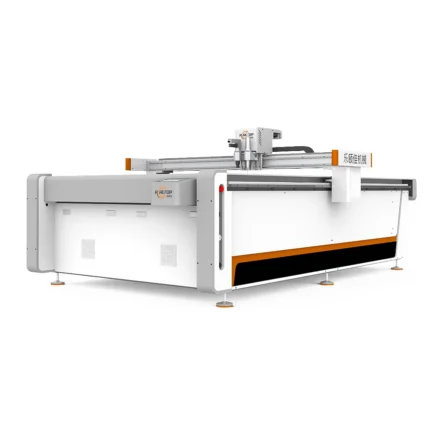
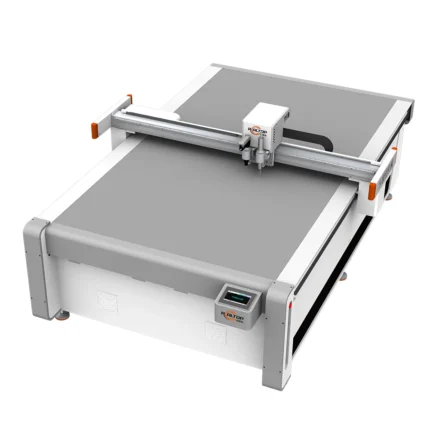
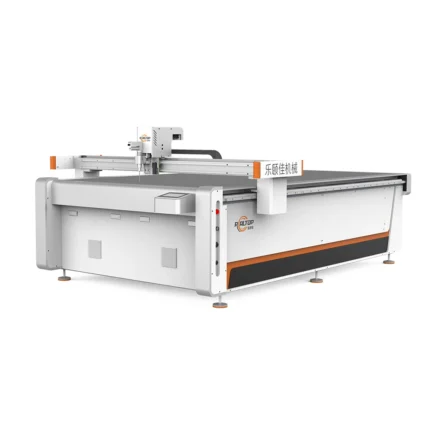
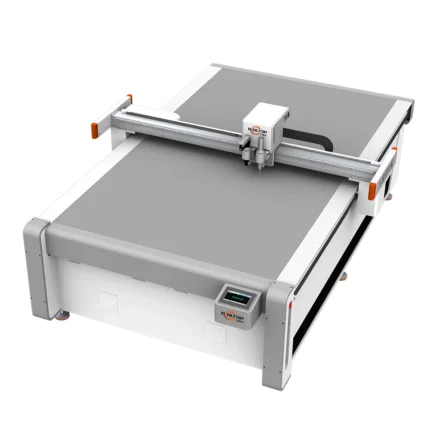
RT-D2516/RT-S2516 Packaging CNC Cutting Machine, 1600×2500mm Working Area, 7.5kW Vacuum Pump — engineered for carton sample making, sticker contour cutting and flexible material processing.
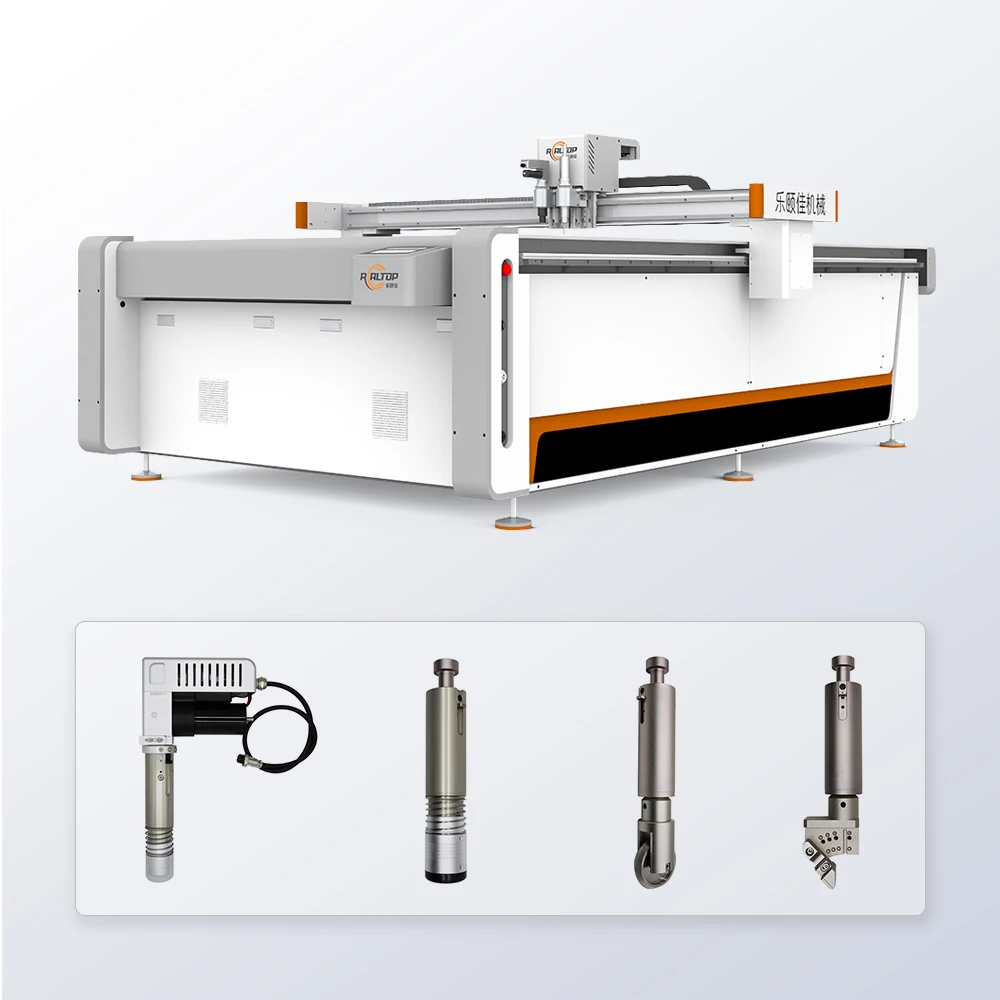
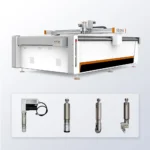
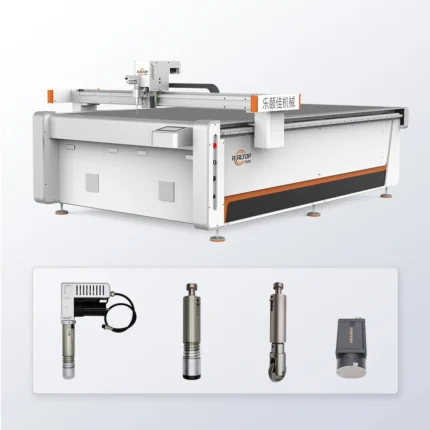
- Swiss imported oscillating knife delivers full-cut, half-cut and cursor positioning for clean edges on corrugated board, vinyl and composite sheets
- Delta servo motors with Taiwan Hiwin linear guides maintain ≤0.1mm repeated accuracy across the aluminum honeycomb vacuum platform
- HP-GL compatible control and professional carton nesting software support multiple file imports and customizable language options
Request a sample cutting report on your own material before commitment — Realtop validates tool head configuration, vacuum zoning and voltage against your production requirements.
Frame-Rigidity Validation — the RT-D2516/RT-S2516 CNC oscillating knife cutting machine is assembled on a stress-relieved steel frame with motion components selected per material density, ensuring the cutting head holds tolerance across the full 1600×2500mm bed.
Technical Specifications
| Parameter | Value |
|---|---|
| Model | RT-D2516/RT-S2516 |
| Product Type | CNC Oscillating Knife Cutting Machine |
| Working Area | 1600×2500mm |
| Machine Dimensions | 3450×2300×1250mm |
| Rated Power | 9 kW |
| Table Type | Flat working table with aluminum alloy honeycomb vacuum adsorption platform |
| Vacuum Pump | 7.5 kW |
| Cutting Head | Swiss imported oscillating knife with full-cut, half-cut and cursor positioning |
| Servo Motor | Delta digital servo |
| Linear Guide | Taiwan Hiwin rail |
| Transmission | Synchronous belt and imported ball screw |
| Translational Velocity | 800–2000 mm/s |
| Cutting Speed | 200–800 mm/s (basis not stated in source — confirm material, thickness and tool configuration) |
| Repeated Accuracy | ≤0.1 mm |
| Safety Device | Infrared sensors |
| Instruction Format | HP-GL compatible |
| Voltage | 380V ±10% |
| Conveyor | Germany imported conveyor belt |
| Software | Professional carton nesting software, multi-format import, customizable language |
| Language Options | English, Russian, Italian, Chinese (custom languages available) |
Application Suitability
| Application | Material or Output |
|---|---|
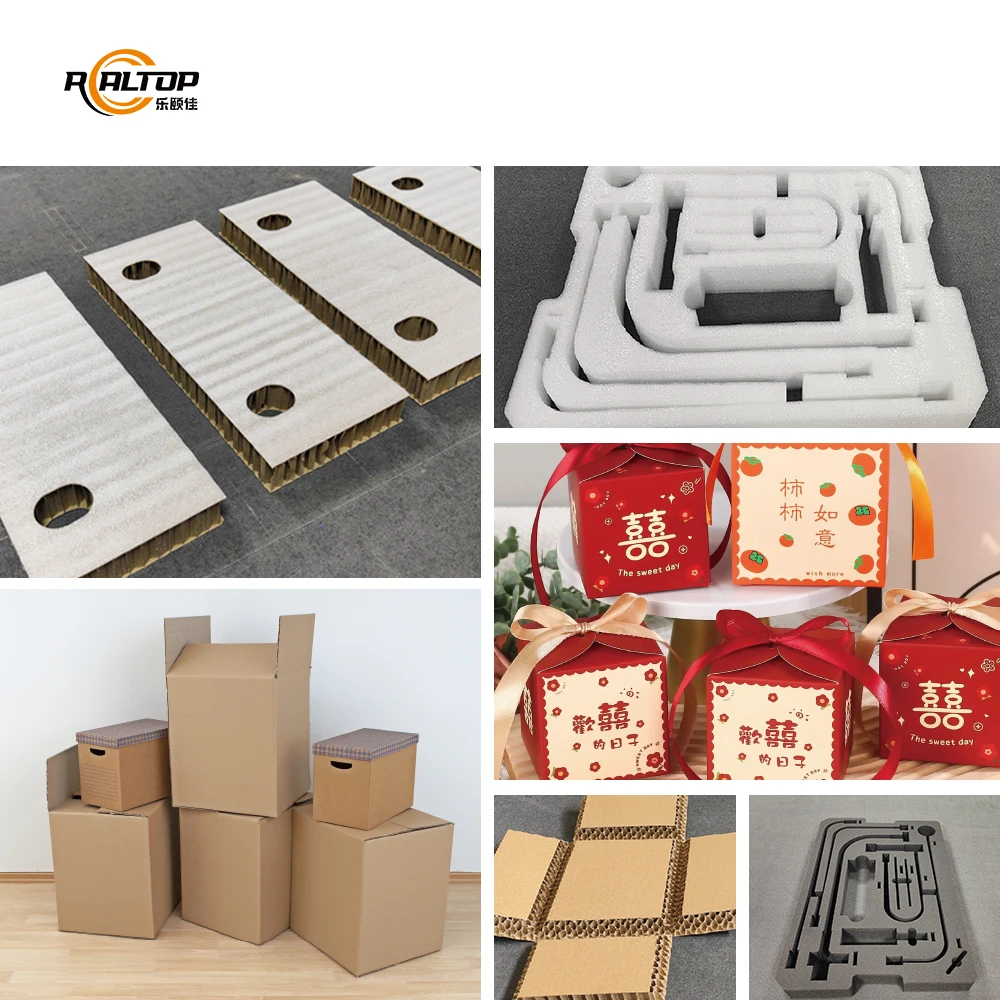
| Carton and packaging sample making | Corrugated board, greyboard, card stock |
| Express and e-commerce box prototyping | Single and double-wall corrugated |
| Large electrical appliance carton cutting | Heavy-duty corrugated and honeycomb board |
| High-end gift box sample production | Coated card stock and specialty paperboard |
| Snack food packaging die-board preparation | Thin corrugated and folding carton board |
| Sticker and label contour cutting | Vinyl, adhesive-backed film, printed sticker sheets |
| Billboard and business card cutting | PVC board, card tag stock, lightweight foam board |
| Flexible material processing | Leather, sponge composite, PVC, soft glass, silicone, rubber |
Why "Working Area" Alone Doesn’t Tell You If the Machine Fits Your Material
Specifying a flatbed cutter by bed size without matching the tool head, vacuum zoning and knife stroke to your actual material is the single most common cause of downtime in sample-making rooms.
I have watched a packaging shop take delivery of a machine ordered purely on a 1600×2500mm footprint, only to find the standard drag knife could not crease their 3mm greyboard cleanly, and the vacuum zones were too large to hold small nesting pieces flat. The cutting speed had to be dialed back to prevent the material from lifting, turning what should have been a fast sample turnaround into a bottleneck [NEED_CITE: material hold-down requirements for small nested parts on vacuum tables]. An oscillating knife cutting machine factory worth working with will ask for your thickest board, your smallest sticker contour, and your daily sample volume before quoting a configuration, because those three variables determine whether the machine runs at full translational velocity or crawls.
Frame and Motion Components That Hold Tolerance Over Long Beds
A 1600×2500mm working area means the gantry spans over two meters, and any flex in the frame or play in the linear bearings shows up as ragged edges at the far corners of the sheet. The RT-D2516/RT-S2516 uses Taiwan Hiwin rails with imported ball screws driven by Delta digital servo motors, keeping repeated accuracy within 0.1 mm across the entire table. This matters most when you are cutting interlocking carton lock-tabs or intricate sticker contours where a fraction of a millimeter of drift causes assembly or peel-off failures downstream.
Vacuum Zoning and the Small-Part Problem
The 7.5 kW vacuum pump feeds an aluminum alloy honeycomb adsorption platform, which distributes suction more evenly than a simple drilled steel plate. But suction alone does not solve the small-part issue — when the oscillating knife cuts a narrow sticker or a thin carton tab, the remaining surface area is too small for vacuum to grip, and the part lifts into the knife path. Proper zoning, where the vacuum bed is divided into independently valved sections, lets the operator activate only the zone under the workpiece, concentrating hold-down force exactly where the cut is happening. This is the difference between running at the rated 800–2000 mm/s translational velocity and slowing down to half speed on every small contour job [NEED_CITE: vacuum zoning strategies for CNC flatbed cutting tables].
Matching the Knife Stroke and Tool Head to Board Density
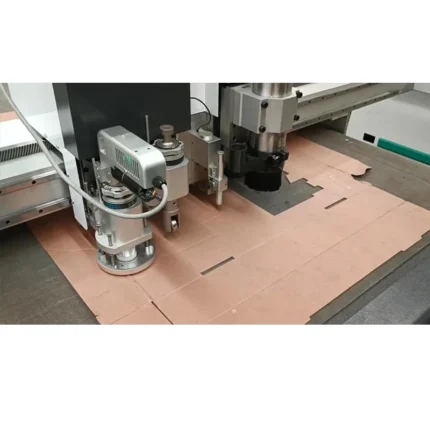
The Swiss imported oscillating knife head provides full-cut, half-cut and cursor positioning in a single tool station. Full-cut handles through-cuts on corrugated and greyboard; half-cut scores crease lines without severing the liner; cursor positioning aligns the cut path to pre-printed registration marks on sticker sheets. However, the actual cutting thickness this head can handle depends on the material density and the knife blade geometry selected — a 3mm greyboard demands a different blade angle and stroke frequency than a 5mm foam gasket. Confirming the blade and stroke configuration against your specific material stack before shipment avoids the situation where the machine arrives, the first test cut crushes the flute structure, and you are waiting weeks for a replacement tool head.
What Happens When the Configuration Is Wrong
When a carton sample maker receives a machine with insufficient vacuum zoning, the operator compensates by reducing cutting speed and adding manual weights to the sheet edges, which cuts daily sample output noticeably and increases operator fatigue. If the knife stroke is not matched to board density, the oscillating blade either fails *hin corrugated, producing sample cartons that look rough in client presentations. A mismatch between the software’s supported file formats and the design office’s existing CAD workflow forces a manual re-draw of every die-line, adding hours to each new sample order [NEED_CITE: file format compatibility in packaging CAD and CNC nesting workflows]. These are not defects in the machine — they are defects in the specification process, and they are entirely avoidable if the seller asks the right questions before production starts.
Why Source This Oscillating Knife Cutting Machine From a Factory That Builds Both Knife and Laser Lines
Realtop designs and assembles both CNC knife and laser cutting equipment in-house, which means the cutting method is selected to match your material rather than forcing every job onto one technology. For the RT-D2516/RT-S2516, the tool head and table configuration are specified per material type and production volume, not pulled from a default list. The factory runs a sample cut on your actual greyboard, corrugated or sticker stock before the order is confirmed, so edge quality, crease depth and contour accuracy are verified against your standard. Voltage is locked to 380V ±10% and the control language — English, Russian, Italian, Chinese or a custom option — is set before the electrical cabinet is closed. The HP-GL compatible carton nesting software is tested with your existing file formats during the factory test, so the machine arrives ready to accept jobs from day one rather than sitting idle while the software integrator works out a converter.
Documentation & Verification
- Machine specification sheet confirming tool head, knife stroke and vacuum zone layout matched to your material
- Electrical schematic with 380V ±10% circuit diagram and breaker sizing for your local panel
- Sample cutting report on your own greyboard, corrugated or sticker stock with edge and crease photos
- Software licence certificate with HP-GL format compatibility note and confirmed control language
- Factory test record showing repeated accuracy measurement across the full 1600×2500mm travel
- Spare parts list with Swiss knife blade part numbers and Hiwin rail carriage references
Installation, Commissioning & Support
- Floor must be level within tolerance to support the 3450×2300×1250mm machine footprint without frame twist
- Dedicated 380V ±10% circuit with breaker sizing matching the 9 kW rated power plus 7.5 kW vacuum pump draw
- Machine ships partially disassembled; gantry and vacuum table require on-site alignment and belt tensioning
- First-run calibration includes Hiwin rail parallelism check and Delta servo tuning across full travel
- Operator training covers half-cut crease depth adjustment, vacuum zone valve control and nesting software workflow
- Spare Swiss knife blades and synchronous belt segments included for initial consumable coverage
Before You Request a Quote
Send your thickest board sample, your smallest sticker contour file, and your typical daily sample count so the tool head and vacuum zoning can be matched to real production conditions. Confirm your workshop voltage and frequency, the control language your operators need, and whether your existing CAD output is HP-GL, DXF or another format. If you run a conveyor-fed workflow, specify the upstream printer and downstream creasing equipment so the nesting software and infeed sequence can be validated before the machine leaves the factory.
Frequently Asked Questions
Q: How is the tool head and vacuum configuration matched to my material before the order is placed?
A: You send a sample of your actual material — greyboard, corrugated, sticker vinyl or composite — and the factory runs a test cut on the RT-D2516/RT-S2516 using the proposed knife blade, stroke setting and vacuum zone layout. The resulting sample cutting report documents edge quality, crease depth and contour accuracy, and any adjustments are made before the machine enters final assembly.
Q: What voltage and control language options are confirmed before shipment?
A: The standard configuration is 380V ±10%, which suits most industrial three-phase supplies. If your local supply differs, the electrical schematic and transformer sizing are adjusted before the cabinet is built. Control language is set from English, Russian, Italian or Chinese, or a custom language can be loaded into the nesting software before the factory test.
Q: How does the vacuum table handle small sticker and carton parts without material lift?
A: The aluminum honeycomb platform is divided into zones with independent valves. The operator activates only the zone covering the current cutting area, concentrating the 7.5 kW pump’s suction on a smaller surface. This holds narrow sticker contours and small carton tabs flat so the oscillating knife can run at full translational velocity without the part drifting.
Q: Can the nesting software import my existing die-line file formats?
A: The professional carton nesting software is HP-GL compatible and supports multiple format imports including common CAD outputs. During the factory test, your actual design files are loaded and processed to confirm compatibility. If a conversion is needed, the file format compatibility note in the documentation specifies the exact export settings from your CAD system.
Q: What factory test procedures run before the machine ships?
A: The RT-D2516/RT-S2516 undergoes a full-travel accuracy test across the 1600×2500mm bed, a vacuum hold-down test on your supplied material, a cutting and creasing cycle using the confirmed tool configuration, and a software workflow test with your file formats. All results are recorded in the factory test record and shipped with the machine.


Related products
Automation CNC Pizza Box Machine 2026 Rotary Die Cutting
Product Parameters
| Type | Automation CNC Pizza Box Machine |
| Model Year | 2026 |
| Cutting Technology | Rotary Die Cutting |
| Operation | Automated CNC Control |
Introduction
This 2026 Automation CNC Pizza Box Machine features advanced rotary die cutting technology, ensuring precise and efficient pizza box production. With automated CNC control, it offers high productivity and accuracy for professional manufacturing needs.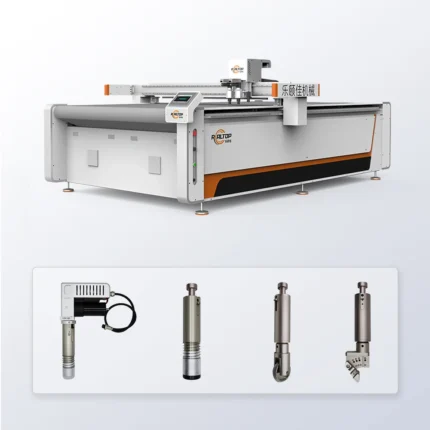

CNC Flatbed Oscillating Knife Cutting Machine 2026
Product Introduction
High-performance CNC Flatbed Oscillating Knife Cutting Machine 2026, ideal for precision cutting of various materials with advanced oscillating knife technology, ensuring efficient and accurate operations for industrial manufacturing needs.Specifications
| Model | 2026 |
| Type | CNC Flatbed Oscillating Knife Cutting Machine |


REALTOP 2026 Digital Industrial Cardboard Box Cutter
Product Introduction
REALTOP Digital Industrial Cardboard Box Cutter Machine 2026 is a professional industrial-grade cutting equipment designed for efficient cardboard box processing, ideal for manufacturing and packaging applications.
Product Parameters
| Model | 2026 |
| Type | Digital Industrial Cardboard Box Cutter |
| Application | Cardboard Box Processing |
| Feature | Industrial-grade, Efficient Cutting |
商品评价
There are no reviews yet.