







Oscillating Knife Cardboard Cutting Machine – Technical Guide
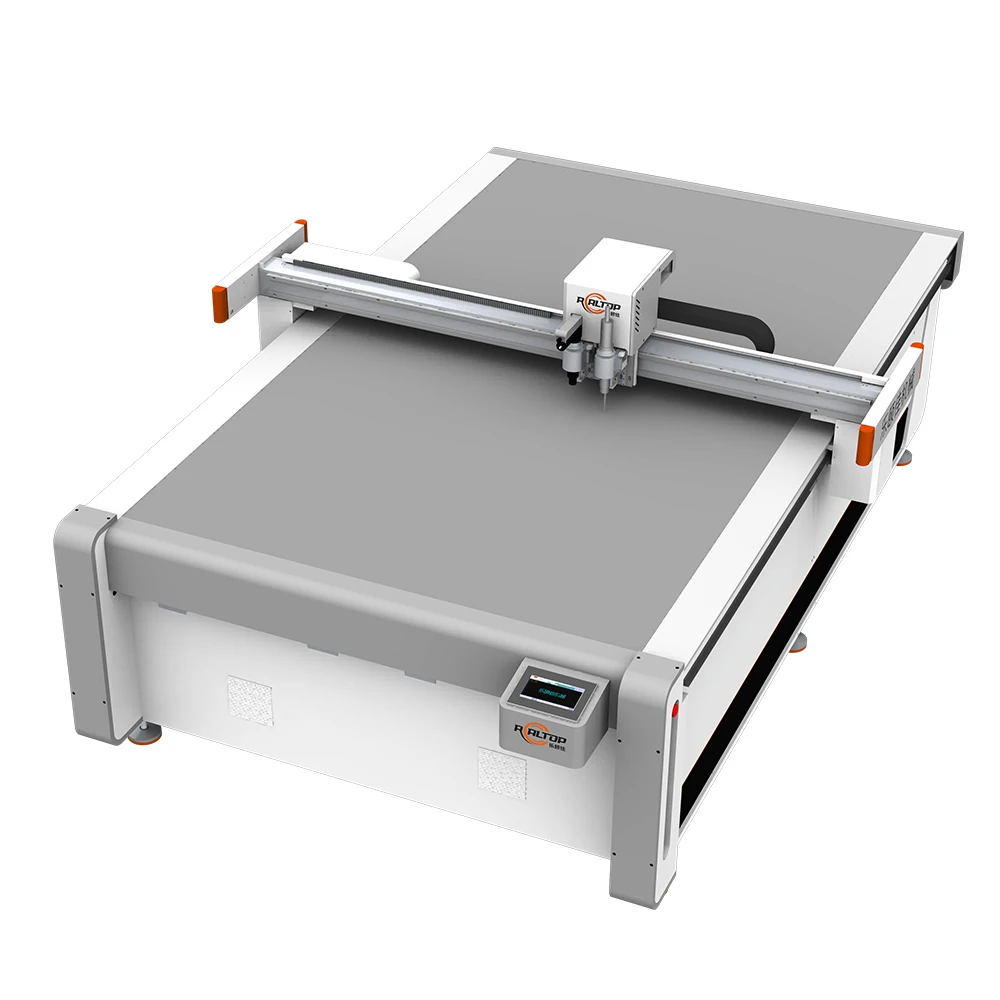
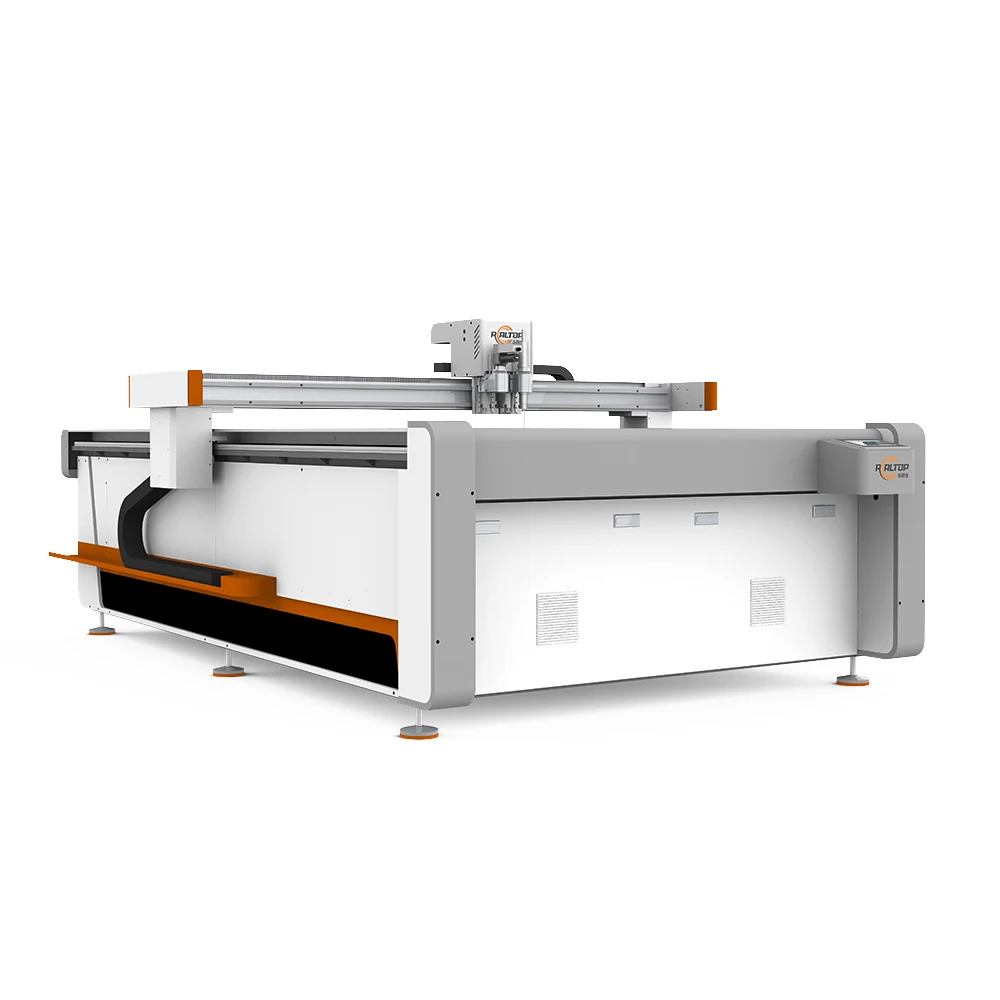
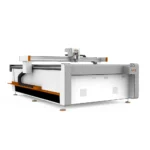
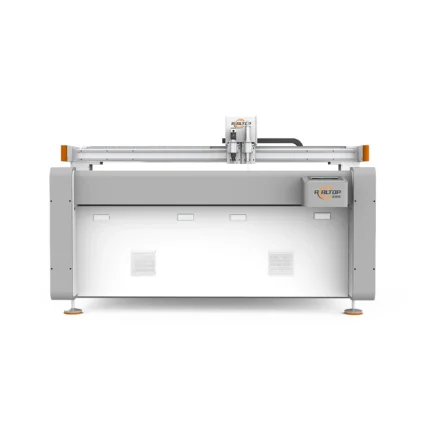
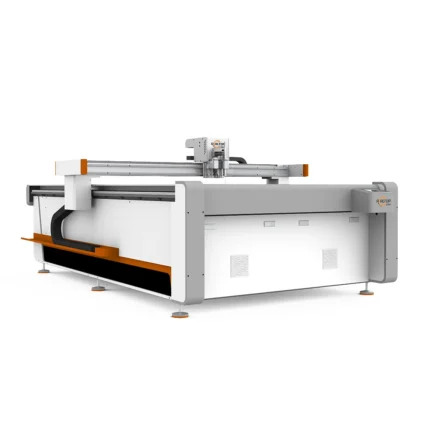
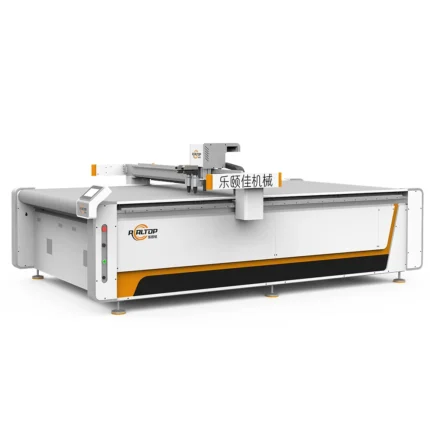
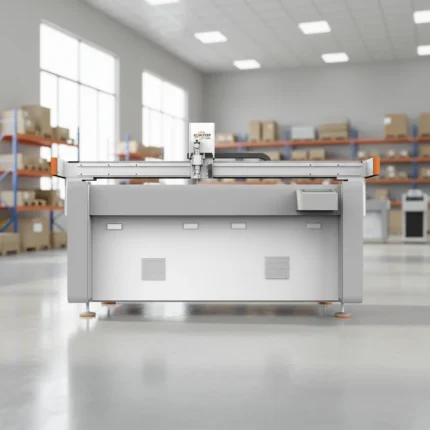
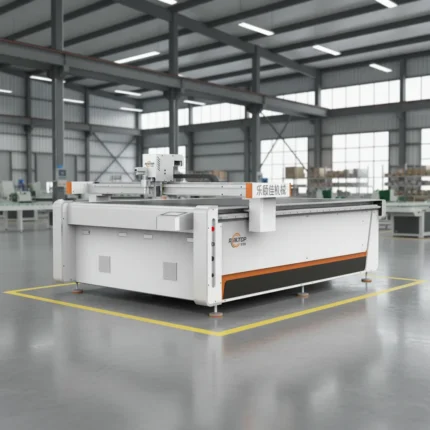
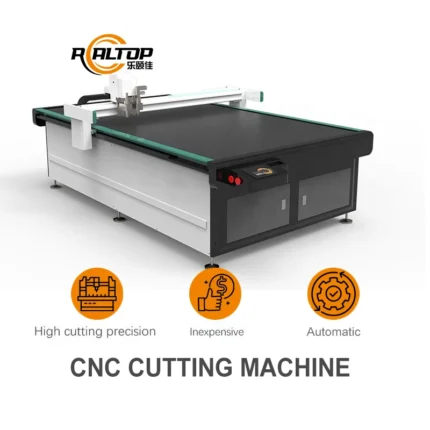
RT-D2516/RT-S2516 CNC Oscillating Knife Cutting Machine, 1600×2500mm Working Area, ≤100mm Cutting Thickness — integrates CO₂ and fiber laser options for processors evaluating blade-cut versus laser-sealed edges on synthetics.
- Laser versus knife routing: Continuous power ratings mapped to real cutting depth on acrylic, textile, foam and sheet metal, with edge sealing behavior clarified for PU, EVA, XPE and PVC materials
- Extraction, assist-gas and voltage specifications confirmed per material mix before order, with sample cutting reports provided on buyer’s own material to verify kerf width, edge quality and engraving depth prior to commitment
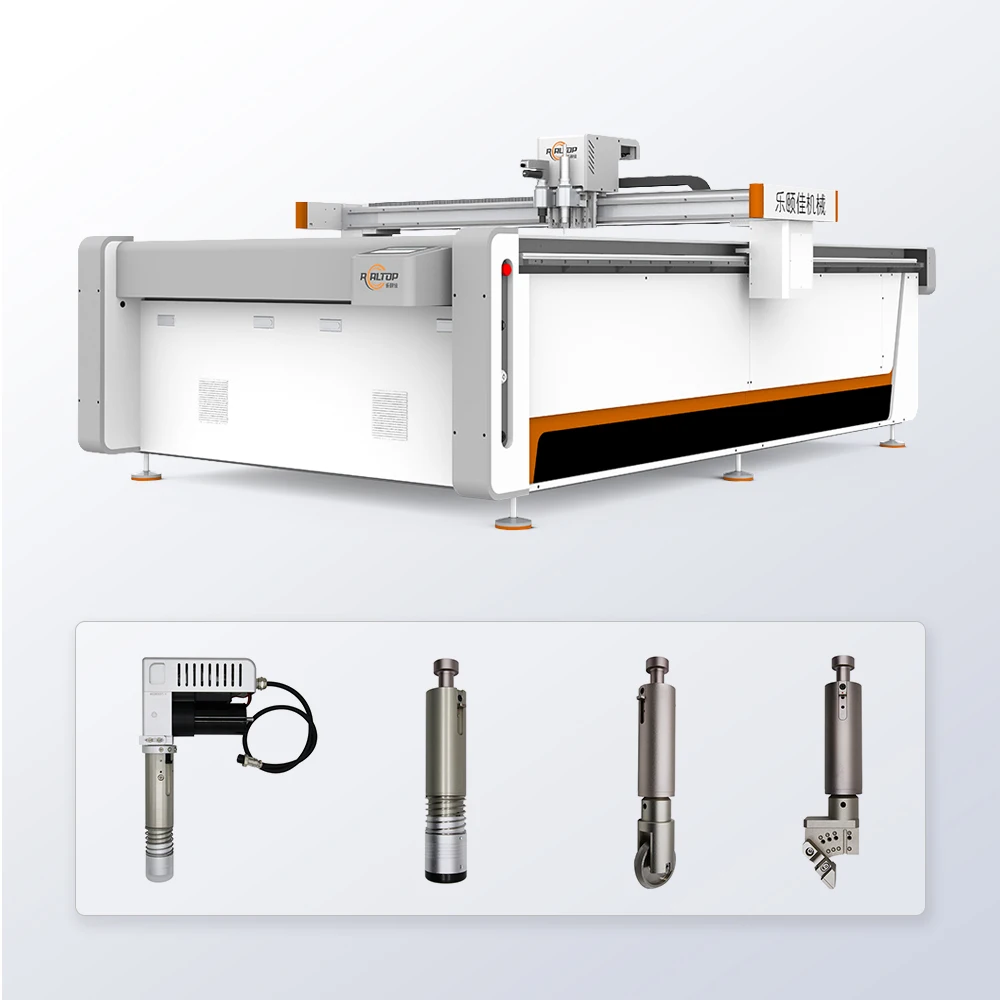
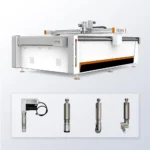
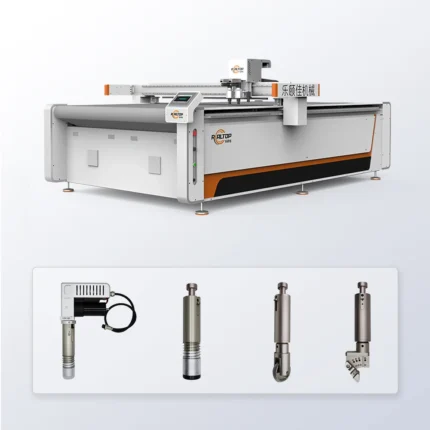
Swiss Knife Precision — The RT-D2516/RT-S2516 platform pairs a Swiss-imported oscillating knife with CO₂ or fiber laser heads, so acrylic, wood, textile and sheet metal processors select the cutting method that actually suits their material rather than forcing a single process.
Technical Specifications
| Parameter | Value |
|---|---|
| Product Type | CNC Oscillating Knife Cutting Machine |
| Model | RT-D2516/RT-S2516 |
| Working Area | 1600×2500mm |
| Machine Size | 3450×2300×1250mm |
| Rated Power | 9kW |
| Translational Velocity | 800–2000mm/s |
| Cutting Speed | 200–800mm/s (according to different cutting materials) |
| Cutting Thickness | ≤100mm (varies with material) |
| Repeated Accuracy | ≤0.1mm |
| Transmission System | Digital servo motor, linear guide, synchronous belt, ball screw |
| Servo Motor Option | Delta (China) or Panasonic (Japan) |
| Vacuum Pump | 7.5kW |
| Vacuum Table | Magnesium-aluminum alloy with fluorocarbon PVDF powder spraying, anodic oxidation |
| Voltage | 380V±10% |
| Table Type | Flat working table or auto feeding table (option) |
| Instruction System | HP-GL compatible format |
| Tool Head | Swiss imported knife — vibration full cutting, half cutting, cursor location |
| CCD Positioning | Small CCD mark point, panoramic camera, or projection positioning (options) |
| Software Compatibility | PLT, DXF, AI and other file formats with auto typesetting |
| Control Panel | Touch screen with multiple language options |
| Safety Devices | Infrared sensors, anti-collision on both sides of beam, emergency stop |
| Assembly State | Fully assembled before shipment |
| Standards | CE declaration where applicable |
Application Suitability
| Application | Material or Output |
|---|---|
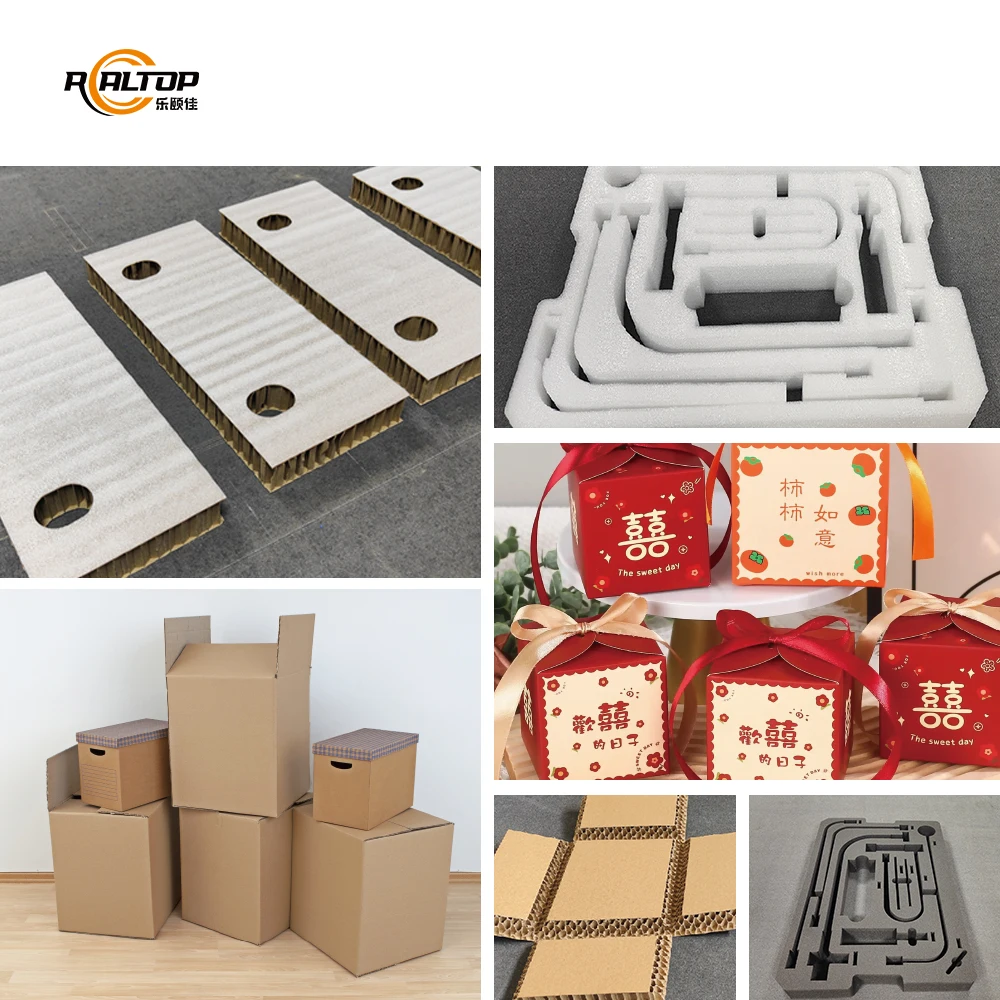
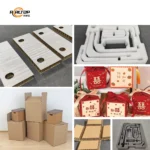
| Carton and packaging sample making | Cardboard, honeycomb cardboard, corrugated board — oscillating knife with creasing wheel and V-cutting knife |
| Acrylic signage and display fabrication | Acrylic sheets with laser edge polish versus knife-cut clarity |
| Textile and garment cutting | Synthetic fabrics requiring laser edge sealing, natural fibres cut cleanly by knife |
| Automotive interior and gasket production | Leather, PU, EVA, XPE composites and foam gaskets |
| Composite panel processing | Fiberglass, carbon fiber, honeycomb composites, PP and PTFE sealing sheets |
| Soft furnishings and carpet cutting | Carpet, floor mats, foam, sponge and non-woven fabric rolls |
Laser Power Claims versus Real Cutting Depth on the RT-D2516/RT-S2516
Always confirm laser power as continuous wattage, not peak.
Many equipment quotes list peak laser power, which sounds impressive on paper but delivers far less cutting depth on the shop floor. A CO₂ head rated at a certain peak figure may struggle to cut through 10mm acrylic cleanly at production speed, while a continuous rating on the same CNC oscillating knife cutting machine for laser and engraving processing tells the operator exactly what thickness and speed combination is achievable. I have stood at trade booths where the stated power and the actual cut result simply did not match — the sales brochure promised one thing, the sample told a different story. [NEED_CITE: distinction between continuous and peak laser power ratings]
Matching Cutting Method to Material Behaviour
The RT-D2516/RT-S2516 platform lets processors choose between knife and laser based on material behaviour. Synthetics like PU, EVA and XPE benefit from laser edge sealing, which melts the cut edge to prevent fraying — essential when producing automotive interior panels or outdoor gear components. Natural textiles and cardboard, on the other hand, produce a cleaner result under the oscillating knife with no thermal discolouration. Having both options on one working area means the same machine handles a corrugated packaging sample in the morning and an acrylic display piece in the afternoon.
Engraving Resolution and Extraction Requirements
When the laser head is engaged for engraving on acrylic, coated metals or wood, resolution depends on focal spot size and travel speed rather than laser power alone. Deeper engraving passes require slower head movement, which affects throughput on larger batches. At the same time, laser cutting and engraving on synthetics generates fumes that must be captured before they settle on the workpiece or the linear guides. The 1600×2500mm working area demands extraction ducting sized for the full table span, and buyers should confirm filtration specifications for their specific material mix — cutting PVC releases different by-products than cutting wood. [NEED_CITE: fume extraction standards for laser processing of synthetic materials]
Reading the Parameter Sheet Against Your Production Needs
The 9kW rated power covers the machine’s motion and vacuum systems; the laser head draws additional power depending on the selected source. The 7.5kW vacuum pump paired with the magnesium-aluminum alloy table must hold small parts flat across the full 1600×2500mm surface — insufficient zoning means lightweight cardboard or thin film can lift during high-speed passes at up to 2000mm/s translational velocity. The ≤0.1mm repeated accuracy, driven by imported linear guides and ball screws, keeps contour cuts aligned with printed marks when the CCD camera option is engaged. Servo motor choice between Delta and Panasonic affects responsiveness during direction changes on intricate packaging crease patterns.
What Happens When the Wrong Head Meets the Wrong Material
Routing a foam gasket job through the laser head instead of the oscillating knife produces melted edges that fail dimensional checks and emit fumes the extraction system may not handle at production speed. Conversely, knife-cutting acrylic signage leaves a matte edge that requires secondary polishing — time and cost the processor did not budget for. These mismatches are not machine faults; they are specification gaps that surface only after the first production run. I once watched a buyer discover mid-installation that their extraction ducting was sized for knife dust, not laser fume. [NEED_CITE: material-specific fume and dust extraction requirements]
Why Buyers Source This Platform Here
In-house design covers both knife and laser technology on one frame, so cutting method follows material rather than the buyer adapting their workflow to a single-process machine. Tool head and table configuration are specified per material and production volume before the order is placed. CCD camera positioning is tested against the buyer’s printed artwork to confirm tracking at actual production speed. Software file format compatibility — PLT, DXF, AI — is verified during the pre-order stage, not after delivery. Sample cutting on the buyer’s own material happens before commitment, with a report covering edge quality, kerf width and engraving depth. Voltage, plug type and control language are confirmed against the destination market’s electrical standards. [NEED_CITE: voltage and frequency standards by export market]
Documentation & Verification
- Machine specification sheet confirming laser power as continuous rating with real cutting depth per material
- Electrical schematic and 380V±10% voltage confirmation matched to destination market supply
- Sample cutting report on buyer’s own material covering edge quality, kerf and engraving depth
- Extraction requirements document specifying ducting, filtration and airflow for the buyer’s material mix
- Software licence and file format compatibility note for PLT, DXF and AI workflows
- Factory test record with CCD positioning accuracy verified on buyer’s printed sample
Installation, Commissioning & Support
- Floor space planning for the 3450×2300×1250mm machine footprint plus material loading clearance
- Dedicated 380V±10% circuit sized for 9kW machine power plus 7.5kW vacuum pump
- Fully assembled delivery — no structural reassembly required at the buyer’s site
- First-run parameter tuning for cutting speed, laser power and vacuum zoning per material
- Touch screen control language set to operator preference before commissioning
- Spare parts list covering Swiss knife blades, vacuum seals and laser head consumables
Preparing Your Enquiry
Share your primary materials, typical sheet thickness and daily cut volume so the configuration matches actual production. Confirm your workshop’s voltage supply, frequency and available floor space for the 1600×2500mm working area. If your workflow depends on specific file formats or nesting software, provide samples so compatibility is checked before quotation. Send representative material samples for a cutting test — the results determine which tool head and laser power rating your machine ships with.
Frequently Asked Questions
Q: How do I verify laser power is continuous rather than peak on the RT-D2516/RT-S2516?
A: Request the machine specification sheet listing continuous wattage alongside real cutting depth for your specific material. Peak ratings appear in marketing materials but do not reflect sustained output. A sample cutting report on your own material at stated production speed confirms whether the laser head delivers the depth and edge quality your application requires.
Q: CO₂ versus fiber laser head — which suits my material and thickness?
A: CO₂ laser heads cut and engrave non-metals such as acrylic, wood, textile and coated surfaces. Fiber laser heads handle sheet metal and tube cutting. The choice depends entirely on your primary material mix and thickness range. Both can be integrated into the platform alongside the oscillating knife for jobs that require clean mechanical cuts.
Q: What extraction and assist-gas setup does this platform require for my material?
A: Extraction capacity depends on the materials you cut most often. Synthetics generate fumes requiring filtration, while cardboard and natural fibres produce particulate dust. Assist gas — typically compressed air or nitrogen — is needed for fiber laser cutting on metals. Confirm ducting diameter, airflow rate and filtration type for your material mix before installation.
Q: Voltage, plug type and control language — how are these confirmed before shipment?
A: These details are locked during the specification confirmation stage after order placement. The 380V±10% system is verified against your workshop’s electrical supply. Plug type matches the destination country standard. Control panel language — English, Russian, Italian, Chinese or others — is set before the machine leaves the factory.
Q: Edge sealing on synthetics: when does laser outperform knife, and when does knife outperform laser?
A: Laser edge sealing melts synthetic fibres on PU, EVA, XPE and PVC, preventing fraying on automotive and outdoor gear components. Knife cutting produces a clean, non-thermal edge on natural textiles, cardboard and foam where discolouration or hardening is unacceptable. The platform supports both methods so you route each job to the appropriate head.


Related products
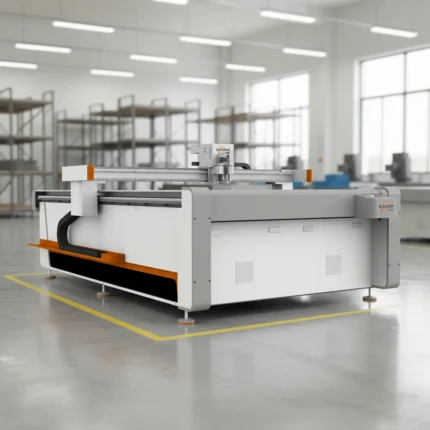
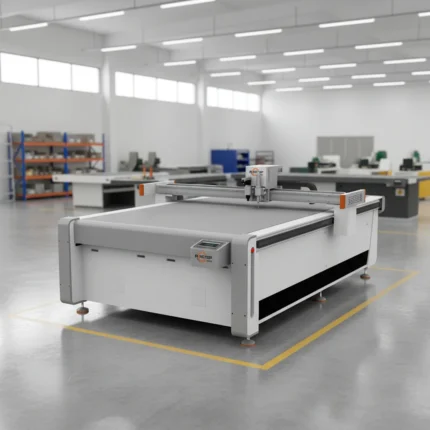
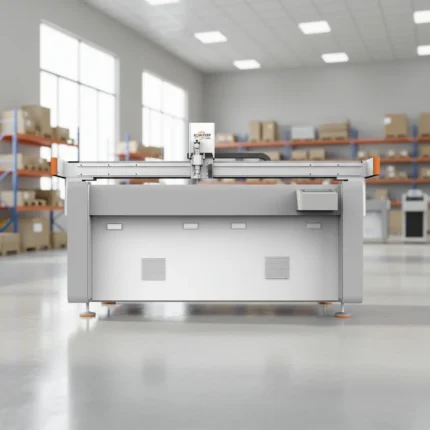
2026 Digital Flatbed Cutting Plotter Auto Corrugated Box Die Cutter
Product Introduction
Digital Flatbed Cutting Plotter 2026, ideal for auto corrugated box die cutting, offering precision and efficiency for professional packaging production.Specifications
| Type | Digital Flatbed Cutting Plotter |
| Model | 2026 |
| Application | Auto Corrugated Box Die Cutting |
| Function | Precision Cutting & Plotting |
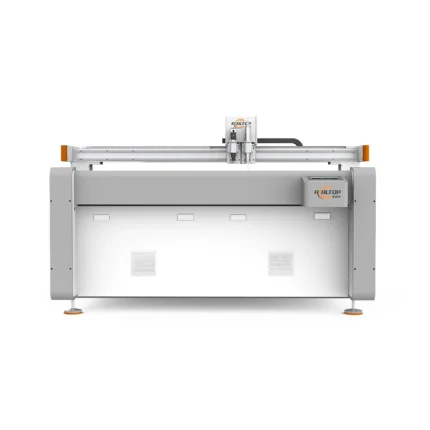
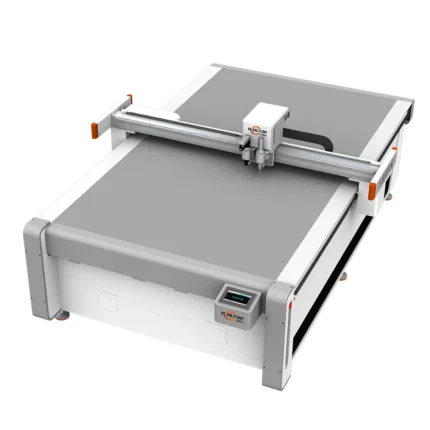
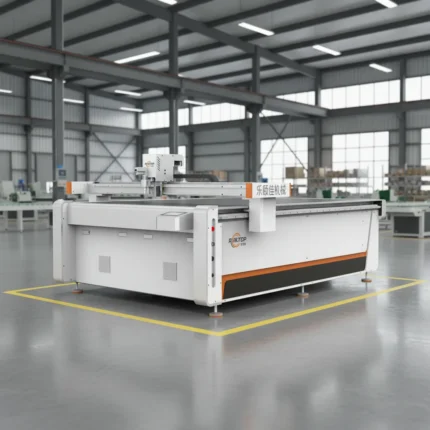
Automatic Die-less Cardboard Vibrating Knife Cutter 2026
Product Introduction
Automatic Die-less Cardboard Vibrating Knife Cutter 2026, a precision cutting solution for cardboard materials, featuring advanced die-less technology for efficient and flexible cutting operations. Ideal for various cardboard processing needs in manufacturing and packaging industries.Key Specifications
| Model | 2026 |
| Type | Automatic Die-less Cutter |
| Cutting Tool | Vibrating Knife |
| Material | Cardboard |
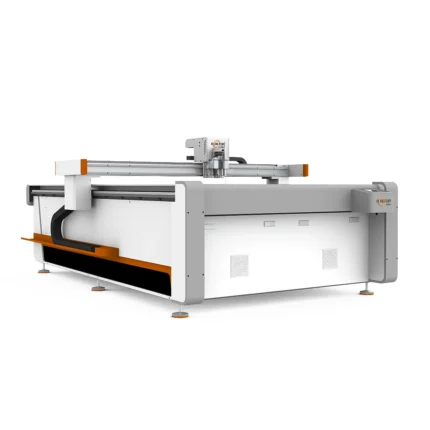
CNC Flatbed Cutter 2026 Digital Corrugated Box Making Machine
Product Introduction
High-precision CNC flatbed cutter designed for efficient cardboard box production. Ideal for 2026 digital corrugated box manufacturing, offering precise cutting and reliable performance for professional packaging solutions.
Key Specifications
| Type | CNC Flatbed Cutter |
| Application | Cardboard Box Production |
| Technology | 2026 Digital System |
| Material | Corrugated Board |

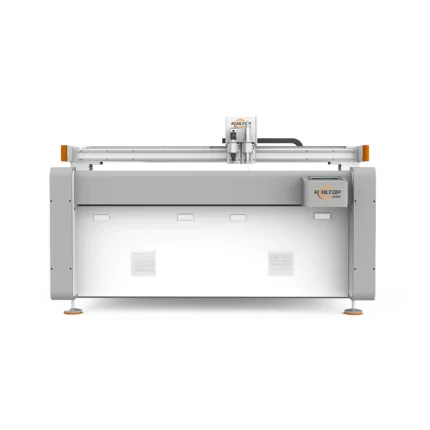
Realtop 2026 CNC Oscillating V-Cut Machine
Product Introduction
Realtop CNC Oscillating V-Cut Machine 2026 is a precision equipment designed for efficient V-cutting operations, ideal for various material processing needs with advanced CNC technology.
Key Specifications
| Model | Realtop CNC Oscillating V-Cut Machine 2026 |
| Type | CNC Oscillating V-Cut Machine |
| Application | Precision V-cutting operations |
| Feature | Advanced CNC technology |
商品评价
There are no reviews yet.