

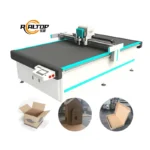
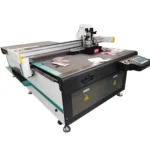
Packaging CNC Cutting Machine for Cardboard – Laser Process
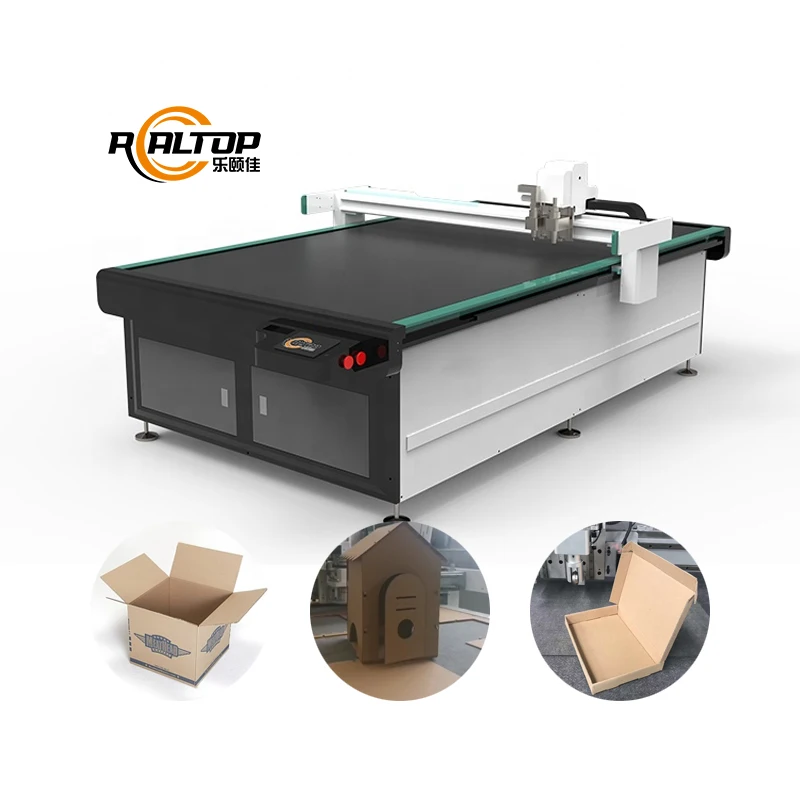
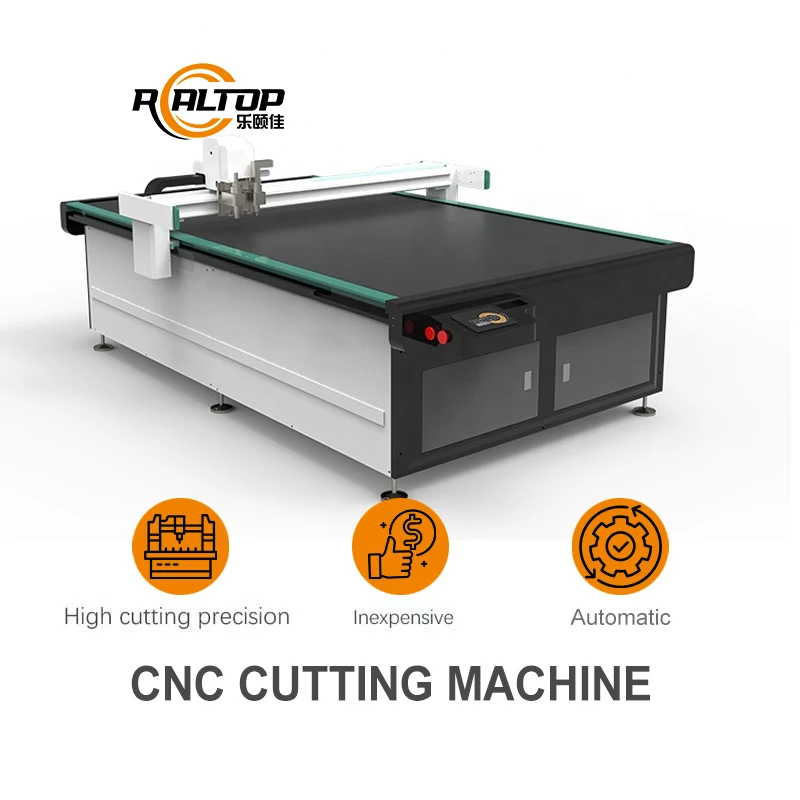
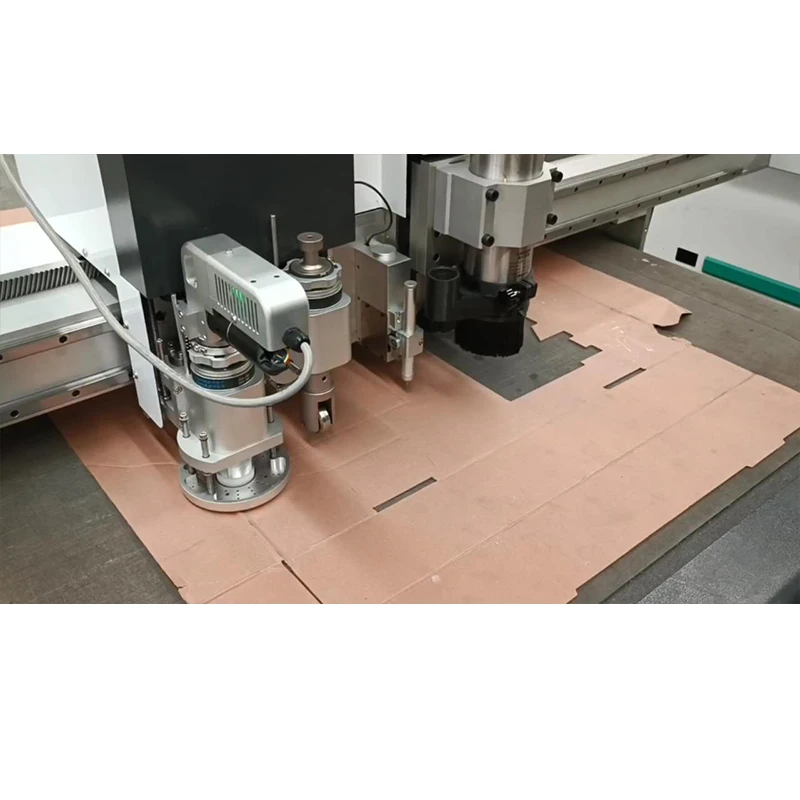
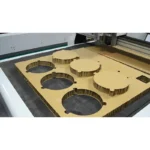
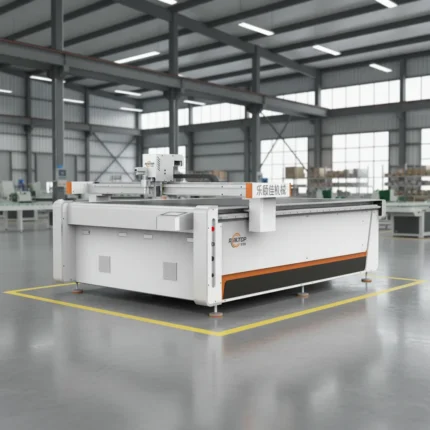
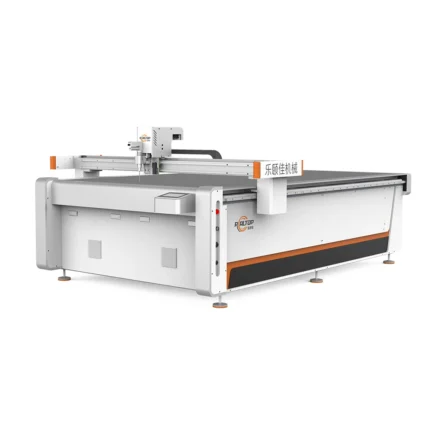
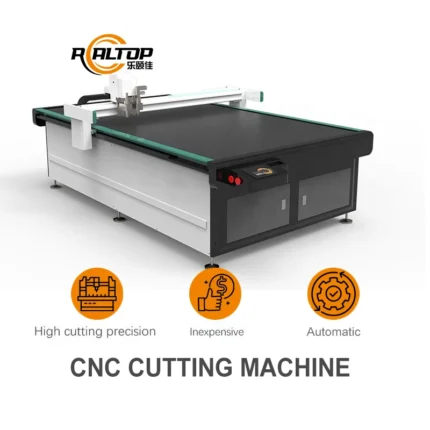
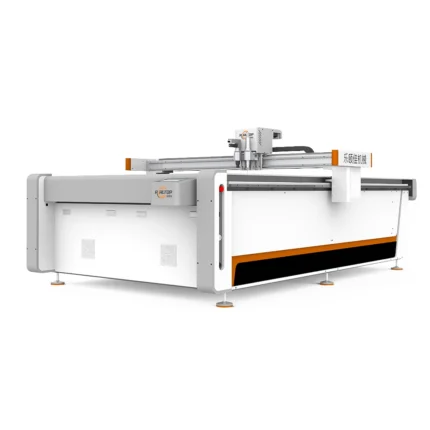
RT-D2516/RT-S2516 Packaging CNC Cutting Machine, 1600×2500mm Working Area, 9kW Rated Power — configured for cardboard and carton sample production with oscillating knife process, eliminating thermal damage on packaging materials.
- Cutting speed 200-800mm/s depending on material type
- Aluminum alloy honeycomb vacuum table for secure hold-down
- HP-GL compatible software with multi-format import support
- 380V±10% voltage, language customizable control interface
In-house design team specifies tool head and table configuration per your material and production workflow.
Vibration knife process verified on your material — sample cutting on the buyer’s own corrugated grade before order confirmation eliminates the mismatch between quoted capacity and actual edge quality on high-density board.
Technical Specifications
| Parameter | Value |
|---|---|
| Model | RT-D2516/RT-S2516 |
| Product Type | Digital Flatbed CNC Oscillating Knife Cutting Machine |
| Working Area | 1600 × 2500 mm |
| Machine Size | 3450 × 2300 × 1250 mm |
| Rated Power | 9 kW |
| Vacuum Pump | 7.5 kW |
| Work Table | Aluminum alloy honeycomb vacuum adsorption platform |
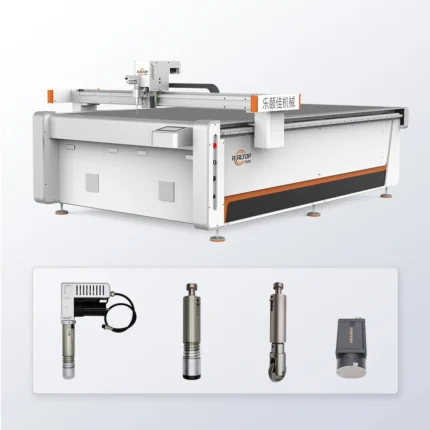
| Tool Head | Swiss imported knife with vibration full cutting, vibration half cutting and cursor location |
| Cutting Speed | 200–800 mm/s (according to different cutting materials) |
| Translational Velocity | 800–1200 mm/s |
| Repeated Accuracy | ≤0.1 mm |
| Transmission System | Digital servo motor, linear guide, synchronous belt, ball screw |
| Servo Motor | Delta |
| Guide Rail | Taiwan Hiwin |
| Conveyor Belt | Germany imported |
| Instruction System | HP-GL compatible format |
| Voltage | 380V ± 10% (other voltages configurable) |
| Safety Device | Infrared sensors |
| Software | Professional carton cutting software, language customizable, multiple format import |
| Language Options | English, Russian, Italian, Chinese (special languages customizable) |
| Machine Frame | Thick square seamless steel structure with high temperature treatment |
| Standards | CE (basis not stated in source — confirm CE declaration) |
Application Suitability
| Application | Material or Output |
|---|---|
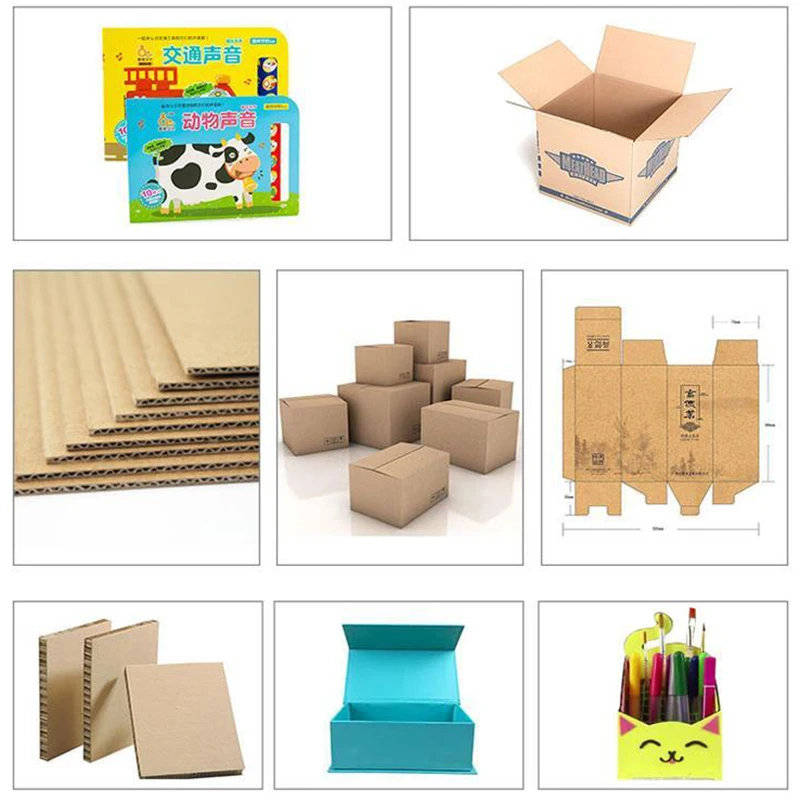
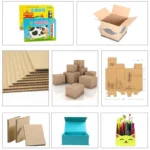
| Carton box prototyping and short-run production | Three-layer and five-layer corrugated board, greyboard, kraft paper |
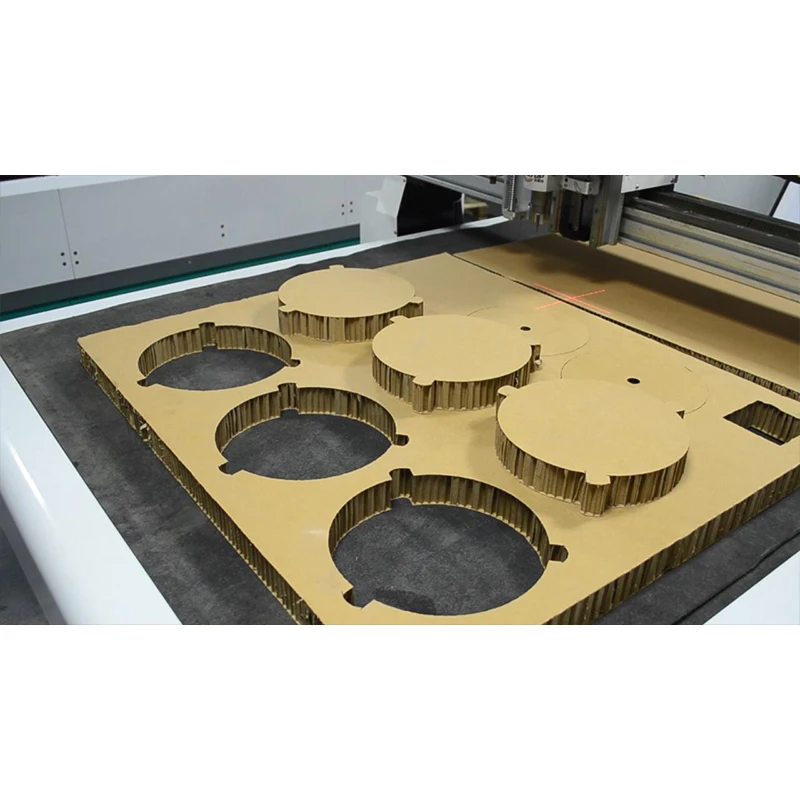
| Packaging sample making and die-free proofing | Card stock, folding carton board, honeycomb paperboard |
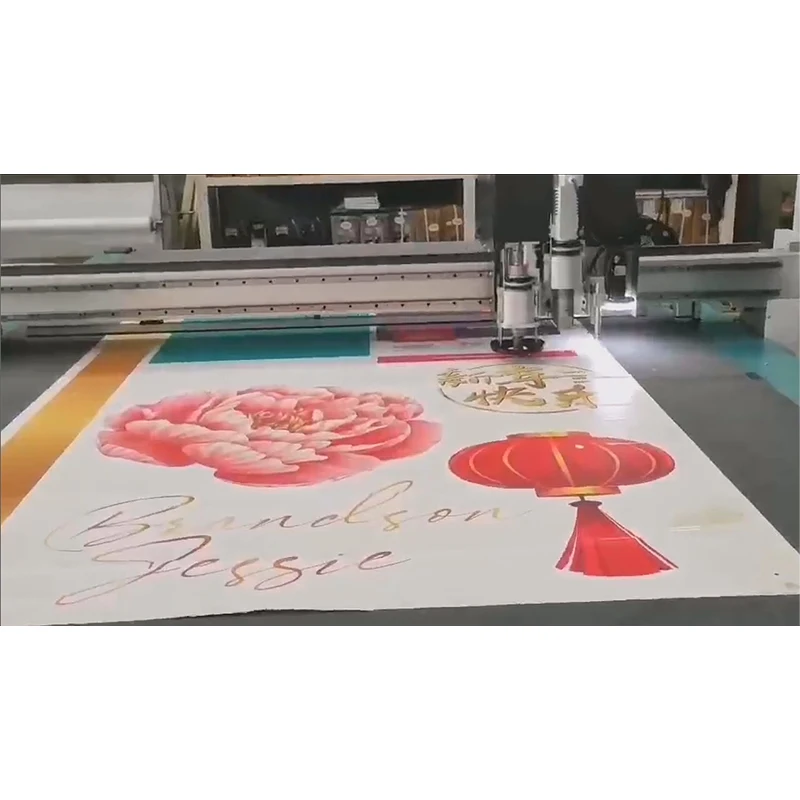
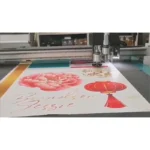
| Sticker and label contour cutting | Self-adhesive vinyl, PET film, paper-backed labels |
| Billboard and signage blank cutting | Foam board, corrugated plastic, light card stock |
| Gasket and non-metal flat part cutting | Rubber sheet, silicone, PVC, soft composite materials |
Why "Cutting Thickness ≤100 mm" Misleads Packaging Buyers
Actual cutting depth on corrugated board depends on flute profile, density and knife oscillation frequency, not a single catalog number.
I have stood in a customer’s workshop watching a flatbed cutter struggle through high-density five-layer board after the same machine handled three-layer corrugated all morning without complaint. The specification sheet reads a maximum cutting thickness, but dense double-wall and triple-wall stock demands different oscillation settings, tool pressure and feed rates. When a CO2 and fiber laser cutting machine manufacturer quotes a process that actually runs on a vibration knife, the confusion deepens — the buyer assumes thermal sealing of edges when the reality is mechanical shearing with zero burn [NEED_CITE: material density effect on oscillating knife cutting depth]. Packaging sample shops that skip material-specific testing often discover the gap between rated capacity and daily throughput only after installation.
Knife Versus Laser: Choosing the Right Process for Cardboard
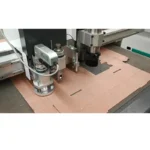
Cardboard and corrugated board do not benefit from thermal edge sealing the way acrylic or synthetic textiles do. An oscillating knife cuts through fibre without cauterising, leaving a clean mechanical edge that accepts glue and print without additional preparation. The RT-D2516/RT-S2516 uses a Swiss imported vibration knife running full-cut and half-cut modes, which means crease lines and through-cuts happen in the same setup without a tool change. For packaging sample makers comparing a CO2 and fiber laser cutting machine manufacturer catalog against a knife system, the deciding factor is usually edge char on light-coloured board — a laser leaves a brown burn line that is unacceptable on premium retail packaging.
Throughput Reality on Mixed Board Grades
Cutting speed ranges from 200 to 800 mm/s depending on material type, which means a single sheet of thin card stock processes quickly while the same machine slows considerably on dense five-layer corrugated. The Delta servo motors and Taiwan Hiwin linear guides maintain positional accuracy at both ends of that range, keeping repeated accuracy within 0.1 mm whether the head is tracing a gentle curve or plunging into thick stock. Production managers evaluating throughput should plan their daily schedule around the slowest material in the mix rather than the fastest [NEED_CITE: production scheduling based on slowest material in mixed-grade cutting].
What the Vacuum Table Actually Holds Down
The aluminum alloy honeycomb vacuum platform paired with a 7.5 kW pump generates enough hold-down force for full-sheet corrugated, but small sticker parts and narrow label strips can lift at the edges when the knife exits a cut. Zoning the vacuum into smaller sections — if available on the ordered configuration — prevents this lift. Buyers running a mix of large carton blanks and small label runs on the same RT-D2516/RT-S2516 should confirm vacuum zone layout before the machine ships, because retrofitting zones on a solid table is not practical after delivery.
The Hidden Cost of Skipping a Material Test
I once flew to a site where an entire batch of sample cartons was scrapped because the cutting edge on high-density board showed heavy fibre tear. The machine had been specified on working area alone, and nobody had run the customer’s actual five-layer stock before dispatch. When the on-site knife and oscillation settings could not match the board density, the customer lost a full day of output and an entire sample approval cycle [NEED_CITE: fibre tear on corrugated board caused by incorrect knife oscillation settings]. A sample cutting report on the buyer’s own material before commitment would have surfaced the mismatch in the factory, not on the production floor.
Why Source This Flatbed Cutter Here
In-house design covers both knife and laser cutting technologies, so the recommendation is based on material behaviour rather than pushing one process. Tool head and table configuration are specified per material grade and production volume, not selected from a fixed menu. CCD camera positioning is available for printed contour work when the application demands it. Software compatibility is confirmed against the buyer’s existing HP-GL workflow before order. Voltage, control language and plug type are customised to the destination market — the 380V ± 10% standard configuration is adjusted when the target grid differs. Sample cutting on the buyer’s own corrugated or card stock runs before commitment, producing a documented report rather than a verbal assurance.
Documentation & Verification
- Machine specification sheet confirming working area, tool head selection and vacuum table zone layout
- Electrical schematic with voltage and frequency matched to destination grid before shipment
- Sample cutting report on buyer’s corrugated grade with edge quality photographs
- Software licence and HP-GL file format compatibility note for existing packaging design workflow
- Factory test record showing repeated accuracy measurement on buyer-specified material
- Packing photographs documenting machine condition and crate security before container loading
Installation, Commissioning & Support
- Foundation must support 3450 × 2300 mm footprint with level tolerance across the full working area
- Dedicated 380V ± 10% circuit rated for 9 kW machine load plus 7.5 kW vacuum pump on a separate breaker
- Machine arrives with frame and table assembled; conveyor and tool head require on-site alignment
- First-run parameter setting covers oscillation frequency, knife depth and vacuum zone balance for buyer’s material
- Operator training includes HP-GL file import, tool change procedure and nesting layout in the carton software
- Spare knife blades and drive belts included; consumable replacement schedule provided at commissioning
What to Include in Your Inquiry
Send the specific board grades and flute profiles you run most often, along with typical sheet dimensions and daily sample volume. Confirm your workshop voltage, frequency and plug standard so the electrical package matches on arrival. If your design team works in a specific CAD format beyond HP-GL, attach a sample file so software compatibility is verified before quotation.
Frequently Asked Questions
Q: How do I know whether my packaging material needs a knife cutter or a laser?
A: Cardboard, corrugated board and most paper-based packaging materials cut cleanly with an oscillating knife and do not benefit from laser edge sealing. Lasers leave a burn line on light-coloured stock. We run a sample cut on your actual material before order so you can compare edge quality and decide based on physical results, not a catalog claim.
Q: Can the software import files from my existing packaging design system?
A: The carton cutting software supports HP-GL compatible formats and multiple additional import options. Before order confirmation, send a sample file from your design system so we verify compatibility and nesting behaviour. Language customisation for the software interface is included in the configuration.
Q: What voltage and language options are available for export markets?
A: The standard configuration is 380V ± 10%, but other voltages and plug types are configurable to match the destination grid. Control language options include English, Russian, Italian and Chinese, with special languages available on request. Confirmation happens before production begins.
Q: How is cutting capacity verified before I commit to the order?
A: We run sample cuts on your actual material — your board grade, your flute profile, your sticker stock — and produce a documented report showing edge quality, cutting depth and achievable speed. This removes the guesswork between catalog specifications and real production conditions.


Related products
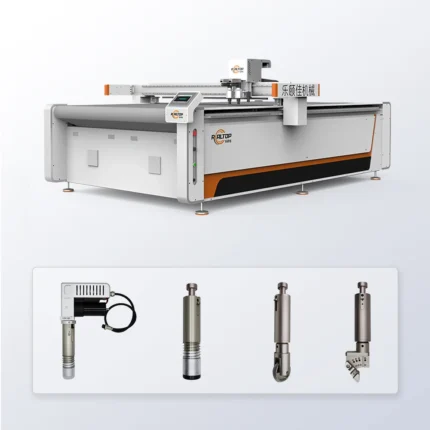
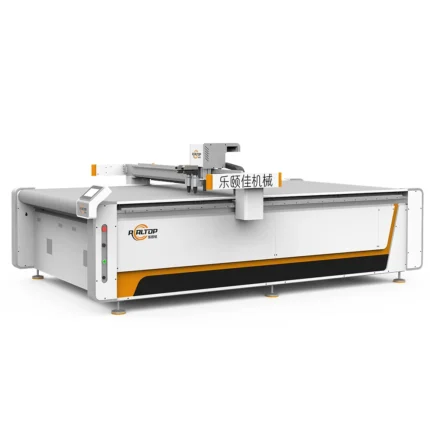

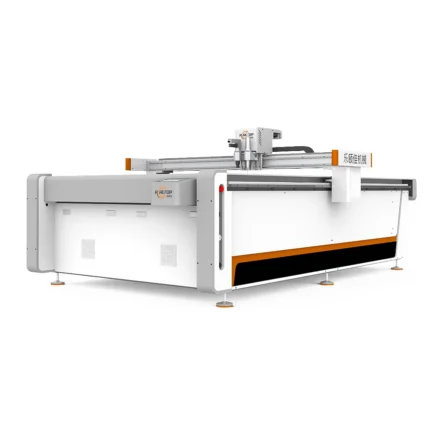
CNC Flatbed Oscillating Knife Cutting Machine 2026
Product Introduction
High-performance CNC Flatbed Oscillating Knife Cutting Machine 2026, ideal for precision cutting of various materials with advanced oscillating knife technology, ensuring efficient and accurate operations for industrial manufacturing needs.Specifications
| Model | 2026 |
| Type | CNC Flatbed Oscillating Knife Cutting Machine |
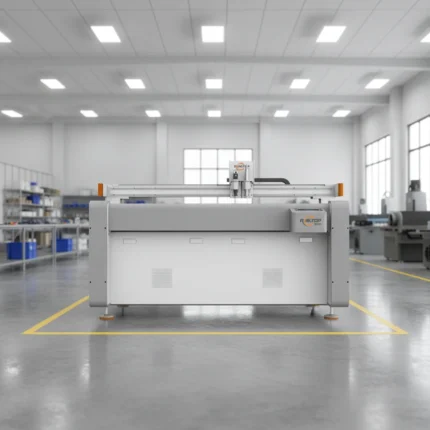
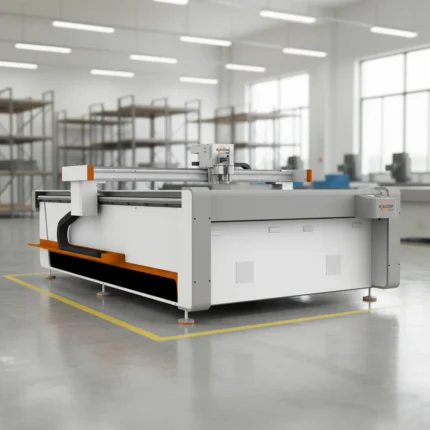


Digital CNC Cardboard Cutting Machine 2026
Product Introduction
High-precision Digital CNC Cardboard Cutting Machine 2026, ideal for efficient cardboard processing with advanced CNC technology, ensuring precise and fast cutting performance for various packaging and craft applications.
Key Specifications
| Model | 2026 |
| Type | Digital CNC Cutting Machine |
| Material | Cardboard |
| Feature | High Precision, Efficient Cutting |
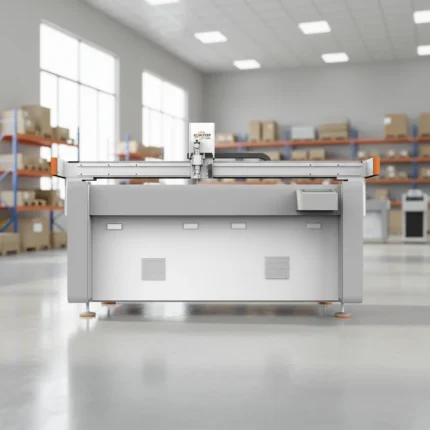

Realtop 2026 CNC Oscillating V-Cut Machine
Product Introduction
Realtop CNC Oscillating V-Cut Machine 2026 is a precision equipment designed for efficient V-cutting operations, ideal for various material processing needs with advanced CNC technology.
Key Specifications
| Model | Realtop CNC Oscillating V-Cut Machine 2026 |
| Type | CNC Oscillating V-Cut Machine |
| Application | Precision V-cutting operations |
| Feature | Advanced CNC technology |

商品评价
There are no reviews yet.