



Packaging CNC Cutting Machine for Cardboard – Laser Process
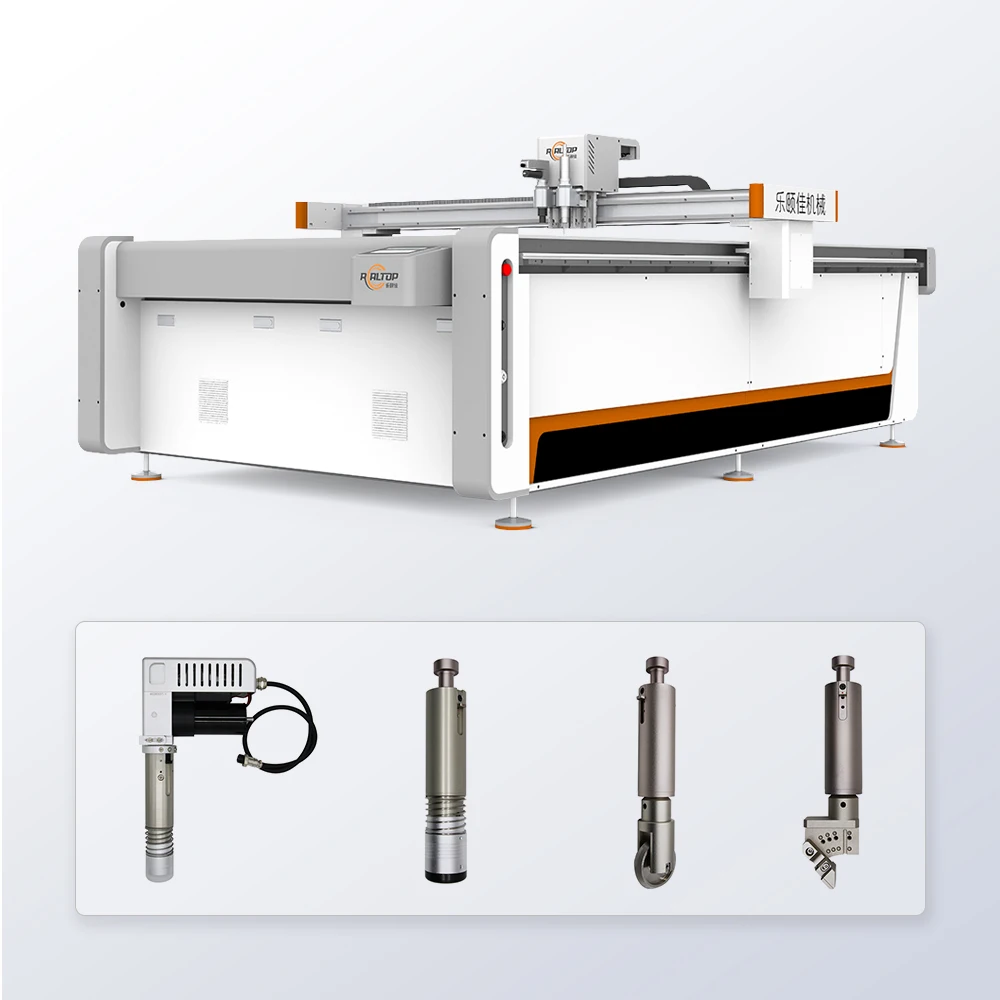
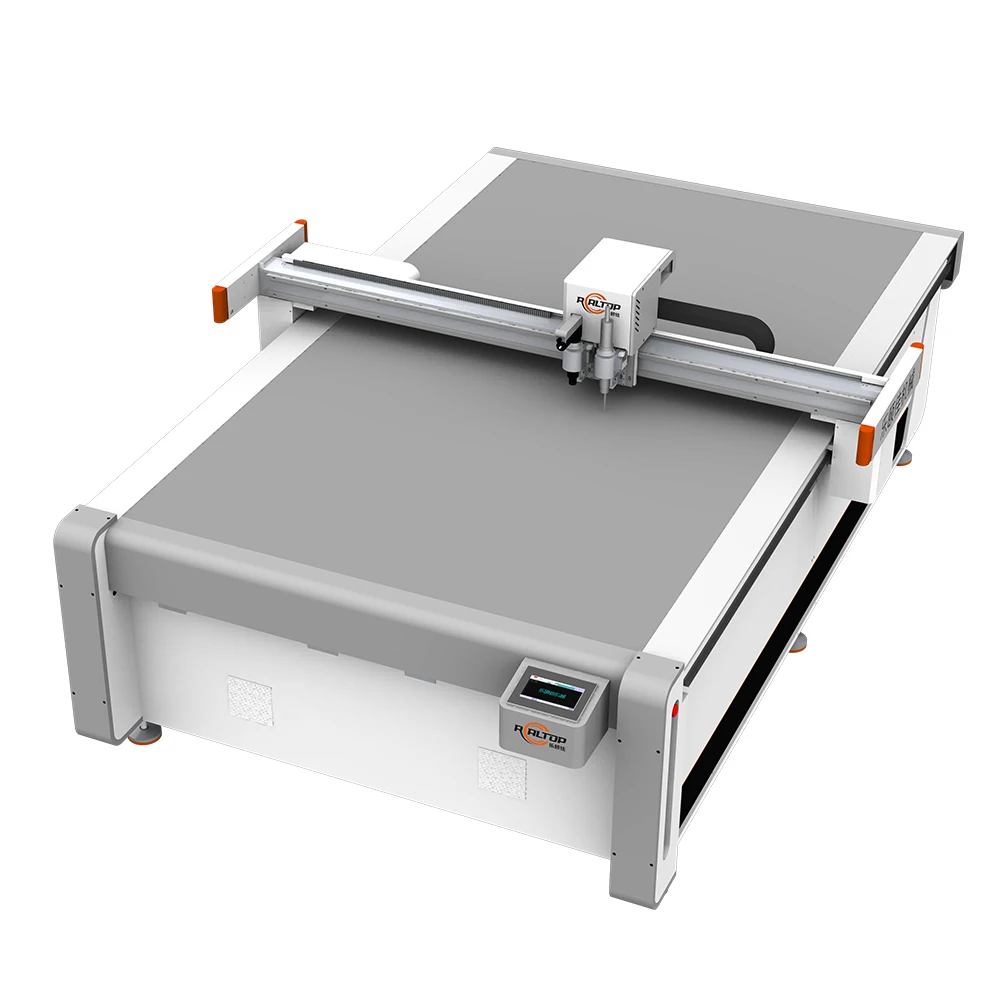
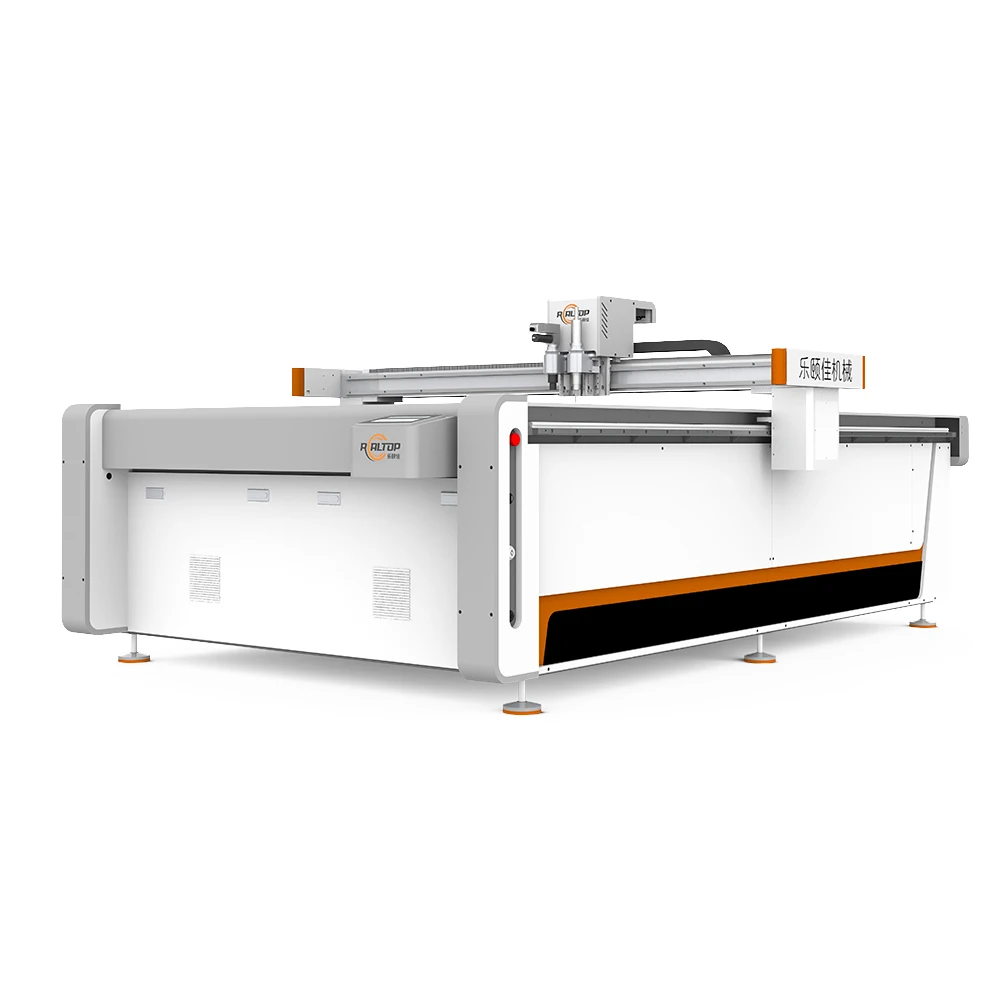
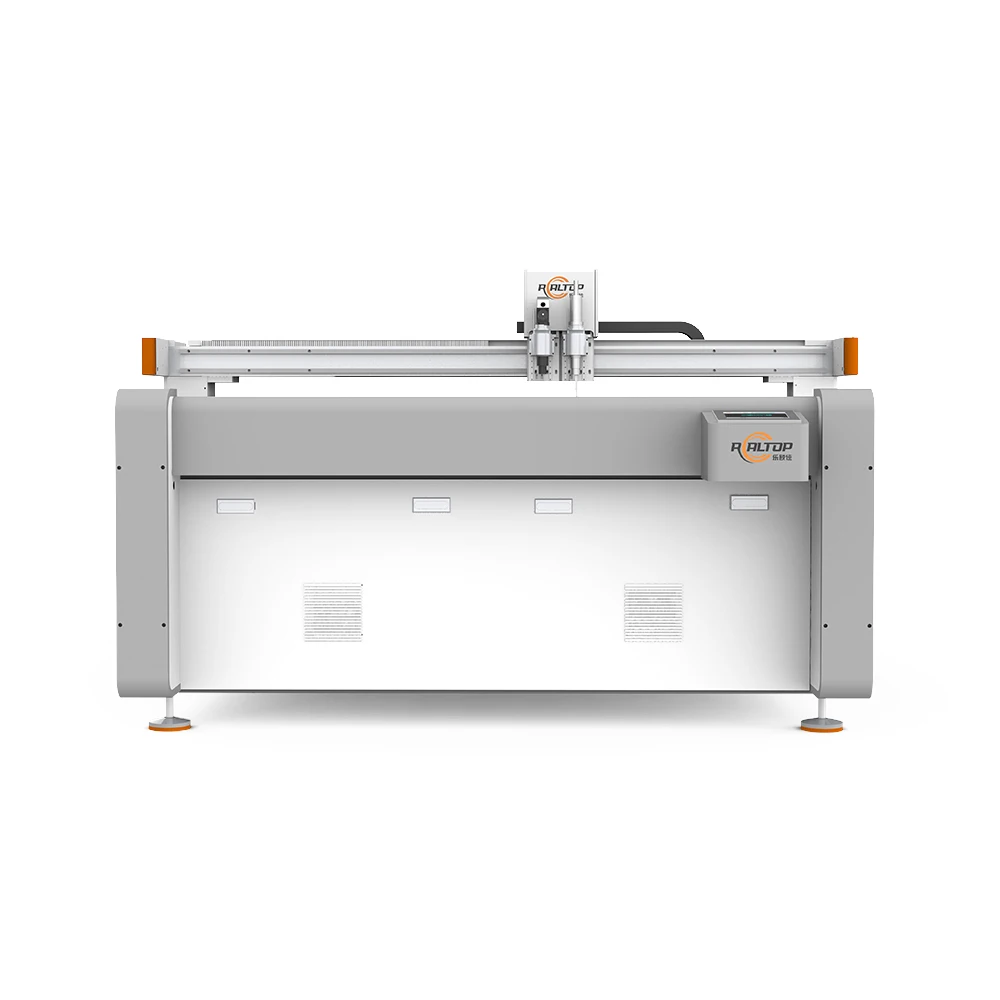
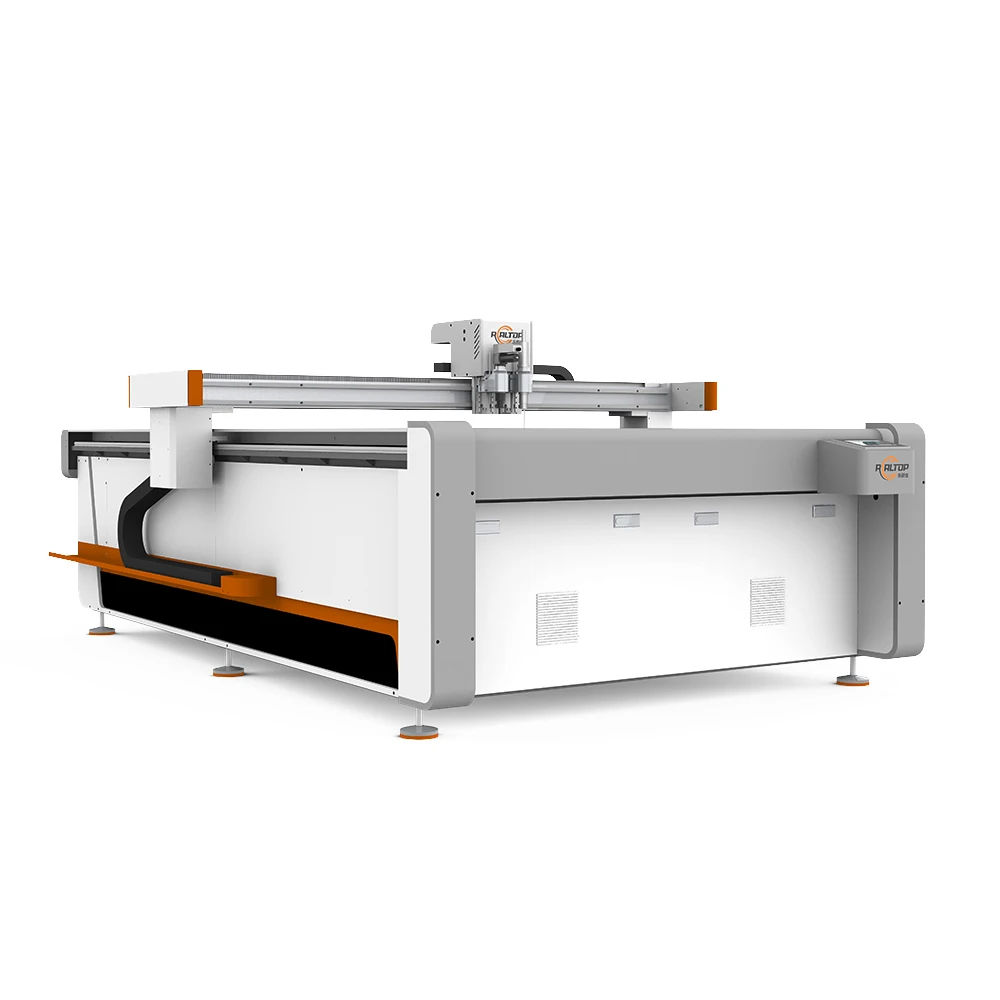
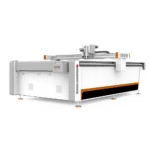
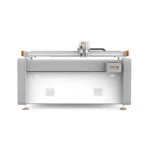
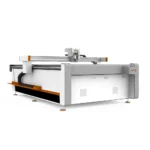
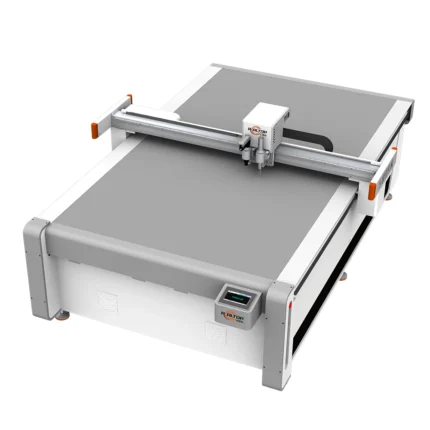
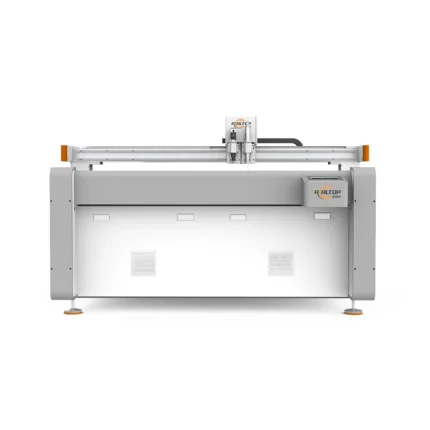
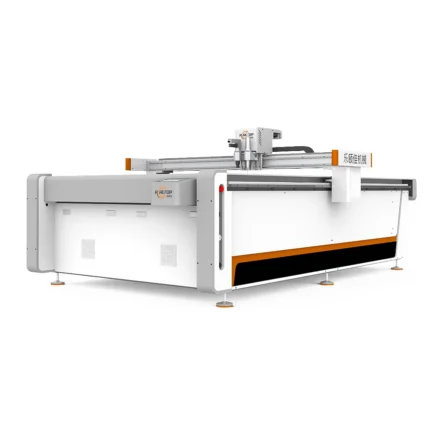
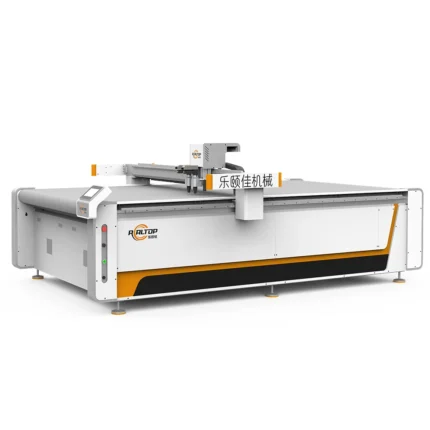
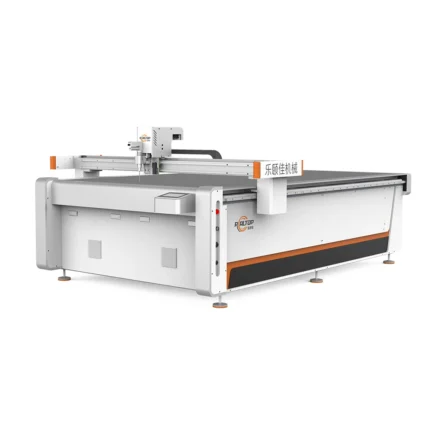
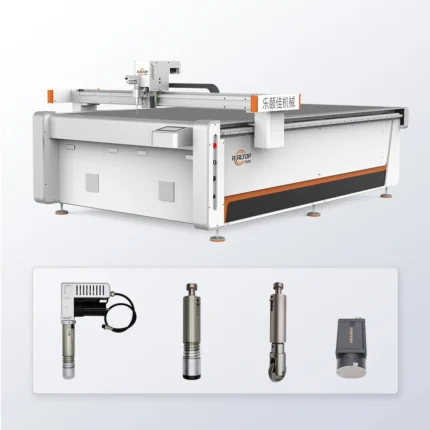
CNC Oscillating Knife Packaging Cutting Machine, 1600×2500 mm Working Area, 9 kW Rated Power, Aluminum Honeycomb Vacuum Table — engineered for corrugated carton sample making, sticker contour cutting and packaging production across varied board grades.
- Delta servo motors with Hiwin linear guides and rack transmission deliver ≤0.1 mm repeatability across the full flatbed
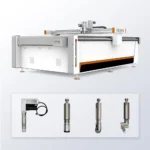
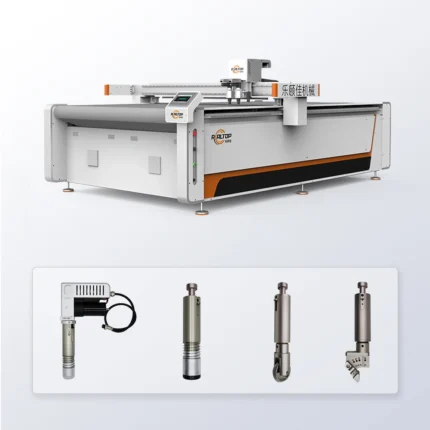
- Swiss imported oscillating knife head performs full cut, half cut and creasing in one setup, eliminating tool changes between operations
- Zoned vacuum adsorption follows the active cutting area to prevent small carton parts from lifting during high-speed passes
- Professional nesting software included with automatic layout, material yield calculation and customizable interface language
We cut samples on your own cardboard stock before commitment, documenting achievable speed and edge quality at your specific flute profile and thickness so the configuration matches your actual production reality rather than a generic demo board.
Laser Process Mastery — Realtop matches CO₂ power ratings to actual acrylic, wood and textile cutting depth rather than quoting peak values, so the beam delivers consistent edge sealing at your production speed.
Technical Specifications
| Parameter | Value |
|---|---|
| Product Type | CNC Oscillating Knife Cutting Machine for Packaging and Cardboard |
| Working Area | 1600 × 2500 mm |
| Machine Dimensions | 3450 × 2300 × 1250 mm |
| Rated Power | 9 kW |
| Voltage | 380V ±10% |
| Vacuum Pump | 7.5 kW |
| Table Construction | Aluminum alloy honeycomb vacuum adsorption flatbed |
| Multifunctional Head | Swiss imported knife with vibration full cut, half cut and cursor location |
| Translational Velocity | 800–2000 mm/s |
| Cutting Speed | 200–800 mm/s (basis not stated in source — confirm material type, thickness and flute profile) |
| Repeatability | ≤0.1 mm |
| Drive System | Digital servo motor (Delta), linear guide (Taiwan Hiwin), rack and pinion |
| Instruction Format | HP-GL compatible |
| Safety Devices | Infrared sensors and emergency stop |
Application Suitability
| Application | Material or Output |
|---|---|
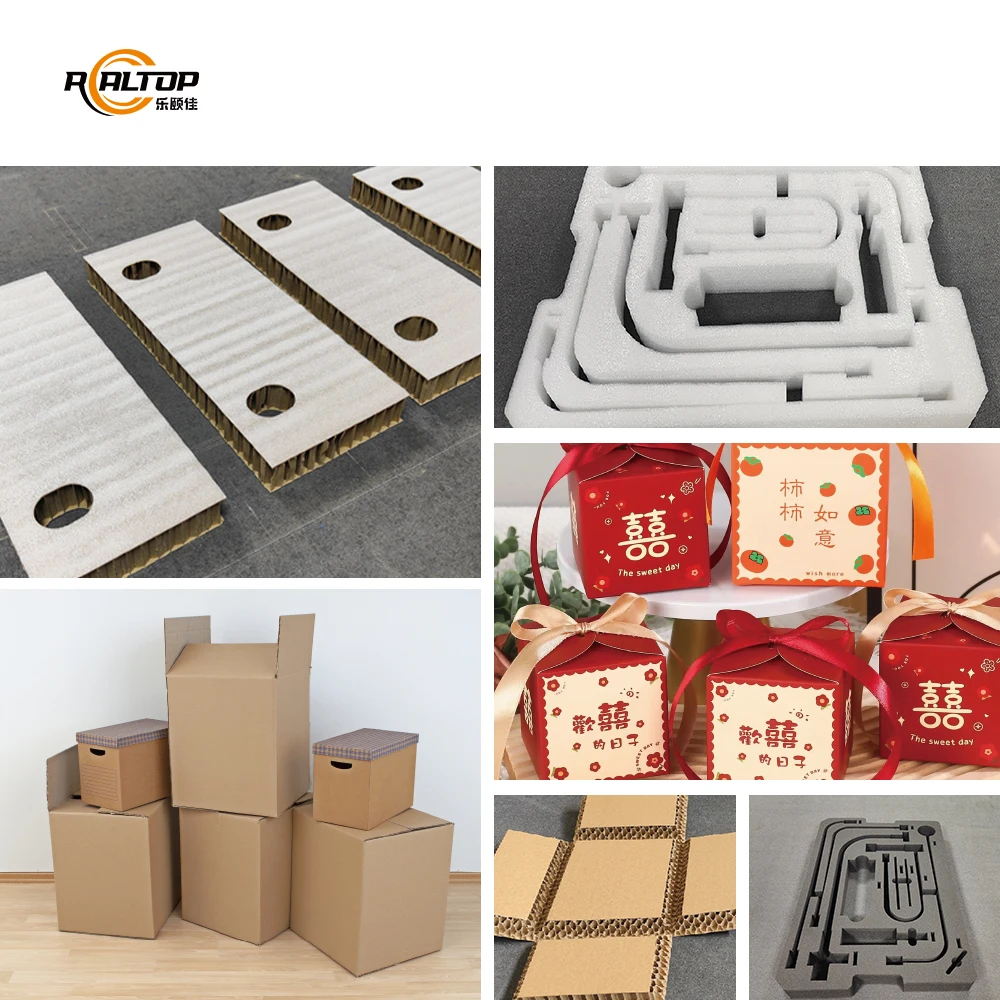
| Carton and corrugated sample making | Single-face and double-face corrugated board across varying flute profiles |
| Packaging box manufacturing | Cardstock and grey board for gift box and premium packaging blanks |
| Sticker and label contour cutting | Self-adhesive vinyl and paper stocks with printed registration marks |
| Express and logistics cartons | Multi-layer corrugated board for shipping box production runs |
| Billboard and signage blanks | Foam board and lightweight composite sheet for display graphics |
Why Board Thickness Matters More Than the Working Area You Quoted
A flatbed sized for your largest sheet will still fail if the oscillating knife cannot penetrate your heaviest flute at production speed. Buyers often anchor their purchase on table dimensions alone, specifying a 1600 × 2500 mm surface to handle full-size corrugated sheets, then discover the machine stalls or leaves ragged edges on double-wall board because the knife stroke and motor torque were never matched to the actual flute profile. I have watched sample runs where a correctly sized table produced clean creases on E-flute but tore through B-flute stock because the half-cut depth was never validated against that specific board [NEED_CITE: corrugated flute classification and crush resistance standards].
The CNC oscillating knife packaging cutting machine must therefore be evaluated on cutting force, knife stroke frequency and vacuum hold-down before the footprint is even discussed. A board that lifts mid-cut will shift the registration and ruin the entire nest.
Knife Stroke and the Flute Profile It Actually Handles
Oscillating frequency and blade stroke determine whether the knife slices cleanly through corrugated medium or crushes the flute structure, leaving a compromised fold line. This CNC oscillating knife packaging cutting machine uses a Swiss imported head capable of full cut, half cut and creasing in one setup, which eliminates the tool-change delay that slows down short-run sample work where a single sheet may require dozens of distinct cut-and-crease paths.
Vacuum Zoning That Follows the Active Cut Path
Honeycomb aluminum tables hold large sheets firmly, but small carton blanks near the sheet edge can still lift if suction is uniform across the entire surface. Zoned vacuum adsorption directs suction only to the region immediately surrounding the active tool path, keeping offcuts and narrow crease lines flat against the bed. Without this, a 7.5 kW pump wastes energy pulling air through empty table area while the actual workpiece starves for hold-down force [NEED_CITE: vacuum hold-down principles in flatbed digital cutting].
Creasing Wheel Pressure and Board Compression Recovery
A crease line that is too deep fractures the liner; one that is too shallow causes the fold to crack during box assembly. Servo-driven creasing pressure, combined with the rack and pinion transmission, keeps wheel depth consistent across the full 1600 × 2500 mm travel, which matters when a single packaging blank contains both heavy structural creases and light fold lines for tuck flaps.
Delta Servo Response at Direction Changes
Sharp corners on carton geometry demand rapid axis deceleration and reversal. Delta digital servos paired with Hiwin linear guides deliver the repeatability needed to hold corner registration within ≤0.1 mm, preventing the rounded-corner defect that forces packaging sample makers to reject prototypes during client approval stages.
The Hidden Cost of Skipping the Sample Cut
Running your own board stock through the machine before commitment is the only way to verify that the oscillating knife frequency, vacuum zoning and creasing wheel pressure all align with your flute profile. I once saw a batch of corrugated prototypes scrapped because the vacuum zones were configured for large-format sheets while the actual job was small hang-tag nests — the tags lifted mid-cut and shifted the CCD registration by several millimeters across every piece [NEED_CITE: material hold-down requirements for small-format digital cutting]. Without a documented sample cutting report, you ship a machine that looks correct on paper but fails on the buyer’s first production morning.
Why Procurement Converges Here
Realtop’s in-house design team covers both knife and laser technologies, allowing the cutting method to be matched to the material rather than forcing one process onto every substrate. Tool head and table configurations are specified per material grade and daily volume, so the oscillating knife stroke, creasing wheel and drag knife are selected as a set rather than offered as a generic package. CCD camera contour recognition is validated on your printed stock before the order is confirmed, and software file format compatibility — DXF, PLT, AI — is verified against your existing nesting workflow. Voltage, plug configuration and control language are locked in before production starts, not discovered at the unloading dock.
Documentation & Verification
- Sample cutting report on your corrugated board stock showing edge quality at confirmed flute profile
- Tool head and table configuration list matched to your material range and daily volume
- Electrical schematic with voltage and frequency confirmed against your facility supply
- Software licence note verifying DXF, PLT and AI file import compatibility
- Factory test record documenting repeatability across the full 1600 × 2500 mm working area
- Operation manual with system language set to your operator requirement
Installation, Commissioning & Support
- Level foundation required to support 3450 × 2300 mm footprint and dynamic cutting loads
- Dedicated 380V ±10% circuit rated for 9 kW machine load plus 7.5 kW vacuum pump
- Machine arrives fully assembled; positioning and utility connection only on site
- First-run parameter tuning on your board stock to set oscillating frequency and creasing depth
- Operator training covering nesting software workflow and vacuum zone configuration
- Spare parts list identifying Swiss knife blades, creasing wheels and vacuum seals as consumables
What to Include With Your Inquiry
Send your board grade, flute profile, typical sheet size and the daily volume you need to produce. Specify the voltage and frequency at your facility, the control language your operators require, and whether your existing design files are in DXF, PLT or AI format. If your packaging blanks mix cutting, creasing and perforating on the same sheet, note which operations are needed so the tool head can be configured before the sample cut is scheduled.
Frequently Asked Questions
Q: How is the right tool head selected for my corrugated board type?
A: The oscillating knife stroke and frequency are matched to your flute profile and board thickness, while the creasing wheel diameter and pressure are set to the liner grade. A sample cut on your own stock documents the achievable edge quality and crease depth before the machine configuration is finalized.
Q: What print mark size does the CCD camera need for reliable contour tracking?
A: Registration mark diameter, contrast ratio and spacing are determined by your print layout and the cutting speed required. We test tracking on your actual printed sheet during the sample run to confirm the camera follows the contour without losing registration at the production feed rate.
Q: Will the nesting software accept my existing DXF and AI files?
A: File format compatibility is verified before the order is placed. You send a representative file set, and we confirm that the included carton nesting software imports, nests and outputs the cut paths correctly, including crease line recognition and tool path assignment.
Q: Can the voltage and control language be set for my local market?
A: Voltage, plug type and frequency are confirmed against your facility supply before production begins. The control interface language is set to your operator requirement, and the electrical schematic shipped with the machine reflects the as-built configuration.
Q: What does the sample cutting report cover before I commit?
A: The report documents cutting speed, edge quality and crease depth achieved on your specific board stock and flute profile, along with the vacuum zoning configuration used. It serves as the acceptance benchmark for the machine when it arrives at your facility.


Related products
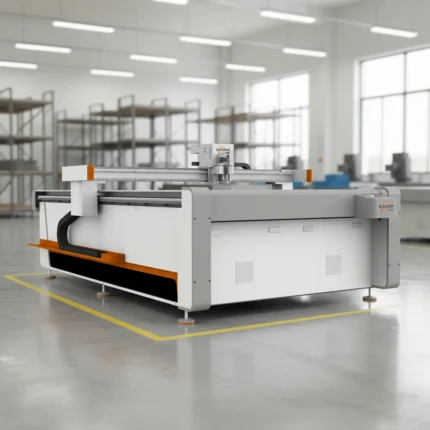
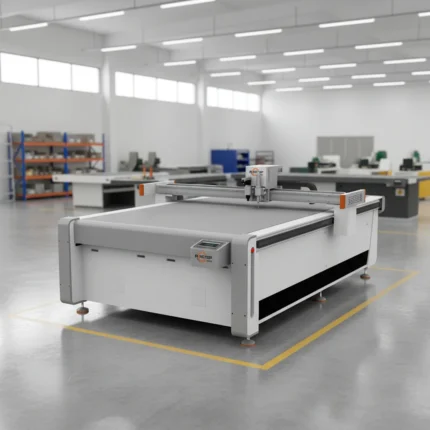
2026 Digital Flatbed Cutting Plotter Auto Corrugated Box Die Cutter
Product Introduction
Digital Flatbed Cutting Plotter 2026, ideal for auto corrugated box die cutting, offering precision and efficiency for professional packaging production.Specifications
| Type | Digital Flatbed Cutting Plotter |
| Model | 2026 |
| Application | Auto Corrugated Box Die Cutting |
| Function | Precision Cutting & Plotting |
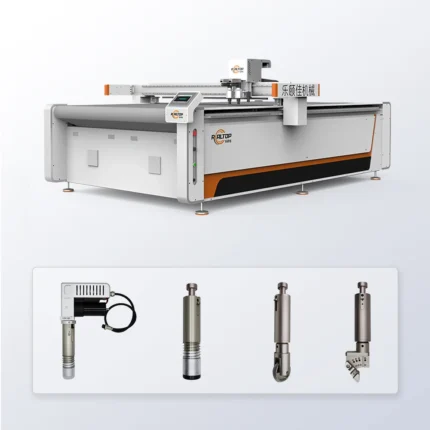
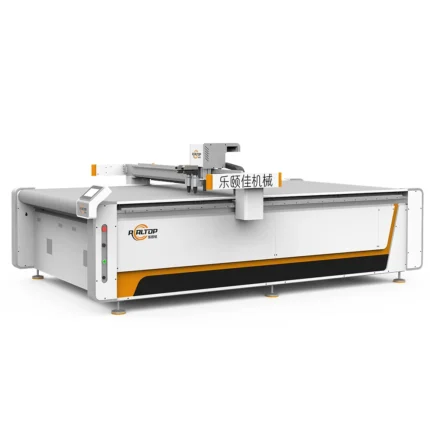
Automatic CNC Cutter Plotter 2026 Flat Bed Cardboard Cutter
Product Introduction
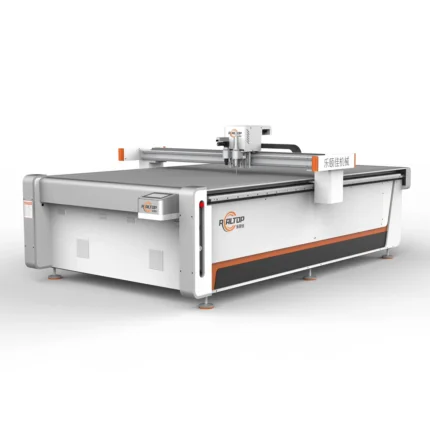
Automatic CNC Cutter Plotter 2026 is a flat bed cardboard cutting machine designed for precise and efficient cutting tasks. Ideal for various cardboard processing needs, it combines advanced CNC technology to deliver accurate results, suitable for manufacturing and packaging applications.Product Parameters
| Type | Automatic CNC Cutter Plotter |
| Model | 2026 |
| Design | Flat Bed |
| Application | Cardboard Cutting |
Automatic Digital Cardstock Cutter 2026 CNC Cutter
Product Introduction
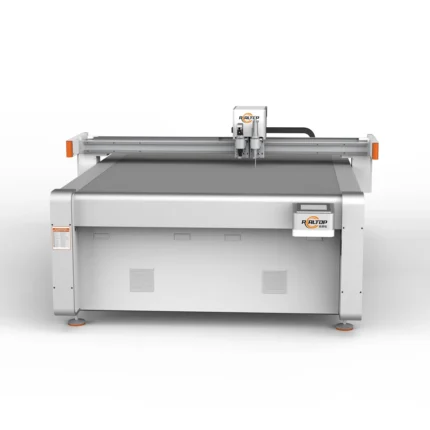
Automatic Digital Cardstock Cutter 2026 is a CNC cutting machine ideal for white cardboard and kraft paper. It offers precise and efficient cutting performance, suitable for various paper processing needs in manufacturing and craft applications.Key Specifications
| Type | CNC Digital Cutting Machine |
| Material Compatibility | White Cardboard, Kraft Paper |
| Operation | Automatic |
| Application | Paper Cutting & Processing |

CNC Flatbed Oscillating Knife Cutting Machine 2026
Product Introduction
High-performance CNC Flatbed Oscillating Knife Cutting Machine 2026, ideal for precision cutting of various materials with advanced oscillating knife technology, ensuring efficient and accurate operations for industrial manufacturing needs.Specifications
| Model | 2026 |
| Type | CNC Flatbed Oscillating Knife Cutting Machine |


Digital CNC Cardboard Cutting Machine 2026
Product Introduction
High-precision Digital CNC Cardboard Cutting Machine 2026, ideal for efficient cardboard processing with advanced CNC technology, ensuring precise and fast cutting performance for various packaging and craft applications.
Key Specifications
| Model | 2026 |
| Type | Digital CNC Cutting Machine |
| Material | Cardboard |
| Feature | High Precision, Efficient Cutting |
商品评价
There are no reviews yet.