


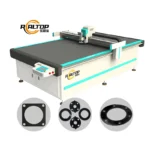

Realtop 2026 PVC Carpet CNC Cutter 1600x3000mm for Gasket – Factory Direct
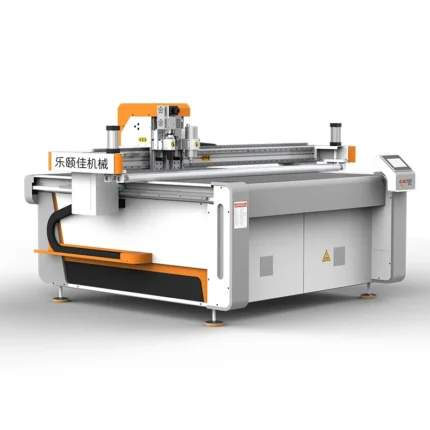
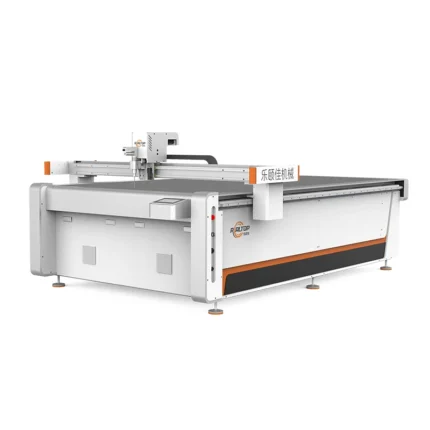
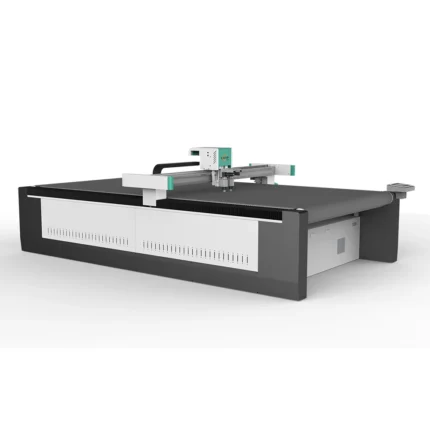
RT-D2516/RT-S2516 CNC Oscillating Knife Cutting Machine for Gasket, 1600×2500mm Working Area, ≤100mm Cutting Depth — purpose-built for gasket and sealing material processing with Swiss imported multi-tool head, CCD camera contour positioning, and zoned magnesium-aluminum vacuum table.
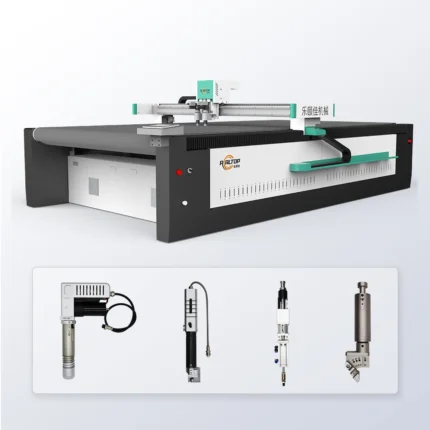
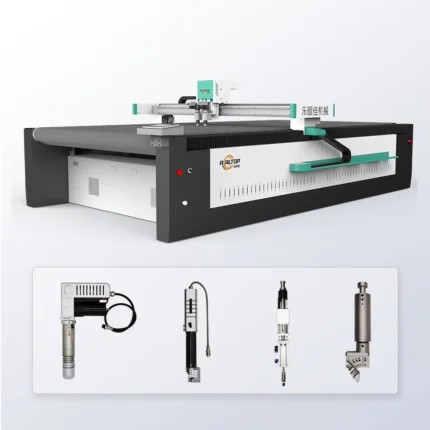
- Oscillating, pneumatic, and drag knife options matched to rubber, PTFE, PVC, and composite material density
- Delta/Panasonic IP67 servo motors with Taiwan Hiwin linear guides delivering ≤0.1mm repeatability
- HP-GL compatible instruction system with multi-language control and 380V±10% voltage configuration
Sample cutting on your own gasket material confirms edge quality, cutting depth, and cycle time before order commitment.
Configurable Tool Head and Zoned Vacuum — the RT-D2516/RT-S2516 platform lets gasket and sealing pad producers match the cutting method to the actual material density and thickness rather than forcing a single blade through every compound.
Technical Specifications
| Parameter | Value |
|---|---|
| Product Type | CNC Oscillating Knife Cutting Machine |
| Model | RT-D2516/RT-S2516 |
| Working Area | 1600×2500mm |
| Machine Dimensions | 3450×2300×1250mm |
| Rated Power | 9kW |
| Working Table | Magnesium-aluminum alloy vacuum adsorption, PVDF fluorocarbon sprayed, anodic and hard oxidation |
| Tool Head System | Swiss imported knife; optional oscillating, pneumatic, high-power vibrating, circular, V-cutting, drag knife, creasing wheel, dotted line, punching, brush |
| Visual Positioning | Small CCD camera mark point, panoramic camera recognition, projection positioning |
| Translational Velocity | 800–1200mm/s |
| Cutting Speed | 200–800mm/s (varies with material) |
| Cutting Thickness | ≤100mm (basis not stated in source — confirm material and density) |
| Repeated Accuracy | ≤0.1mm |
| Transmission | Digital servo motor (Delta or Panasonic, IP67), linear guide, synchronous belt, ball screw; Taiwan Hiwin rail |
| Instruction Format | HP-GL compatible |
| Voltage | 380V±10% |
| Vacuum Pump | 7.5kW, integrated aviation aluminum shell, built-in silencer sponge, noise reduction 35% |
| Safety Devices | Infrared induction blocking, anti-collision, emergency stop |
| Conveyor Belt | Germany imported (optional) |
| Auto Feeding | Available (optional) |
| Language Options | English, Russian, Italian, Chinese; special languages customizable |
| Assembly State | Fully assembled |
Application Suitability
| Application | Material or Output |
|---|---|
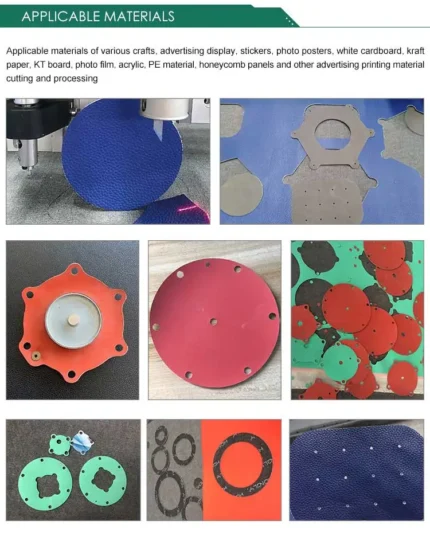
| Automotive gasket fabrication | Rubber, PTFE, graphite composite sheets, cork-rubber blends |
| Industrial sealing pad cutting | PVC, PU, EVA, XPE foam, fiber-reinforced composite sheets |
| Flange and pipe gasket production | Non-asbestos fiber, aramid, compressed graphite on steel core |
| HVAC and ductwork seals | Closed-cell sponge rubber, neoprene, EPDM profiles |
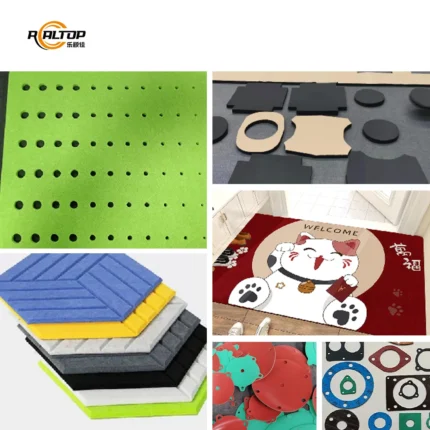
| Soft furnishings contour cutting | Printed carpet tiles, floor mats, upholstery foam with CCD tracking |
Why "Cutting Thickness up to 100mm" Means Nothing Without the Material Context
The depth a blade can reach and the depth it can cut cleanly are two entirely different numbers. When a CNC Oscillating Knife Cutting Machine for Gasket applications is quoted at a maximum thickness, that figure often comes from testing on a soft, uniform foam block under ideal conditions. In a real gasket workshop cutting compressed non-asbestos fiber at 6mm or graphite-laminated steel at 3mm, the forces involved, the blade wear rate, and the edge quality diverge sharply from that headline number [NEED_CITE: industrial gasket material density and compressibility ranges]. A buyer who specifies working area and maximum thickness without locking down the actual material stack-up often discovers ragged edges on dense compounds or crushed surfaces on soft foams — problems that surface only after the machine arrives and the first production run begins.
Matching the Blade to the Compound
The RT-D2516/RT-S2516 carries a Swiss imported base knife and supports a range of interchangeable tool heads — oscillating, pneumatic, drag knife, creasing wheel, and punching among them. For dense rubber and PTFE sheets, the oscillating knife delivers a clean shear cut through the full thickness without delaminating composite layers. For softer foam and sponge gasket materials, a drag knife or high-power vibrating knife follows contours at speed without compressing the stock ahead of the blade edge. A single CNC Oscillating Knife Cutting Machine for Gasket production configured with two or three tool heads on one carriage can handle mixed-material work orders without stopping to swap setups manually.
Vision Positioning for Printed Gasket Sheets
Many automotive and HVAC gasket producers print registration marks on sheet stock and expect the cutter to pick up those marks and align the cut path automatically. The panoramic camera recognition system on this platform scans the full working area, identifies printed mark points, and compensates for sheet distortion or slight misalignment on the table. This is critical when cutting pre-printed cork-rubber or composite gasket sheets where even a 1mm shift produces scrap [NEED_CITE: CNC vision registration accuracy standards for die-cutting]. Without confirmed camera tracking at production translational speeds of 800–1200mm/s, a shop either slows down to let the camera catch up or abandons contour cutting entirely.
How the Table, Drive, and Vacuum Work Together
The magnesium-aluminum alloy vacuum table with PVDF fluorocarbon coating provides a flat, chemically resistant cutting surface that resists scoring from blade passes. Zoned suction through the 7.5kW vacuum pump holds small gasket parts — flange rings, O-rings, valve cover gaskets — flat against the table even at cutting speeds approaching 800mm/s. Beneath the table, Taiwan Hiwin linear guides and Delta or Panasonic IP67-rated servo motors maintain repeated accuracy within 0.1mm across the full 1600×2500mm travel. The ball screw and synchronous belt transmission converts servo rotation into linear motion with minimal backlash, which matters when cutting tight radii on small-bore gaskets where accumulated positioning error shows up as mismatched bolt holes.
The Cost of Skipping the Configuration Conversation
A gasket producer who orders based on working area alone and accepts a standard vacuum layout often faces material lift on small parts — the vacuum zones are too large for pieces under 100mm, and the suction spreads thin across the table surface. Wrong tool head selection produces crushed foam cores on composite gaskets or frayed edges on fiber-reinforced sheets, and the operator blames the machine rather than the configuration [NEED_CITE: vacuum zoning requirements for small-part CNC cutting]. Voltage mismatches discovered after shipment mean rewiring the control cabinet on-site, voiding warranty terms in some cases. These are not machine defects; they are specification gaps that a detailed pre-order dialogue would have closed.
Why Source This Platform Here
The design team covers both knife and laser cutting technologies in-house, so a gasket producer gets a recommendation based on material behavior rather than a single product line being pushed. Every RT-D2516/RT-S2516 ships with a sample cutting report run on the buyer’s own gasket material, confirming edge quality, achievable depth, and cycle time before the purchase order is signed. Voltage, plug type, and control language are verified against the destination market before production begins, not assumed. The HP-GL compatible instruction system is checked against the buyer’s existing nesting software workflow to ensure file format continuity. And the tool head and table configuration list is specified per material and production volume, not pulled from a default bill of materials.
Documentation & Verification
- Sample cutting report on buyer’s gasket material with edge photos and cycle data
- Tool head and vacuum table configuration list matched to specified material stack
- Electrical schematic with 380V±10% voltage confirmation for destination market
- HP-GL file format compatibility note signed off against buyer’s nesting software
- Factory test record with repeated accuracy measurement before crating
- Spare parts list covering blades, vacuum pump consumables, and guide rail lubricants
Installation, Commissioning & Support
- 3450×2300mm footprint requires level concrete floor; verify overhead clearance against 1250mm machine height
- 9kW rated power plus 7.5kW vacuum pump need dedicated 380V circuit with correct breaker rating
- Machine arrives fully assembled; place, level, connect power and vacuum, then run calibration
- First-run parameter setting includes vacuum zone mapping for buyer’s smallest gasket geometry
- Operator training covers tool head changeover, CCD camera calibration, and HP-GL file loading
- Monthly guide rail lubrication and blade inspection schedule documented in maintenance manual
What to Include in Your Inquiry
Share the specific gasket materials you cut — compound type, thickness range, and whether sheets are pre-printed — along with your typical daily sheet volume. Confirm your workshop voltage and frequency, the control language your operators need, and whether your current nesting software outputs HP-GL or requires a different format. If small parts under 100mm are common in your mix, note the smallest piece dimension so vacuum zoning can be configured before build.
Frequently Asked Questions
Q: How is cutting thickness verified for my specific gasket material?
A: We run a sample cut on your actual material at your specified thickness before any order is confirmed. The sample cutting report documents edge quality, achievable depth, blade wear observed, and cycle time. Maximum thickness claims are only meaningful when tied to a specific compound and density, so we never quote a blanket depth figure without testing your material first.
Q: Which tool head should I choose for my gasket materials?
A: It depends on the compound. Dense rubber and PTFE typically require the oscillating knife for a clean shear cut. Soft foam and sponge materials cut better with a drag knife or high-power vibrating knife to avoid compression. We specify the tool head combination based on your material list and verify it during the sample cutting stage before production.
Q: Can the CCD camera track printed marks on my gasket sheets at full speed?
A: The panoramic camera recognition system is designed to identify printed registration marks and compensate for sheet misalignment. During sample testing, we verify tracking accuracy at production translational speeds on your actual printed sheets to confirm the system holds registration within tolerance before committing to the configuration.
Q: What voltage and language will be set before the machine ships?
A: We confirm voltage, frequency, plug type, and control panel language against your destination market requirements before production starts. The RT-D2516/RT-S2516 supports 380V±10% as standard with language options including English, Russian, Italian, and Chinese, plus custom languages. All electrical details are documented in the schematic before dispatch.
Q: How does vacuum zoning handle small gasket parts that lift during cutting?
A: The 7.5kW vacuum pump feeds a zoned magnesium-aluminum alloy table. For shops cutting many small parts, we configure finer vacuum zones so suction concentrates under each piece rather than spreading across the full 1600×2500mm area. Zone layout is planned around your smallest part dimensions during the pre-order configuration stage.


Related products
2026 Spiral Wound Gasket Cutter CE Hot Sale
Product Introduction
Hot Sale 2026 Spiral Wound Gasket Cutter with CE certification, ideal for precise gasket cutting in industrial applications. Made by a leading Chinese manufacturer of welding and cutting equipment.Product Parameters
| Model | 2026 |
| Certification | CE |
| Type | Spiral Wound Gasket Cutter |
| Application | Industrial Gasket Cutting |
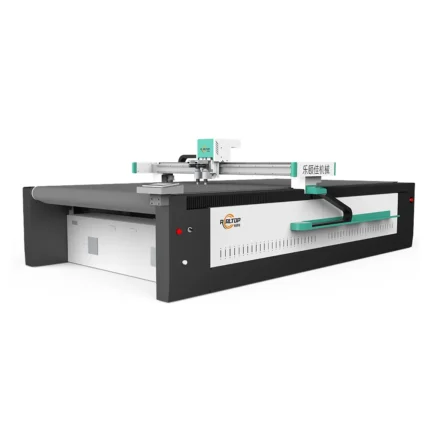
CNC Gasket Cutter 2026 ISO Certified High Quality
Product Parameters
| Certification | ISO Certified |
| Application | Cylinder Head Gasket Cutting |
| Type | CNC Gasket Cutter |
| Quality | High Quality |
| Year | 2026 |
Introduction
This high-quality CNC Gasket Cutter, ISO certified, is designed for precise cylinder head gasket cutting. Ideal for professional manufacturing, ensuring accuracy and reliability in 2026 production standards.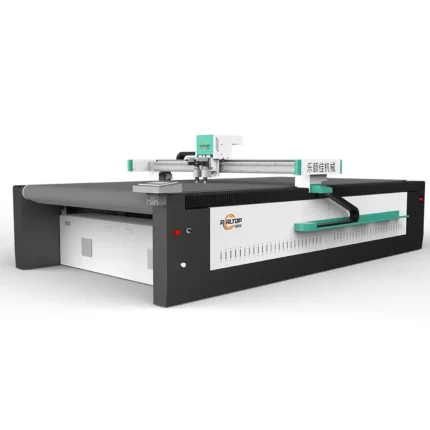
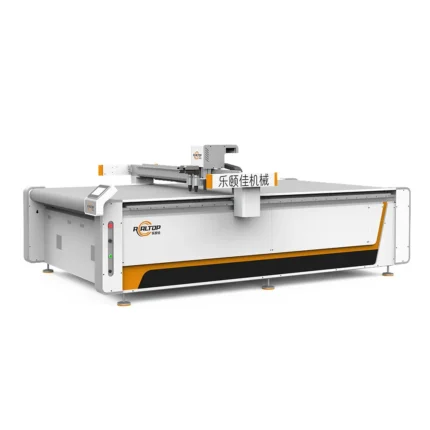
Flexible Material Cutting Machine 005 – Fast, Precise, High Conversion
Product Parameters
| Function | Advertising printing & cutting |
| Demonstration Model | 005 |
| Application | Advertising industry |
| Manufacturer | Chinese leading factory |
| Type | Integrated printing-cutting machine |
Introduction
This Advertising printing and cutting machine (Model 005) is designed for the advertising industry, integrating printing and cutting functions. Manufactured by a renowned Chinese factory, it offers reliable performance for various advertising production needs.
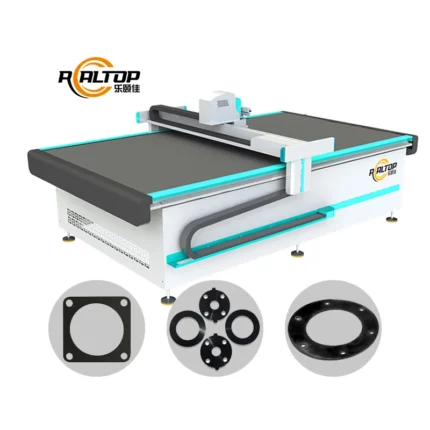
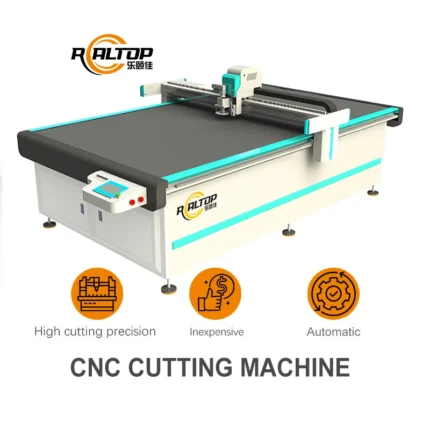
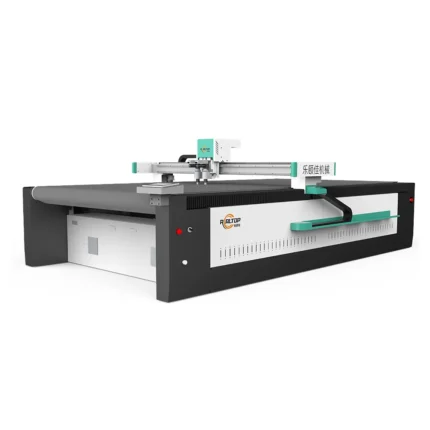
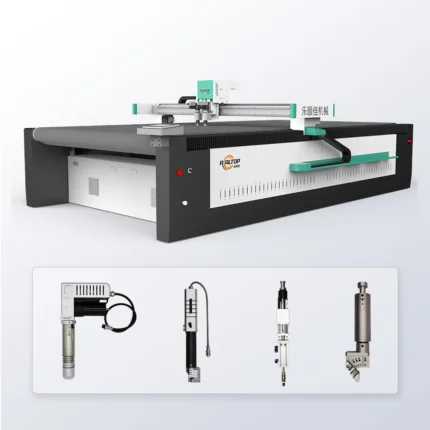
Realtop 2026 CNC Gasket Cutter 1200¡Á2400mm Auto Rubber Cutter
Product Parameters
| Model | Realtop CNC Sealing Gasket Cutter 2026 |
| Working Area | 1200¡Á2400mm |
| Type | Auto Rubber Cutting Machine |
Introduction
Realtop CNC Sealing Gasket Cutter 2026 is an advanced auto rubber cutting machine with a 1200¡Á2400mm working area, ideal for precise and efficient gasket production, manufactured by a leading Chinese welding & cutting equipment factory.
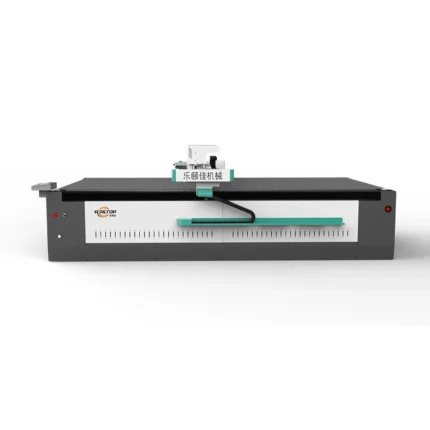
Realtop CNC Gasket Cutter 2026 High-Speed Rubber PTFE Cutter
Product Introduction
Realtop CNC Gasket Cutting Machine 2026, a high-speed digital cutter designed for precise cutting of rubber, PTFE, and cork materials, ideal for efficient gasket production.
Product Parameters
| Model | Realtop CNC Gasket Cutting Machine 2026 |
| Type | High-Speed Digital Cutter |
| Materials | Rubber, PTFE, Cork |

商品评价
There are no reviews yet.