

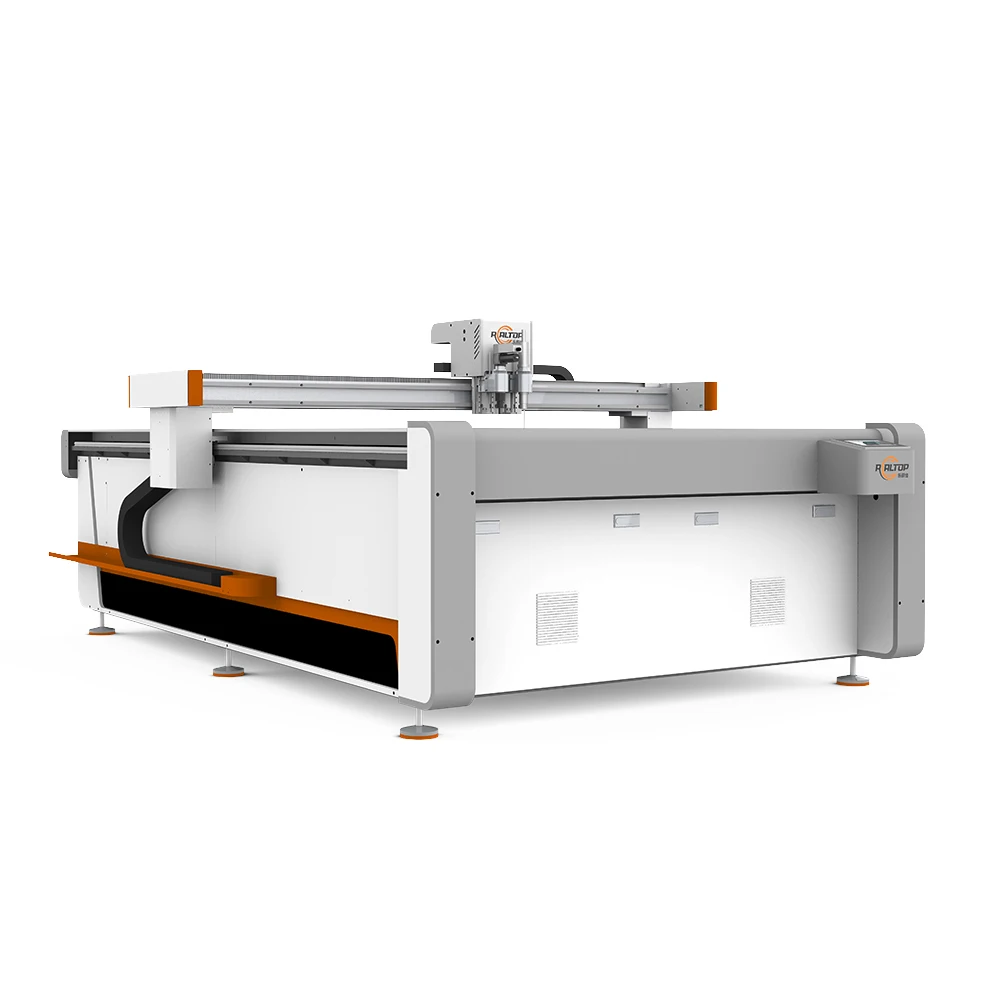
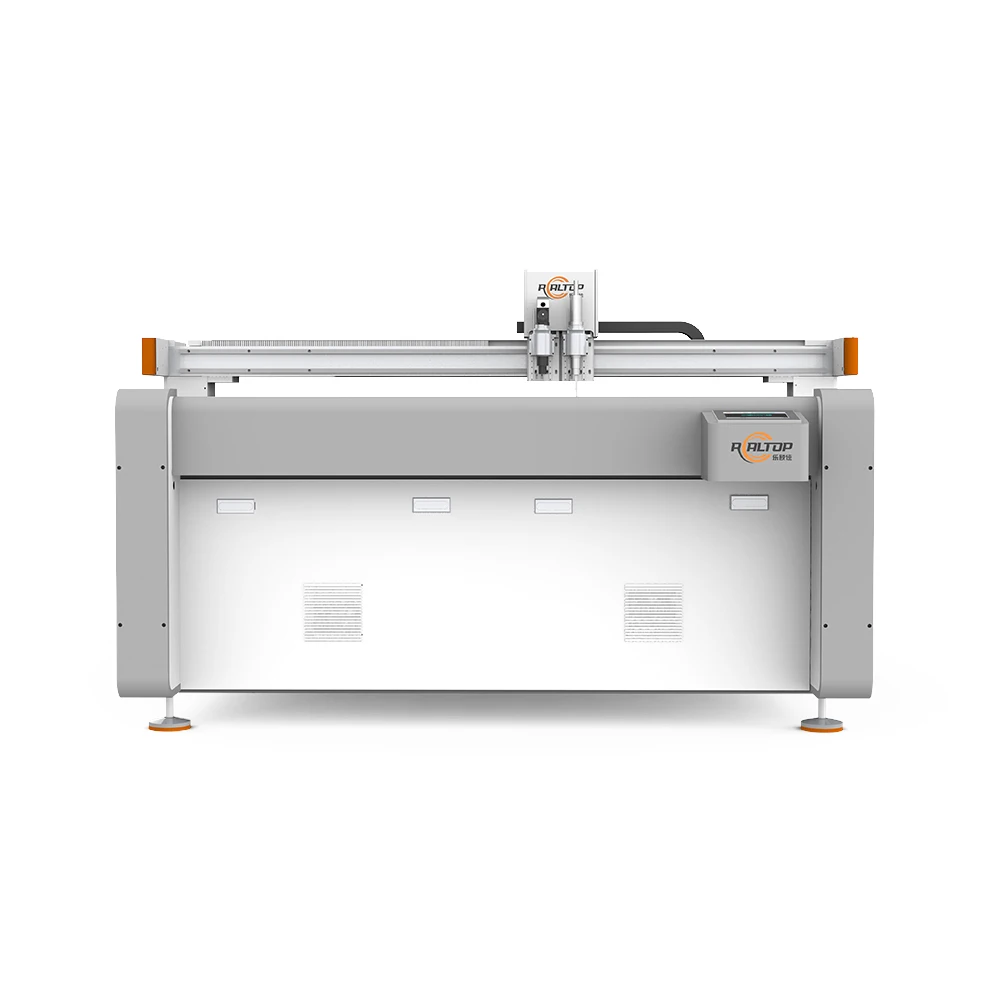
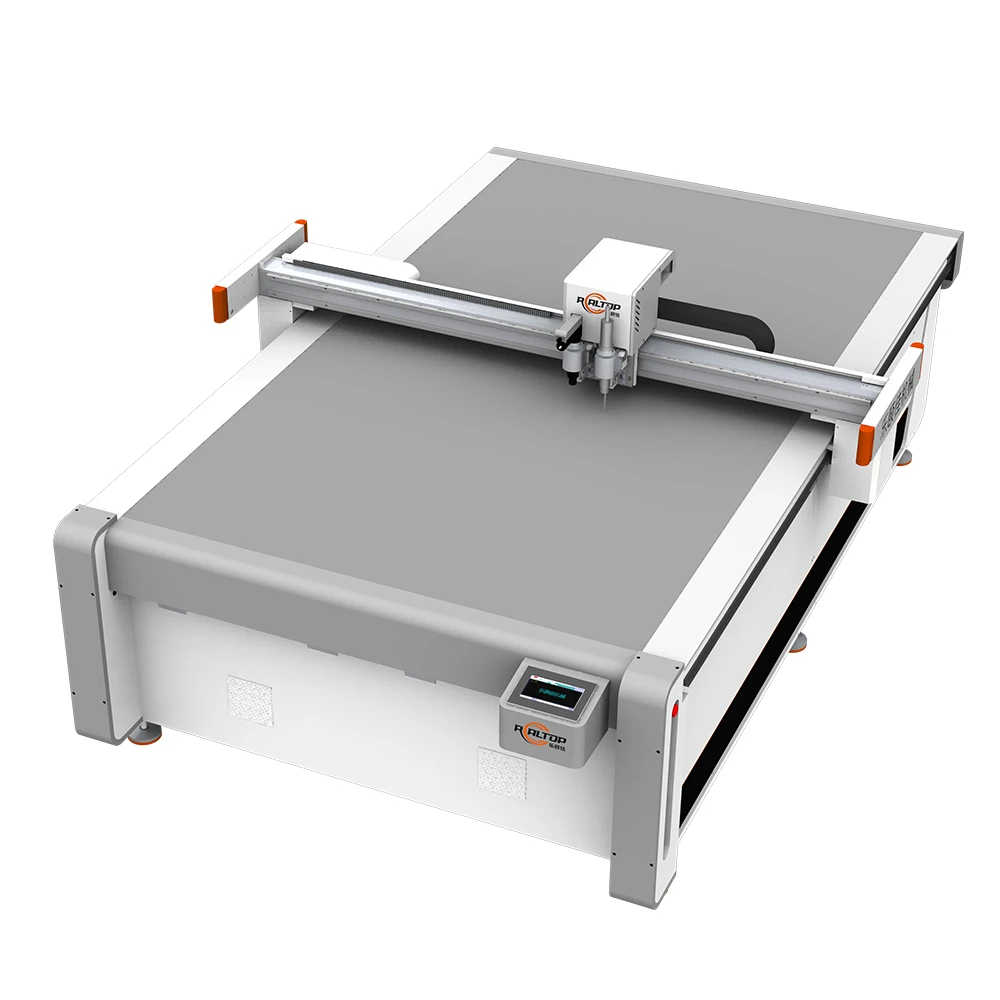
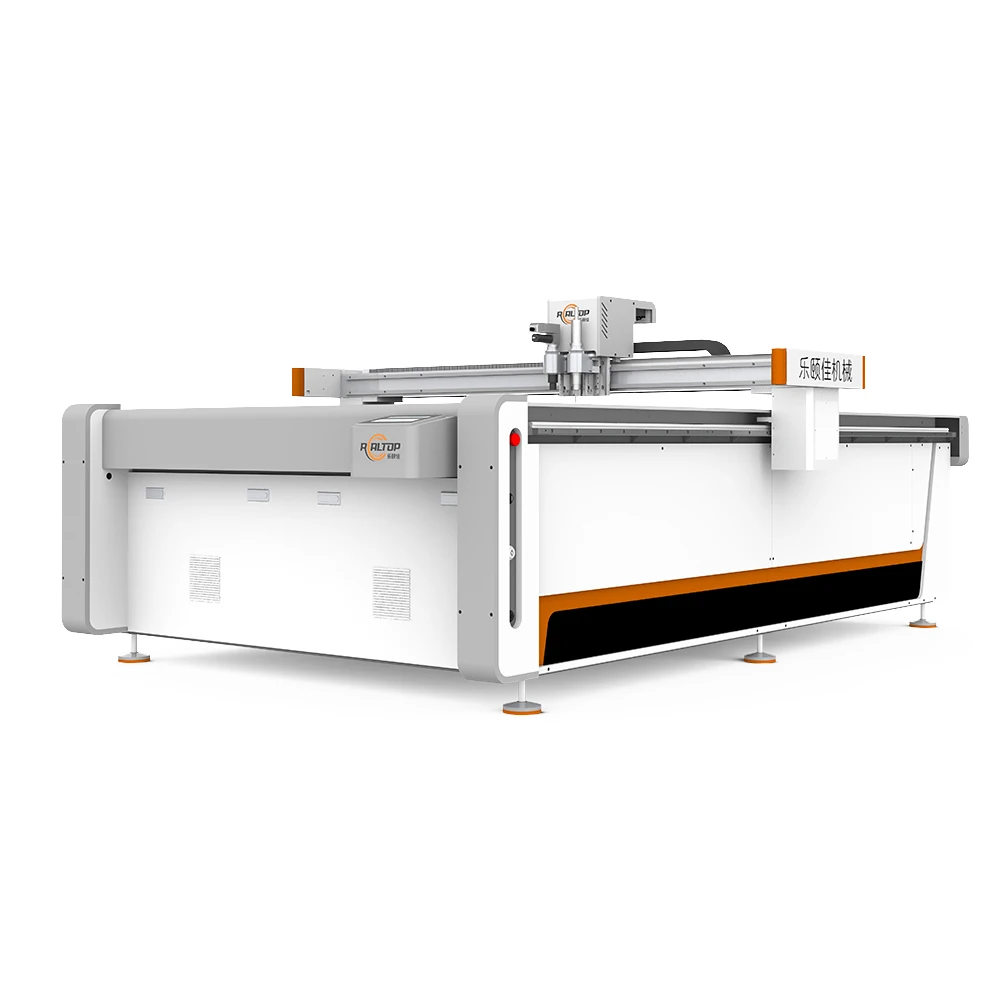
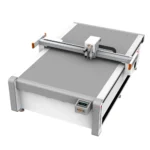
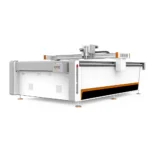

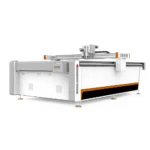
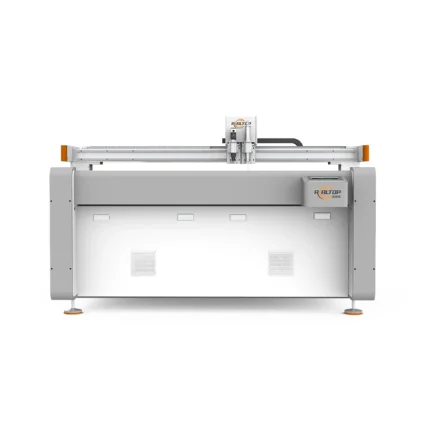
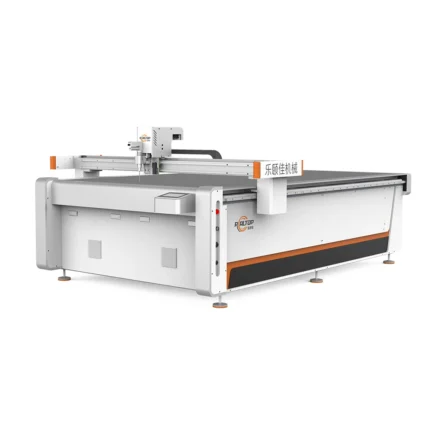
Realtop 2516 CNC Vibrating Knife Cutting Machine for Corrugated Cardboard – OEM Available
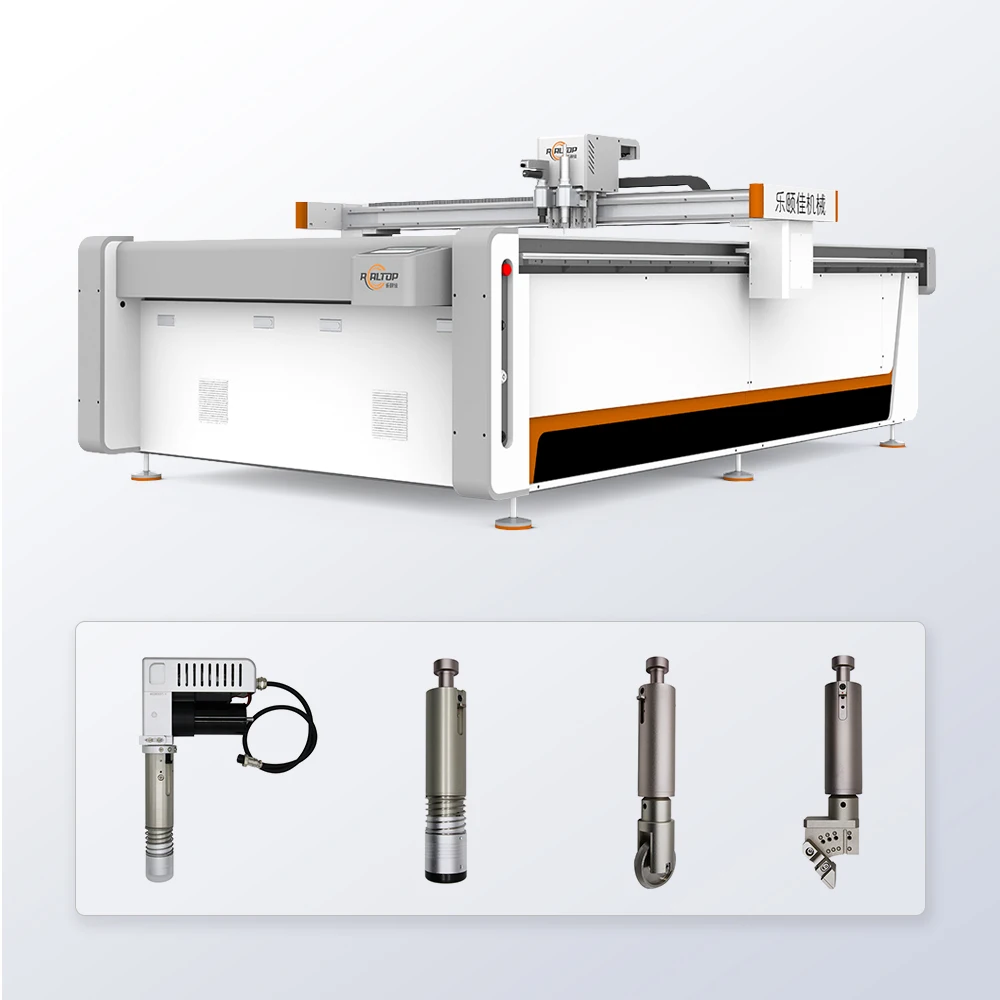
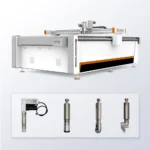
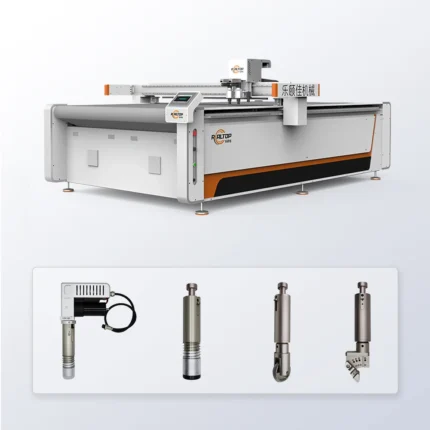
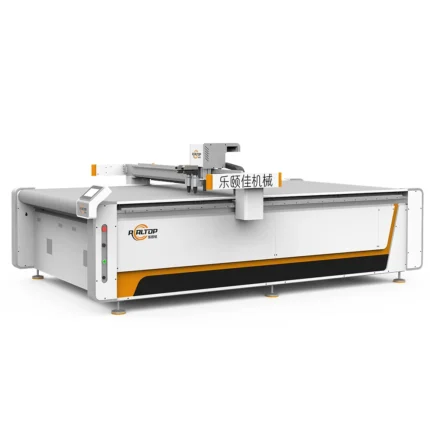
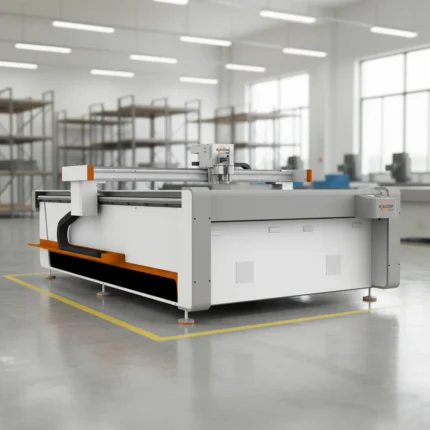
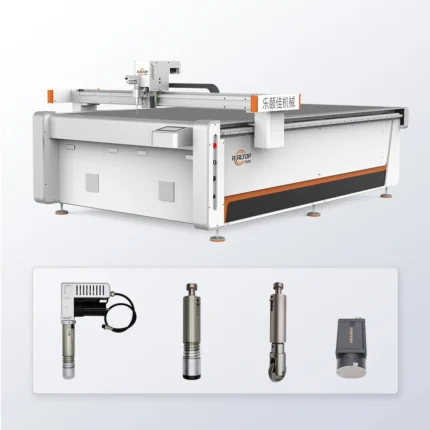
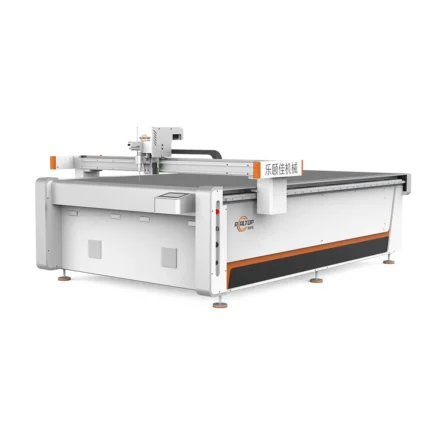
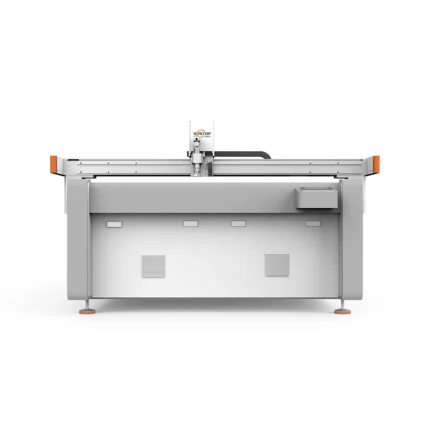
Realtop 1625 CNC Oscillating Knife Cutting Machine, 1600×2500mm Working Area, ≤40mm Cutting Thickness — engineered for corrugated cardboard, greyboard, and foam packaging with interchangeable tool heads including oscillating knife, creasing wheel, and V-groove options.
- Full-surface aluminum bellows vacuum table ensures stable hold-down for small and nested packaging parts
- Dedicated packaging design software accepts PLT, DXF, AI, and PDF imports for seamless workflow integration
- PLC control panel with multi-language support (English, Russian, Italian, Chinese, custom options available)
- Infrared safety sensors and emergency stop device protect operators during high-speed 0-1500 mm/s cutting
In-house design team configures tool head selection and vacuum zoning to match your specific flute profile and production volume, with sample cutting validation on your own material before commitment.
Multi-tool configurability — seven interchangeable heads specified per substrate and flute profile rather than forcing one cutting method across packaging materials.
Technical Specifications
| Parameter | Value |
|---|---|
| Model | 1625 |
| Product Type | CNC Oscillating Knife Cutting Machine |
| Working Area | 1600×2500 mm |
| Tool Head Options | Oscillating knife, Driven rotary knife, Creasing wheel, Kiss cutting tool, Pneumatic knife, Milling tool, V-groove knife |
| Cutting Speed | 0–1500 mm/s |
| Cutting Thickness | ≤ 40 mm (basis not stated in source — confirm material and density) |
| Cutting Accuracy | ±0.1 mm |
| Vacuum Table | Aluminum bellows vacuum table with full-surface adsorption |
| Vacuum Pump Power | 9 kW |
| Control System | PLC control panel |
| Servo Motor Options | Panasonic, Delta, Dorna (availability per order) |
| Voltage Options | 110V, 220V, 380V |
| Software Compatibility | PLT, DXF, AI, PDF; dedicated packaging box structure design software |
| Language Options | English, Russian, Italian, Chinese; special languages customizable |
| Safety Devices | Infrared sensor device and emergency stop device |
| Machine Size | 3300×2100×1350 mm |
| Certification | CE (specific standard to verify) |
Application Suitability
| Application | Material or Output |
|---|---|
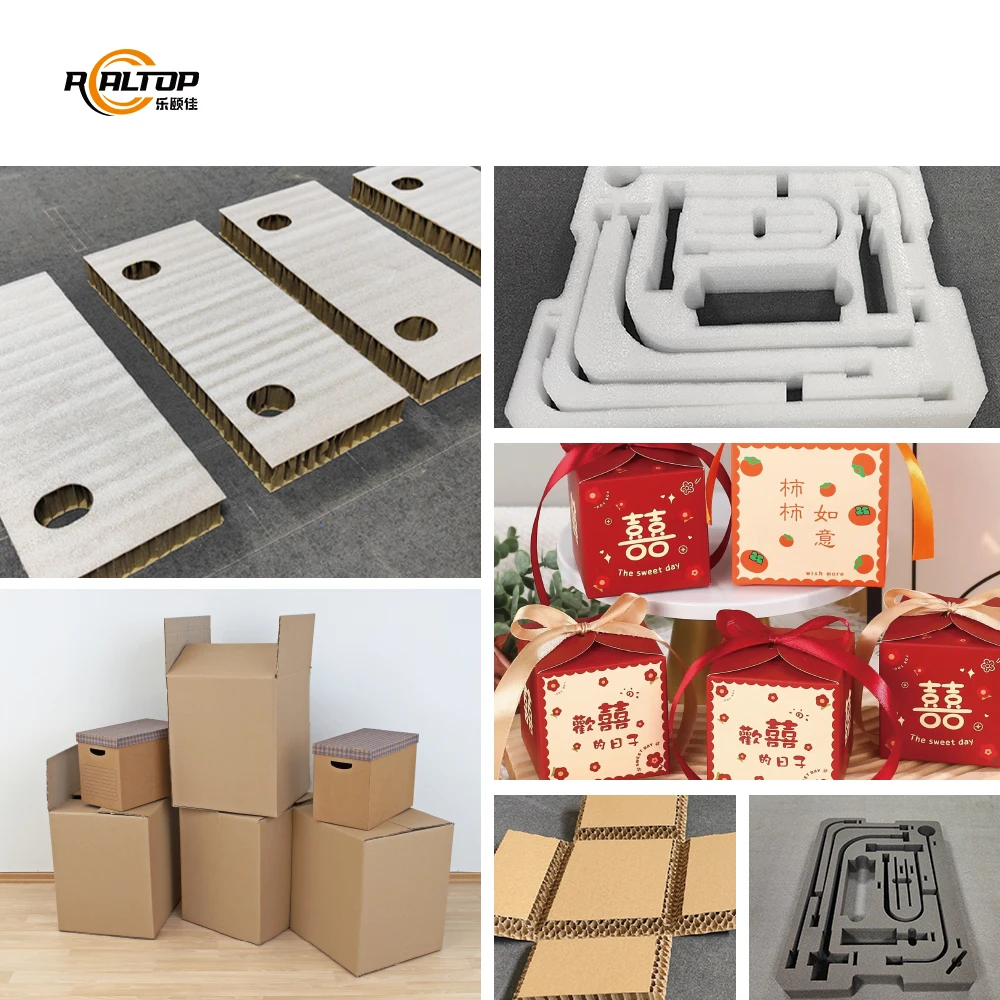
| Packaging prototyping and short-run sample making | Corrugated cardboard (E-flute, B-flute, BC-flute), greyboard, cardstock, art paper, specialty paper |
| Protective packaging insert fabrication | EVA foam, EPE foam, PU foam, rubber mats |
| Non-metal component cutting for mixed-material orders | Velvet and fleece fabric, non-woven fabric, thin plastic sheets, PVC, PET, leather, synthetic leather, composite and adhesive-backed materials |
Why the Voltage Question Must Precede the Price on a CNC Oscillating Knife Cutting Machine
Confirming electrical specifications before quotation prevents costly rewiring and control panel replacements after arrival.
A laser cutting and engraving machine buyer who focuses on working area and speed often discovers, after the crate arrives, that the 380V three-phase supply does not match their single-phase workshop, or that the PLC interface speaks a language their operators cannot read. The cost of retrofitting a control cabinet and reprogramming menus in the field routinely eclipses any savings negotiated at the order stage [NEED_CITE: voltage and frequency standards by export market]. I have watched customers sit with a perfectly functional machine for weeks while waiting for a step-down transformer and a translated manual.
Laser Process Versus Knife Cutting: Where Each Method Earns Its Place
When the substrate is acrylic, MDF, or textile requiring sealed edges, a laser cutting and engraving machine delivers cauterized cuts that prevent fraying without secondary finishing. CO2 tubes rated between 80 W and 150 W handle most non-metal packaging and signage work, while fiber sources above 1 kW address sheet metal and tube profiles. Assist gas selection — compressed air for thin acrylic, nitrogen for clean wood edges, oxygen for mild steel — directly determines cut face quality and post-process cleaning time.
For corrugated board, greyboard, and multi-layer foam inserts, forcing a laser beam through fibrous, air-gap-heavy material produces charred edges and inconsistent depths across flute transitions. An oscillating knife physically shears the fibres, leaving a clean edge that requires no sanding or sealing. The 1625 offers up to 40 mm of cutting depth on low-density foam and board, a range where a laser cutting and engraving machine would demand prohibitive wattage and generate excessive fume extraction requirements.
Extraction, Fume Management, and Workshop Integration
Laser processing of PVC, vinyl, and certain treated boards releases hydrochloric acid and other corrosive by-products that attack machine optics and linear guides within months if extraction is undersized. A properly ducted extraction system with activated carbon filtration adds meaningful floor space and electrical load to the installation [NEED_CITE: CE machinery directive requirements for industrial equipment]. By contrast, knife cutting of the same materials produces dry particulate and offcuts that a standard industrial vacuum and chip tray can manage, keeping the workshop environment and maintenance interval more predictable for small-batch packaging operations.
Reading the Spec Sheet: What the Numbers Actually Mean on the Floor
The 9 kW vacuum pump driving the aluminum bellows table must hold nested packaging blanks flat across the full 1600×2500 mm bed. On small, intricate carton samples — think locking tabs and ventilation slots under 30 mm wide — insufficient hold-down causes the part to lift during the oscillating knife stroke, producing a ragged edge or a crashed tool head. Full-surface adsorption across the entire table area, rather than zoned segments, addresses this directly but demands that the vacuum circuit remain clean of dust and board debris between jobs.
The ±0.1 mm cutting accuracy figure assumes a rigid frame, properly tensioned belts, and servo motors that do not skip steps under the inertial load of rapid directional changes. At cutting speeds approaching 1500 mm/s, the knife must decelerate, change direction, and re-accelerate at every corner. Servo options from Panasonic, Delta, or Dorna offer different torque curves and encoder resolutions; the correct match depends on the thickest, densest board you intend to run at full speed. A machine rated for 40 mm on E-flute may not achieve that depth on high-density greyboard at production pace — sample cutting on your actual stock is the only way to confirm.
The Hidden Cost of a Misconfigured Tool Head
Specifying an oscillating knife for a job that requires a creasing wheel produces scored lines that crack through the top liner instead of folding cleanly — a defect that only appears when the customer’s client tries to assemble the box. A V-groove knife intended for foam inserts, run on corrugated board, will crush the flutes rather than channel them, collapsing the structural integrity of the insert. These errors are not caught at the factory test, because the test runs the material the buyer stated, not the material that actually arrives on the pallet [NEED_CITE: material variability in corrugated and foam packaging supply chains]. I once spent a week at a customer’s site swapping tool heads and recalibrating vacuum zones because their incoming greyboard was denser than the samples they had sent for testing.
Why Source This Configuration Here
In-house design and production cover both knife and laser cutting technologies, so a buyer evaluating a laser cutting and engraving machine for one product line can consult on knife cutting for another, matching the method to the material rather than forcing one process across the entire catalogue. Tool head and table configuration are specified per stated material, thickness, and production volume — not sold as a one-size-fits-all package.
Software compatibility is confirmed in writing before the order is placed: if your design team works in a specific CAD platform, the file import pipeline is tested against your actual DXF, PLT, AI, or PDF output. Voltage, plug type, and control panel language are locked down in the specification document, not left to assumption. Sample cutting on the buyer’s own material — shipped to the factory or sourced locally — produces a report showing edge quality, cutting speed achieved, and tool wear before any commitment is made.
Documentation & Verification
- Machine specification sheet listing confirmed tool heads and vacuum table configuration for your material
- Electrical schematic and voltage confirmation matched to your workshop supply before dispatch
- Sample cutting report on your corrugated flute or foam density with measured edge quality
- Software licence and file format compatibility note verified against your design workflow
- Factory test record documenting cutting accuracy and speed on your submitted material
- Spare parts list with consumable tool blades and vacuum table seals itemised by part number
Installation, Commissioning & Support
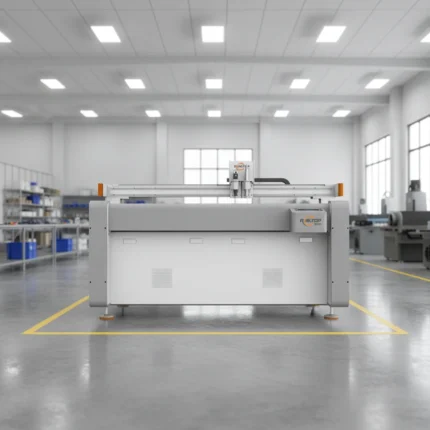
- 3300×2100×1350 mm machine footprint requires level concrete floor with clearance for material loading on two sides
- 9 kW vacuum pump plus servo and PLC load demand a dedicated circuit matching confirmed voltage option
- Machine ships in single crate; frame, gantry, and table assemble on-site with factory-supplied fasteners
- First-run commissioning includes tool head calibration, vacuum seal check, and cutting test on your material
- Operator training covers PLC panel navigation, tool change procedure, and nesting software file import
- Consumable blades, vacuum table seals, and drive belt tension checked at documented maintenance intervals
What to Prepare Before Requesting a Quote
Send the actual material types, thicknesses, and flute profiles you run most frequently, along with a representative DXF or PDF file of your most complex packaging design. Specify your workshop voltage and phase, preferred control language, and daily output target so the configuration — tool heads, vacuum zoning, and servo selection — can be matched before the quotation is issued rather than corrected after shipment.
Frequently Asked Questions
Q: How do I confirm the 40 mm cutting thickness applies to my specific corrugated flute and board density?
A: The ≤ 40 mm figure is measured on a reference material whose density and flute profile are stated in the test conditions. Send a sample of your actual board — including the specific flute type and any adhesive or coating — for a factory cutting test. The resulting report documents achievable depth, edge quality, and cutting speed on your exact stock, so the specification reflects your production reality rather than a generic benchmark.
Q: Which tool head should I use for creasing versus through-cutting on my carton stock?
A: Creasing wheels compress the board along a fold line without severing the liner, while oscillating or pneumatic knives cut completely through the material. The correct head depends on board thickness, flute orientation relative to the crease, and whether the finished carton requires scored folds or separated blanks. A configuration list matched to your specific carton design and board type is issued before order confirmation.
Q: Can the control panel and software be customised for my local voltage and operator language?
A: Voltage is configurable across 110V, 220V, and 380V options, and the PLC interface supports English, Russian, Italian, Chinese, and custom languages on request. Both are confirmed in writing during the specification review stage, not assumed from a default build. The software licence and file format compatibility note verify that your existing design files import without manual re-drawing.
Q: What should I send for a sample cutting test, and what does the report include?
A: Ship a representative sheet of your actual production material — at minimum the thickest and the most abrasive stock you plan to cut. The factory runs your supplied design file and returns a report documenting cutting speed, edge quality photographs, tool wear after a defined run length, and vacuum hold-down performance on nested small parts.
Q: Will the packaging design software accept files from my existing CAD workflow?
A: The dedicated packaging box structure design software imports PLT, DXF, AI, and PDF formats. Before the order is placed, your design team sends a sample file from your current platform, and the import is tested for layer recognition, dimension accuracy, and nesting behaviour. The compatibility note in your documentation confirms which formats have been verified.


Related products
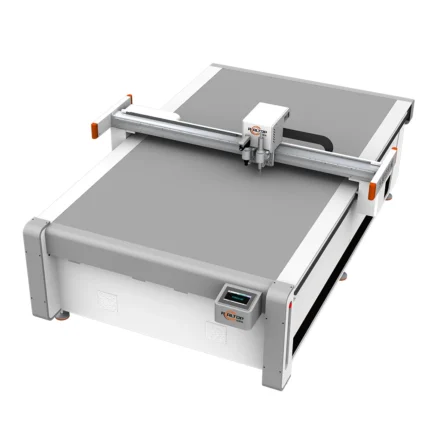
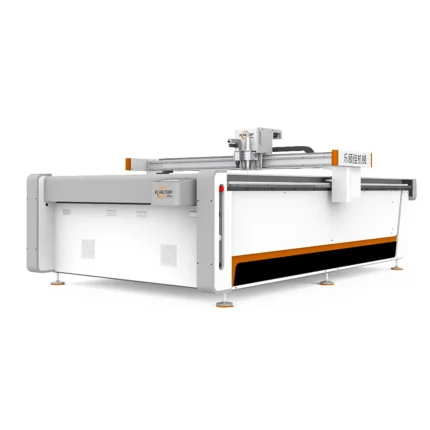
CNC Vibrating Knife Cutter 2026 Custom Cartons Packaging
Product Introduction
CNC Vibrating Knife Cutter 2026 is ideal for custom cartons & packaging, offering precise cutting solutions for various materials. Engineered by a leading Chinese welding & cutting equipment manufacturer, it ensures efficiency and accuracy for packaging production needs.Key Specifications
| Model | 2026 |
| Type | CNC Vibrating Knife Cutter |
| Application | Custom Cartons & Packaging |
| Manufacturer | Chinese Leading Factory |
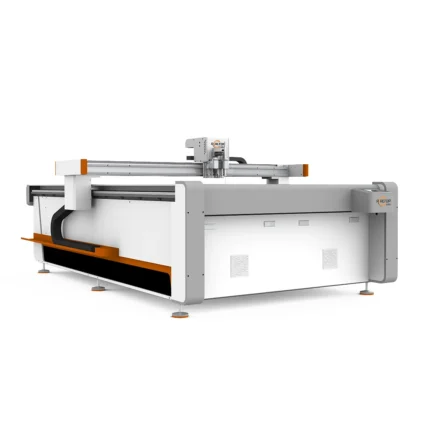
Digital Box Cutter 2026 Oscillating Knife Cardboard Cutter
Product Parameters
| Model | Digital Box Cutter 2026 |
| Cutting Type | Oscillating Knife |
| Material | Corrugated Cardboard |
Introduction
Professional oscillating knife cutting machine for corrugated cardboard. Ideal for precise, efficient cutting in packaging production. Reliable performance from China's leading welding & cutting equipment manufacturer.


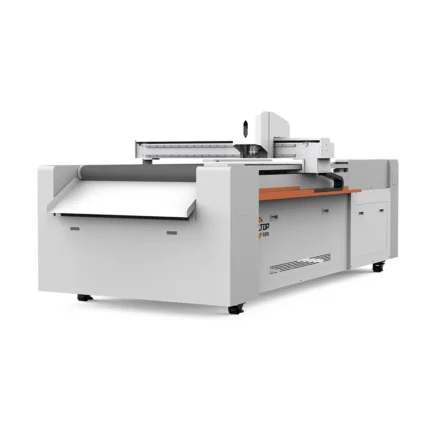
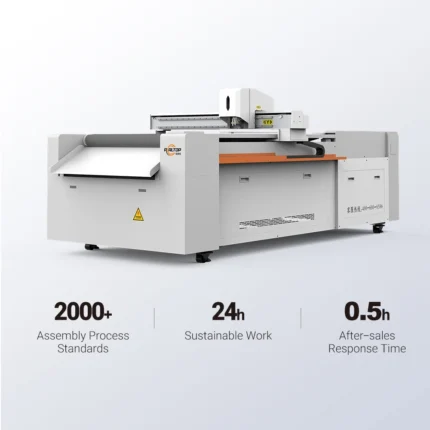
Digital CNC Cardboard Cutting Machine 2026
Product Introduction
High-precision Digital CNC Cardboard Cutting Machine 2026, ideal for efficient cardboard processing with advanced CNC technology, ensuring precise and fast cutting performance for various packaging and craft applications.
Key Specifications
| Model | 2026 |
| Type | Digital CNC Cutting Machine |
| Material | Cardboard |
| Feature | High Precision, Efficient Cutting |
Realtop 2026 Digital Box Cutter High-Speed Corrugated Board
Product Introduction
Realtop Digital Box Cutting Machine 2026 is a high-speed solution for corrugated board cutting, designed for efficient and precise box production in manufacturing settings.Key Specifications
| Model | 2026 |
| Type | Digital Box Cutting Machine |
| Application | Corrugated Board |
| Feature | High-Speed Cutting |
商品评价
There are no reviews yet.