

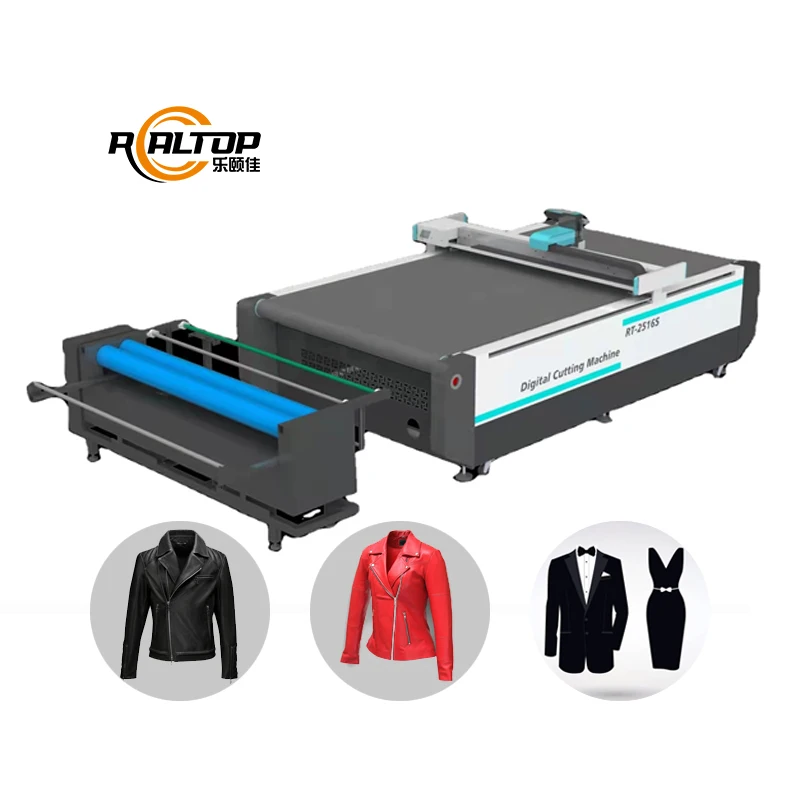
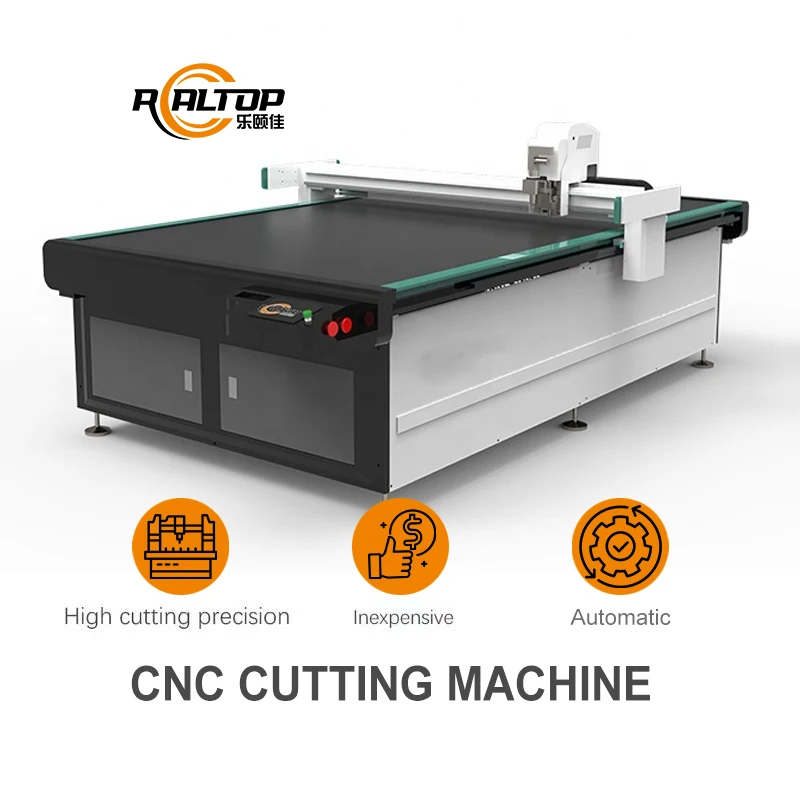
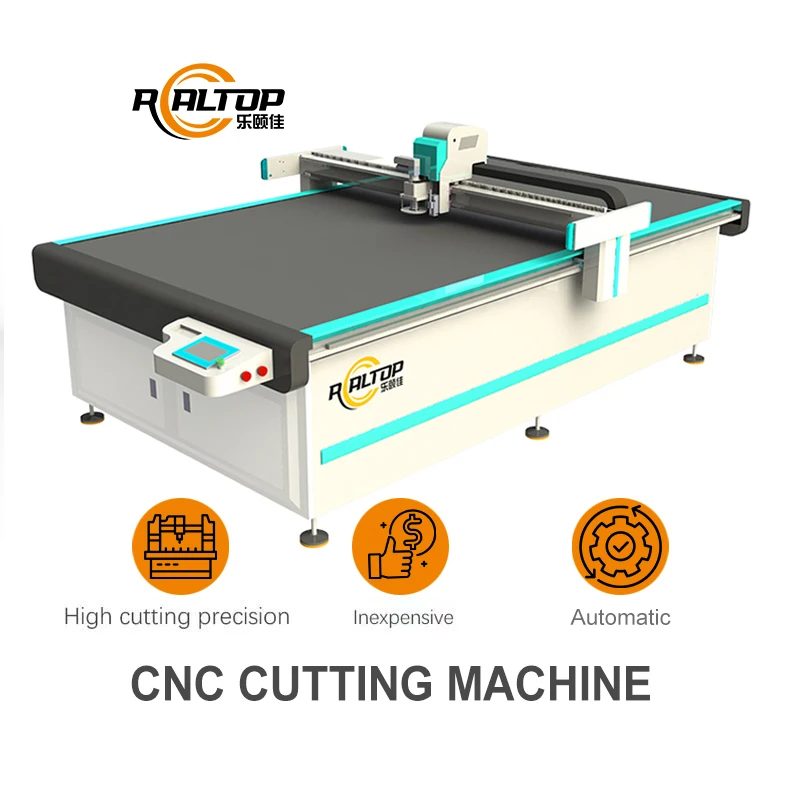
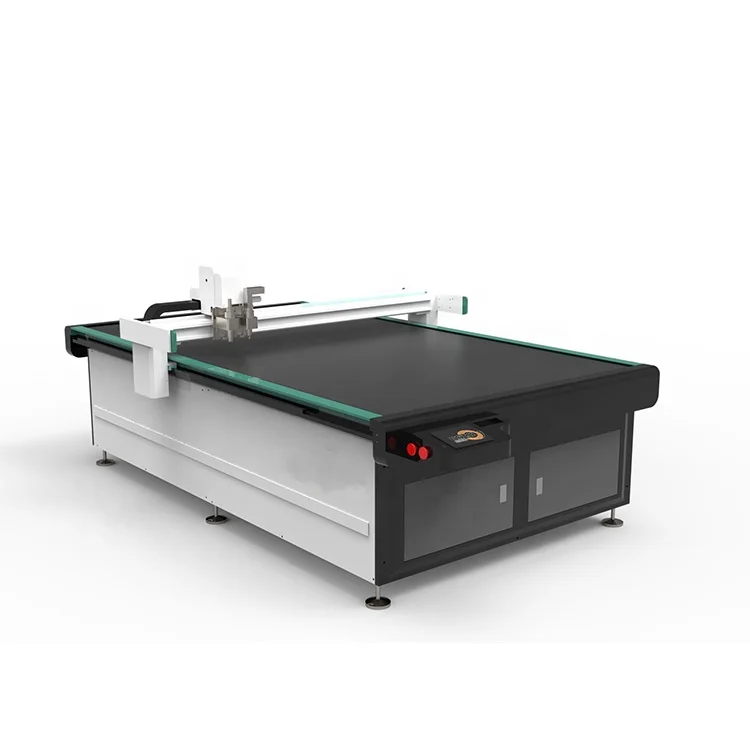


RT-D2516 RT-S2516 Cloth CNC Cutting Machine – Manufacturer
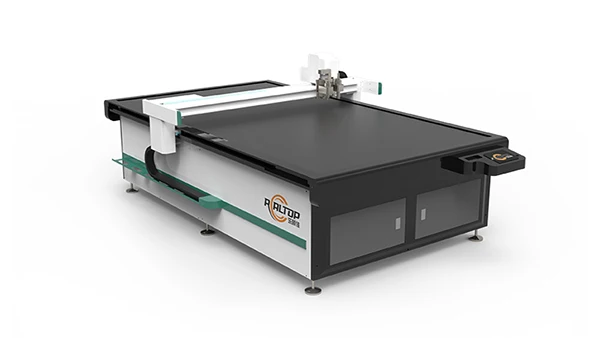
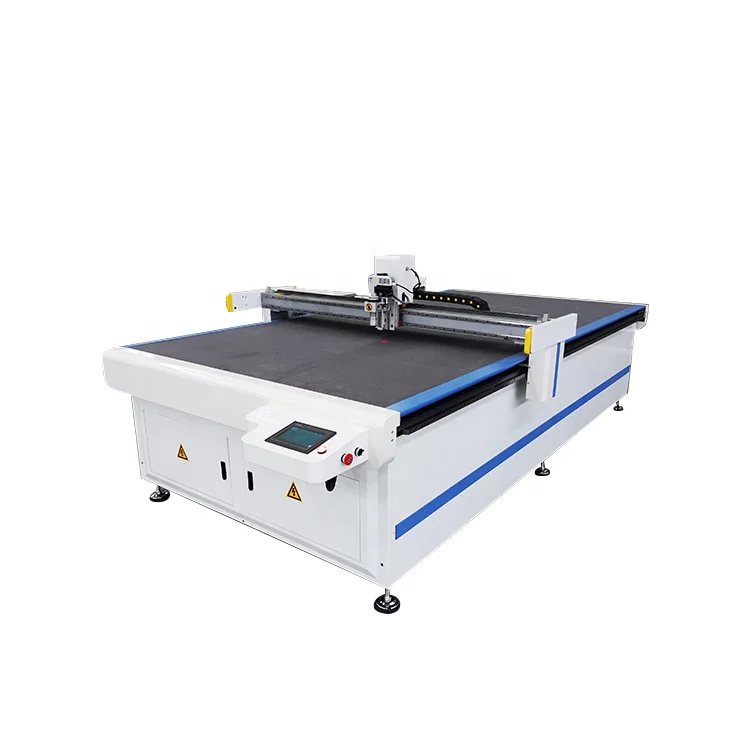
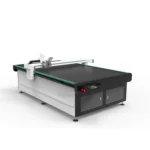
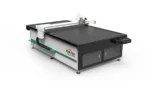
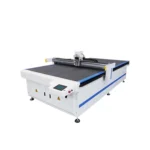
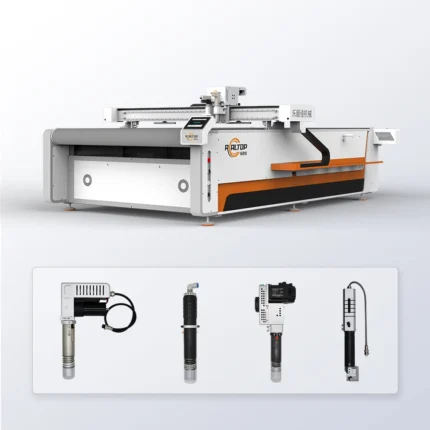
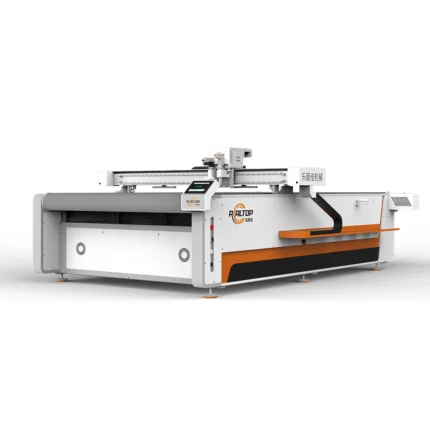
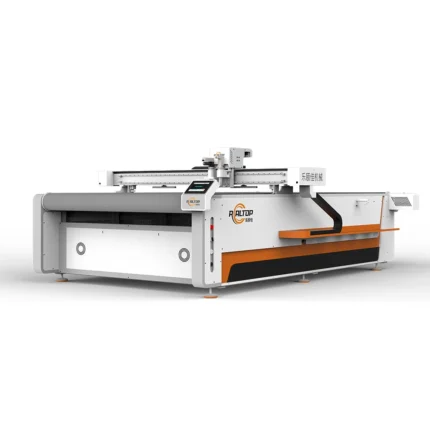
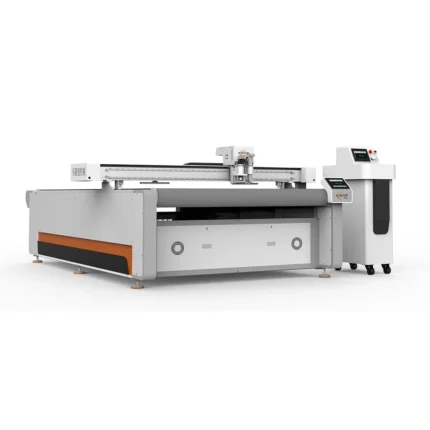
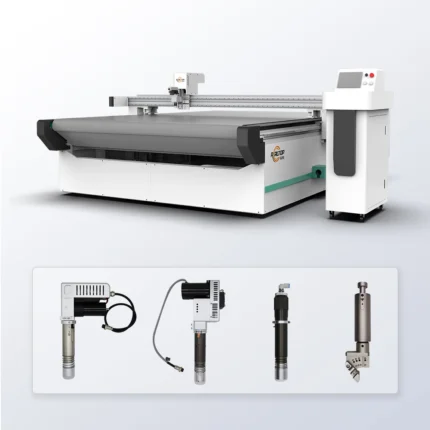
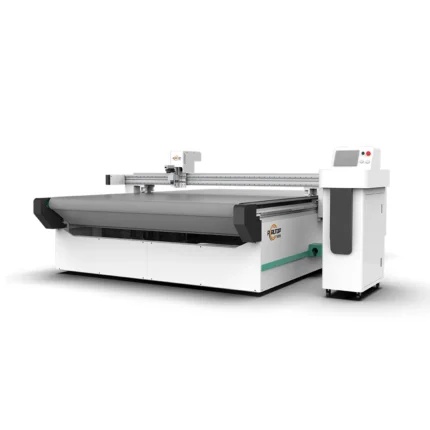
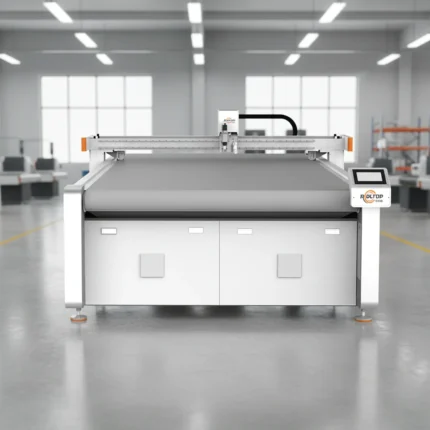
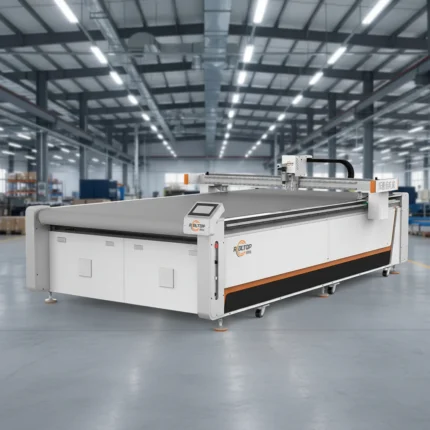
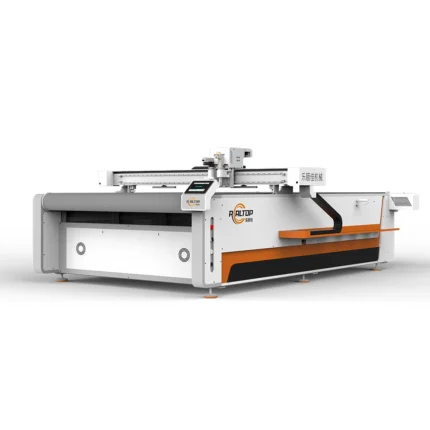
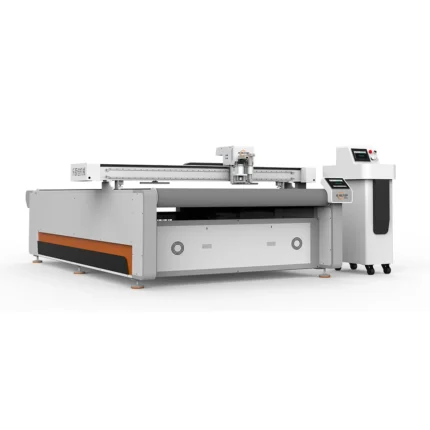
RT-D2516/RT-S2516 Cloth CNC Cutting Machine, 1600×2500 mm Working Area, 7.5 kW Vacuum, CCD Positioning — configured with oscillating knife, drag knife and creasing wheel tool heads to match fabric, leather and composite material thickness before order.
- Multi-tool head and magnesium-aluminum vacuum table deliver burr-free, burn-free cuts at 800–1200 mm/s translational speed
- Delta servo motor with Hiwin linear guides ensures ≤0.1 mm repeated accuracy across full bed
- Panoramic camera and mark-point CCD track printed contours at production speed
Sample cutting on your own material confirms edge quality, depth and throughput before commitment.
Precision Knife Cutting Systems — RT-D2516 and RT-S2516 oscillating knife platforms configured with material-specific tool heads and vacuum zoning to eliminate edge crushing on coated composites and multi-layer fabric stacks.
Technical Specifications
| Parameter | Value |
|---|---|
| Product Type | CNC Oscillating Knife Cutting Machine |
| Model | RT-D2516 / RT-S2516 |
| Working Area | 1600 × 2500 mm |
| Machine Dimensions | 3450 × 2300 × 1250 mm |
| Rated Power | 9 kW |
| Voltage | 380V ±10% (frequency 50/60 Hz to be confirmed) |
| Vacuum Pump | 7.5 kW, integrated aviation aluminum shell |
| Table Surface | Magnesium-aluminum alloy, PVDF coated, anodized |
| Translational Velocity | 800–1200 mm/s |
| Cutting Thickness | 20–80 mm (basis not stated in source — confirm material type and density) |
| Repeated Accuracy | ≤0.1 mm |
| Servo Motor | Delta (Panasonic optional) |
| Guide Rail | Taiwan Hiwin linear guide |
| Transmission | Synchronous belt and ball screw (imported) |
| Conveyor Belt | Germany imported |
| Visual Positioning | Small CCD mark point, panoramic camera, projection positioning |
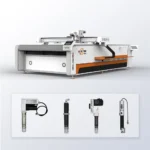
| Tool Head Options | Oscillating knife, pneumatic knife, high-power vibrating knife, circular knife, V-cutting knife, drag knife, creasing wheel, dotted line knife, punching, brush |
| Control Language | English, Russian, Italian, Chinese (custom languages available) |
| Instruction Format | HP-GL compatible |
| Safety Devices | Infrared sensor stop, beam anti-collision, emergency stop |
| Assembly State | Fully assembled |
Application Suitability
| Application | Material or Output |
|---|---|
| Garment and footwear production | Multi-layer fabric, leather, shoe uppers, non-woven textiles with nesting optimization |
| Automotive interior trimming | Sponge composite leather, PU, EVA, XPE foam for seat covers and door panels |
| Luggage and bag manufacturing | Nylon, canvas, synthetic leather, PVC sheets for panels and straps |
| Carpet and floor mat production | Tufted carpet, rubber underlay, felt pads cut to contour shapes |
| Sealing gasket fabrication | Rubber, PTFE, ETFE, fiberglass composite sheets for industrial seals |
| Packaging and sample making | Corrugated cardboard, sticker film, foam board with creasing and perforating |
Why Working Area Alone Is Not a Specification
A machine sized only by bed dimensions leaves the cutting outcome entirely to chance.
I worked with a buyer who selected a flatbed cutter based purely on the 1600 × 2500 mm working area, assuming any knife machine that size would handle their coated composite leather for automotive seat covers. What they did not account for was tool head resistance — the coating layer added drag that a standard oscillating knife could not overcome at production speed, resulting in frayed edges and delaminated layers. The cutting capacity of a CNC oscillating knife cutting machine for fabric and leather depends on matching the knife type, stroke frequency, and vacuum hold-down to the specific material stack, not just the table size [NEED_CITE: material thickness and density variables in digital knife cutting]. Without a sample cutting report on your actual material, the working area figure tells you nothing about whether the machine will run your production job.
Laser Process Versus Knife Cutting on Textiles and Composites
The RT-D2516 and RT-S2516 occupy a specific position in the cutting workflow where laser thermal processing falls short. CO2 laser systems seal edges on synthetics, which is an advantage for certain polyester and nylon applications, but the heat-affected zone discolors natural leather, melts foam cores in composite materials, and produces fumes that require extraction infrastructure. Knife cutting leaves no thermal damage, no edge sealing where it is unwanted, and no airborne particulates.
For buyers evaluating both processes, the decision point is material response to heat. A CNC oscillating knife cutting machine for fabric and leather produces burr-free, burn-free cuts on sponge-backed automotive leather and multi-layer garment fabric where laser char marks would require secondary cleaning or cause rejection at quality inspection.
Visual Positioning for Printed Contour Work
The system supports three visual positioning methods: small CCD camera mark point positioning, panoramic camera recognition, and projection positioning. Each addresses a different production scenario. Mark point positioning aligns cuts to pre-printed registration marks on dyed or printed fabric rolls, which is standard in garment production where pattern pieces must follow the printed design. Panoramic camera recognition captures the entire sheet in a single pass, suitable for irregularly shaped natural leather hides where the operator nests pieces around scars and defects.
Projection positioning overlays the cutting path onto the material surface before the knife engages, allowing the operator to verify placement visually. This is useful for high-value materials where a misaligned cut wastes expensive stock [NEED_CITE: CCD contour recognition reliability at production speeds]. The choice between these three systems depends on whether your workflow involves printed rolls, natural hides, or pre-cut panels.
How Specifications Translate to Cutting Performance
The 7.5 kW vacuum pump paired with the magnesium-aluminum alloy table is not simply a hold-down specification — it determines whether small parts remain stationary during high-speed contour cuts. On a 1600 × 2500 mm table, vacuum zoning becomes critical: if the entire surface draws suction uniformly, small gasket pieces or garment pattern sections can lift at the edges when the knife exits a cut. Zoned vacuum activation concentrates suction only under the cutting area.
The Delta servo motors (with Panasonic as an option) and Taiwan Hiwin linear guides deliver the ≤0.1 mm repeatability specification. In practical terms, this means nesting software can place pattern pieces with minimal kerf allowance, improving material yield on expensive leather hides or technical fabrics. The 800–1200 mm/s translational velocity range allows the operator to reduce speed for thick composite stacks where knife deflection becomes a risk, then increase speed for thin single-layer film or sticker cutting. The HP-GL compatible instruction format ensures compatibility with established nesting and CAD/CAM workflows common in garment and signage industries.
What Happens When the Tool Head Is Wrong for the Material
Selecting a standard oscillating knife for dense, coated composite leather produces visible problems within the first few cuts: the knife edge drags through the coating layer rather than shearing cleanly, leaving a ragged edge that fails quality inspection. On foam materials like EVA or XPE, an incorrect knife stroke frequency crushes the cell structure at the cut line, compressing the material and producing an undersized part that does not fit the assembly jig.
With ten available tool head options — including pneumatic knife for thick stacks, high-power vibrating knife for dense composites, circular knife for continuous straight runs, and V-cutting knife for bevel edges — the correct selection depends entirely on the material sample. A wrong choice does not just produce poor edges; it forces the operator to slow translational velocity well below the rated range, reducing throughput to a fraction of what the machine can actually deliver [NEED_CITE: tool head selection criteria for composite and foam materials].
Why Buyers Source This Equipment from REALTOP
The design team covers both knife and laser cutting technologies in-house, which means the recommendation between an oscillating knife table and a CO2 laser system is based on material suitability rather than pushing one technology onto every application. Each RT-D2516 or RT-S2516 is configured with the tool head and vacuum table zoning matched to your material type, thickness, and daily volume before the order is confirmed.
Software file format and nesting workflow compatibility are verified against your existing CAD/CAM system so there are no integration surprises on arrival. Voltage, plug type, and control language are confirmed for your target market before shipment. Every machine ships with a sample cutting report run on your own material, providing documented evidence of edge quality, cutting depth, and achievable speed before you commit to the purchase.
Documentation & Verification
- Factory test record run on your specific fabric or leather type before dispatch
- Tool head and vacuum table configuration list matched to your material stack
- Electrical schematic with confirmed voltage, frequency, and plug type for your market
- Sample cutting report showing edge quality and cutting speed on your supplied material
- Software licence with verified file format and nesting workflow compatibility note
- Operation and maintenance manual in your selected control language
Installation, Commissioning & Support
- Requires level floor space accommodating 3450 × 2300 mm machine footprint with operator clearance on all sides
- Dedicated 380V ±10% circuit required for 9 kW rated power plus 7.5 kW vacuum pump draw
- Arrives fully assembled; placement and utility connection are the primary on-site tasks
- First-run parameter setting includes vacuum zoning calibration for your specific part sizes
- Operator training covers tool head changeover procedures across all configured knife types
- Spare parts list identifies wear items including knife blades, conveyor belt sections, and vacuum seals
Before You Request a Quote
To specify the RT-D2516 or RT-S2516 accurately for your production, provide your material type, maximum thickness, sheet or roll dimensions, and daily cutting volume. Confirm your facility voltage, frequency, and the control language your operators require. If your workflow involves printed materials or natural hides, indicate whether mark point, panoramic, or projection positioning fits your process. Send a sample of your actual material so the tool head and vacuum configuration can be validated before the quotation is issued.
Frequently Asked Questions
Q: How is the correct tool head selected for my material?
A: The selection is based on a sample cutting test using your actual material. We run your fabric, leather, or composite through multiple tool head options — oscillating, pneumatic, high-power vibrating, or circular knife — and document edge quality, cutting depth, and speed for each. The tool head that produces clean cuts at the highest reliable speed is specified in your configuration list before order confirmation.
Q: What voltage and plug configurations are available?
A: The standard supply is 380V ±10%, with frequency confirmed to your local grid standard at 50 Hz or 60 Hz. Plug type and main breaker specifications are matched to your market before shipment. If your facility runs a different voltage, confirm this during the inquiry stage so the transformer and electrical components can be adjusted before production begins.
Q: Can the CCD camera track printed marks at full production speed?
A: The small CCD camera handles mark point positioning for standard printed fabric rolls, while the panoramic camera captures full-hide contours on natural leather. Tracking reliability at the 800–1200 mm/s translational velocity range depends on mark contrast, print quality, and ambient lighting. We test your printed material during sample cutting to confirm the camera maintains registration without slowing the cutting head.
Q: How is vacuum zoning configured for small parts?
A: The magnesium-aluminum alloy table is divided into zones that activate independently, concentrating suction under the cutting area rather than across the full 1600 × 2500 mm surface. This prevents small gasket pieces or garment pattern sections from lifting when the knife exits a cut. Zone configuration is set during commissioning based on your typical part size range.
Q: What file formats does the system accept?
A: The control system reads HP-GL compatible instruction files, which covers output from most standard nesting and CAD/CAM platforms used in garment, signage, and gasket industries. File format compatibility is verified against your existing software before the order is placed, so your current nesting workflow transfers directly to the machine without intermediate conversion steps.


Related products
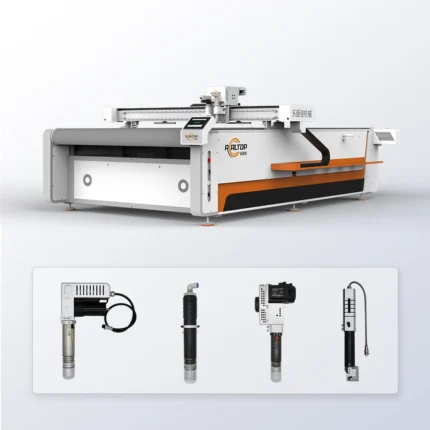
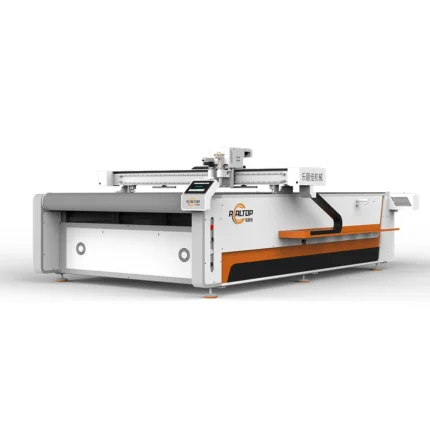
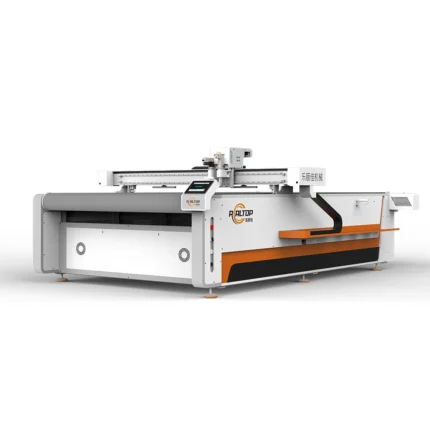
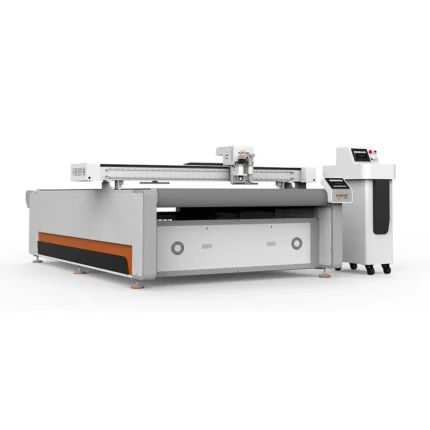
2026 Auto CNC Cloth Cutting Machine High-Precision Fabric Leather Plotter
Product Introduction
2026 Auto CNC Cloth Cutting Machine, a high-precision fabric & leather plotter designed for efficient cutting. Ideal for textile and leather industries with advanced CNC technology.
Key Specifications
| Model | Auto CNC Cloth Cutting Machine 2026 |
| Application | Fabric & Leather |
| Precision | High-Precision Cutting |
| Type | CNC Plotter |
2026 Automatic PVC Tarpaulin Cutter Machine
Product Introduction
High-performance Automatic PVC Tarpaulin Cutter Machine 2026, ideal for precise and efficient cutting of PVC tarpaulin materials, designed for industrial manufacturing needs with reliable operation and user-friendly control.Product Parameters
| Model | 2026 |
| Type | Automatic PVC Tarpaulin Cutter |
| Application | PVC Tarpaulin Cutting |
| Feature | Precise & Efficient Cutting |
2026 Flatbed Oscillating Knife Cutter 1600x3500mm Auto-Feeding Textile
Product Overview
Flatbed Oscillating Knife Cutting Machine 2026 is a high-precision textile fabric cutter with auto-feeding function, ideal for efficient and accurate cutting tasks in textile manufacturing. It combines advanced oscillating knife technology with a large working area to meet industrial production needs.Key Specifications
| Model | 2026 |
| Working Area | 1600x3500mm |
| Feeding System | Auto-Feeding |
| Cutting Type | Oscillating Knife |
| Application | Textile Fabric |
Automatic Multi-Layer Vibrating Knife Cutter 2026
Product Introduction
Automatic Multi-Layer Vibrating Knife Cutter 2026, ideal for precise cutting of various materials with multi-layer processing capability, enhancing production efficiency.
Key Specifications
| Type | Automatic Vibrating Knife Cutter |
| Layer Capacity | Multi-Layer |
| Model | 2026 |
| Function | Precision Cutting |
CNC Oscillating Knife Cutting Machine 2026 3000¡Á1600mm High-Speed
Product Parameters
| Model | CNC Oscillating Knife Cutting Machine 2026 |
| Working Area | 3000mm¡Á1600mm |
| Cutting Type | Oscillating Knife |
| Application | Fabric Cutting |
| Feature | High-Speed |
Introduction
High-performance CNC oscillating knife cutting machine with 3000mm¡Á1600mm working area, ideal for high-speed fabric cutting. Precision and efficiency for professional textile processing needs.
Jinan Realtop CNC Fabric Slitting Cutter 2026: Advanced Flexible Material Cutter
Product Introduction
Jinan Realtop CNC Fabric Slitting Cutter 2026 is a high-performance cutting equipment designed for precise fabric processing, ideal for industrial manufacturing needs with reliable CNC technology.Specifications
| Model | 2026 |
| Type | CNC Fabric Slitting Cutter |
| Manufacturer | Jinan Realtop |
| Application | Fabric Processing |
| Control System | CNC |
商品评价
There are no reviews yet.