

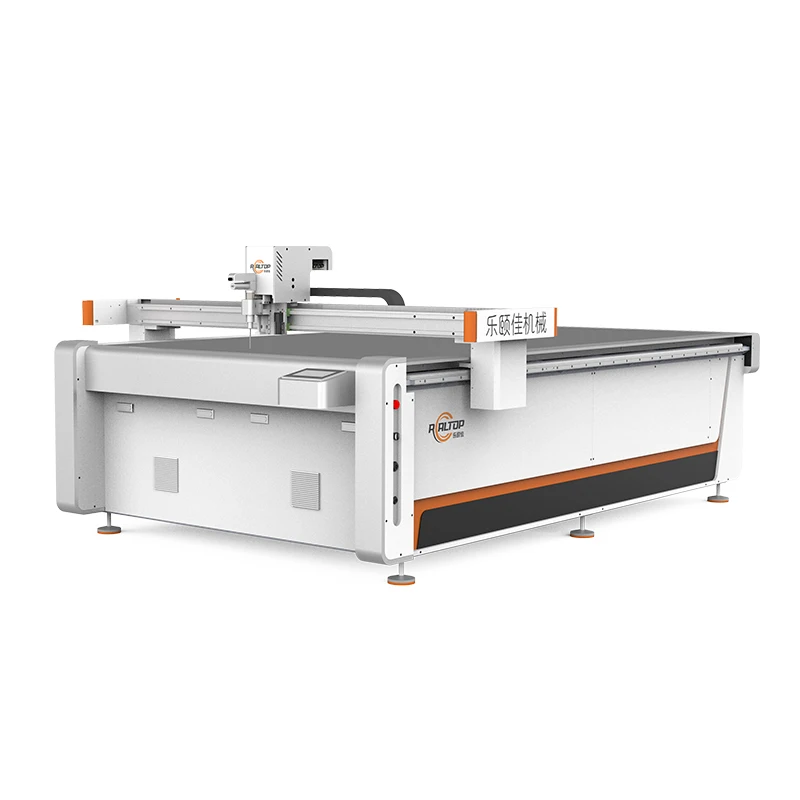
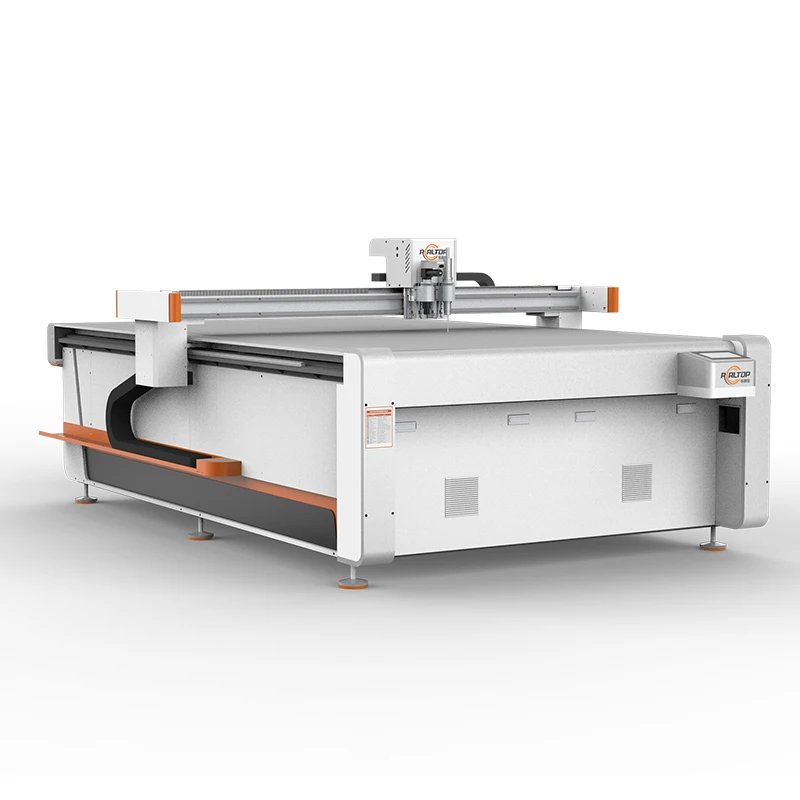
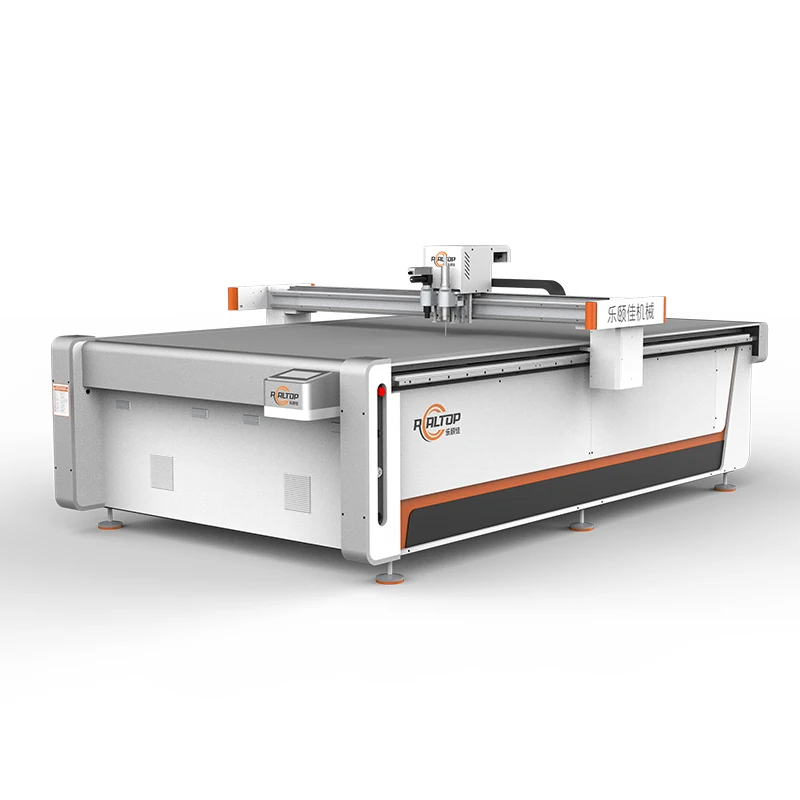
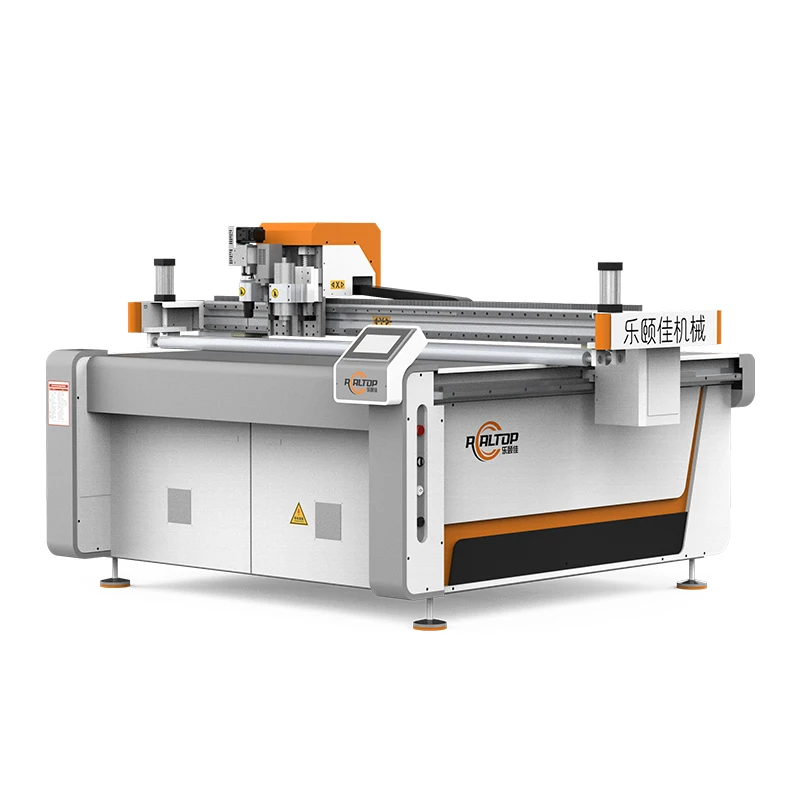

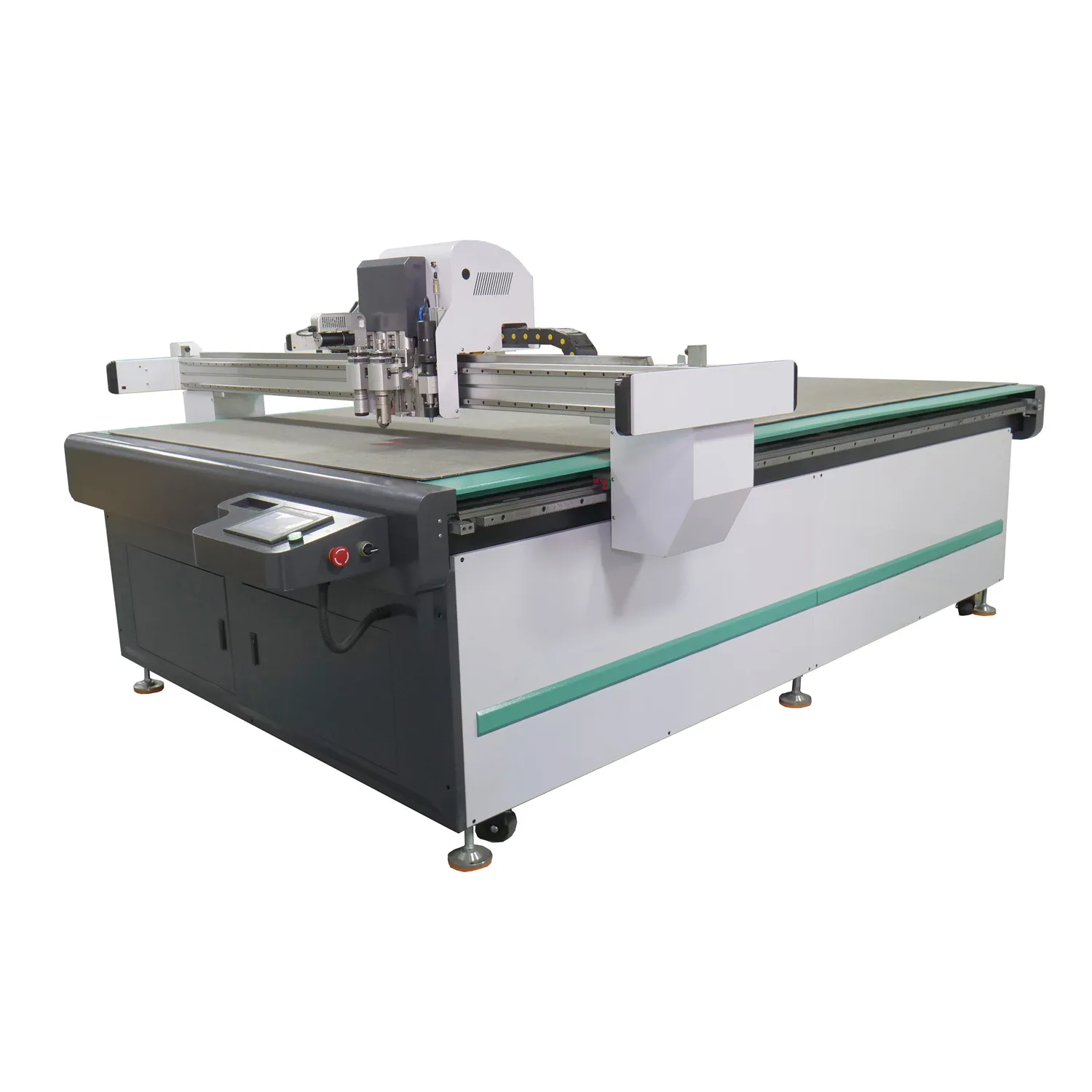
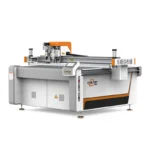
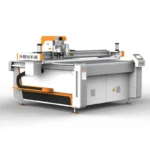
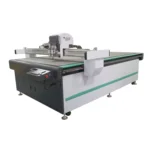
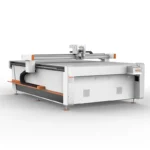
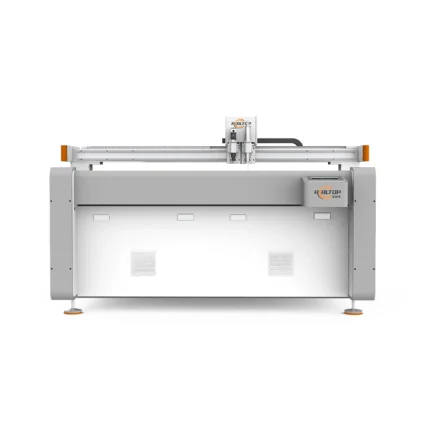
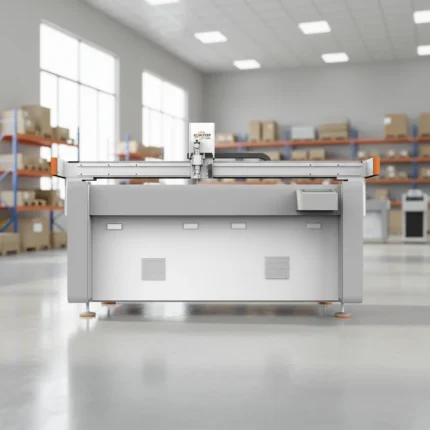
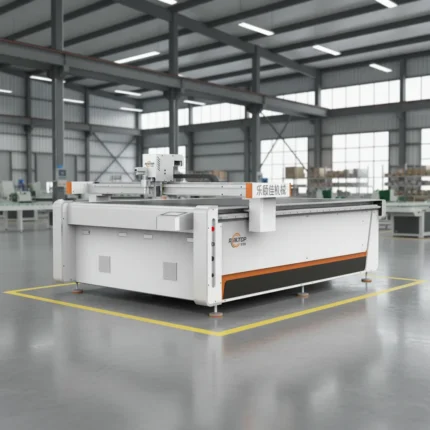
RT-D2516/RT-S2516 CNC Oscillating Knife Cutting Machine for Advertising Printing – OEM Available
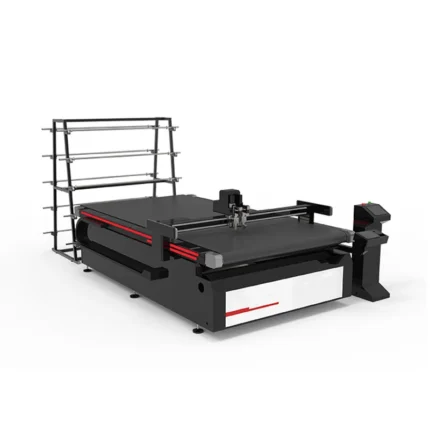
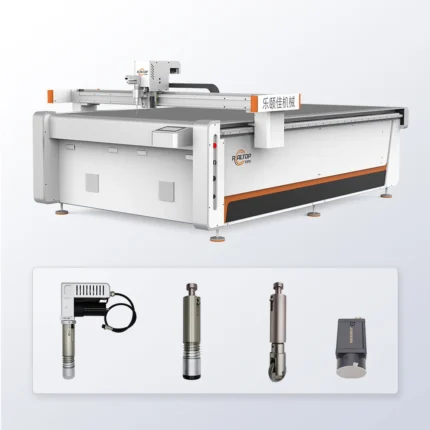
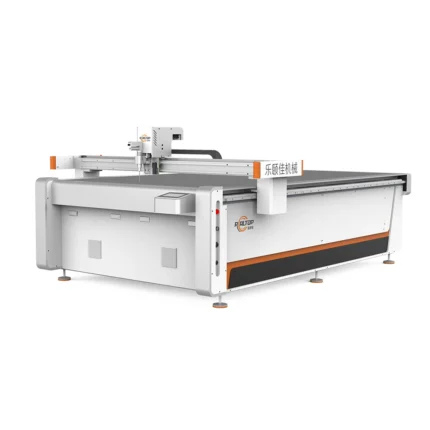
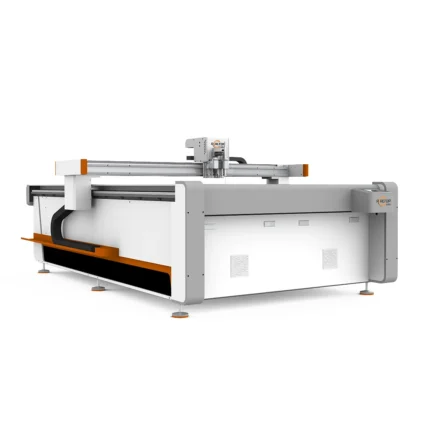
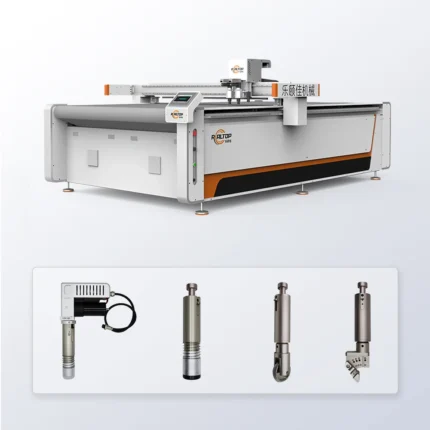
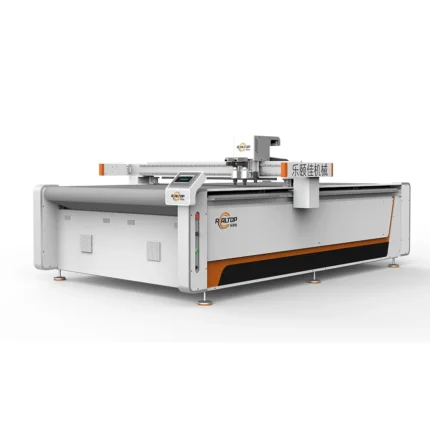
RT-D2516/RT-S2516 CNC Oscillating Knife Cutting Machine, 1600×2500mm Working Area, 9kW, Delta Servo Motor — configured with Swiss-imported oscillating knife and multifunctional tool head for full cutting, half cutting, and cursor positioning across flexible advertising materials.
- CCD visual positioning with panoramic camera recognition for printed contour tracking
- Magnesium-aluminum vacuum adsorption table with PVDF coating ensures stable material hold during high-speed operation at 800-1200mm/s
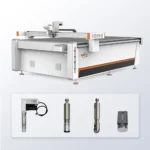
- Tool head options include pneumatic knife, drag knife, creasing wheel, and V-cutting knife for KT board, PVC, vinyl, and composite sheets
In-house design covers both knife and laser platforms, so you can match the cutting method to your material rather than compromise.
Configurable cutting head arrays — tool head combinations verified against material type rather than relying on single-purpose setups.
Technical Specifications
| Parameter | Value |
|---|---|
| Model | RT-D2516/RT-S2516 |
| Product Type | CNC Oscillating Knife Cutting Machine |
| Working Area | 1600 × 2500 mm |
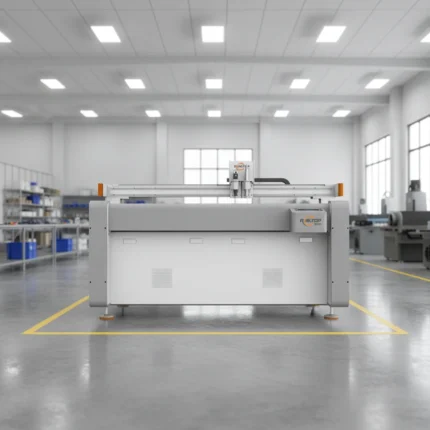
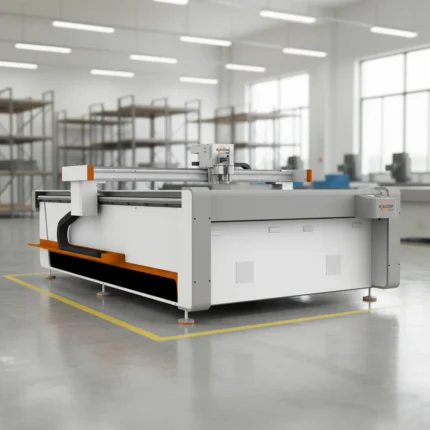
| Machine Footprint | 3450 × 2300 × 1250 mm |
| Rated Power | 9 kW |
| Working Table | Flatbed with vacuum adsorption |
| Transmission Architecture | Digital servo motor, linear guide, synchronous belt, ball screw |
| Translational Velocity | 800–1200 mm/s |
| Repeated Accuracy | ≤ 0.1 mm |
| Maximum Cutting Thickness | Up to 100 mm (varies with the material density and tooling) |
| Instruction Compatibility | HP-GL compatible format |
| Voltage Requirement | 380V ± 10% |
| Vacuum System | 7.5 kW pump, integrated aviation aluminum shell with built-in silencer |
| Visual Positioning | Small CCD camera mark point positioning, panoramic camera recognition, projection positioning |
Application Suitability
| Application Scenario | Typical Materials Processed |
|---|---|
| Graphic Advertising & Signage Production | KT board, PVC foam board, vinyl film, adhesive stickers, corrugated plastic |
| Packaging & Carton Sample Making | Corrugated cardboard, folding carton stock, honeycomb paper |
| Automotive Interior Components | Synthetic leather, fabric composites, acoustic insulation foam, headliner material |
| Soft Furnishings & Textile Fabrication | Upholstery fabric, sponge composite leather, carpet, floor mat substrates |
| Sealing Gaskets & Industrial Pads | Rubber sheet, silicone, non-asbestos fiber, PTFE compounds |
The Peak Power Trap in Material Processing
A quoted power rating often masks the difference between peak output and continuous thermal delivery, leaving buyers with machines that cannot hold depth on thicker acrylic or dense PVC sheets. Specifying real cutting capacity on your actual stock prevents production bottlenecks that only appear after installation. [NEED_CITE:]
In signage workshops, I have seen flatbed cutters specified solely by working area, only for the buyer to discover that the configured tool head or laser source cannot handle the material thickness required for a major contract. The result is always the same: ragged edges on foam board, crushed cellular structures, or incomplete cuts through layered vinyl stacks. When a machine is evaluated only on table size and maximum travel speed, the physics of the cutting process gets ignored until the first production run fails to meet client tolerances.
Knife Versus Laser: Matching the Process to the Substrate
The fundamental decision in advertising material processing is whether mechanical shearing or thermal vaporization produces the required edge quality. A CNC Oscillating Knife Cutting Machine handles closed-cell foams, corrugated boards, and flexible vinyl without generating the thermal stress or edge discoloration that accompanies CO2 laser cutting on certain polymers. Materials like honeycomb paper and multi-layer adhesive stacks respond predictably to high-frequency blade oscillation, producing clean separations without the fume extraction infrastructure that laser systems demand.
Contour Recognition at Production Speed
Printed graphics on vinyl or rigid board require the cutting path to align precisely with the printed image, a task handled here through small CCD camera mark point positioning or panoramic camera recognition. The vision system reads fiducial marks on the printed sheet and adjusts the cut file to compensate for stretch, skew, or registration drift introduced during the printing stage. Without this correction, die-cut stickers and contour-cut decals accumulate positional errors that compound across a full 1600 × 2500 mm sheet, resulting in scrapped material and missed delivery deadlines. [NEED_CITE:]
Decoding the Specification Sheet for Real Output
The translational velocity of 800–1200 mm/s describes head travel speed on straight segments, not the effective throughput across a nested sheet of mixed geometries. Acceleration curves, cornering deceleration, and tool head plunge cycles all reduce the practical cycle time. The 7.5 kW vacuum pump paired with the magnesium-aluminum alloy table must maintain sufficient hold-down force across the entire bed; if zoning is inadequate for small nested parts, those components lift during the final cut pass, ruining the piece and potentially damaging the blade. Repeated accuracy of ≤ 0.1 mm ensures that multi-pass cutting on thick foam or sequential kiss-cut and through-cut operations on adhesive layers remain registered to the original coordinate system.
What Happens When the Tool Head Is Wrong for the Stock
Choosing a drag knife for closed-cell PVC foam board instead of an oscillating knife produces compressed edges that require secondary trimming, adding labor and reducing yield. On thin vinyl films, a high-power vibrating knife can grab and tear the material if the oscillation amplitude is not matched to the substrate tension. I have walked into facilities where the wrong creasing wheel profile was fitted for the flute direction of corrugated board, resulting in fold lines that cracked on the outside radius during assembly. These errors are not visible during vendor demonstrations run on ideal sample materials. [NEED_CITE:]
Why Sourcing From This Facility Reduces Configuration Risk
In-house design covering both knife and laser cutting platforms means the recommendation is based on material behavior rather than forcing every job through one technology. Tool head and table configurations are specified per material type and daily volume before the order is finalized. Software compatibility with the buyer’s existing nesting workflow and HP-GL file output is confirmed during the pre-order phase, preventing integration failures after delivery. Voltage, plug type, and control language are locked in before production begins, so a machine shipped to a 415V three-phase facility does not arrive with a 380V transformer mismatch. Sample cutting on the buyer’s own material stock provides physical proof of edge quality and cycle time before commitment.
Documentation & Verification
- Machine specification sheet detailing configured tool heads and vacuum table zones
- Electrical schematic with confirmed voltage, amperage draw, and circuit breaker sizing
- Sample cutting report executed on your specific PVC foam or vinyl stock
- Factory test record documenting positional accuracy across the full 1600 × 2500 mm bed
- Software license documentation with verified HP-GL format compatibility notes
- Spare parts list identifying consumable blades, vacuum seals, and CCD calibration targets
Installation, Commissioning & Support
- Floor leveling and anchor bolt plan for the 3450 × 2300 mm machine footprint
- Dedicated 380V three-phase circuit with isolated ground for the 9 kW rated load
- Assembly of segmented bed frame and vacuum manifold connections on arrival
- First-article cutting test with your material to set oscillation frequency and vacuum zone mapping
- Operator training on CCD mark teaching, tool offset calibration, and nesting import procedures
- Scheduled replacement intervals for oscillating knife blades and vacuum pump silencer elements
Preparing a Meaningful Technical Inquiry
To evaluate whether this platform fits your production workflow, share the specific advertising substrates you run, including material name, thickness range, and whether the stock arrives in rolls or sheets. Clarify your local three-phase voltage and frequency, plus the control language your operators require. If your existing design output uses a specific nesting software or RIP format, provide a sample file so compatibility can be confirmed before quotation.
Frequently Asked Questions
Q: How do I determine whether oscillating knife or laser cutting suits my advertising materials?
A: Closed-cell foams, corrugated boards, and multi-layer vinyl stacks generally perform better with mechanical knife cutting because the process avoids thermal edge melt and toxic fume generation. Laser cutting excels on acrylic and thin textiles where edge sealing is desirable. Submit representative material samples so both methods can be tested and compared on edge quality and cycle time.
Q: What is the practical difference between peak and continuous power ratings on cutting equipment?
A: Peak power describes a momentary maximum output the system can reach, while continuous power reflects the sustained energy available during a production run. Machines rated only on peak values often fail to maintain cutting depth on thicker materials once thermal limits are reached. Always request cutting test results on your actual material thickness to verify real-world capacity.
Q: How does the CCD vision system maintain accuracy on printed contour cutting jobs?
A: The CCD camera reads fiducial marks printed on the sheet and dynamically adjusts the cut path to compensate for printing distortion, material stretch, or loading skew. Panoramic recognition covers the full working area for large-format jobs, while mark point positioning handles smaller sheets. This prevents misaligned cuts that would otherwise scrap expensive printed media.
Q: What file formats and nesting workflows are compatible with this CNC system?
A: The control system accepts HP-GL compatible formats generated by most mainstream nesting and CAD software. Before order confirmation, a sample file from your existing workflow is imported and processed to verify compatibility. If your shop uses proprietary nesting output, the software license and conversion requirements are documented before the machine ships.
Q: Why must voltage and plug configuration be confirmed before the machine enters production?
A: Industrial three-phase voltage standards vary significantly between export markets, and a mismatch at the installation site causes transformer failures or motor burnout within hours of startup. Confirming the exact supply voltage, frequency, and plug type before manufacturing ensures the electrical cabinet and motor drives arrive configured for immediate connection without costly rewiring or component replacement.


Related products
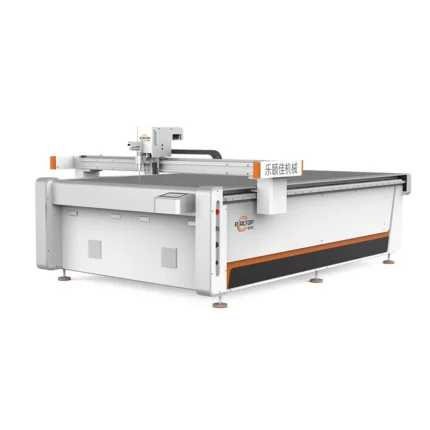
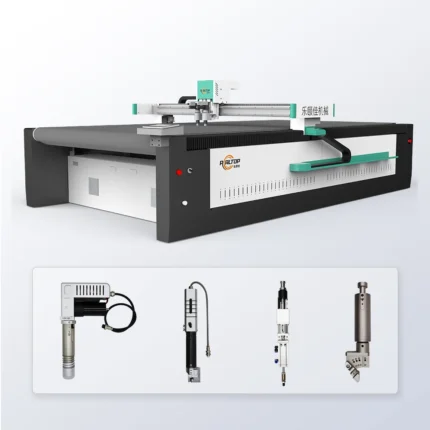
2026 Automatic Hot Knife Cutting Machine Acrylic PVC Cutter
Product Introduction
Automatic Hot Knife Cutting Machine 2026, ideal for acrylic and PVC film cutting with digital precision. Efficient, reliable, and designed for professional use in manufacturing settings.Key Specifications
| Application | Acrylic, PVC Film |
| Type | Digital Hot Knife Cutter |
| Year | 2026 Model |
| Operation | Automatic |
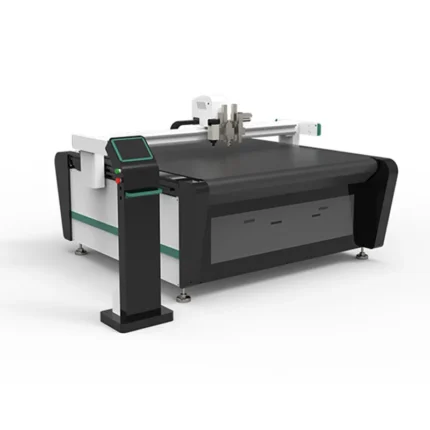
Advertising Printing CNC Cutter for Sterile Surgical Gown – OEM Available
RT-D2516/RT-S2516 CNC Oscillating Knife Cutting Machine, 1600×2500mm Working Area, 380V, 7.5kW Vacuum — configured for sterile surgical gown die-cutting and advertising print contour work across leather, flexible textiles, sponge composites and PVC.
- Japanese Yaskawa servo drives with Taiwan Hiwin linear rails deliver ≤0.1mm repeatability for precise CCD-contour cutting at 200–800mm/s.
- Auto-feeding conveyor table with zoned vacuum hold-down keeps flexible materials flat during high-speed oscillating knife operation.
Sample cutting on your own material is completed and documented before order confirmation, ensuring the tool head and vacuum zoning match your actual production requirements.
CNC Oscillating Knife Cutter for Non-Asbestos Gasket – for Industry
1625 CNC Oscillating Knife Cutting Machine, 1600×2500 mm, ±0.1 mm Accuracy — cold-cutting solution for composite gasket and non-metal materials without thermal damage.
- Multi-tool head configuration (oscillating knife, driven rotary, creasing wheel, milling) matched to material thickness up to 30 mm
- Aluminum bellows vacuum table ensures full-surface adsorption for flexible and semi-rigid substrates
- PLC control with multi-language display and CCD contour recognition for printed mark tracking
Buyer sample cutting performed on your own material before order commitment, with tool head configuration list and voltage confirmation documented prior to shipment.
CNC Oscillating Knife Cutting Machine 1625 for Packaging – OEM Available
RT-D2516/RT-S2516 CNC Oscillating Knife Cutting Machine, 1600×2500 mm working area, 9 kW rated power, supports cardboard, corrugated board, foam and composite packaging materials with oscillating knife, creasing wheel and V-cutting tool heads.
- Magnesium-aluminum vacuum table with PVDF coating and 7.5 kW pump; CCD mark point or panoramic camera positioning optional for printed contour cutting.
- Digital servo drive with ≤0.1 mm repeatability; HP-GL compatible control accepts PLT, DXF and AI files for packaging sample nesting workflows.
Sample cutting on buyer's own material is provided before commitment, with tool head and vacuum zoning configuration specified per material type and production volume.
High Speed CNC Vibrating Knife Cutter for Corrugated Box & Cardboard – Manufacturer
RT-D2516/RT-S2516 CNC Oscillating Knife Cutting Machine, 1600×2500mm Working Area, 9kW — configured for corrugated box and cardboard sample making with oscillating knife, creasing wheel and V-cutting tool heads. Translational velocity reaches 800–2000mm/s with ≤0.1mm repeatability, while the aluminum air box vacuum platform ensures uniform hold-down across full sheets. - Multi-tool head handles full-cut, half-cut and creasing in a single pass for packaging workflows. - Supports PLT, DXF and AI file import with auto typesetting software for nesting efficiency. - Sample cutting on your own material before order commitment ensures the configuration matches your exact board grade and thickness.
Packaging CNC Cutting Machine for Carton Box – Manufacturer
RT-D2516/RT-S2516 CNC Digital Carton Sample Cutting Machine, 1600×2500mm Working Area, 9kW Rated Power, Delta Servo — equipped with Swiss-imported vibration knife for full and half cutting, creasing wheel, and CCD contour recognition on an aluminum honeycomb vacuum platform.
- Configured per board grade and flute type so cutting depth and tool head match your packaging stock, with zoned vacuum suction preventing small parts from lifting during runs.
- HP-GL compatible software supports multiple file imports and customizable interface language for fast template changes in carton prototyping.
Sample cutting on your own board stock confirms edge quality and achievable thickness before order commitment, with voltage, plug and software compatibility documented prior to shipment.


RT-2026 CNC Digital Carton Cutting Machine – Full Range
RT-2026 CNC Digital Carton Cutting Machine, 1600×2500mm Working Area, 380V — equipped with Swiss imported oscillating knife head delivering vibration full and half cutting for cardboard, sticker and flexible packaging materials.
- Delta servo motor and Taiwan Hiwin rail ensure ≤0.1mm repeated accuracy
- Aluminum honeycomb vacuum platform with automatic zone following prevents small part lift
- HP-GL compatible instruction system supports multiple file format imports
Laser and knife cutting technologies developed in-house allow precise method matching to your material, with sample cutting on buyer's own stock validated before order commitment.
Technical Guide CNC Vibrating Knife Cutter for Cardboard Box
1625(std.) CNC Oscillating Knife Cutting Machine, 1600×2500mm, ≤40mm Thickness — configured for corrugated board, greyboard, and specialty paper sample making with interchangeable oscillating knife, creasing wheel, and V-groove tools.
- Aluminum bellows vacuum table ensures consistent hold-down across the full working area during high-speed cutting at up to 1500 mm/s
- PLC control with dedicated packaging structure design software supports PLT, DXF, AI, and PDF file import for seamless design-to-cut workflow
CO2 laser process details including continuous power verification and real cutting depth confirmed on buyer's own material before order commitment.
商品评价
There are no reviews yet.