

Blog
CO2 Laser Engraver for Metal Furniture: China Wholesale Supplier

CO2 Laser Engraver for Metal Furniture: China Wholesale Supplier
A CO2 laser cannot cut or deeply engrave bare stainless steel.
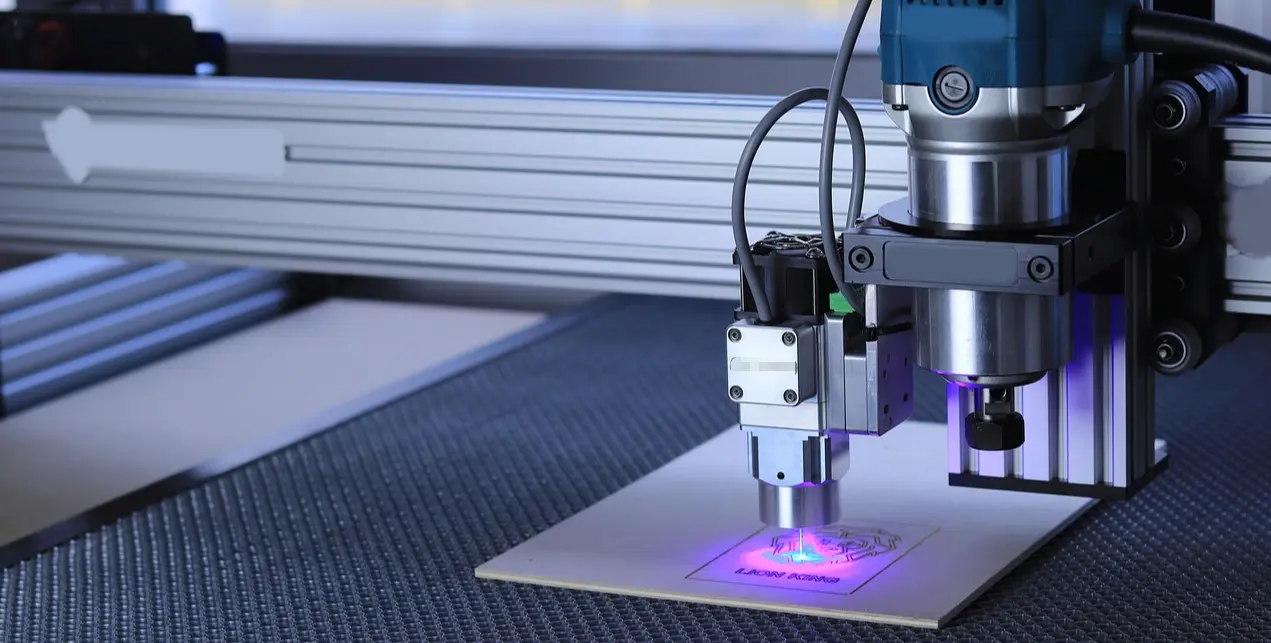
If you are sourcing a CO2 laser engraver for metal furniture, stop immediately. The physics of the machine makes it fundamentally incompatible with uncoated metals like stainless steel, aluminum, or brass. Attempting to use a standard CO2 source on these materials will result in high reflection rates that damage the laser lens, poor mark quality, and significant safety hazards. For metal furniture components, fiber laser technology is the required standard, while CO2 systems remain the superior choice for wood, acrylic, and fabric elements often found in mixed-material designs.
I learned this lesson the hard way in a sheet metal workshop in Houjie, Dongguan. A furniture manufacturer brought in drawings for intricate floral patterns on 304 stainless steel handrails. They had purchased a high-wattage CO2 unit, believing power alone could overcome material resistance. The result was not a clean engraving but a batch of scorched, yellowed plates with uneven edges. The reflectivity of the bare metal sent energy back into the optical path, risking catastrophic failure of the laser tube. This was not a machine defect; it was a fundamental mismatch between wavelength and material absorption. [NEED_CITE: laser wavelength absorption rates for common metals]
Understanding this distinction is critical for wholesalers and manufacturers. Misallocating budget to the wrong technology leads to idle equipment and production bottlenecks. This guide clarifies the technical limitations of CO2 systems on metal and directs you toward the correct industrial solutions for your specific furniture production needs.
Can a CO2 Laser Really Engrave or Cut Metal Furniture Parts?
No, a standard CO2 laser cannot effectively process bare metal furniture parts without hazardous modifications or inefficient coatings.
The core issue lies in the wavelength. CO2 lasers operate at 10.6 micrometers, a wavelength that is highly absorbed by organic materials like wood, leather, and acrylic but largely reflected by metals. [NEED_CITE: interaction of infrared wavelengths with metallic surfaces] When a CO2 beam hits bare stainless steel or aluminum, most of the energy bounces off. To achieve any marking effect, operators often resort to spraying the metal with a marking spray or anodizing it first. This adds a secondary processing step, increases labor costs, and produces marks that can wear off over time, which is unacceptable for high-end furniture.
For cutting, the situation is worse. While some industrial CO2 lasers with very high power and oxygen assist can cut thin steel, they are inefficient, produce oxidized edges that require extensive post-processing, and pose a high risk of back-reflection damage. In the context of furniture manufacturing, where precision and edge quality are paramount, this method is obsolete. Buyers often confuse "marking" with "cutting." A CO2 laser might leave a faint discoloration on coated metal, but it cannot perform the deep, clean engraving or through-cutting required for structural metal furniture components.
Why Do Some Suppliers Recommend CO2 for Metal?
Misunderstanding of application scope and the desire to clear older inventory drive incorrect recommendations.
It is common to encounter suppliers who suggest a CO2 laser engraver for metal furniture for mixed-material projects. Their logic often stems from a partial truth: CO2 lasers are excellent for the non-metal parts of furniture. If a piece combines wooden frames with metal accents, a CO2 machine can handle the wood perfectly. However, recommending it for the metal parts is technically flawed. Some distributors may be trying to sell older stock or lack the technical expertise to distinguish between surface marking on coated metals and true metal processing.
In one instance, a buyer was quoted a low price for a CO2 unit capable of "metal marking." Upon inspection, the supplier clarified it only worked on anodized aluminum or painted steel. For bare stainless steel furniture legs or decorative screens, this machine was useless. The confusion often arises because early marketing materials grouped all "laser engravers" together, failing to specify the material limitations. [NEED_CITE: industry standards for laser classification and material compatibility]
Furthermore, the term "engraver" is loosely used. A CO2 laser can engrave into wood or acrylic, removing material to create depth. On metal, without a fiber source, it merely alters the surface color if a coating is present. It does not remove metal. For wholesalers, accepting such advice leads to customer complaints and returns. The key is to verify if the "metal" capability requires pre-treatment. If it does, it is not a direct metal processing solution.
The Right Laser Technology for Stainless Steel and Aluminum Furniture
Fiber lasers are the industry standard for metal furniture, while CO2 lasers excel in non-metal components.
When processing stainless steel, aluminum, or brass for furniture, fiber lasers are the correct choice. Operating at 1.06 micrometers, their wavelength is readily absorbed by metals, allowing for efficient cutting, deep engraving, and high-speed marking without coatings. The beam quality is superior, enabling finer details in complex patterns often seen in modern metal furniture design.
To help buyers make the right decision, consider the following comparison of technologies commonly used in furniture manufacturing:
| Feature | CO2 Laser | Fiber Laser | Plasma Cutter |
|---|---|---|---|
| Primary Material | Wood, Acrylic, Leather, Fabric | Stainless Steel, Aluminum, Brass | Thick Steel Plates |
| Metal Marking | Only on coated/anodized surfaces | Direct on bare metal | Not applicable |
| Metal Cutting | Inefficient, risky for thin sheets | High precision, clean edges | Rough edges, heat affected zone |
| Maintenance | High (tubes, mirrors, lenses) | Low (solid-state source) | Moderate (consumables) |
| Operating Cost | Higher due to consumables | Lower energy efficiency | Variable based on gas |
[NEED_CITE: comparative analysis of laser sources for industrial cutting]
For manufacturers producing mixed-material furniture, such as sofas with metal frames or tables with wooden tops and metal bases, a single machine rarely does it all efficiently. While a fiber laser handles the metal legs and accents, a different technology is needed for the upholstery, leather, or composite panels. This is where specialized cutting solutions become vital. For instance, oscillating knife cutting machines offer a cold-cutting alternative for fabrics, leather, and composites, ensuring no burnt edges and high precision for soft materials. [NEED_CITE: advantages of mechanical cutting for heat-sensitive materials]
Understanding that Realtop Machinery specializes in these digital die-less cutting solutions for flexible materials helps clarify the ecosystem. While we do not manufacture fiber lasers for metal, recognizing the distinct roles of each technology prevents budget misallocation. A furniture factory might need a fiber laser for metal parts and an oscillating knife cutter for leather upholstery, rather than trying to force a CO2 laser to do both poorly.
How to Verify Supplier Claims Before Wholesale Purchase
Request live video demonstrations on bare metal and check wavelength specifications to avoid costly mistakes.
When evaluating a CO2 laser engraver for metal furniture supplier, skepticism is your best tool. Many online listings claim universal compatibility, but physical laws do not bend for marketing copy. Before placing a wholesale order, demand proof of performance on the exact material you intend to use.
- Request a Live Demo on Bare Metal: Ask the supplier to send a video of the machine marking or cutting bare 304 stainless steel or aluminum without any spray or coating. If they hesitate or show only coated samples, the machine is not suitable for direct metal processing.
- Check the Wavelength Specification: Verify the laser source type. A CO2 laser will list 10.6μm. A fiber laser will list 1.06μm. If the supplier cannot provide this basic technical data, proceed with caution. [NEED_CITE: technical specifications for industrial laser sources]
- Inspect the Optical Path: CO2 lasers use mirrors and lenses that are vulnerable to back-reflection. Fiber lasers use fiber optic cables that are more resistant. Ask about the protection mechanisms against reflection. If none are mentioned for a metal-capable claim, it is a red flag.
- Evaluate Sample Quality: Request physical samples. Look for consistency in depth and color. For metal, fiber laser marks should be permanent and resistant to abrasion. CO2 marks on coated metal may scratch off easily.
A European buyer once nearly purchased a batch of CO2 units for a metal railing project. By requesting a demo on bare steel, they discovered the machine could only produce faint, uneven discoloration. Switching to a fiber laser solution saved them from a mid-six-figure loss in scrap material and rework. This due diligence is essential for any wholesaler importing machinery.
Conclusion
Do not use a CO2 laser for bare metal furniture components.
The technical mismatch between CO2 wavelengths and metal absorption makes it an inefficient and risky choice for stainless steel or aluminum. Fiber lasers are the correct tool for metal, while CO2 systems remain ideal for wood and acrylic. For mixed-material furniture production, combining the right laser technology with specialized cutting solutions like oscillating knife systems ensures high quality and efficiency across all components. Verify supplier claims with live demos on bare materials to protect your investment.

