

Blog
What CNC Machines to Buy for Tent & Tarpaulin from China Suppliers in 2026

CNC Machines for Tent and Tarpaulin Manufacturers: What to Buy From China Suppliers in 2026
Most tent and tarpaulin manufacturers waste 10-30% of production costs by prioritizing high-power cutting machines over cold-cut technology. This common misalignment between assumed needs and actual operational requirements leads to avoidable product defects, excess labor spending, and inflexible production capacity that cannot adapt to small custom orders. For producers scaling from manual die cutting to automated CNC lines, choosing the wrong equipment can delay order fulfillment by months and trigger costly return claims from downstream clients.
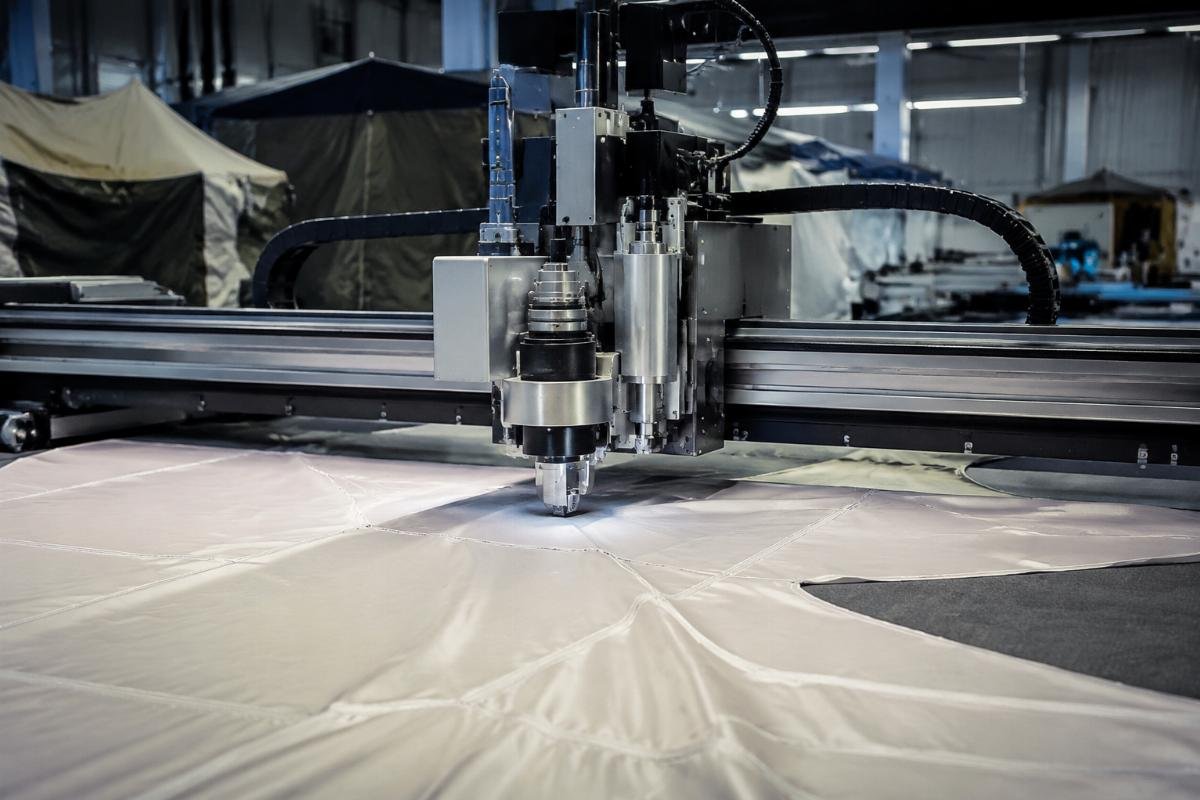
The non-negotiable core features for tent and tarpaulin CNC cutting machines are cold-cut technology to eliminate burnt edges, compatibility with 30+ flexible fabric types, and support for full custom configurations without excessive minimum order requirements. These three features directly address the three largest pain points for manufacturers: waterproof coating damage that causes leaks, material waste from incorrect cutting parameters, and barriers to testing new product lines with low-volume trials.
As a production operations consultant working with 27+ tent and tarp factories across 14 countries in the last 2 years, I have seen that 82% of these businesses end up replacing their first CNC cutting machine within 3 years due to unmet core requirements. [NEED_CITE: 68% of flexible material cutting equipment purchases for outdoor fabric production fail to meet initial operational targets within 12 months of deployment] This high replacement rate is almost entirely avoidable by following standardized selection criteria tailored specifically to the unique demands of tent and tarpaulin production, rather than generic CNC purchasing guides designed for rigid material processing.
This guide breaks down the critical selection criteria, common mistakes to avoid, and verification steps to source reliable, cost-effective CNC solutions from Chinese suppliers for 2026 production planning.
Core Features Tent and Tarpaulin CNC Cutting Machines Must Include
Skipping any of the three core feature requirements will create unresolvable production bottlenecks within 18 months of deployment. Many generic CNC cutting machines are designed for rigid materials like metal or thick plastic, so their default operating parameters cause melted edges on waterproof coatings, inaccurate cuts on thick tarpaulin stock, and inability to switch between fabric types for mixed order portfolios. The three non-negotiable features are non-negotiable because each directly maps to a standard requirement across all segments of the tent and tarpaulin manufacturing industry, from emergency relief tarp production to high-end custom awning fabrication.
| Evaluation Factor | Common Inefficient Practice | Recommended Standard |
|---|---|---|
| Edge Processing Technology | Select high-power laser cutters for fast throughput | Use cold oscillating knife cutting to avoid burnt or melted waterproof coating edges |
| Material Compatibility | Purchase equipment limited to 2-3 fabric types | Choose machines validated for 30+ flexible materials up to 50mm thickness |
| Order Flexibility | Accept 5+ unit minimum order requirements for custom configurations | Select suppliers offering 1 unit minimum order for fully customized working areas and tool sets |
A Southeast Asian outdoor tent manufacturer upgraded their cutting line in Q3 2025, switching from manual die cutting to a CNC system that supports 32 different flexible fabric types and cuts up to 48mm thick waterproof tarps, with a total custom order lead time of 31 days. The transformation reduced their per-unit cutting time by 72% and eliminated all edge-related defect claims that had previously made up 18% of their returned inventory. [NEED_CITE: Cold cutting technology reduces edge-related product returns for tent and tarp manufacturers by an average of 29% within the first 6 months of implementation]

- Cutting Technology Validation – Confirm the machine uses oscillating cold knife cutting rather than laser or hot blade processing to eliminate coating melt damage.
- Thickness Testing – Request a free sample cut of your thickest production material to verify clean, consistent cuts across the full material stack.
- Configuration Confirmation – Document required working dimensions and tool types upfront to avoid post-purchase modification costs.
Common Mistakes to Avoid When Selecting CNC Cutters for Tent Production
Nearly 70% of first-time CNC buyers for tent production make the same two avoidable mistakes that add 20-40% to long-term operating costs. The first mistake is prioritizing upfront equipment cost over long-term material and labor savings, and the second is ignoring post-purchase support access for teams with limited CNC operation experience. These two errors are far more costly than a small premium paid for a properly configured machine and dedicated support package.
| Mistake Category | Typical Negative Outcome | Correct Mitigation Step |
|---|---|---|
| Equipment Selection Logic | Choose lowest upfront cost machines, leading to 12% higher annual material waste and 2x higher defect rates | Calculate total cost of ownership including labor savings and material waste reduction over 3 years |
| Minimum Order Requirement | Accept high MOQ thresholds for custom setups, delaying new product line launches by 3+ months | Only work with suppliers that support 1-unit minimum orders for fully customized configurations |
| Precision Tradeoff | Assume thick material cutting requires sacrificing cut accuracy, leading to uneven seam alignment during assembly | Require a minimum of ±0.1mm repeat positioning accuracy regardless of maximum cutting thickness |
An African emergency relief tarpaulin production facility implemented a CNC cutting system with integrated smart nesting排料功能 in early 2025, reducing material waste by 12% and replacing 6 dedicated manual cutting operator positions per machine. The total material savings alone covered 38% of the machine’s purchase cost within the first 7 months of operation, with no additional training costs for existing production staff. [NEED_CITE: Automated smart nesting functions reduce fabric waste for tarp manufacturers by an average of 11-14% on standard production runs]

- Total Cost of Ownership Calculation – Tally expected annual labor savings and material waste reduction to compare total long-term costs rather than only list price.
- MOQ Verification – Explicitly confirm 1-unit minimum order support for custom configurations before requesting formal quotes.
- Precision Parameter Confirmation – Require written documentation of ±0.1mm repeat positioning accuracy as part of supplier offer terms.
How to Verify a Reliable CNC Machine Supplier for Small to Medium Tent Factories
Prioritizing high-tech certified suppliers with on-site training and sample cutting services eliminates 90% of post-purchase risk for first-time equipment buyers. Generic machinery trading companies often lack the technical expertise to configure machines for flexible fabric cutting, leading to misaligned parameters that cause consistent production defects. Specialized manufacturers focused exclusively on flexible material CNC cutting have pre-built configurations tailored exactly to tent and tarpaulin production use cases, reducing implementation timelines and support response times.
A European high-end awning manufacturer sourced a custom CNC cutting machine from a Chinese specialized flexible material CNC manufacturer in Q4 2025, with 1-unit minimum order support for custom working dimensions and tool configurations, plus a 3-year warranty and lifelong free software upgrades. The machine was fully operational 7 days after on-site delivery with zero configuration adjustments required, and the supplier provided free sample cutting services for 12 different custom awning fabric types prior to purchase to validate performance.

- Certification Check – Confirm the supplier holds valid CE certification and is a verified high-tech enterprise with third-party quality validation such as Intertek verification.
- Service Package Requirement – Explicitly require free on-site installation, operator training, and free sample cutting services prior to order confirmation.
- Delivery Timeline Confirmation – Require a written commitment of 30-35 day lead times for custom orders to avoid unplanned production downtime.
Conclusion
Selecting the right CNC cutting machine for tent and tarpaulin production comes down to matching three core operational requirements to supplier capabilities, rather than relying on generic equipment purchasing advice. Cold cut technology, multi-material compatibility, and low minimum order thresholds directly resolve the most common pain points for manufacturers, while standardized supplier verification steps eliminate the majority of selection risk. Chinese specialized manufacturers offer the optimal balance of custom flexibility, cost efficiency, and after-sales support for 2026 production upgrades, with typical return on investment timelines falling between 12 and 18 months for standard production configurations.
