

Blog
Which Motor Brand Should You Actually Choose for Your Fabric Cutting Machine?

Which Motor Brand Should You Actually Choose for Your Fabric Cutting Machine?
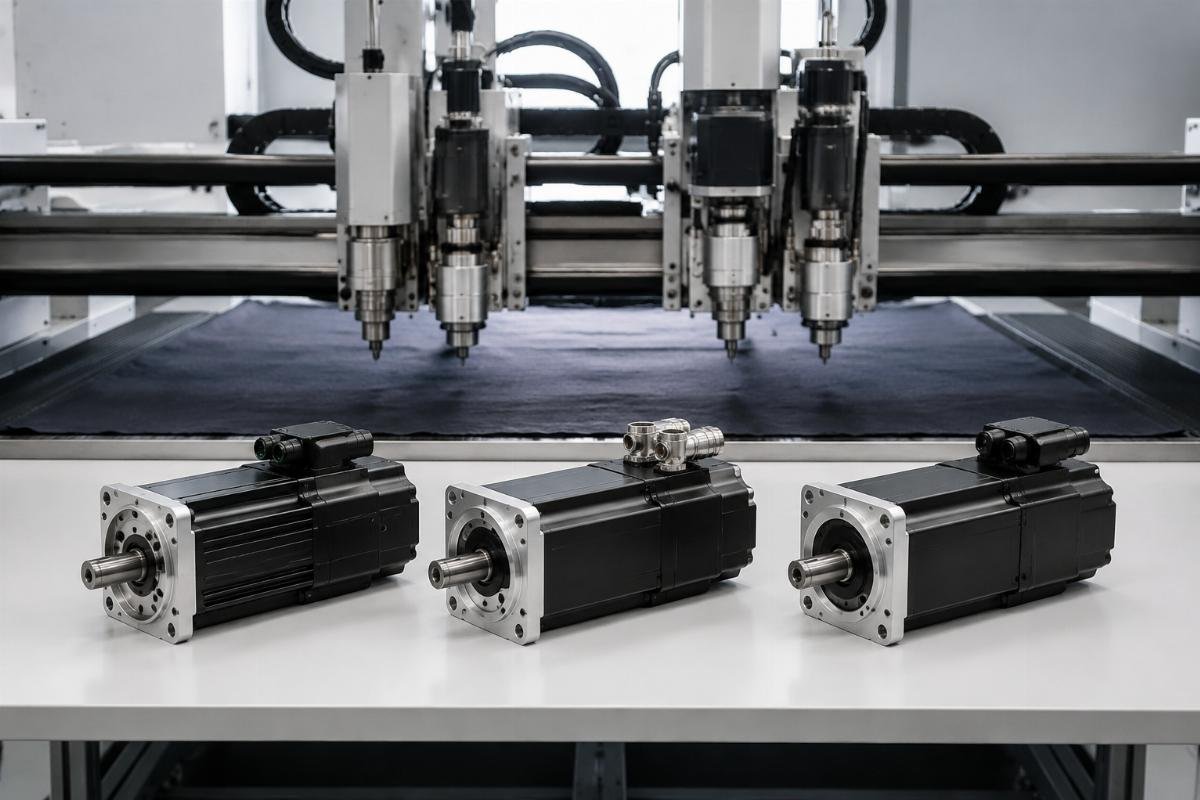
I see it every week in customer calls. Someone asks me which motor brand their new fabric cutting machine should have. They expect me to say one name. They want that easy answer. But I never give it. Why? Because that single-brand answer would cost them money or performance, and sometimes both. Motor brand choice is not about prestige. It is about matching your actual cutting work to the motor's real capabilities, then calculating what that motor will truly cost you over five years.
Motor brand does not predict fabric cutting performance. What matters is whether the specific motor series matches your material thickness, cutting speed requirements, production volume, and how fast you can get replacement parts when something breaks. A prestigious brand name on a mismatched motor series will underperform a correctly specified motor from a less famous maker.
I learned this the expensive way when we built our first batch of composite fabric cutters in 2009. We installed what everyone called the best motors. They were Japanese. They were expensive. And they failed our customer's production targets because we picked the wrong series for high-acceleration short-path cutting patterns. That failure taught me to stop asking "which brand" and start asking "which motor configuration solves this specific cutting problem."
Why Does Motor Brand Actually Matter in Fabric Cutting Equipment?
Most buyers think motor brand matters because better brands make better machines. That logic sounds right. But it skips over what actually happens inside your production line. The motor does not cut fabric. The motor turns rotational force into linear motion through a transmission system1, which moves a cutting head across material at programmed speeds and acceleration rates. If the motor cannot deliver the torque curve your transmission needs, or if it overheats during your duty cycle, brand reputation will not save your production schedule.
Motor brand matters for three operational reasons: parts availability when something breaks, compatibility with your existing control systems, and whether the motor's actual specifications match your cutting parameters. Brand reputation becomes relevant only after you verify these three factors.
What Performance Differences Actually Exist Between Motor Brands?
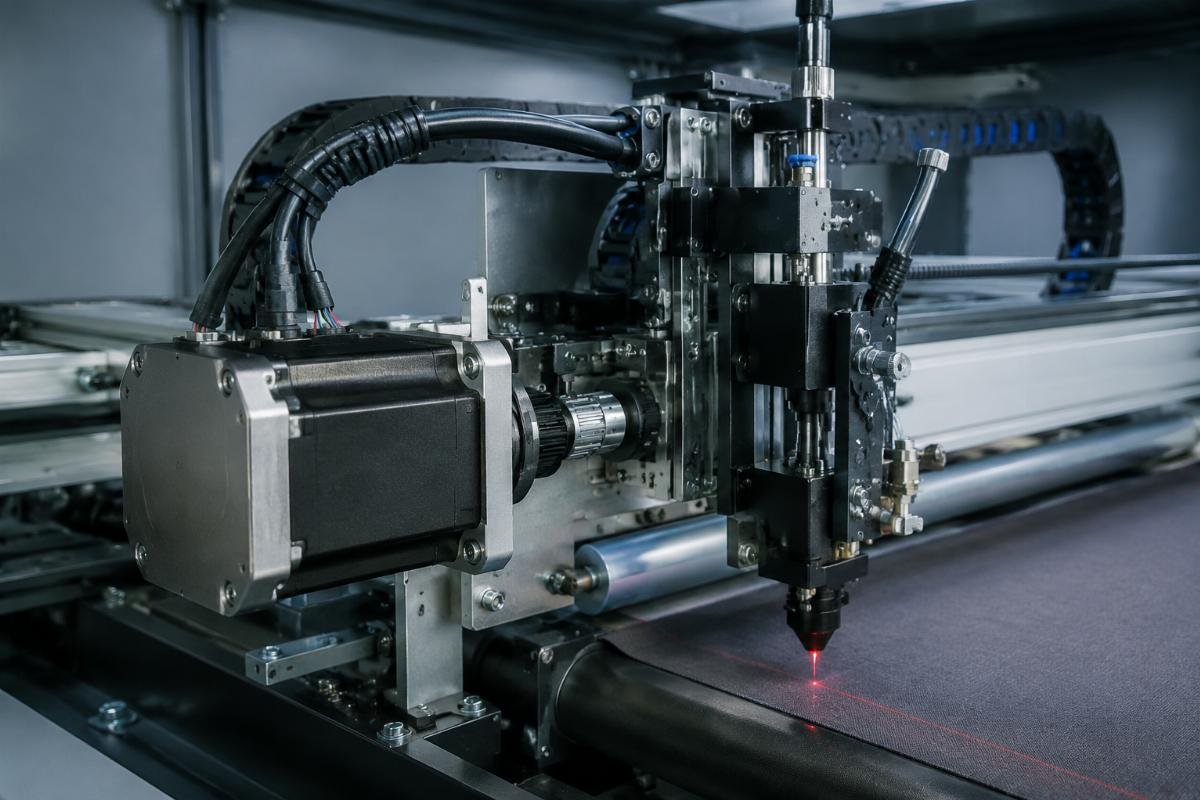
Here is what confused me for years. I would compare spec sheets from Japanese, European, and Chinese motor makers. The numbers looked similar. Rated torque, speed range, encoder resolution—all within 10-15% of each other for motors in the same price range. So where was the legendary performance gap everyone talked about?
The gap is not in the headline specs. It lives in three places most buyers never check. First, thermal performance under continuous operation. Some motors hit their rated specs for 30 minutes, then derate by 20% as they heat up2. Others maintain full output for eight-hour shifts. Second, acceleration response time. Motors with identical rated RPM can have 40% different acceleration curves, which directly affects your cutting speed on small parts. Third, encoder stability over voltage fluctuations. Cheap power supply systems in some factories cause position drift in motors with less robust feedback systems.
I discovered this when we ran a 72-hour test cutting automotive headliner fabric. We installed four different motor brands on identical machine frames, all rated for the same specifications. By hour 48, two motors were running 15% slower than their starting speed because of thermal derating. One motor's position accuracy drifted by 0.3mm because our customer's factory power supply had voltage sag during compressor startups. Only one motor maintained full performance through the entire test, and it was not the most expensive brand.
| Performance Factor | What Spec Sheets Show | What Actually Matters in Production |
|---|---|---|
| Rated Torque | Maximum torque at optimal temperature | Continuous torque during 8-hour shift at ambient temperature in your factory |
| Speed Range | Maximum RPM | Usable speed range within your acceleration/deceleration cycle time |
| Position Accuracy | Encoder resolution | Position stability under power fluctuations and temperature changes |
| Response Time | Not usually listed | Acceleration/deceleration time for your typical cutting path length |
The real performance question is not which brand is better. The question is which motor series, from which brand, maintains the specifications you need under your actual operating conditions. That is a much harder question to answer, which is why most buyers default to brand reputation instead.
How Do Motor Costs Compare Beyond the Purchase Price?
I had a customer last year who wanted to save 30% on machine cost by specifying cheaper motors. I showed him a cost breakdown that changed his mind. The motor purchase price was $800 versus $1,200 for the alternative. Over five years, here is what the cheaper motor actually cost him.
Initial motor cost represents only 25-35% of total ownership expense. The remaining 65-75% comes from energy consumption differences, maintenance labor, replacement parts availability, and downtime costs when motors fail during production. A motor that costs 40% less to buy can cost 60% more to operate.
Where Do Hidden Motor Costs Come From?
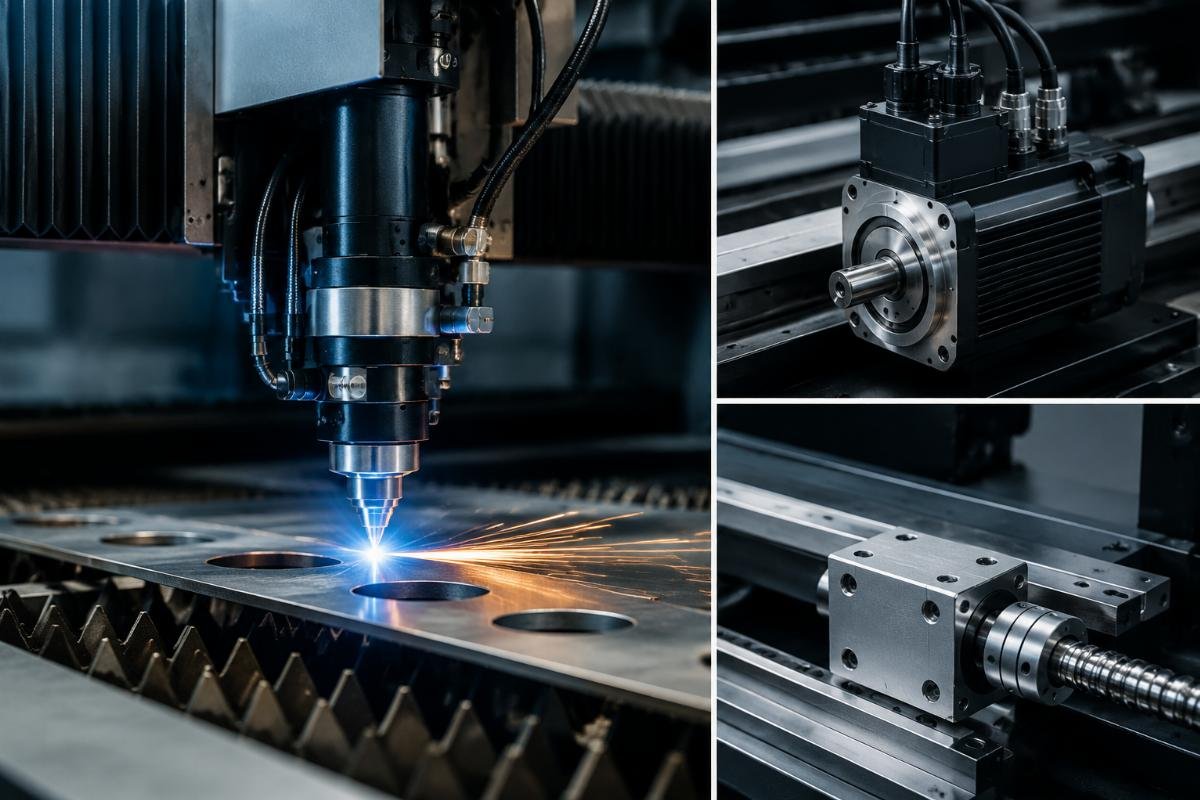
Energy cost hit me as a surprise. I knew different motors had different efficiency ratings, but I did not do the math until a customer asked me to. A cutting machine typically runs motors for 6-8 hours per day, 250 days per year. A motor with 85% efficiency versus 92% efficiency wastes about 400 kWh more per year3. At $0.12/kWh, that is $48 per year per motor. Multiply by four motors per machine over five years, and you just spent $960 on electricity that did not cut any fabric.
Parts availability creates the bigger cost shock. When a motor fails, you need a replacement immediately, not in six weeks. Japanese and European motor brands have excellent technical support, but their spare parts often ship from overseas. Lead time runs 3-8 weeks unless you stock spares yourself. Chinese motor makers have faster parts delivery in Asia, but their technical documentation can be incomplete. I keep this breakdown in mind:
- Premium European motors: 6-8 week parts lead time, excellent technical support, high parts cost
- Japanese motors: 4-6 week parts lead time, good technical support, medium-high parts cost
- Chinese Tier-1 motors: 1-2 week parts lead time in Asia, improving technical support, medium parts cost
- Chinese Tier-2 motors: 1-3 week parts lead time, variable technical support quality, low parts cost
One customer calculated downtime cost at $1,200 per day for their production line. A motor failure that required a six-week parts delivery cost them $50,400 in lost production, compared to a $1,200 motor price difference. After that experience, they started stocking spare motors regardless of brand, which added $4,800 to their working capital but protected them from extended downtime.
How Should You Calculate Real Motor ROI?
I use a simple framework now. Take the motor purchase price, then add these multipliers based on actual operating data from our customer base:
- Purchase price = baseline cost
- Energy cost over 5 years = baseline × 0.4 to 0.6 (depending on efficiency and operating hours)
- Maintenance labor = baseline × 0.2 to 0.3 (depending on motor robustness and your maintenance skill level)
- Spare parts inventory = baseline × 0.5 to 1.0 (depending on parts lead time versus your downtime tolerance)
- Expected downtime cost = (baseline × 2 to 4) × (probability of failure × days out of service)
When I run this calculation with real numbers, the total cost difference between motor brands shrinks considerably. A $800 motor that needs $2,400 in total support costs you $3,200. A $1,200 motor that needs $1,800 in support costs you $3,000. The premium brand actually costs less, but only if you account for the full ownership picture.
What Motor Specifications Should Match Your Cutting Requirements?
This is where most purchasing decisions go wrong. Buyers ask for a specific motor brand without checking whether that brand offers a motor series that fits their cutting application. I had a customer who insisted on a particular European motor brand. Great motors. But the series he wanted was designed for continuous-duty applications like conveyor systems, not the high-acceleration intermittent duty cycle of fabric cutting. We installed it anyway because he insisted. The motor worked fine but ran 20% slower than it could have because it was thermally conservative for a different application.
Motor selection must start with your cutting task parameters: material thickness, cutting speed, acceleration requirements, duty cycle, and path complexity. After you define these parameters, you can identify which motor series from various brands can meet them, then compare those specific models on cost and support factors.
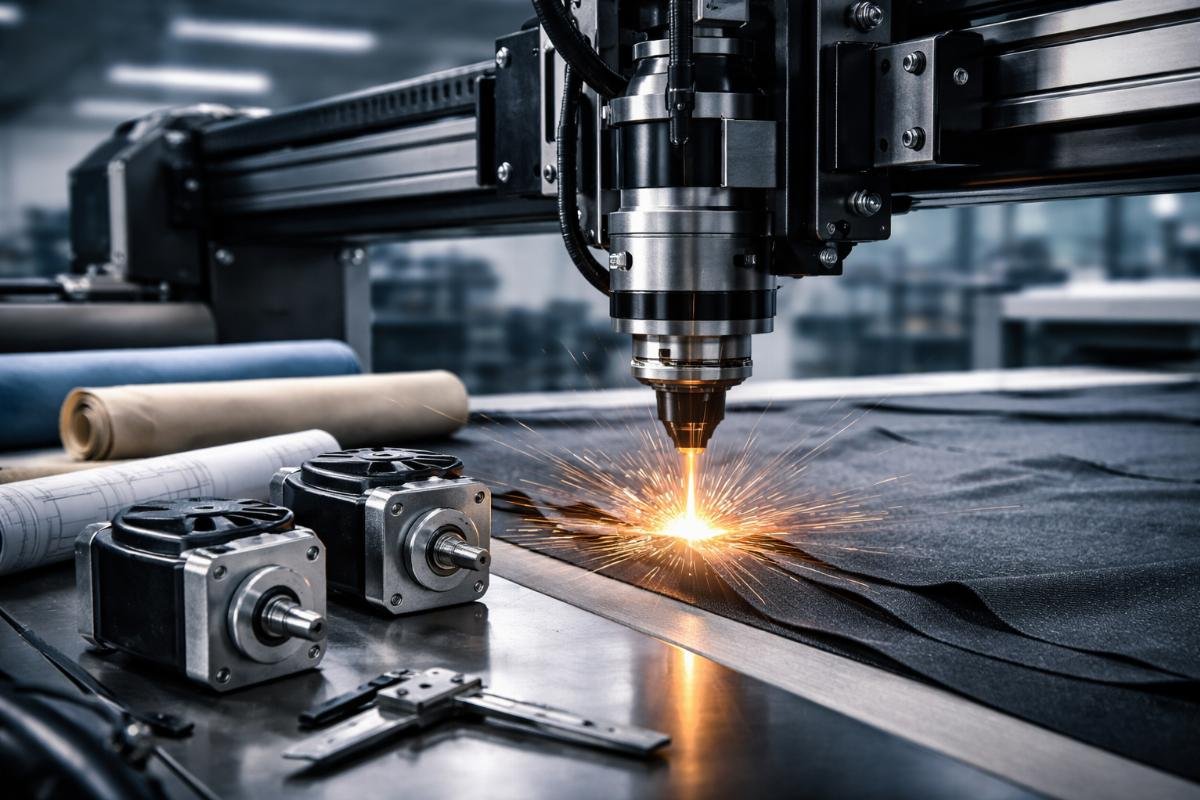
Which Motor Parameters Affect Cutting Performance?
Torque and speed get all the attention, but they are not the whole story. Here is what I actually check when matching motors to cutting requirements:
Continuous torque rating at operating temperature. This determines whether the motor can maintain your required cutting speed through a full production shift. Peak torque ratings mean nothing if the motor derates after 20 minutes. I ask motor suppliers for continuous torque curves at 40°C ambient temperature, which is typical for factory environments.
Acceleration torque capacity. Fabric cutting involves constant speed changes as the cutting head follows programmed paths. Short straight cuts require rapid acceleration and deceleration. If your typical cutting path length is under 200mm, acceleration torque matters more than top speed. I look for motors that can deliver 150-200% of rated torque during acceleration phases.
Encoder resolution and stability. Position accuracy matters when you cut patterns that must align with printed graphics or match assembly tolerances. Encoder resolution needs to match your required position accuracy4, but encoder stability under real conditions matters more. I test this by running motors through temperature cycles and voltage variations to see if position feedback stays consistent.
Thermal management design. Motors generate heat. That heat must dissipate or it will reduce motor performance and shorten motor life5. I check for forced cooling fans, heat sink design, and thermal shutdown protection. Motors without adequate cooling will derate their output as they heat up, which means your cutting speed drops during production.
How Do Different Materials Change Motor Requirements?
Single-layer cotton fabric needs different motor characteristics than 5mm foam-backed automotive carpet. I learned this by watching motors struggle with materials they were not matched to. Light fabrics need high acceleration for fast direction changes but low continuous torque. Heavy layered materials need high continuous torque but can tolerate slower acceleration. Here is how I think about material-to-motor matching:
Thin woven fabrics (cotton, polyester, silk): High acceleration, medium speed, low torque. Look for motors with fast response time and good acceleration torque but moderate continuous ratings.
Technical textiles (carbon fiber, fiberglass, aramid): Medium acceleration, high speed, medium-high torque. These materials resist cutting so you need sustained torque, but they are thin so you can run faster speeds.
Foam and padding materials (polyurethane foam, batting, cushion materials): Low acceleration, medium speed, medium torque. Foam compresses rather than cuts cleanly6, so you need consistent speed more than quick direction changes.
Leather and synthetic leather: Low-medium acceleration, low-medium speed, high torque. Leather thickness varies across the hide7, so motors need torque reserve to maintain speed through thick sections without stalling.
Composite laminates (fabric bonded to foam, adhesive-backed materials): Low acceleration, low-medium speed, high torque, good torque stability. Multiple material layers create variable cutting resistance, so you need motors that maintain speed under changing load.
I do not pick motors by brand for these applications. I pick motor series with torque curves that match the material's cutting resistance profile, then look at which brands offer that motor series with acceptable delivery time and support quality.
How Should You Evaluate Motor Brand Claims?
Motor marketing annoys me. Every brand claims superior precision, reliability, and performance. These claims mean nothing without context. When I evaluate motors now, I ignore marketing language and ask specific questions that reveal real capabilities.
Motor marketing translates engineering specifications into vague superiority claims. Cut through this by asking suppliers for performance data under conditions that match your actual application: your ambient temperature, your duty cycle, your acceleration requirements, and your position accuracy needs. If they cannot provide specific data, their marketing claims are not worth your trust.
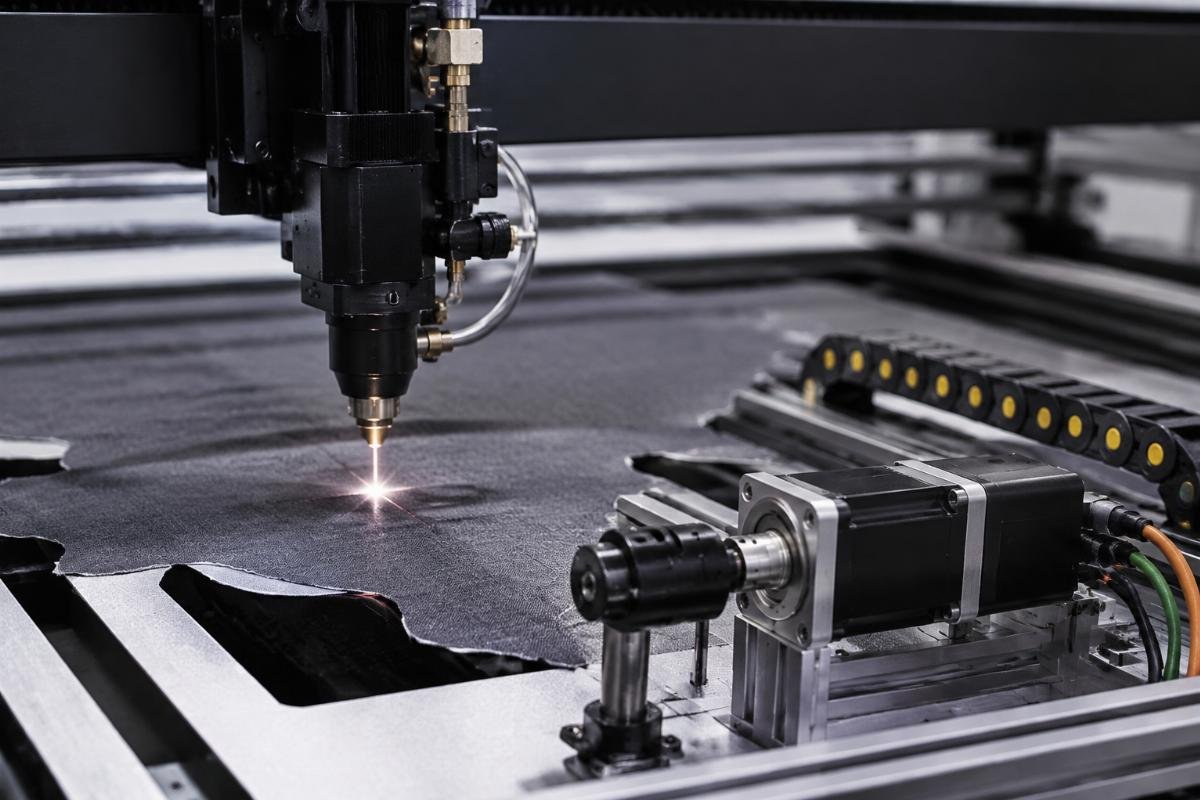
What Questions Expose Real Motor Capabilities?
I have a standard list now. These questions separate motors that will work from motors that will cause problems:
What is continuous torque rating at 40°C ambient temperature? This question reveals whether published specs are based on ideal lab conditions or real factory environments. Many motors lose 15-20% of rated torque when operating temperature rises from 25°C to 40°C8.
What is acceleration time from zero to rated speed under full load? Acceleration performance determines your cutting speed for short paths9. If the motor needs 500ms to reach operating speed, you waste that time on every direction change.
What is encoder drift specification over eight hours? Position accuracy degrades over time due to temperature changes, vibration, and electrical noise10. Good encoders hold position within specified accuracy limits throughout a production shift.
What is parts lead time to my location? This question cuts through marketing to reveal supply chain reality. A great motor that takes 12 weeks to repair will cost you more than a good motor you can fix in one week.
What technical support language and time zone do you provide? When a motor fails at 2 AM during a rush order, you need support that answers calls and speaks your language. Motor brand prestige means nothing if you cannot get help when you need it.
How Can You Test Motor Performance Before Committing?
I do not buy motors based on spec sheets anymore. I test them under real conditions when possible, or I demand test data from conditions that match my application. Here is what I ask for:
Run a sample cutting program on test material for four hours. Measure cutting speed at 30-minute intervals to check for thermal derating. Measure position accuracy at the end of the test to check for encoder drift. Compare actual performance to specification sheet claims.
When I cannot test motors myself, I ask suppliers for test reports from independent labs that show performance under conditions matching my application. Generic test reports do not help. I need data for my materials, my cutting speeds, my acceleration requirements, and my production environment temperature.
This testing adds time and cost to motor selection, but it prevents expensive mistakes. One customer saved $15,000 by discovering during testing that cheaper motors could not maintain specified cutting speed under production conditions. They paid for testing but avoided a failed equipment installation.
Conclusion
Motor brand choice matters less than motor specification match to your cutting requirements, total ownership cost analysis, and parts availability for your location. Stop asking which brand is best, and start asking which motor series delivers the performance you need at a total cost you can justify with supply chain response times you can tolerate.
"Rotary to Linear Motion – Exploring MechSE Summer Camp - Illinois", https://publish.illinois.edu/exploringmechse/rotary-to-linear-motion/. Transmission systems convert rotational motor output into linear motion through mechanisms such as ball screws, rack-and-pinion drives, or belt systems, which are fundamental to CNC machine tool design. Evidence role: mechanism; source type: education. Supports: the mechanical principle of converting rotational motor force into linear motion through transmission systems. Scope note: This source explains the general mechanical principle but may not specifically address fabric cutting applications. ↩
"Electric Motor Thermal Management Research", https://docs.nlr.gov/docs/fy18osti/67121.pdf. Electric motors experience thermal derating when operating temperature exceeds design parameters, with performance reductions typically ranging from 10-25% depending on cooling design and ambient conditions. Evidence role: mechanism; source type: education. Supports: the phenomenon of motor thermal derating during continuous operation. Scope note: The exact 20% figure and 30-minute timeframe are application-specific and may vary by motor design. ↩
"[PDF] Determining Electric Motor Load and Efficiency - Department of Energy", https://www.energy.gov/sites/prod/files/2014/04/f15/10097517.pdf. Energy consumption differences between motors can be calculated using the formula: Energy waste = (Power × Hours × (1/Efficiency_low - 1/Efficiency_high)), with actual values depending on motor load profile and operating hours. Evidence role: mechanism; source type: education. Supports: the method for calculating energy waste differences between motors of varying efficiency ratings. Scope note: The 400 kWh figure depends on specific assumptions about motor power rating and operating hours that should be verified for each application. ↩
"Encoder Resolution, Encoder Accuracy & Repeatability | Dynapar", https://www.dynapar.com/knowledge/encoder-basics/encoder-resolution/encoder-resolution-encoder-accuracy-repeatability/. Position accuracy in servo systems depends on encoder resolution, mechanical transmission accuracy, and control system performance, with encoder resolution typically specified at 4-10 times finer than required position accuracy to account for system errors. Evidence role: mechanism; source type: education. Supports: the relationship between encoder resolution and achievable position accuracy in motion control systems. ↩
"[PDF] Electric Motor Thermal Management R&D", https://www.nrel.gov/docs/fy15osti/63004.pdf. Inadequate heat dissipation in electric motors causes winding insulation degradation, bearing lubricant breakdown, and magnet demagnetization, reducing both immediate performance and long-term reliability according to established thermal aging models. Evidence role: mechanism; source type: education. Supports: the impact of thermal management on motor performance and operational lifespan. ↩
"Cutting soft materials: how material differences shape the response", https://arxiv.org/html/2507.13565v1. Cellular foam materials exhibit significant compression ahead of the cutting edge due to their low elastic modulus and cellular structure, requiring different cutting parameters than non-compressible materials to achieve clean edge quality. Evidence role: mechanism; source type: research. Supports: the compression behavior of foam materials during cutting operations. ↩
"Leather 101: Thickness and Temper - The Leather Guy", https://theleatherguy.org/blogs/leather-101/leather-101-thickness-and-temper?srsltid=AfmBOoqBqqDxzSEm1PzfltWqnZqxd3upl2mPtZ0835t5DxRdssopi_qv. Natural leather exhibits thickness variations across the hide due to biological factors, with typical variation ranges of 0.5-2.0mm between different anatomical regions, affecting processing requirements in manufacturing applications. Evidence role: general_support; source type: education. Supports: the natural thickness variation found in leather hides. ↩
"Motor Derating Due To High Ambient Temperatures - Kollmorgen", https://www.kollmorgen.com/en-us/blogs/motor-derating-due-to-high-ambient-temperatures. Electric motor torque capacity decreases with rising ambient temperature due to reduced thermal headroom for winding heat dissipation, with derating factors typically ranging from 10-25% for temperature increases of 15-20°C above rated conditions. Evidence role: statistic; source type: education. Supports: the typical range of motor torque reduction with increasing ambient temperature. Scope note: Specific derating percentages vary by motor design, cooling method, and insulation class. ↩
"Jerk (physics) - Wikipedia", https://en.wikipedia.org/wiki/Jerk_(physics). For motion profiles with short path lengths, acceleration and deceleration phases consume a significant portion of total cycle time, making acceleration capability more important than maximum velocity for overall throughput in applications with frequent direction changes. Evidence role: mechanism; source type: education. Supports: the relationship between acceleration capability and effective speed in short-path motion profiles. Scope note: The specific path length threshold where acceleration becomes limiting depends on maximum velocity and acceleration rates of the system. ↩
"Robust position servo system based on vibration suppression ...", https://ui.adsabs.harvard.edu/abs/2010ipec.conf..364O/abstract. Encoder position accuracy is affected by thermal expansion of mechanical components, vibration-induced signal noise, and electromagnetic interference, with cumulative effects that can cause position drift in precision motion control systems. Evidence role: mechanism; source type: education. Supports: the environmental and operational factors that affect encoder position accuracy over time. ↩