

Blog
China Auto-Focus Laser Head vs IPG Warranty: OEM Supplier

China Auto-Focus Laser Head vs IPG Warranty: OEM Supplier
Most buyers confuse "warranty length" with "coverage scope," leading to unexpected operational costs.
The core difference between premium brands like IPG and Chinese factory alternatives is not just the duration of the warranty, but what is explicitly excluded. While a three-year warranty sounds identical on paper, IPG typically covers the laser source module against significant power attenuation, whereas many standard warranties from Chinese suppliers exclude optical components entirely, classifying them as consumables. Understanding this distinction is critical for accurate total cost of ownership calculations.
I remember standing at a booth in Hanover, watching an Italian buyer hold up a warranty certificate from a major brand. He asked if we could match the "three-year global coverage" for his new line. I took the document and pointed to the fine print: the warranty covered the source only if power dropped below a specific threshold, not if a lens cracked due to thermal stress. Later, a German client faced a similar situation. His cutting head stopped working, and he assumed it was a warranty claim. The manufacturer rejected it because the damage was traced to a contaminated protective window, which they classified as a maintenance item, not a defect. That experience shifted how I evaluate every quote. It is not about who offers more years, but who defines "failure" in a way that aligns with your production reality. [NEED_CITE: standard warranty exclusion clauses for industrial laser optics]
This distinction matters because downtime costs far more than the replacement part. When evaluating an IPG laser head warranty vs Chinese factory options, you must look beyond the headline number.
What Does "3-Year Warranty" Actually Cover?
A warranty for the laser source is not a warranty for the entire cutting head assembly.
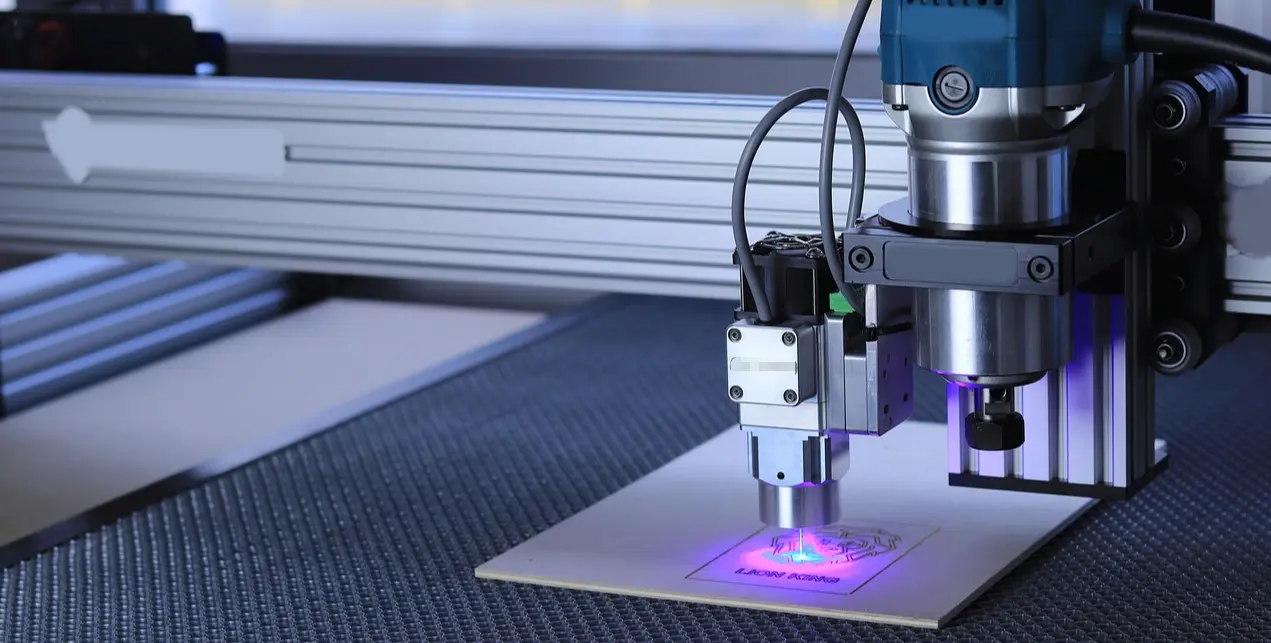
Many procurement managers assume that if the laser stops cutting, the manufacturer will fix it for free. This is rarely the case. The laser source (the fiber generator) is distinct from the cutting head (the optics, collimator, and focus lens). Premium brands often separate these into different service agreements.
| Component | Typical Premium Brand Coverage | Typical Standard Factory Coverage |
|---|---|---|
| Laser Source Module | Covered for power attenuation defects | Covered for complete failure only |
| Collimating Lens | Often excluded or limited | Usually excluded |
| Focus Lens | Excluded (Consumable) | Excluded (Consumable) |
| Protective Window | Excluded (Consumable) | Excluded (Consumable) |
| Cooling System | Separate warranty or excluded | Often excluded |
| Control Cables | Limited coverage | Often excluded |
[NEED_CITE: industry standard breakdown of laser system component warranties]
A European packaging firm once confused a "20% power attenuation" clause with a general failure guarantee. They expected a replacement when their cutting speed slowed down. However, the manufacturer required proof that the power drop was due to internal source degradation, not dirty optics. After weeks of back-and-forth, they realized the issue was a degraded lens, which was not covered. This highlights why reading the definition of "defect" is more important than counting the years.
When comparing an IPG laser head warranty vs Chinese factory providers, ask specifically if the warranty includes the optical path. If it does not, you are responsible for the most frequent failure points.
The "Attenuation" Trap: When Is a Laser Considered "Broken"?
Power drop is a gradual process, and warranties only kick in at a specific, often high, threshold.
Laser sources do not usually fail suddenly; they degrade. Manufacturers define "end of life" or "warranty claim" based on a percentage of power loss. For many premium brands, this threshold is set at a level that ensures the laser is still usable for many applications, meaning you might not qualify for a replacement even if performance has noticeably dropped.
The technical definition of attenuation involves the stability of the output power over time. If a laser is rated for 3kW and drops to 2.5kW, some manufacturers consider this within normal operating variance unless it falls below a strict limit, such as 80% of the original rating. [NEED_CITE: laser power stability standards and attenuation definitions]
A local sheet metal shop compared the upfront price of a premium source against a standard alternative. They assumed the premium brand would last longer without issues. However, after two years of high-duty cycling, both lasers showed similar levels of power drift. The premium brand refused to replace the unit because the power was still above the 20% attenuation limit. The shop had to pay for a manual recalibration and lens cleaning, which cost nearly as much as the initial savings from choosing the cheaper option.
This trap is common when buyers focus on the brand name rather than the technical specifications. In an IPG laser head warranty vs Chinese factory comparison, check the attenuation clause. A lower threshold for claims might be more valuable than a longer warranty period with a high threshold.
Hidden Costs: Why Optics Are Rarely Included in Standard Warranties
Optical contamination and lens degradation cause the majority of downtime, yet they are almost never covered.
It is a common misconception that the laser source is the main failure point. In reality, the optical path is vulnerable to dust, smoke, and thermal stress. Lenses and protective windows are classified as consumables because they wear out during normal operation. [NEED_CITE: root cause distribution of laser cutter downtime per ISO maintenance reports]
A German automotive supplier claimed lens damage during the warranty period. The manufacturer rejected the claim, citing "consumable classification." The buyer had to purchase new optics, which accounted for a significant portion of their annual maintenance budget. This incident revealed that the real cost driver was not the source, but the recurring need for high-quality optics.
When evaluating an IPG laser head warranty vs Chinese factory options, calculate the cost of consumables. Premium brands often charge a premium for replacement lenses, while Chinese factories may offer more affordable aftermarket options. However, the quality of these optics varies. Poor-quality lenses can degrade faster, leading to more frequent replacements and potential damage to the source itself.
The key is to establish a regular maintenance protocol. Cleaning lenses and checking for contamination can extend the life of your optics and prevent unnecessary downtime. Some suppliers offer maintenance kits or training as part of the package, which can be more valuable than a slightly longer warranty on the source.
IPG vs. Chinese Factories: A Total Cost of Ownership Comparison
Lower upfront cost can offset higher perceived risk if maintenance protocols are strictly followed.
The decision between a premium brand and a Chinese alternative should be based on total cost of ownership (TCO), not just the purchase price. TCO includes the initial capital expenditure, ongoing maintenance, consumables, and potential downtime costs.
For many applications, especially those involving flexible materials, the risks associated with laser warranties become irrelevant. This is where alternative technologies come into play. For example, in the packaging and apparel sectors, laser cutting is often replaced by oscillating knife systems. These systems do not use lenses or generate heat, eliminating the warranty headaches associated with optical attenuation and thermal damage.
Realtop’s oscillating knife solutions offer a "no-lens, no-attenuation" alternative. By removing the laser source entirely, buyers avoid the complex warranty terms and hidden costs of optical maintenance. The precision of ±0.1mm and the ability to cut multiple layers of fabric, cardboard, or leather without burnt edges provide a reliable solution for short-run and prototype production.
When comparing an IPG laser head warranty vs Chinese factory lasers, consider if a non-laser solution might better fit your needs. If your primary materials are sensitive to heat or require high edge quality without post-processing, an oscillating knife cutter might offer a better ROI. The absence of a laser source means no warranty claims for power attenuation, no expensive lens replacements, and no risk of optical contamination.
This shift in technology can simplify your procurement process. Instead of negotiating complex warranty terms, you focus on cutting speed, precision, and material versatility. The 3-year warranty on Realtop machines covers the mechanical and electronic components, which are less prone to the ambiguous failures seen in laser systems.
Conclusion
Warranty length is a marketing metric; coverage scope is the real cost driver.
Buyers must distinguish between source warranty and system warranty. Hidden costs in optics and attenuation clauses can negate the benefits of a premium brand. For many flexible material applications, moving away from laser technology entirely eliminates these risks.

