

Blog
CNC Oscillating Knife Cutter for Elevator Parts: OEM Manufacturer

CNC Oscillating Knife Cutter for Elevator Parts: OEM Manufacturer
A handheld laser welder cannot fix a seal that was cut incorrectly.
The core issue in elevator component fabrication is not the joining method, but the initial cutting precision of complex, multi-layered materials. For wire-reinforced fire-resistant seals and composite floor coverings, a handheld laser welder for steel wire reinforced seals is fundamentally mismatched to the task. These materials require cold-cutting technology with micron-level compensation to maintain structural integrity and safety compliance. Using thermal or manual methods on layered composites leads to delamination, poor fit-up, and significant production downtime. The correct solution involves dedicated oscillating knife systems designed specifically for the heterogeneous material stacks found in modern elevator cars.
I remember standing in a workshop in Riyadh, the air thick with the smell of burnt rubber and ozone. A client pointed at a jagged edge on a fire-resistant seal, the steel wire core protruding like a broken bone. "This is your precision?" he asked. The machine they had purchased was marketed as a universal cutter, but it lacked the specific high-frequency vibration needed to slice through the steel reinforcement without tearing the surrounding rubber matrix. The previous supplier had treated the seal as a simple gasket, ignoring the composite nature of the material. It took swapping to a specialized oscillating head with automatic tool compensation to achieve the required tolerance. This experience highlights a critical gap in the market: the assumption that one tool can handle all "elevator parts." In reality, the material layering dictates the machinery. [NEED_CITE: material compatibility standards for elevator sealing components]
The industry is shifting towards digital, die-less cutting solutions, yet many manufacturers still attempt to retrofit old workflows with inappropriate tools. Understanding why a handheld laser welder for elevator parts fails in these specific applications requires a deep dive into material physics and fabrication logic.
Why Are Elevator Manufacturers Considering Handheld Laser Welders?
Speed and portability drive the initial interest, but the application scope is often misunderstood.
Manufacturers are under constant pressure to reduce assembly time in elevator carriages. The appeal of a handheld laser welder for elevator parts lies in its ability to join metal frames quickly without the setup time of traditional fixtures. In scenarios involving pure metal assembly, such as welding carriage interior panels, laser welding offers noticeable time savings and reduced material waste compared to conventional methods. [NEED_CITE: comparative efficiency of laser welding vs traditional methods for elevator fabrication]
However, this enthusiasm often spills over into areas where thermal processes are detrimental. Many buyers assume that because laser welding works for steel frames, it can also address issues with sealing components or composite flooring. This is a dangerous misconception. Laser welding is a joining process, not a cutting or forming process for non-metallics. When applied to the wrong context, it does not solve the root cause of assembly delays, which is often poor part fit-up due to inaccurate prior cutting.
Consider the case of retrofitting carriage interiors. While a handheld laser welder for steel wire reinforced seals might seem like a versatile addition to the toolkit, it cannot compensate for gaps caused by imprecise seal cutting. If the seal is too wide or too narrow due to poor cutting quality, welding the frame around it will not create a proper fire or sound barrier. The defect originates in the cutting stage, not the welding stage. Manufacturers who invest in laser welding without addressing their cutting precision often find themselves welding around poorly fitted components, leading to rework and compromised safety standards.
The key takeaway is that laser welding is a valuable tool for metal joinery, but it is not a substitute for precise material preparation. For elevator manufacturers, the bottleneck is rarely the welding speed; it is the accuracy of the components being welded.
What Are the Hidden Risks in Retrofitting Sealing Components?
Laser welding cannot replace precise cutting for complex composites like wire-reinforced seals.
Sealing components in elevators are not simple rubber strips. They are complex composites, often featuring steel wire reinforcements for tensile strength and fire-resistant coatings for safety compliance. Cutting these materials requires a technology that can handle heterogeneous layers without causing delamination or heat damage. A handheld laser welder for elevator parts is entirely unsuitable for this task, as it introduces heat rather than removing material with mechanical precision.
The primary risk is failure to meet precision tolerances. Fire safety standards demand tight fits to prevent smoke and flame propagation. If a seal is cut with a blunt blade or a thermal method that melts the edges, the resulting gap can compromise the entire safety system. [NEED_CITE: international safety standards for elevator component fitment] In one instance, a manufacturer attempted to use a generic cutting tool for wire-reinforced seals, resulting in a high failure rate during quality control. The steel wires were frayed, and the rubber matrix was torn, making the seals unusable.
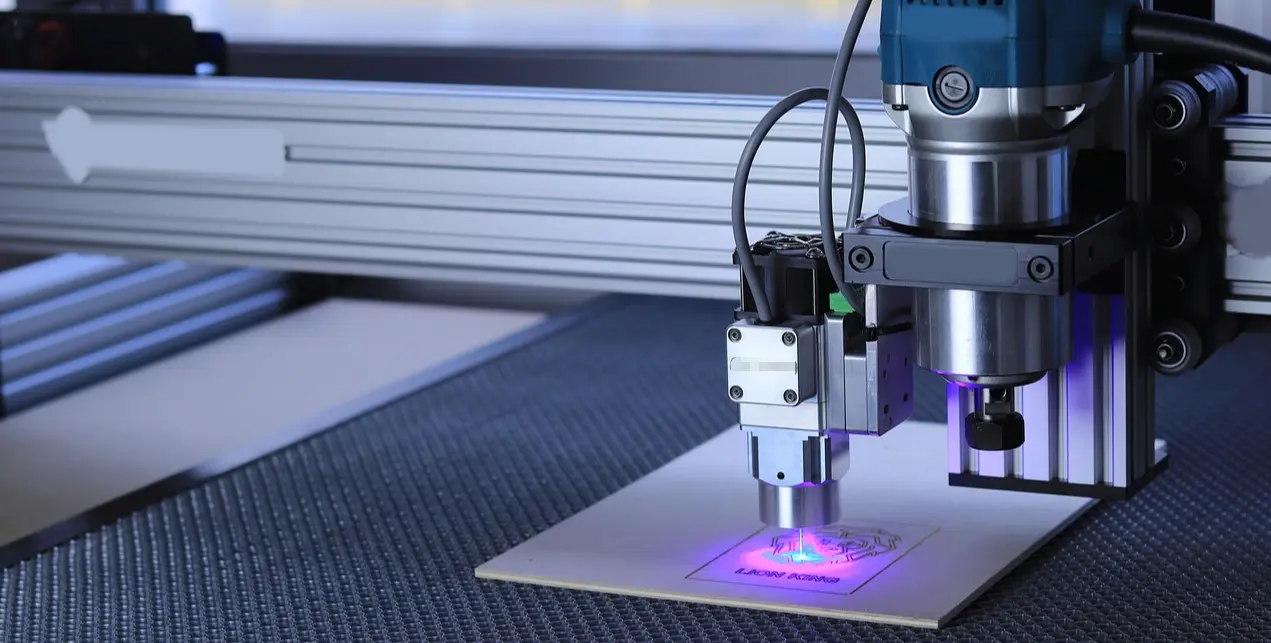
Switching to an oscillating knife system resolved the issue. The high-frequency vibration of the knife allows it to slice through the steel wire cleanly while leaving the rubber edges smooth and intact. This level of precision, often within ±0.1mm, is unattainable with manual or thermal methods. The difference is not just aesthetic; it is functional. A properly cut seal ensures consistent compression and long-term durability, reducing maintenance calls and warranty claims.
Furthermore, the use of inappropriate tools leads to increased material waste. When seals are cut incorrectly, they must be discarded, and the entire batch may need reprocessing. This waste accumulates quickly, eroding profit margins. By investing in the right cutting technology, manufacturers can significantly reduce scrap rates and improve overall production efficiency. The focus should be on getting the cut right the first time, rather than trying to fix poor fits with welding or adhesives.
How Does Material Layering Affect Your Fabrication Choice?
Different layers require specific tooling; a one-size-fits-all approach leads to line stoppages.
Elevator interiors consist of a variety of materials, each with different physical properties. Floor coverings may include layered composites of vinyl, foam, and fabric. Wall panels might feature laminated metals or plastics. Roof linings often use acoustic foams with protective skins. Each of these materials reacts differently to cutting forces. A tool that works well for solid rubber may fail miserably on a layered composite, causing the layers to separate or shift during cutting.
This variability is why a handheld laser welder for steel wire reinforced seals is not a viable solution for multi-material fabrication. Laser welding is designed for metal fusion, not for navigating the complex interfaces of layered non-metallics. Attempting to use thermal or manual methods on these materials often results in poor edge quality and dimensional instability.
For example, when cutting multi-layer floor coverings, the tool must be able to adjust its frequency and amplitude to match the density of each layer. An oscillating knife cutter can be equipped with different blades and settings to handle these variations seamlessly. In contrast, a fixed-tool approach requires constant manual adjustment and trial-and-error, leading to significant downtime. [NEED_CITE: technical data on tooling selection for composite materials]
The impact of material layering extends beyond just cutting quality. It affects the entire production workflow. If a manufacturer uses a single tool for all materials, they will inevitably encounter bottlenecks when processing difficult composites. This can delay entire orders and disrupt supply chains. By recognizing the specific requirements of each material layer, manufacturers can select the appropriate tooling and avoid these costly interruptions.
Understanding material layering is crucial for optimizing fabrication lines. It allows manufacturers to choose tools that are specifically designed for their product mix, ensuring consistent quality and efficient production. This targeted approach is far more effective than trying to force a general-purpose tool to perform specialized tasks.
When Should You Choose Oscillating Knife Technology Over Laser?
For non-metallic, layered, or heat-sensitive materials, oscillating knives offer superior precision and edge quality.
The decision between laser and oscillating knife technology comes down to material composition. Laser cutting and welding are excellent for metals and some plastics, but they struggle with materials that are sensitive to heat or have complex internal structures. Oscillating knife technology, on the other hand, is a cold-cutting process that relies on mechanical vibration to slice through materials. This makes it ideal for rubbers, foams, fabrics, and composites.
One of the main advantages of oscillating knife cutters is their ability to maintain precision across a wide range of materials. Unlike laser systems, which can cause melting or charring on heat-sensitive materials, oscillating knives produce clean, burr-free edges. This is particularly important for elevator parts, where aesthetic quality and functional fit are both critical. [NEED_CITE: precision benchmarks for oscillating knife vs laser cut edge quality]
Additionally, oscillating knife systems are highly versatile. They can be equipped with various tools, such as drag knives, punch tools, and creasing wheels, to handle different cutting tasks. This flexibility allows manufacturers to process a wide variety of elevator components on a single machine, from seals and gaskets to floor mats and wall panels. In contrast, a handheld laser welder for elevator parts is limited to metal joining and cannot perform these diverse cutting functions.
From a cost perspective, oscillating knife cutters often offer a better return on investment for manufacturers dealing with mixed materials. They have lower operating costs, as they do not require expensive gases or high-power lasers. Maintenance is also simpler, with fewer consumables and less specialized training required for operators. This makes them a practical choice for small to medium-sized enterprises looking to modernize their fabrication lines.
Ultimately, the choice of technology should be driven by the specific needs of the materials being processed. For elevator manufacturers, this means prioritizing cold-cutting solutions for non-metallic components and reserving laser technology for metal assembly. This balanced approach ensures optimal quality, efficiency, and cost-effectiveness.
Conclusion
Precision cutting is the foundation of reliable elevator assembly, not an afterthought.
The allure of quick fixes like a handheld laser welder for elevator parts often distracts from the fundamental need for accurate material preparation. For complex composites and wire-reinforced seals, only dedicated cold-cutting technologies like oscillating knife systems can deliver the required precision and edge quality. Manufacturers who prioritize tooling specificity over general-purpose versatility will see significant improvements in production efficiency and product reliability.

