

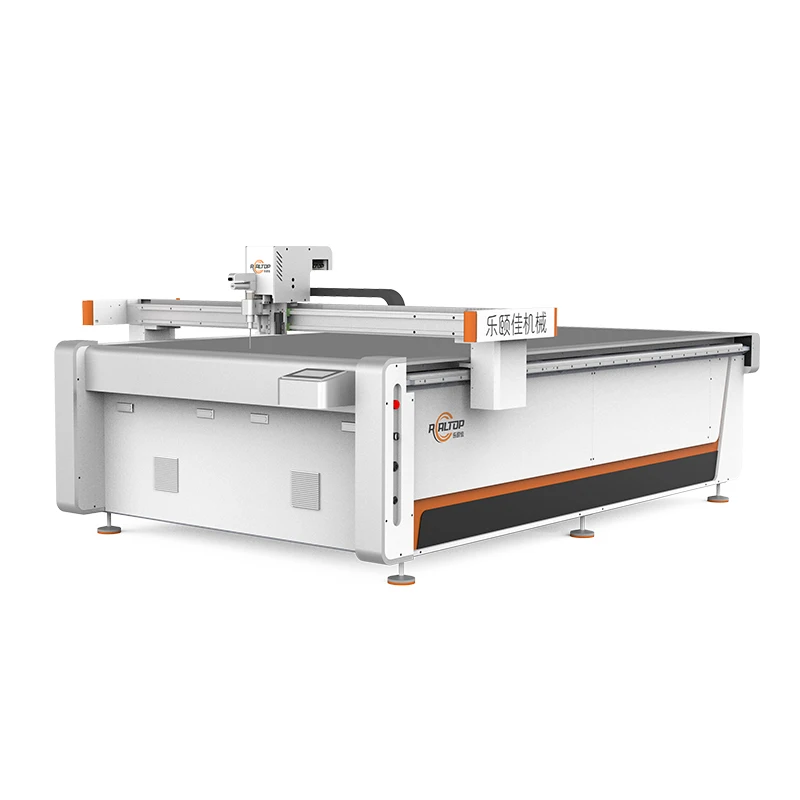
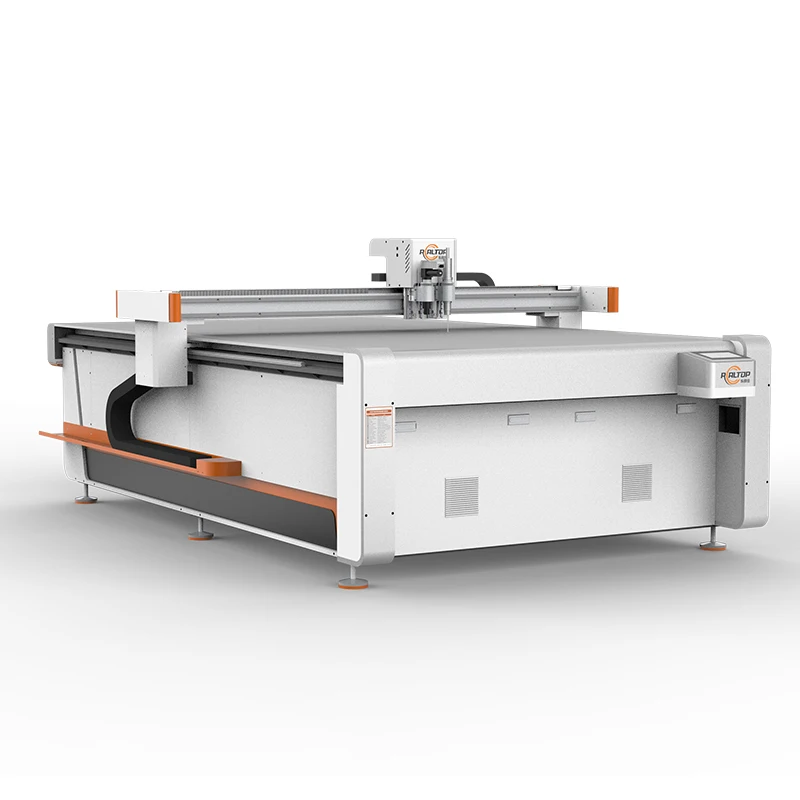
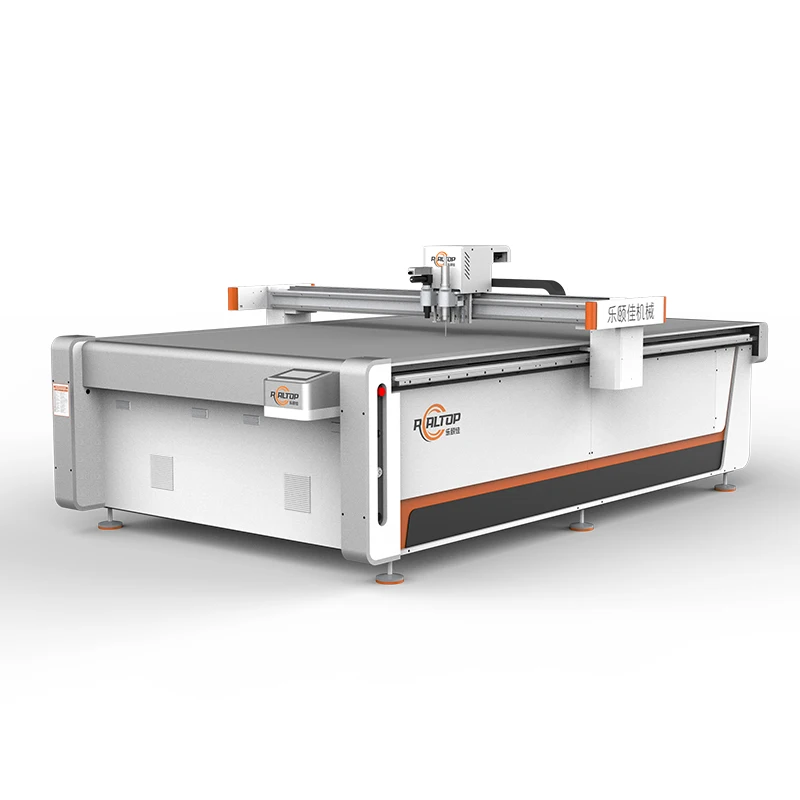
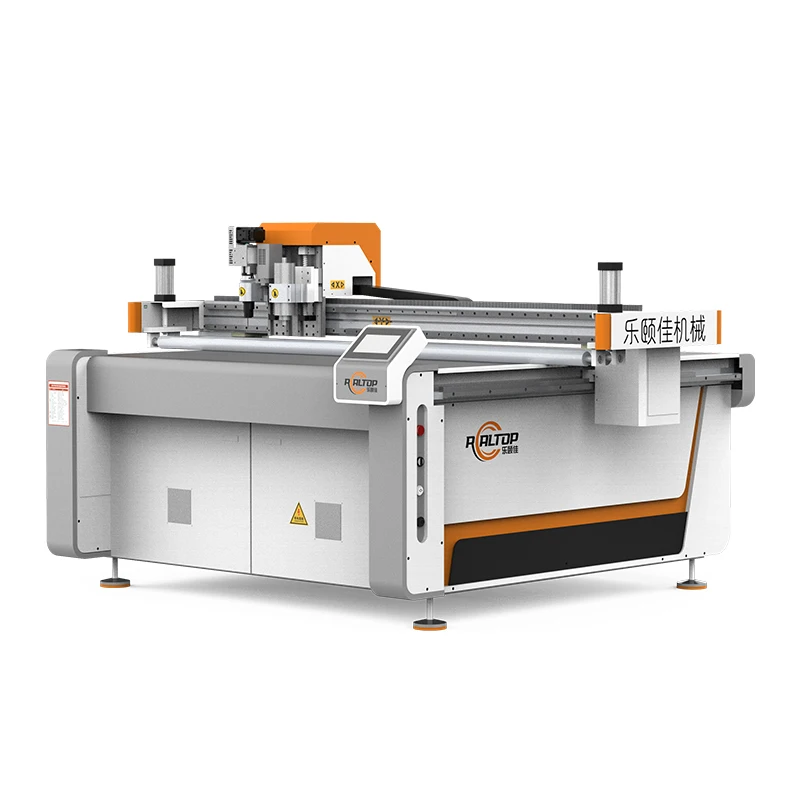

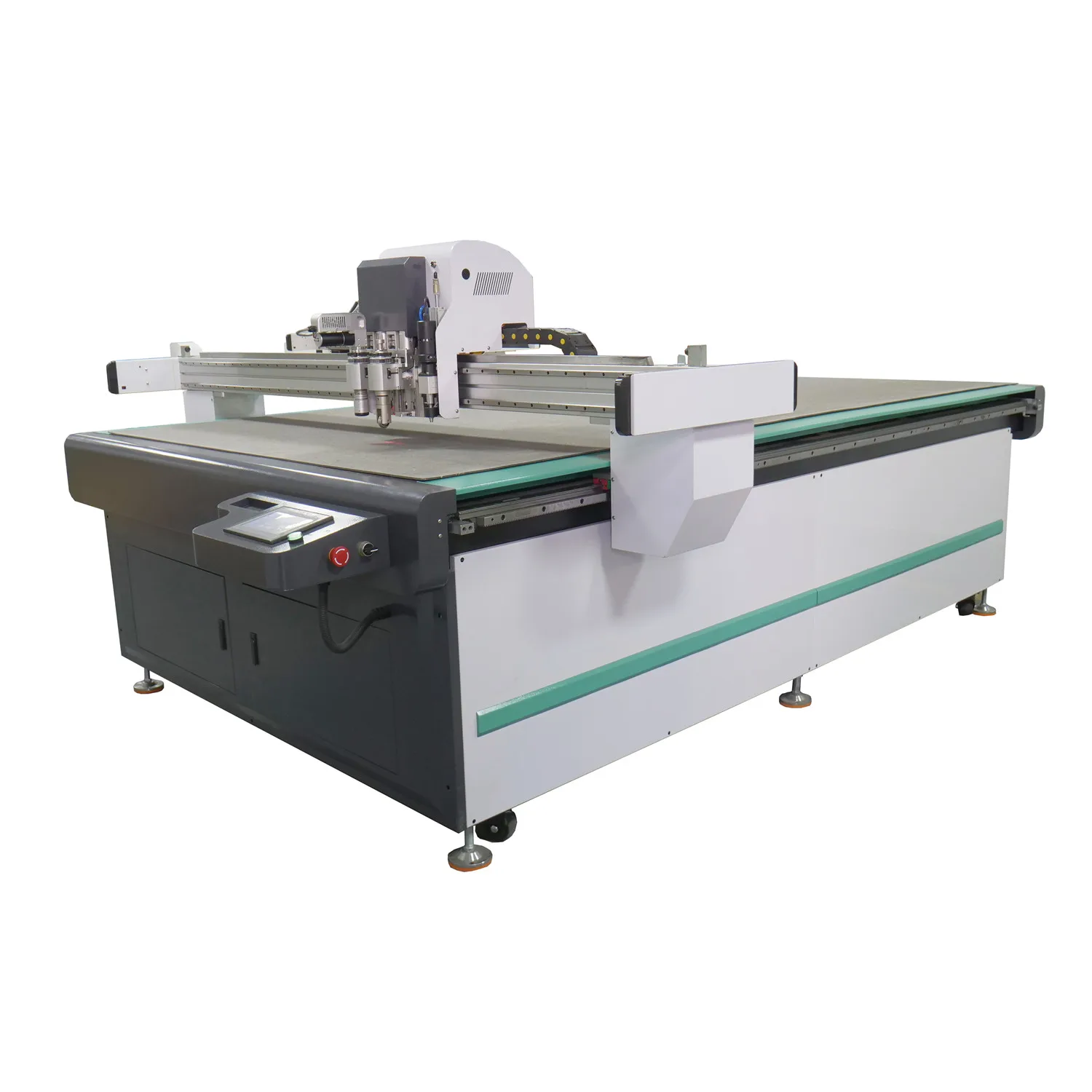
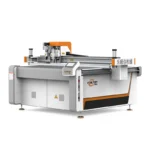
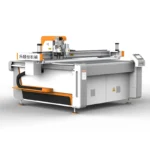
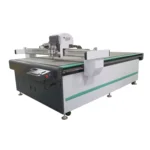
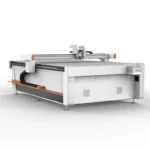
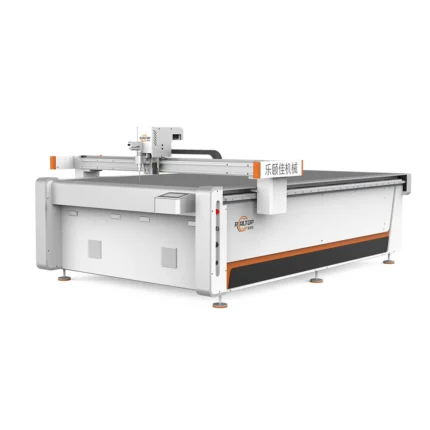
RT-D2516/RT-S2516 CNC Oscillating Knife Cutting Machine for Advertising Printing – OEM Available
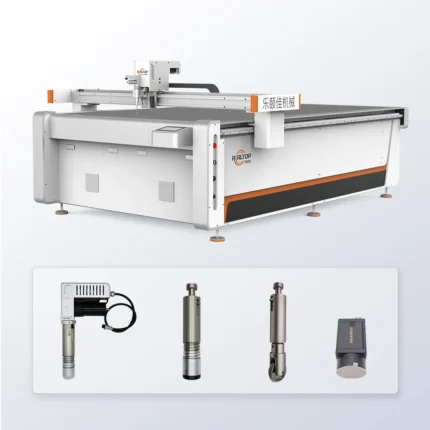
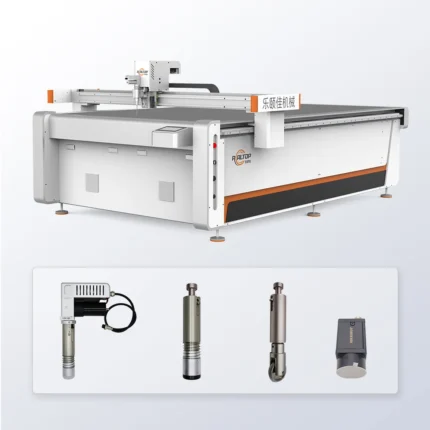
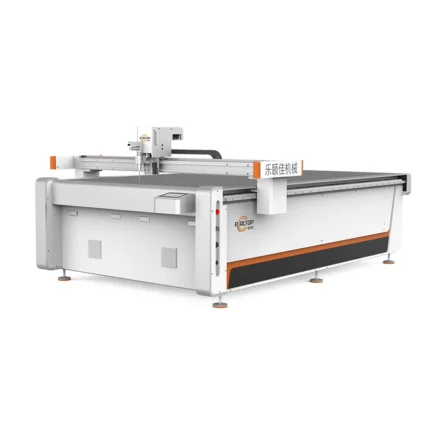
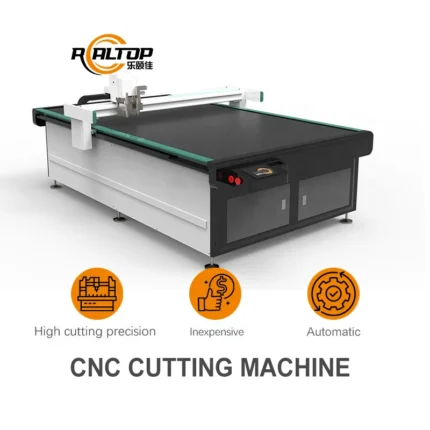
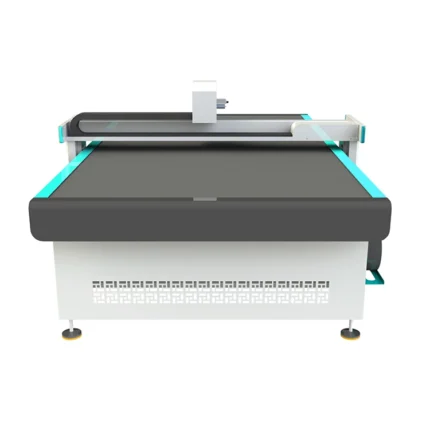
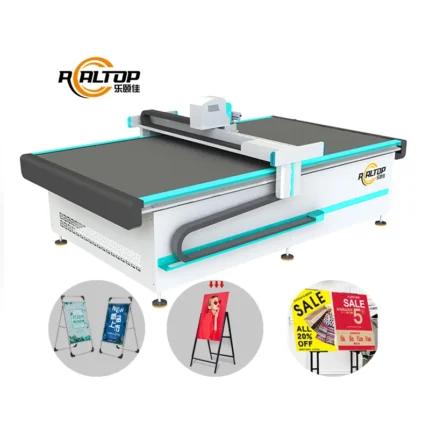
RT-D2516/RT-S2516 CNC Oscillating Knife Cutting Machine, 1600×2500mm Working Area, 9kW, Delta Servo Motor — configured with Swiss-imported oscillating knife and multifunctional tool head for full cutting, half cutting, and cursor positioning across flexible advertising materials.
- CCD visual positioning with panoramic camera recognition for printed contour tracking
- Magnesium-aluminum vacuum adsorption table with PVDF coating ensures stable material hold during high-speed operation at 800-1200mm/s
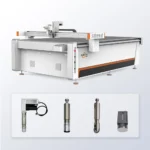
- Tool head options include pneumatic knife, drag knife, creasing wheel, and V-cutting knife for KT board, PVC, vinyl, and composite sheets
In-house design covers both knife and laser platforms, so you can match the cutting method to your material rather than compromise.
Configurable cutting head arrays — tool head combinations verified against material type rather than relying on single-purpose setups.
Technical Specifications
| Parameter | Value |
|---|---|
| Model | RT-D2516/RT-S2516 |
| Product Type | CNC Oscillating Knife Cutting Machine |
| Working Area | 1600 × 2500 mm |
| Machine Footprint | 3450 × 2300 × 1250 mm |
| Rated Power | 9 kW |
| Working Table | Flatbed with vacuum adsorption |
| Transmission Architecture | Digital servo motor, linear guide, synchronous belt, ball screw |
| Translational Velocity | 800–1200 mm/s |
| Repeated Accuracy | ≤ 0.1 mm |
| Maximum Cutting Thickness | Up to 100 mm (varies with the material density and tooling) |
| Instruction Compatibility | HP-GL compatible format |
| Voltage Requirement | 380V ± 10% |
| Vacuum System | 7.5 kW pump, integrated aviation aluminum shell with built-in silencer |
| Visual Positioning | Small CCD camera mark point positioning, panoramic camera recognition, projection positioning |
Application Suitability
| Application Scenario | Typical Materials Processed |
|---|---|
| Graphic Advertising & Signage Production | KT board, PVC foam board, vinyl film, adhesive stickers, corrugated plastic |
| Packaging & Carton Sample Making | Corrugated cardboard, folding carton stock, honeycomb paper |
| Automotive Interior Components | Synthetic leather, fabric composites, acoustic insulation foam, headliner material |
| Soft Furnishings & Textile Fabrication | Upholstery fabric, sponge composite leather, carpet, floor mat substrates |
| Sealing Gaskets & Industrial Pads | Rubber sheet, silicone, non-asbestos fiber, PTFE compounds |
The Peak Power Trap in Material Processing
A quoted power rating often masks the difference between peak output and continuous thermal delivery, leaving buyers with machines that cannot hold depth on thicker acrylic or dense PVC sheets. Specifying real cutting capacity on your actual stock prevents production bottlenecks that only appear after installation. [NEED_CITE:]
In signage workshops, I have seen flatbed cutters specified solely by working area, only for the buyer to discover that the configured tool head or laser source cannot handle the material thickness required for a major contract. The result is always the same: ragged edges on foam board, crushed cellular structures, or incomplete cuts through layered vinyl stacks. When a machine is evaluated only on table size and maximum travel speed, the physics of the cutting process gets ignored until the first production run fails to meet client tolerances.
Knife Versus Laser: Matching the Process to the Substrate
The fundamental decision in advertising material processing is whether mechanical shearing or thermal vaporization produces the required edge quality. A CNC Oscillating Knife Cutting Machine handles closed-cell foams, corrugated boards, and flexible vinyl without generating the thermal stress or edge discoloration that accompanies CO2 laser cutting on certain polymers. Materials like honeycomb paper and multi-layer adhesive stacks respond predictably to high-frequency blade oscillation, producing clean separations without the fume extraction infrastructure that laser systems demand.
Contour Recognition at Production Speed
Printed graphics on vinyl or rigid board require the cutting path to align precisely with the printed image, a task handled here through small CCD camera mark point positioning or panoramic camera recognition. The vision system reads fiducial marks on the printed sheet and adjusts the cut file to compensate for stretch, skew, or registration drift introduced during the printing stage. Without this correction, die-cut stickers and contour-cut decals accumulate positional errors that compound across a full 1600 × 2500 mm sheet, resulting in scrapped material and missed delivery deadlines. [NEED_CITE:]
Decoding the Specification Sheet for Real Output
The translational velocity of 800–1200 mm/s describes head travel speed on straight segments, not the effective throughput across a nested sheet of mixed geometries. Acceleration curves, cornering deceleration, and tool head plunge cycles all reduce the practical cycle time. The 7.5 kW vacuum pump paired with the magnesium-aluminum alloy table must maintain sufficient hold-down force across the entire bed; if zoning is inadequate for small nested parts, those components lift during the final cut pass, ruining the piece and potentially damaging the blade. Repeated accuracy of ≤ 0.1 mm ensures that multi-pass cutting on thick foam or sequential kiss-cut and through-cut operations on adhesive layers remain registered to the original coordinate system.
What Happens When the Tool Head Is Wrong for the Stock
Choosing a drag knife for closed-cell PVC foam board instead of an oscillating knife produces compressed edges that require secondary trimming, adding labor and reducing yield. On thin vinyl films, a high-power vibrating knife can grab and tear the material if the oscillation amplitude is not matched to the substrate tension. I have walked into facilities where the wrong creasing wheel profile was fitted for the flute direction of corrugated board, resulting in fold lines that cracked on the outside radius during assembly. These errors are not visible during vendor demonstrations run on ideal sample materials. [NEED_CITE:]
Why Sourcing From This Facility Reduces Configuration Risk
In-house design covering both knife and laser cutting platforms means the recommendation is based on material behavior rather than forcing every job through one technology. Tool head and table configurations are specified per material type and daily volume before the order is finalized. Software compatibility with the buyer’s existing nesting workflow and HP-GL file output is confirmed during the pre-order phase, preventing integration failures after delivery. Voltage, plug type, and control language are locked in before production begins, so a machine shipped to a 415V three-phase facility does not arrive with a 380V transformer mismatch. Sample cutting on the buyer’s own material stock provides physical proof of edge quality and cycle time before commitment.
Documentation & Verification
- Machine specification sheet detailing configured tool heads and vacuum table zones
- Electrical schematic with confirmed voltage, amperage draw, and circuit breaker sizing
- Sample cutting report executed on your specific PVC foam or vinyl stock
- Factory test record documenting positional accuracy across the full 1600 × 2500 mm bed
- Software license documentation with verified HP-GL format compatibility notes
- Spare parts list identifying consumable blades, vacuum seals, and CCD calibration targets
Installation, Commissioning & Support
- Floor leveling and anchor bolt plan for the 3450 × 2300 mm machine footprint
- Dedicated 380V three-phase circuit with isolated ground for the 9 kW rated load
- Assembly of segmented bed frame and vacuum manifold connections on arrival
- First-article cutting test with your material to set oscillation frequency and vacuum zone mapping
- Operator training on CCD mark teaching, tool offset calibration, and nesting import procedures
- Scheduled replacement intervals for oscillating knife blades and vacuum pump silencer elements
Preparing a Meaningful Technical Inquiry
To evaluate whether this platform fits your production workflow, share the specific advertising substrates you run, including material name, thickness range, and whether the stock arrives in rolls or sheets. Clarify your local three-phase voltage and frequency, plus the control language your operators require. If your existing design output uses a specific nesting software or RIP format, provide a sample file so compatibility can be confirmed before quotation.
Frequently Asked Questions
Q: How do I determine whether oscillating knife or laser cutting suits my advertising materials?
A: Closed-cell foams, corrugated boards, and multi-layer vinyl stacks generally perform better with mechanical knife cutting because the process avoids thermal edge melt and toxic fume generation. Laser cutting excels on acrylic and thin textiles where edge sealing is desirable. Submit representative material samples so both methods can be tested and compared on edge quality and cycle time.
Q: What is the practical difference between peak and continuous power ratings on cutting equipment?
A: Peak power describes a momentary maximum output the system can reach, while continuous power reflects the sustained energy available during a production run. Machines rated only on peak values often fail to maintain cutting depth on thicker materials once thermal limits are reached. Always request cutting test results on your actual material thickness to verify real-world capacity.
Q: How does the CCD vision system maintain accuracy on printed contour cutting jobs?
A: The CCD camera reads fiducial marks printed on the sheet and dynamically adjusts the cut path to compensate for printing distortion, material stretch, or loading skew. Panoramic recognition covers the full working area for large-format jobs, while mark point positioning handles smaller sheets. This prevents misaligned cuts that would otherwise scrap expensive printed media.
Q: What file formats and nesting workflows are compatible with this CNC system?
A: The control system accepts HP-GL compatible formats generated by most mainstream nesting and CAD software. Before order confirmation, a sample file from your existing workflow is imported and processed to verify compatibility. If your shop uses proprietary nesting output, the software license and conversion requirements are documented before the machine ships.
Q: Why must voltage and plug configuration be confirmed before the machine enters production?
A: Industrial three-phase voltage standards vary significantly between export markets, and a mismatch at the installation site causes transformer failures or motor burnout within hours of startup. Confirming the exact supply voltage, frequency, and plug type before manufacturing ensures the electrical cabinet and motor drives arrive configured for immediate connection without costly rewiring or component replacement.


Related products
CNC Foam Cutting Machine EVA/PP 2026 High-Precision
Product Description
High-precision CNC foam cutting machine designed for EVA/PP materials, ideal for packaging box cutting with advanced 2026 technology. Ensures accurate and efficient cutting performance for professional packaging production needs.Key Specifications
| Material Compatibility | EVA, PP |
| Application | Packaging Box Cutting |
| Precision | High-Precision |
| Type | CNC Foam Cutting Machine |
CNC Oscillating Knife Cutter for Non-Asbestos Gasket – for Industry
1625 CNC Oscillating Knife Cutting Machine, 1600×2500 mm, ±0.1 mm Accuracy — cold-cutting solution for composite gasket and non-metal materials without thermal damage.
- Multi-tool head configuration (oscillating knife, driven rotary, creasing wheel, milling) matched to material thickness up to 30 mm
- Aluminum bellows vacuum table ensures full-surface adsorption for flexible and semi-rigid substrates
- PLC control with multi-language display and CCD contour recognition for printed mark tracking
Buyer sample cutting performed on your own material before order commitment, with tool head configuration list and voltage confirmation documented prior to shipment.

Corrugated Packaging CNC Cutting Machine – Specifications
RT-D2516/RT-S2516 CNC Oscillating Knife Cutting Machine, 1600×2500mm Working Area, 9kW, Vacuum Table — engineered for corrugated packaging, carton sample making, and sticker contour cutting across non-metal substrates.
- Swiss imported oscillating knife with full-cut and half-cut modes for crease-and-cut workflows
- Taiwan Delta servo drives and Hiwin linear rails deliver ≤0.1mm repeatability
- Aluminum honeycomb vacuum platform with 7.5kW pump for stable hold-down at 800–2000mm/s translational speed
- HP-GL compatible, multi-language control interface
CO2 laser seals synthetic edges but cannot crease card stock — this oscillating knife system handles corrugated, foam board, and flexible materials where blade cutting outperforms thermal processes. Sample cutting on your material available before order confirmation.

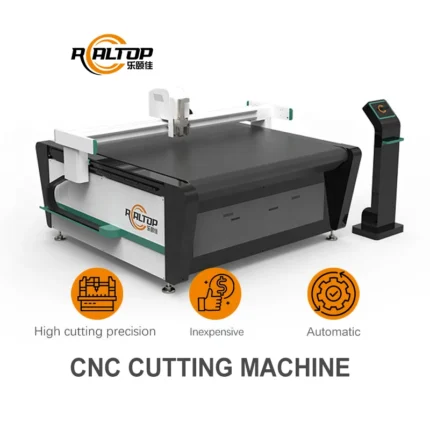
Realtop Digi Cuts 2026 CNC Oscillating Knife Cutter
Product Introduction
Realtop Digi Cuts CNC Oscillating Knife Cutting Machine 2026 is a precision cutting solution designed for various materials, ideal for industrial manufacturing needs with advanced CNC technology.Product Parameters
| Model | Digi Cuts 2026 |
| Type | CNC Oscillating Knife Cutting Machine |
| Manufacturer | Realtop (China) |
| Application | Industrial Material Cutting |


RT-2026 CNC Digital Carton Cutting Machine – Full Range
RT-2026 CNC Digital Carton Cutting Machine, 1600×2500mm Working Area, 380V — equipped with Swiss imported oscillating knife head delivering vibration full and half cutting for cardboard, sticker and flexible packaging materials.
- Delta servo motor and Taiwan Hiwin rail ensure ≤0.1mm repeated accuracy
- Aluminum honeycomb vacuum platform with automatic zone following prevents small part lift
- HP-GL compatible instruction system supports multiple file format imports
Laser and knife cutting technologies developed in-house allow precise method matching to your material, with sample cutting on buyer's own stock validated before order commitment.
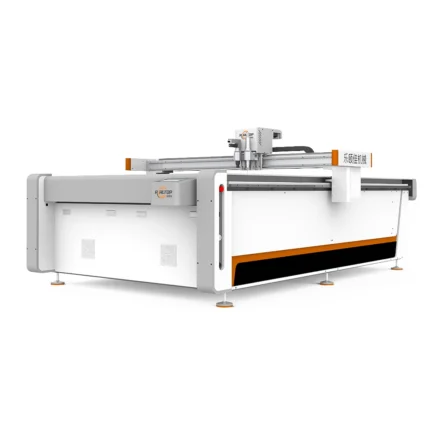

RT-D2516/RT-S2516 CNC Oscillating Knife Cutting Machine | Manufacturer
RT-D2516/RT-S2516 CNC Oscillating Knife Cutting Machine, 1600×2500mm Working Area, 9kW, 380V — engineered for non-thermal processing of packaging and flexible materials where laser cutting leaves charred edges or fails on thick substrates.
- Swiss imported oscillating knife head with full-cut, half-cut and cursor positioning
- Aluminum honeycomb vacuum table with zoned suction for small-part hold-down
- Delta servo and Taiwan Hiwin linear guide, ≤0.1mm repeatability, up to 2000mm/s traverse
- Professional nesting software with crease-line recognition and multi-format import
Sample cutting on your own material, tool head specified per substrate, and voltage plus control language confirmed before shipment — backed by in-house design and core factory production.
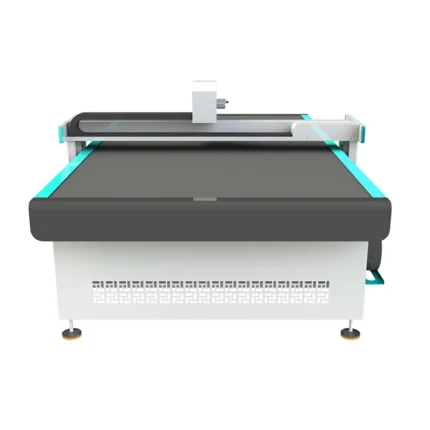

Sticker Cutting Machine for Flexible Material – Manufacturer
RT-D2516/RT-S2516 CNC Oscillating Knife Cutting Machine, 1600×2500 mm, 7.5 kW Vacuum — configured with Swiss imported oscillating knife head for full-cut, half-cut and kiss-cut operations on stickers, leather, PVC and flexible composites. Zoned vacuum table holds small parts flat during high-speed cutting at 800–1200 mm/s translational velocity. Japanese Yaskawa servo motors and Taiwan Hiwin linear rails deliver ≤0.1 mm repeated accuracy across the work area.
- Cutting method and tool head specified per your material type, thickness and edge quality requirement before order
- Sample cutting on your own sticker stock or flexible material provided for validation prior to commitment
- Voltage, plug type, control language and software file format confirmed to match your production workflow
商品评价
There are no reviews yet.