

Blog
1610 CO2 Laser Cutter for Farm Equipment Manufacturer OEM

1610 CO2 Laser Cutter for Farm Equipment Manufacturer OEM
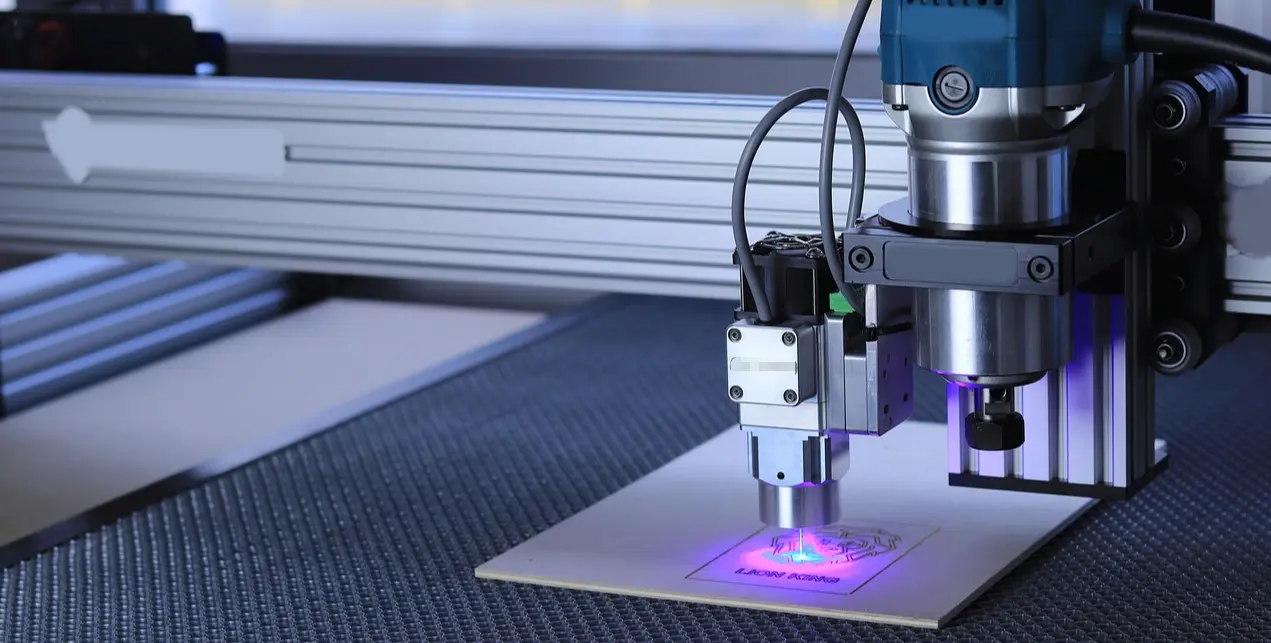
A 1610 CO2 laser cutter is not the right tool for cutting thick structural steel in farm equipment manufacturing.
If you are looking to cut chassis frames, heavy-duty plow blades, or thick tractor components, a CO2 laser will be an inefficient and costly mistake. However, if your production line involves cab interiors, gaskets, decals, and thin-sheet metal accessories, this machine offers precision that fiber lasers often overlook. The core issue lies in wavelength absorption: CO2 lasers struggle with bare metals but excel with non-metals and coated materials. Misidentifying this boundary leads to operational bottlenecks rather than productivity gains.
I recall a shipment of cutting equipment destined for a fabrication shop in Dubai. The client had purchased a high-power CO2 unit expecting it to handle their entire agricultural implement line, including ten-millimeter steel plates. By the time the container cleared customs at Jebel Ali Port—delayed due to ambiguous HS code classification for the laser source—the client had already incurred weeks of storage fees. More critically, their production floor was stalled. They were trying to force a technology designed for organic materials and thin sheets to perform heavy industrial metalwork. The result was excessive gas consumption, frequent lens contamination, and edges that required secondary grinding. This scenario is not unique; it stems from a fundamental misunderstanding of how laser wavelengths interact with different materials. [NEED_CITE: absorption rates of CO2 vs fiber lasers on steel]
Understanding where this technology fits requires looking beyond the marketing claims of "universal cutting." Let’s break down the specific applications where a CO2 laser cutter for farm equipment adds value, and where it fails.
Why CO2 Lasers Struggle with Heavy Farm Steel?
The primary limitation of a CO2 laser in agricultural manufacturing is its wavelength. Operating at 10.6 micrometers, the CO2 laser beam is poorly absorbed by bare metals like steel and aluminum. To cut these materials, the machine relies heavily on assist gases and high power levels to initiate and sustain the cut. This process is inherently less efficient than fiber lasers, which operate at a wavelength of roughly 1.07 micrometers—a range that metals absorb readily. [NEED_CITE: physics of laser-metal interaction wavelengths]
For a farm equipment manufacturer, this translates to higher operational costs. Cutting thick structural steel with a CO2 system requires significant amounts of oxygen or nitrogen. The gas consumption alone can erode profit margins, especially when compared to the electrical efficiency of modern fiber sources. Furthermore, the cut quality on thick metal often suffers from striations and oxidation, requiring post-processing. In an industry where durability and finish matter, adding a grinding step to every chassis part is a logistical burden.
Consider the maintenance aspect. The optical path in a CO2 laser involves mirrors and lenses that are sensitive to the back-reflection and spatter generated during metal cutting. In a dusty farm equipment workshop, keeping these optics clean is a constant battle. Frequent cleaning intervals mean more downtime. While a CO2 laser cutter for farm equipment might seem like a versatile single-solution purchase, using it for heavy metalwork turns it into a high-maintenance liability. The machine is simply fighting against the physics of the material.
Where Does the 1610 CO2 Excel in Agri-Manufacturing?
While it fails at heavy steel, the CO2 laser cutter for farm equipment shines in auxiliary component production. Modern tractors and harvesters are not just steel frames; they are complex assemblies featuring cabs, interiors, sealing systems, and branding elements. These components often involve non-metallic materials or thin sheets where precision and edge quality are paramount.
One critical application is the fabrication of cab interior trim. Agricultural vehicles require durable windows made from polycarbonate or acrylic, along with foam seals for noise and dust reduction. A CO2 laser cuts these materials with exceptional clarity, leaving a polished edge on acrylics that requires no further finishing. The precision allows for tight assembly gaps, reducing the need for manual fitting during final assembly. [NEED_CITE: tolerance standards for automotive cab interiors]
Another high-value use case is gasket and seal fabrication. Engine housings and hydraulic systems in farm machinery rely on custom rubber and silicone gaskets. Traditional die-cutting requires expensive tooling and long lead times for each new design. A CO2 laser can cut these soft materials instantly from digital files, allowing for rapid prototyping and small-batch production without tooling costs. This flexibility is crucial for manufacturers who need to adapt quickly to custom orders or replacement part demands.
Additionally, branding and signage benefit significantly from this technology. Contour cutting vinyl decals for tractor branding or safety labels requires speed and accuracy. A CO2 laser can handle these tasks at high speeds, ensuring that every logo and warning label is perfectly shaped. For thin metal sheets used in decorative panels or light guards, the CO2 laser provides a clean cut, provided the thickness remains within its effective range. Here, the CO2 laser cutter for farm equipment acts as a precision instrument for detail work, complementing heavier industrial processes.
Hidden Costs: Gas, Maintenance, and Clearance Pitfalls
Beyond technical suitability, there are logistical and financial pitfalls associated with importing and operating these machines. Many buyers focus solely on the machine price, overlooking the total cost of ownership. As mentioned earlier, gas consumption for metal cutting is substantial. But even for non-metal applications, the maintenance of the laser tube and optics represents a recurring expense. CO2 tubes have a finite lifespan and degrade over time, affecting power output and cut quality. Replacing them is not a trivial task and requires technical expertise.
Customs clearance is another area where mistakes happen. I have seen shipments delayed because the HS code did not accurately reflect the laser source type or the machine’s primary function. Misclassification can lead to higher duties or inspections that halt production schedules. It is essential to work with freight forwarders who understand the nuances of laser equipment classification. Providing detailed technical specifications, including the laser type and intended materials, helps avoid these delays. [NEED_CITE: HS code classification guidelines for laser cutting machines]
Furthermore, safety compliance cannot be ignored. Different regions have varying standards for laser safety enclosures and fume extraction. Ensuring that the CO2 laser cutter for farm equipment meets local regulations, such as CE marking in Europe or specific FDA guidelines in the US, is crucial. Non-compliance can result in fines or the inability to operate the machine legally. Buyers must verify that the manufacturer provides the necessary certification documentation before shipment.
Alternatives for Metal-Heavy Workflows
If your primary focus is cutting thick steel for chassis and implements, a CO2 laser is not the optimal choice. Fiber lasers are the industry standard for this application, offering faster cutting speeds, lower operating costs, and better edge quality on metals. However, for manufacturers dealing with a mix of materials, including composites, fabrics, and foams used in seating and insulation, another alternative exists.
Oscillating knife cutting machines offer a superior solution for multi-layer fabrics, foams, and gaskets. Unlike lasers, which burn through material, oscillating knives provide a clean, cold cut with no burnt edges or toxic fumes. This is particularly important for interior components where air quality and material integrity are concerns. The precision of modern oscillating knife systems allows for complex shapes to be cut from multiple layers simultaneously, significantly boosting productivity. [NEED_CITE: comparison of laser vs knife cutting for composite materials]
For a farm equipment manufacturer, integrating an oscillating knife cutter alongside a fiber laser for metal creates a balanced production line. The fiber laser handles the heavy structural steel, while the oscillating knife manages the soft goods and composites. This combination eliminates the inefficiencies of using a CO2 laser for materials it is not designed to handle. It also reduces the risk of fire hazards associated with laser cutting foams and certain plastics.
When evaluating a CO2 laser cutter for farm equipment, consider whether your workflow truly requires its specific capabilities. If your production is dominated by non-metals and thin sheets, it may be suitable. But for a broader range of agricultural manufacturing needs, especially those involving composites and textiles, specialized tools like oscillating knife cutters provide better results and lower operational risks.
Conclusion
Choose the right tool for the specific material, not the general category.
A CO2 laser cutter for farm equipment is a specialized instrument, not a universal solver. It excels in precision cutting of non-metals, thin sheets, and interior components but fails economically and technically on heavy structural steel. Understanding this distinction prevents costly misinvestments and operational inefficiencies. By aligning your technology choices with the specific materials in your production line, you ensure smoother workflows and higher quality outputs.

