

Blog
Buy Foam Cutting Machine Manufacturer Guide | Wholesale Supplier OEM

Buy Foam Cutting Machine Manufacturer Guide | Wholesale Supplier OEM
Bigger cutting area does not mean better machine.
When buying a foam cutting machine, the three specs that determine whether it works for your material are stroke length, knife head configuration, and vacuum zone pressure. Voltage compatibility and precision stability decide whether it survives the first month on your factory floor.
I still remember the phone call from a packaging plant in the Middle East. They had just unboxed a foam cutting machine we shipped, plugged it in, and watched the main board fry within seconds. Their local grid ran at a voltage our standard configuration did not cover. The machine sat dead for days while replacement parts flew across continents, and the air freight bill alone swallowed the entire profit margin of that order. That was years ago, back when I was still tuning oscillating knives on the shop floor in Changqing District before moving into international sales. Since then, I check voltage specs the way a surgeon checks a patient’s chart before cutting.
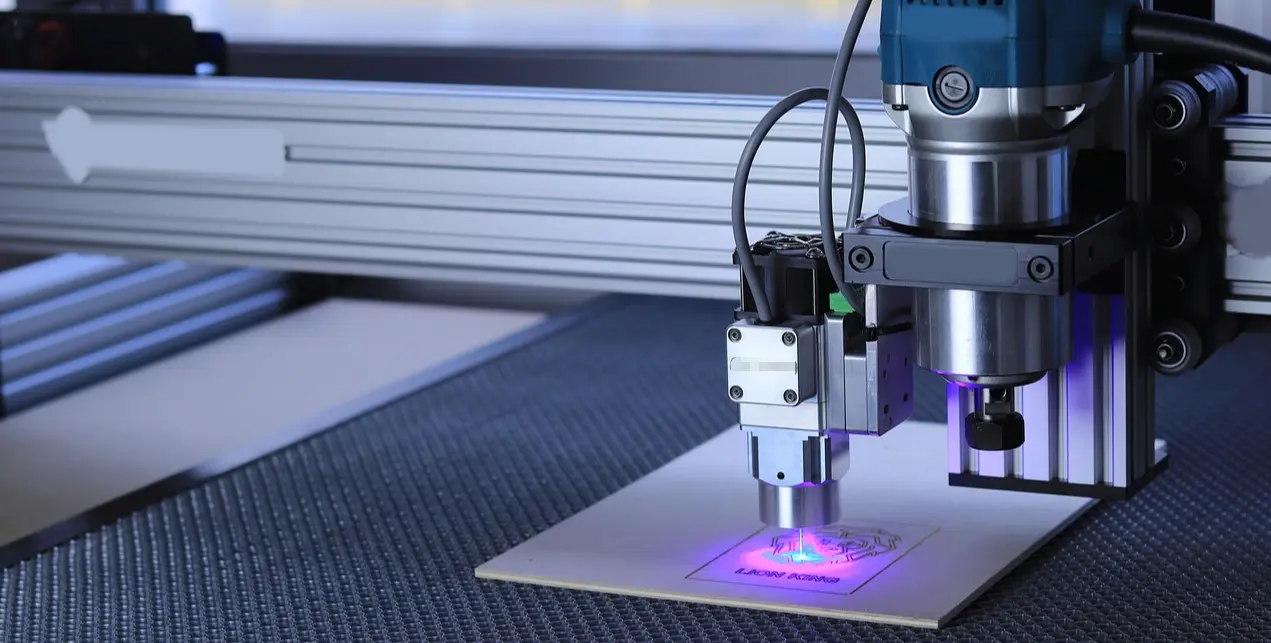
Choosing the right foam cutting machine is not about chasing the longest stroke or the fastest feed rate printed on a brochure. It is about matching the tool to your foam density, your local power grid, and your precision tolerance. Get any one of those wrong, and you will either burn through EVA stock or wait weeks for a replacement servo driver. [NEED_CITE: common failure modes in CNC cutting equipment related to power supply mismatch]
Let me walk you through the specs that actually matter, the pitfalls that cost real money, and how to verify what a manufacturer tells you before you wire any deposit.
What Specs Matter Most When Buying a Foam Cutting Machine?
Stroke length, knife type, and vacuum suction power are the three parameters that directly determine whether a foam cutting machine can handle your specific material and production volume.
Most buyers open a spec sheet and scan for cutting speed first. That is a mistake. Speed means nothing if the knife cannot penetrate the foam cleanly or if the sheet slides during the cut. Here is what you need to compare:
| Parameter | What It Controls | What to Verify |
|---|---|---|
| Stroke Length (X/Y axis) | Maximum sheet size the machine can process in one pass | Confirm bed rigidity increases proportionally with stroke [NEED_CITE: relationship between gantry span and structural deflection in CNC machines] |
| Knife Head Type | Material compatibility and edge quality | Oscillating knife for EVA/XPE; hot wire for EPS |
| Z-Axis Travel | Maximum foam thickness the knife can reach | Must exceed your thickest material by a safe margin |
| Vacuum Zone Count | Holding force on thin or irregular sheets | More zones allow sectional suction for nested layouts |
| Cutting Speed Range | Throughput at different foam densities | Must be adjustable; high speed on low-density EPS causes edge tearing |
A packaging factory in Southeast Asia once ordered a foam cutting machine with the largest working area a supplier offered. When it arrived, the gantry flexed noticeably under rapid directional changes, and the cut lines on dense EVA drifted out of tolerance. The root cause was simple: the bed structure was not reinforced to match the extended stroke. The manufacturer had stretched a standard frame to win a spec-sheet comparison, and the buyer paid for it in scrapped material and retrofit engineering. [NEED_CITE: structural rigidity requirements for large-format CNC cutting beds]
The lesson is that stroke and rigidity move in opposite directions. A longer stroke demands a thicker, heavier bed to resist vibration. If a manufacturer quotes you a large working area at a price that seems too good, ask for the bed thickness and the steel grade used in the gantry.
How to Avoid Voltage and Power Supply Pitfalls?
Before placing any order, confirm your local grid voltage and frequency, then require the manufacturer to configure the transformer and electrical cabinet accordingly.
This sounds obvious, yet voltage mismatch remains one of the most frequent reasons a foam cutting machine fails during commissioning. Industrial power standards vary significantly across regions. Some Middle Eastern countries operate on non-standard three-phase voltages that differ from both the common 380V and the North American configurations. Parts of South America and Africa may have grid fluctuations that exceed the tolerance range of a standard servo drive.
When I worked through the early export orders from Jinan, we learned the hard way that simply labeling a machine "380V" is not enough. You need to specify:
- Nominal voltage at the installation site
- Frequency (50Hz or 60Hz)
- Allowable voltage fluctuation range at the factory
- Whether a step-up or step-down transformer is included in the quote
A buyer from a West African country once received a foam cutting machine configured for standard 380V. Their facility actually ran on a lower nominal voltage with frequent dips. The servo drives tripped repeatedly, and the control system threw error codes that the local electrician could not diagnose. The fix required a custom transformer and a firmware adjustment to widen the drive’s voltage tolerance window. The downtime cost far more than the transformer itself. [NEED_CITE: IEC standards for voltage tolerance in industrial machinery power supplies]
Here is what you should request from any foam cutting machine manufacturer before signing:
- Written confirmation of the voltage configuration matched to your site
- A wiring diagram showing transformer placement and protection circuits
- Documentation of the servo drive’s voltage tolerance range
- A list of replacement fuses and circuit breakers rated for your local standard
At Realtop Machinery, we now treat voltage confirmation as a mandatory step in every quotation. Our engineering team cross-checks the buyer’s local grid data against the CE-certified electrical design before production begins. We have built custom transformer configurations for markets where the standard 220V or 380V options do not apply, and we include the voltage verification report in the pre-shipment documentation package.
Oscillating Knife vs Hot Wire: Which Foam Cutter Fits Your Material?
Use an oscillating knife for EVA, XPE, and cross-linked polyethylene foams where edge quality matters. Use a hot wire cutter for EPS where speed and volume are the priority and minor edge char is acceptable.
This is the single most common specification error I see in purchase inquiries. Buyers request a hot wire foam cutting machine because it is cheaper, then try to cut EVA with it. The result is melted, ragged edges that fail cosmetic inspection. Others specify an oscillating knife for expanded polystyrene and wonder why the knife drags and dulls within hours.
The physics are straightforward:
-
Oscillating knife — A blade vibrates at high frequency, shearing the foam mechanically. No heat is involved, so there is no melting, no toxic fumes from burned material, and no edge discoloration. This is the correct choice for packaging inserts, gasket materials, and any foam that will be visible in the final product. [NEED_CITE: mechanical cutting principles for flexible foam materials]
-
Hot wire — A heated resistive wire passes through the foam, melting it along the cut path. This is extremely fast on low-density EPS and handles thick blocks efficiently. However, the heat leaves a slightly fused edge, and the wire cannot follow tight curves with the same precision as a knife.
| Factor | Oscillating Knife | Hot Wire |
|---|---|---|
| Edge Quality | Clean, no burn marks | Slightly fused surface |
| Material Suitability | EVA, XPE, PE, rubber foam, gasket materials | EPS, low-density polyurethane |
| Curve Precision | High, suitable for complex nested shapes | Limited by wire tension and kerf |
| Cutting Speed | Moderate to high, adjustable by density | Very high on thick EPS blocks |
| Tool Wear | Blade replacement at regular intervals | Wire replacement; minimal mechanical wear |
| Fume Generation | Negligible | Requires extraction for melted EPS fumes |
A European packaging distributor once ordered a hot wire foam cutting machine to produce custom EVA inserts for electronics packaging. The first batch came off the table with melted edges that left residue on the client’s products. The end customer rejected the shipment. The distributor had to reorder an oscillating knife configuration, and the original hot wire unit sat idle in their warehouse. The total cost of the mistake — including scrapped foam, return shipping, and lost client trust — ran into multiple times the price difference between the two machine types.
If your production involves multiple foam types, some manufacturers offer dual-head configurations on a single foam cutting machine platform, allowing you to switch between oscillating knife and hot wire tools depending on the job. This is worth asking about if your order mix varies.
What Should You Verify Before Placing an Order?
Require a live cutting trial with your actual material, a verifiable CE certificate number, and a written after-sales response commitment before you transfer any deposit.
The foam cutting machine market is crowded with suppliers who look credible on paper. Spec sheets can be copied. Brochure photos can be borrowed. The only way to separate a serious manufacturer from a trading company reselling someone else’s equipment is to ask for proof that can be independently checked.
Start with a cutting trial. Send your foam samples — the exact grade, density, and thickness you plan to run in production — and ask the manufacturer to record a video of the cutting process on your material. Watch for:
- Whether the foam holds flat under vacuum or lifts at the edges
- Whether the cut edge is clean or shows tear-out on inside corners
- Whether the machine maintains consistent depth across the full sheet
- The actual cycle time for your nested layout, not a theoretical number
A North American packaging company once received a foam cutting machine that performed perfectly on the supplier’s test foam. When they loaded their own high-density XPE, the vacuum system could not hold the sheet firmly enough, and the knife dragged through shifted material. The machine was not defective; it was simply configured for a different foam density. A pre-shipment trial with their actual material would have caught the mismatch and allowed the manufacturer to adjust the vacuum zone pressure before shipping. [NEED_CITE: vacuum hold-down requirements for different foam densities in CNC cutting]
Next, verify the CE certification. Many manufacturers claim CE compliance, but the certificate may cover only the electrical components, not the mechanical safety features such as blade guards, emergency stop placement, or gantry collision protection. Ask for the certificate number and the name of the notified body that issued it. You can cross-check this against the EU’s public database. A legitimate foam cutting machine manufacturer will provide this without hesitation.
Finally, get the after-sales terms in writing. "We provide support" is not a commitment. You need:
- Response time for remote diagnostics
- Availability of spare parts and typical dispatch timelines
- Whether the control system supports remote access for troubleshooting
- Warranty duration and what it covers
Realtop Machinery offers free sample cutting trials with video documentation for every inquiry, regardless of order size. Our CE certification covers the complete machine including mechanical safety systems, and we provide the certificate number for independent verification. Our warranty extends for a full three years, and our technical team provides round-the-clock remote diagnostics with direct access to the machine’s control system when needed. We also provide free operator training to ensure your team can maintain precision from day one.
Conclusion
Choosing a foam cutting machine is an exercise in matching specs to your actual production conditions, not to a brochure.
Verify voltage compatibility against your local grid, match the knife type to your foam material, confirm precision with a live cutting trial on your own stock, and demand independently verifiable certifications. The manufacturers who welcome these questions are the ones worth doing business with.

