

Blog
3D Fiber Laser Cutter Wholesale Supplier for Trading Companies

3D Fiber Laser Cutter Wholesale Supplier for Trading Companies
The cheapest unit price often leads to the most expensive total cost of ownership.
For trading companies sourcing high-value CNC equipment, selecting a 3D fiber laser cutter wholesale supplier is less about negotiating the lowest factory gate price and more about verifying certifications and after-sales infrastructure. The primary risk is not the machine itself, but the hidden costs of customs detention due to invalid compliance documents and client churn caused by inadequate technical support in target markets like the Middle East. A reliable partner provides verifiable CE and SASO documentation, remote diagnostic capabilities, and transparent spare parts logistics, ensuring that the trading margin is protected from logistical and operational pitfalls.
Having spent years navigating the bustling ports of Jebel Ali and the industrial zones of Riyadh, I have seen how a single paperwork error can turn a profitable deal into a financial drain. One particular instance involved a batch of machinery held at customs for over a month because the CE mark was a digital forgery rather than a certified compliance statement. The demurrage costs alone erased the entire profit margin for the quarter. This reality shifts the focus from simple procurement to strategic vetting. When evaluating a 3D fiber laser cutter wholesale supplier, the conversation must move beyond horsepower and cutting speed to include certification validity and service level agreements.
Transitioning from the buyer’s side to understanding the manufacturer’s constraints has clarified why many trading companies struggle. The gap is rarely in the hardware quality but in the alignment of expectations regarding compliance and support. This guide breaks down the critical factors that separate a risky transaction from a sustainable partnership.
Why Do Trading Companies Fail with Low-Cost Laser Suppliers?
Hidden compliance and support costs frequently exceed the initial savings from low-unit pricing.
Many traders assume that a lower ex-factory price directly translates to a higher margin. However, this view ignores the downstream costs associated with regulatory non-compliance and operational downtime. In markets with strict import regulations, such as Saudi Arabia and the United Arab Emirates, the cost of rectifying certification issues can be substantial. [NEED_CITE: common causes of customs clearance delays for industrial machinery in GCC countries]
Consider the scenario of a trading company importing equipment without verified local certifications. If the goods are detained at the port, the daily storage fees accumulate rapidly. Furthermore, if the machine fails to meet local safety standards, it may require costly modifications or even face rejection. Another frequent issue is the lack of localized technical support. When a 3D cutting head requires calibration in a remote fabrication shop, the absence of a nearby technician means prolonged downtime. The cost of flying in an engineer, including visas, flights, and accommodation, often dwarfs the initial price difference between suppliers.
A robust 3D fiber laser cutter wholesale supplier understands these dynamics. They do not just sell a machine; they sell a compliant, supported solution. The failure mode for many traders is focusing on the invoice value while neglecting the total landed cost and operational reliability. By prioritizing suppliers who offer comprehensive documentation and remote support tools, traders can mitigate these hidden risks.
What Certifications Are Non-Negotiable for Middle East Imports?
Valid CE and local SASO or ESMA approvals are critical for smooth customs clearance and market access.
Importing industrial machinery into the Middle East requires strict adherence to international and local safety standards. A generic CE certificate is often insufficient if it cannot be traced back to a recognized notified body. Many low-cost suppliers provide self-declared CE marks that hold no legal weight in stringent jurisdictions. [NEED_CITE: requirements for CE marking validation under EU Machinery Directive]
For Saudi Arabia, the Saber platform and SASO certification are mandatory. Without these, goods cannot clear customs. Similarly, the UAE requires ESMA approval for many electronic and mechanical devices. A reliable 3D fiber laser cutter wholesale supplier will provide original certificates that can be verified through official channels. Traders should request the certificate number and verify it against the issuing body’s database before placing an order.
| Certification Type | Verification Method | Risk Level if Invalid |
|---|---|---|
| CE Mark (EU) | Check Notified Body Number | High (Customs Detention) |
| SASO (Saudi Arabia) | Verify via Saber Platform | Critical (Shipment Rejection) |
| ESMA (UAE) | Check ECAS Registry | High (Market Access Denied) |
| ISO 9001 | Audit Report Review | Medium (Quality Consistency) |
Beyond the basic safety marks, electrical components must comply with local voltage and frequency standards. In regions with unstable power grids, additional protection certifications may be required. Traders must ensure that the supplier’s documentation matches the specific destination country’s requirements. A mismatch here is not a minor administrative error; it is a complete blockage of the supply chain.
How to Evaluate a Supplier’s Technical Support Capability?
Look for remote diagnostic tools and localized service partners, not just sales promises.
After-sales support is the backbone of customer retention for trading companies. When a client in Dubai or Doha faces a technical issue, their immediate concern is resolution time, not the supplier’s location. A 3D fiber laser cutter wholesale supplier that relies solely on email communication for complex technical problems is a liability. Modern support infrastructure includes remote diagnostics software that allows engineers to access the machine’s control system securely.
This capability enables real-time troubleshooting, reducing the need for physical visits. For instance, if a nesting software error causes material waste, a remote session can identify the configuration issue within hours. Without this, the trader might need to send a technician, incurring significant travel costs and time delays. [NEED_CITE: impact of remote diagnostics on industrial equipment uptime]
Additionally, the availability of spare parts is crucial. A transparent inventory system ensures that critical components, such as laser sources or cutting heads, can be shipped quickly. Some suppliers maintain regional warehouses, which significantly reduces lead times. Traders should ask for evidence of these capabilities, such as case studies or access to a client portal where they can track service requests.
Realtop, for example, integrates 24/7 online technical support and remote diagnostics into their service model, providing a benchmark for what traders should expect. This level of support minimizes downtime and protects the trader’s reputation with end-users. It transforms the supplier from a vendor into a strategic partner.
Which Technical Specs Define a Reliable 3D Fiber Laser Cutter?
Prioritize cutting head stability and nesting software efficiency over raw power claims.
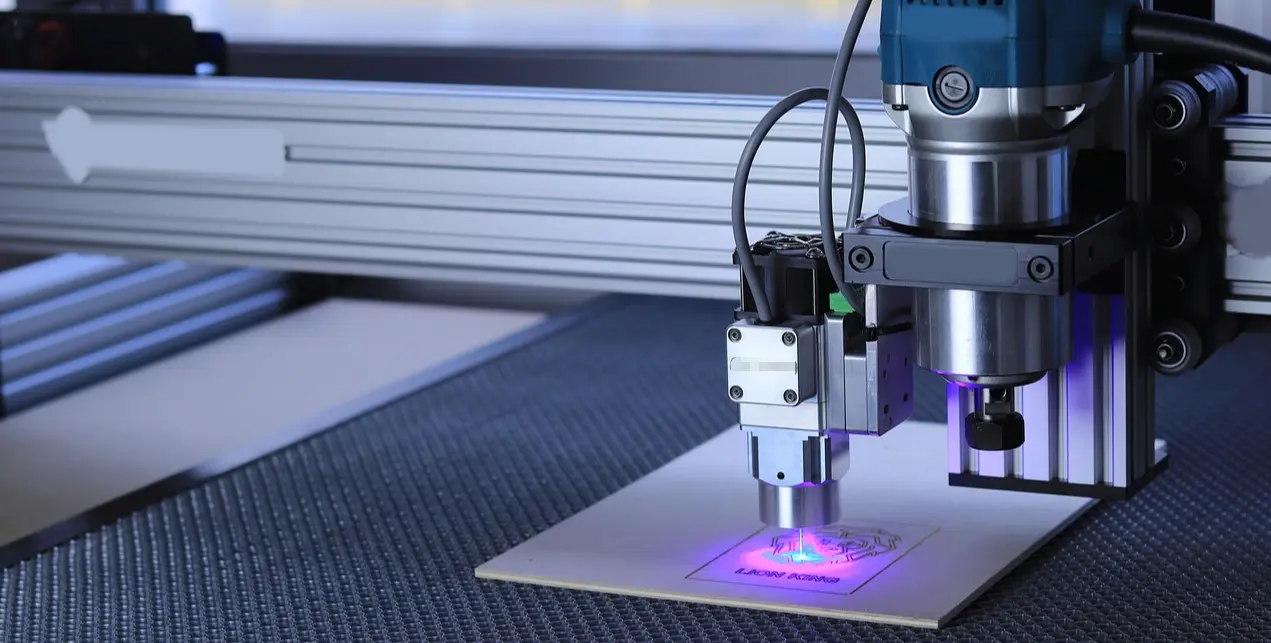
When reviewing technical specifications, traders often focus on laser power and cutting speed. While important, these metrics do not tell the whole story. The true differentiator in 3D fiber laser cutting is the stability of the cutting head and the intelligence of the nesting software. A powerful laser is useless if the head vibrates during complex 3D contours, leading to poor edge quality.
Anti-collision systems are another critical feature. In 3D cutting, the head moves in multiple axes, increasing the risk of collision with the workpiece. A robust anti-collision sensor prevents damage to the expensive cutting head and the lens. [NEED_CITE: importance of anti-collision systems in multi-axis laser cutting]
Software compatibility is equally vital. The nesting algorithm determines material utilization. Efficient software can reduce waste significantly, which is a key selling point for end-users. Traders should evaluate the software’s ability to handle complex geometries and its integration with common CAD formats.
| Technical Feature | Basic Specification | Premium Specification |
|---|---|---|
| Cutting Head | Standard Manual Focus | Auto-Focus with Anti-Collision |
| Nesting Software | Basic 2D Nesting | Advanced 3D Nesting with Material Saving |
| Drive System | Standard Rack and Pinion | High-Precision Helical Gear |
| Control System | Proprietary Closed Loop | Open Architecture with Remote Access |
A 3D fiber laser cutter wholesale supplier that emphasizes these details demonstrates a deeper understanding of the application. They recognize that end-users care about precision, material savings, and ease of use, not just raw power. By focusing on these specs, traders can offer a product that delivers tangible value to their clients.
How to Structure a Safe Wholesale Agreement?
Include penalty clauses for delivery delays and clear warranty terms for core components.
The contract is the final safeguard for trading companies. It must clearly define the responsibilities of both parties, particularly regarding delivery timelines and warranty coverage. Ambiguity in these areas leads to disputes that can damage business relationships. A well-structured agreement includes specific penalties for late delivery, ensuring that the supplier is incentivized to meet deadlines.
Warranty terms should be explicit about what is covered and for how long. Core components like the laser source and cutting head should have extended warranty periods. Additionally, the agreement should specify the response time for technical support and the process for claiming warranty services. [NEED_CITE: best practices for B2B equipment supply contracts]
Traders should also include clauses related to certification compliance. If the supplied documents are found to be invalid, the supplier should bear the cost of rectification and any resulting penalties. This shifts the risk back to the manufacturer, who is in the best position to ensure compliance.
By structuring the agreement with these protections, traders can operate with greater confidence. It ensures that the 3D fiber laser cutter wholesale supplier is accountable for their commitments, aligning their interests with those of the trading company.
Conclusion
Success in trading high-value industrial equipment depends on risk mitigation, not just price negotiation.
Selecting the right 3D fiber laser cutter wholesale supplier requires a holistic approach that values compliance, support, and technical reliability. By verifying certifications, evaluating support infrastructure, and focusing on critical technical specs, trading companies can avoid common pitfalls. This strategy ensures sustainable growth and long-term client satisfaction in competitive markets.

