

Blog
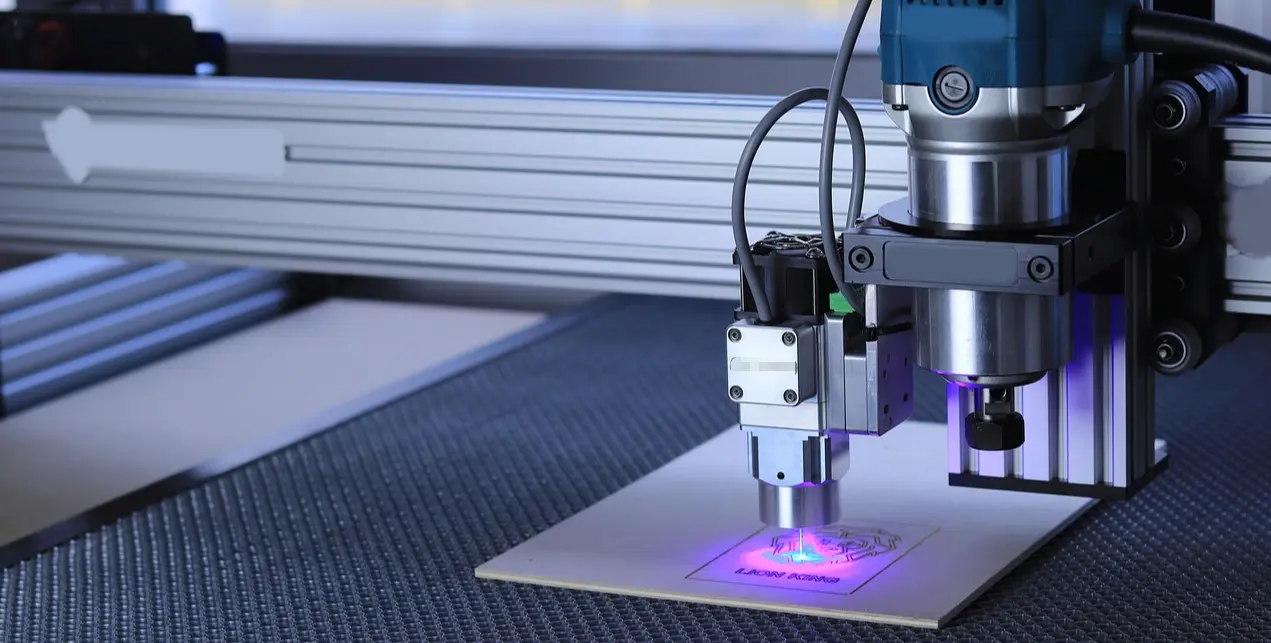
Bulk Small Format Laser Engraver for Kazakhstan Custom Metal Art Wholesale

Bulk Small Format Laser Engraver for Kazakhstan Custom Metal Art Wholesale
Higher wattage does not guarantee better metal art quality; thermal stability and beam consistency do.
For wholesale buyers sourcing a small format laser engraver wholesale Kazakhstan operations, the critical selection criteria are fiber source stability for brass and steel marking, integrated water cooling capacity matched to local ambient temperatures, and power supply tolerance for voltage fluctuations. Prioritize units with verified beam quality metrics over raw power ratings to ensure continuous production reliability.
I still remember unboxing three laser engravers at Apapa port in Lagos, tubes completely blackened inside. The buyer had gone with a cheaper supplier for a metal signage project—two months of non-stop engraving, the water chiller couldn’t handle the heat load, tubes fried, and an entire batch of custom brass plates missed their deadline. That job pushed me off the installation floor and into sales. Now when a wholesale buyer asks about small-format laser engravers, I don’t lead with a quote. I ask what alloy they’re marking, how many shifts they run, and whether the workshop has climate control. Clients who got burned in Nigeria now call me to double-check their specs before ordering. One field failure teaches what ten brochures never could. [NEED_CITE: common failure modes in laser cooling systems under high ambient temperature]
Selecting the right equipment requires looking beyond the initial invoice price. The operational reality in regions with variable infrastructure demands hardware that can withstand environmental stress without constant recalibration. This guide breaks down the technical specifications that actually matter for sustained metal art production.
What Are the Critical Specs for Metal Art Engraving?
Focus on beam quality and thermal management, not just power output.
When evaluating a small format laser engraver wholesale Kazakhstan distributors offer, the temptation is to chase the highest wattage. However, for intricate metal art, the beam spot size and mode quality determine the fineness of the detail. A larger spot size may deliver more energy but will blur fine lines in brass or stainless steel etching. [NEED_CITE: relationship between laser beam quality M2 factor and engraving resolution]
The following matrix compares typical specifications found in entry-level versus industrial-grade small format units. Note that "Basic" cooling often relies on passive air or small pumps insufficient for continuous duty cycles.
| Specification Category | Entry-Level Unit | Industrial-Grade Unit | Impact on Metal Art Production |
|---|---|---|---|
| Laser Source Type | Generic Diode/CO2 | Fiber Laser Source | Fiber provides superior absorption on bare metals without coating. [NEED_CITE: laser wavelength absorption rates for common metals] |
| Beam Quality | Unverified/Multi-mode | Single-mode/High Purity | Determines minimum line width and edge sharpness in detailed logos. |
| Cooling System | Air-cooled/Small Pump | Integrated Water Chiller | Prevents thermal lensing and power drift during long runs. |
| Power Supply | Standard Linear | Stabilized/Surge Protected | Maintains consistent pulse energy despite grid fluctuations. |
| Working Area Precision | Basic Stepper Motors | Servo Motors with Encoders | Ensures repeatability for batch production of identical items. |
A workshop in Almaty once reported inconsistent depth in their stainless steel plaques. Upon inspection, the issue was not the laser power but the cooling system’s inability to maintain a stable temperature during summer months. The laser source heated up, causing the beam to defocus slightly—a phenomenon known as thermal lensing. Switching to a unit with a robust, closed-loop water chiller resolved the inconsistency immediately. [NEED_CITE: effects of thermal lensing on laser focusing optics]
Fiber vs. CO2: Which Source Fits Your Metal Workflow?
Match the laser type to the specific metal treatment: marking versus deep engraving.
A common misconception is that all lasers labeled for "metal" perform identically. In reality, the physics of interaction differs vastly between fiber and CO2 sources. Fiber lasers operate at a wavelength that is highly absorbed by metals, making them ideal for marking, annealing, and shallow engraving without additional sprays. CO2 lasers, conversely, are largely reflected by bare metals and require a marking spray or anodized surfaces to create contrast. [NEED_CITE: wavelength absorption characteristics of fiber vs CO2 lasers on metallic surfaces]
For a business focused on custom metal art wholesale, the choice depends on the finish desired. If the goal is high-contrast black marking on stainless steel or deep etching on aluminum, a fiber source is non-negotiable. CO2 systems may be cheaper initially but incur ongoing costs for consumables and slower processing times due to the need for surface preparation.
Consider the case of a signage manufacturer who attempted to use a CO2 laser for bare brass nameplates. The results were faint and required post-processing with chemical etchants to achieve visibility. After switching to a fiber-based small format laser engraver wholesale Kazakhstan suppliers recommended for metal-specific tasks, their throughput doubled because the pre-treatment step was eliminated. The fiber laser’s ability to directly alter the metal surface through micro-melting or oxidation provides a permanent, high-quality mark without additives. [NEED_CITE: industrial standards for permanent metal marking methods]
How Does Climate Impact Laser Performance in Kazakhstan?
Robust cooling and voltage stabilization are non-negotiable for regional reliability.
Kazakhstan experiences significant temperature variations, from harsh winters to warm summers. These fluctuations pose specific challenges for laser equipment. Electronic components and optical lenses expand and contract with temperature changes, potentially misaligning the beam path. More critically, the efficiency of cooling systems drops as ambient temperatures rise. A water chiller rated for a controlled environment may struggle to dissipate heat in a non-climate-controlled workshop during peak summer. [NEED_CITE: impact of ambient temperature on laser chiller efficiency and component lifespan]
Voltage instability is another regional factor. Laser sources require precise current regulation to maintain consistent pulse energy. Fluctuations in the power grid can cause uneven engraving depth or even damage the power supply unit. Equipment designed for stable European or North American grids may fail prematurely in areas with frequent voltage spikes or dips.
Realtop’s engineering approach addresses these issues by integrating voltage stabilizers and oversized cooling capacities into their designs. This ensures that the laser source operates within its optimal temperature range regardless of external conditions. For buyers sourcing a small format laser engraver wholesale Kazakhstan markets, verifying the voltage tolerance range (typically ±10-15%) and the chiller’s rated ambient operating temperature is essential. Ignoring these factors leads to frequent downtime and costly repairs. [NEED_CITE: recommended voltage tolerance ranges for industrial laser equipment]
What Hidden Costs Arise from Poor Equipment Selection?
Downtime and replacement parts often exceed initial savings from cheaper units.
The lowest-priced option often carries the highest total cost of ownership. When a laser tube fails or a power supply burns out, the cost is not just the replacement part. It includes shipping delays, technician fees, and most significantly, lost production revenue. For a wholesale operation fulfilling large orders, even a few days of downtime can jeopardize client relationships and incur penalty clauses.
A buyer once saved a significant amount by purchasing a unit without a spare parts kit. When a minor fan failed, the entire machine halted for weeks while waiting for a specific component to be shipped internationally. In contrast, units supplied with comprehensive spare parts kits allow for immediate on-site repairs, minimizing disruption. [NEED_CITE: average downtime costs for small manufacturing workshops]
Furthermore, cheap lasers often lack proper shielding and safety interlocks, posing risks to operators and potentially violating local safety regulations. Compliance with international safety standards such as IEC 60825 is not just a legal requirement but a practical necessity for insurance and liability purposes. Investing in a compliant, well-supported machine reduces long-term risk and operational friction. [NEED_CITE: IEC 60825 safety standards for laser products]
Conclusion
Reliability in metal art production stems from thermal stability and beam quality, not just raw power.
Selecting a small format laser engraver wholesale Kazakhstan buyers import requires a focus on technical resilience. Prioritize fiber sources for direct metal marking, ensure cooling systems match local climate conditions, and verify voltage tolerance for grid stability. These factors collectively determine the longevity and consistency of your production output, turning equipment investment into sustainable business growth.

