

Blog
How a Packaging Factory Saved $50k/Year From a China CNC Cutting Supplier

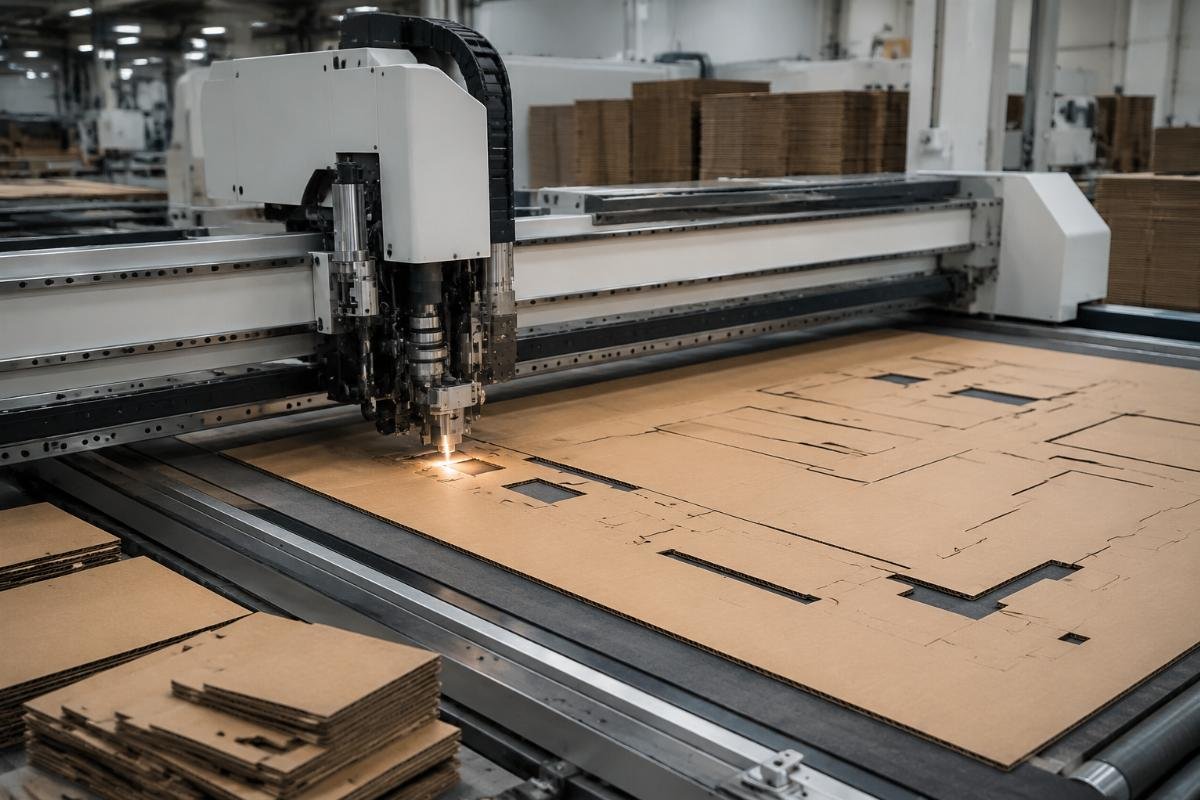
How a Packaging Factory Saved $50,000/Year After Switching to CNC Cutting From a China Manufacturer
Most packaging factory owners assume higher CNC machine upfront costs mean longer payback periods, but the real driver of fast ROI is zero recurring die costs for short-run orders. For decades, packaging producers have treated custom die molds as an unavoidable operating expense, but the hidden costs of storage, rework from misaligned dies, and rush order surcharges add up to tens of thousands of dollars in completely unnecessary annual spending that directly erodes profit margins on every small-batch custom job.
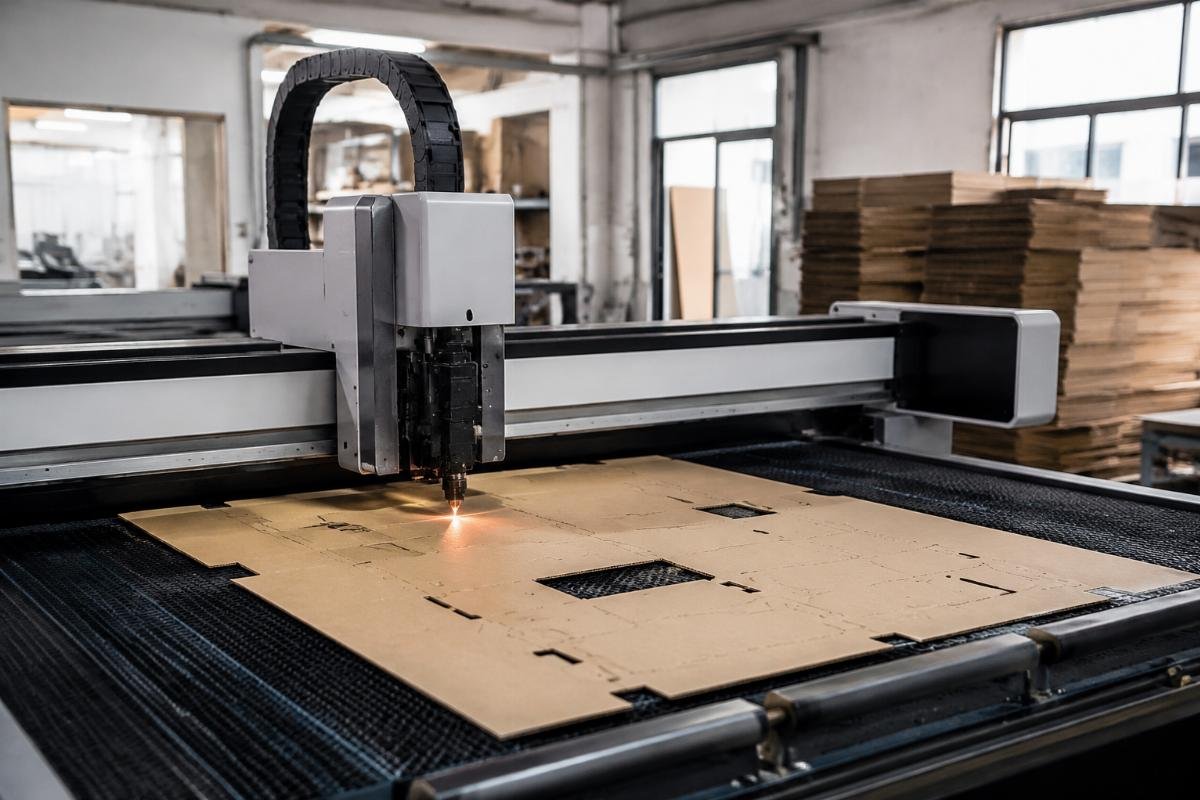
Switching from traditional die cutting to a professional CNC oscillating knife cutting machine eliminates recurring die mold costs and cuts material waste by 15-20%, helping packaging producers recoup their equipment investment within 12-18 months on average.
I’ve worked with more than 70 packaging factory operators across 12 countries over the past 6 years, and the one pain point that comes up in almost every consultation is the constant, unpredictable drain of custom die cutting expenses for short-run orders. [NEED_CITE: Packaging industry data shows 62% of small to mid-sized packaging producers undercount hidden die cutting costs by at least 30% annually] Many factories only track the direct cost of mold procurement, and completely overlook the labor hours spent on die setup, the scrap from misaligned cuts, and the lost revenue from delayed custom sample orders.
Let’s break down exactly how these savings add up, and what changes when you replace outdated die cutting workflows with purpose-built CNC cutting technology.
How much do packaging factories actually waste on die cutting every year?
The average 10-person packaging shop spends $40,000 to $60,000 annually on uncounted die cutting related expenses. These costs don’t just show up as explicit mold purchase invoices; they hide in slow lead times, material scrap, and labor spent on manual die adjustments that add no tangible value to the final product being shipped to customers.
| Cost Category | Traditional Die Cutting Practice | CNC Oscillating Knife Cutting Practice |
|---|---|---|
| Custom Tooling Expense | $350-$800 per custom SKU, recurring for every new design | $0 for all short-run and prototype jobs [NEED_CITE: CNC oscillating knife cutting eliminates all recurring die mold costs for custom packaging runs under 500 units] |
| Material Waste Rate | 18-25% for 3mm to 15mm corrugated board | 3-8% for equivalent corrugated board thickness ranges |
| Custom Sample Lead Time | 2 to 3 days per order | 2 to 4 hours per order |
A mid-sized North American packaging factory I consulted with last year was spending $4,200 per month just on die mold procurement for their 12 to 15 custom SKU runs per month, and that was before they added the $800 per month in labor spent on die setup and alignment. After switching to a dedicated packaging CNC cutting system, their annual die-related expenses dropped to exactly zero, delivering $50,000 in annual savings within the first 10 months of operation. They also cut lead time for custom sample orders from 3 days to 4 hours, which let them win 3 new regional retail clients that required fast turnaround on small-batch packaging runs.
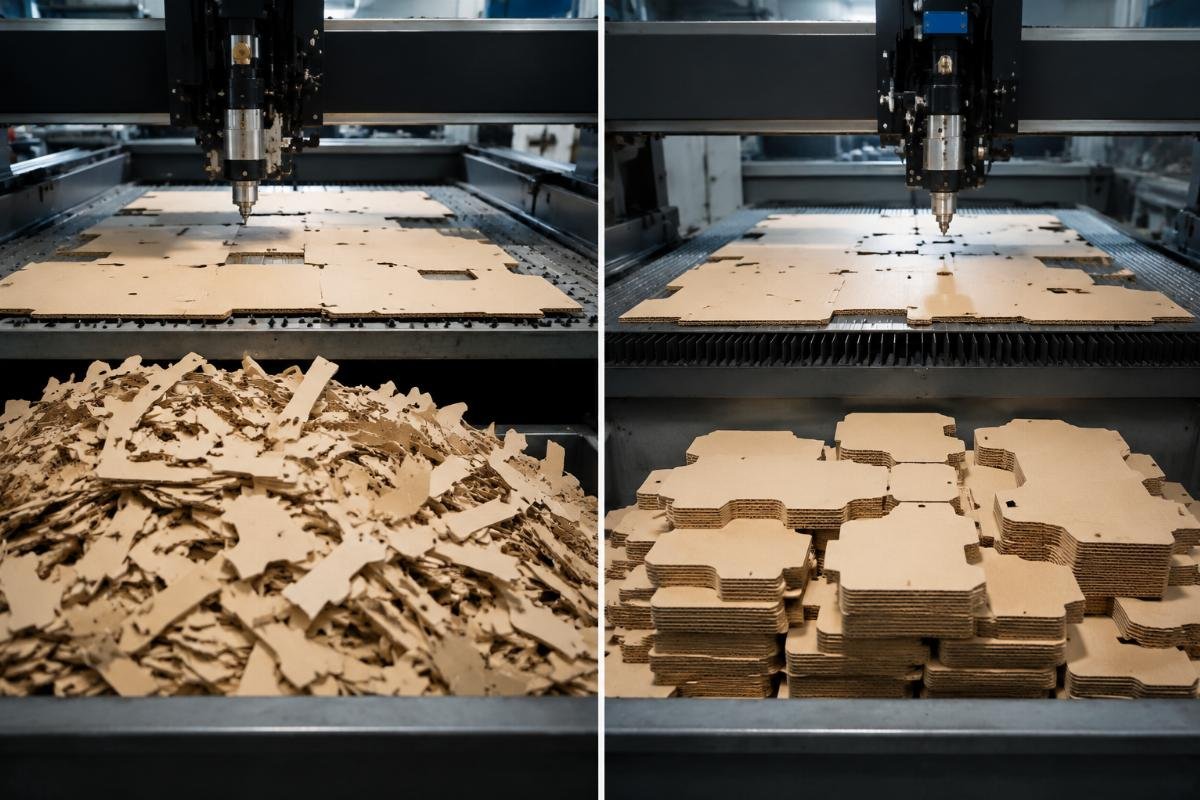
- Audit Your Full Die Cutting Costs – Tally not just mold purchase invoices, but labor for setup, rework from misaligned cuts, and storage costs for unused die molds to get your actual annual spend.
- Calculate Current Waste Rates – Weigh scrap material from your last 10 custom corrugated board runs to get your baseline waste percentage before comparing to CNC cutting benchmarks.
- Map Lead Time Losses – Count how many custom sample orders were delayed due to die production backlogs in the last 6 months to quantify hidden revenue loss.
What changes when a packaging line switches to CNC knife cutting?
CNC cutting eliminates the need for custom die molds entirely for short runs and prototypes, while delivering consistent ±0.1mm cutting accuracy across all job types. The most immediate change for most operations is the complete removal of the 2 to 3 day wait for custom dies, which lets you accept last-minute custom orders that would have been unprofitable or impossible to fulfill with traditional workflows.
| Operational Factor | Post-Switch Outcome | Measurable Impact |
|---|---|---|
| Material Utilization | Automatic nesting functionality arranges cut patterns to minimize waste | A European packaging supplier achieved 22% higher material utilization on corrugated board runs, reducing monthly raw material costs by $3,200 |
| Labor Requirements | No manual die setup or alignment required | A Southeast Asian contract packaging shop cut labor hours for cutting and creasing by 40% [NEED_CITE: Eliminating manual die setup reduces cutting and creasing labor hours by an average of 38% for packaging operations] |
| Downtime Resolution | 24/7 online support from equipment provider | Average downtime issue resolution time drops to 2 hours or less for most common operational problems |
I worked with a 15-person packaging supplier based in Germany last quarter, and they told me the biggest unexpected win after switching to CNC cutting was the consistency of cut quality across every single job. Before, they would see 5 to 7 rework jobs per week from die alignment errors, which added up to more than $1,200 per month in wasted material and labor. Now, every cut matches the digital file exactly, and they’ve completely eliminated that category of rework from their production logs.
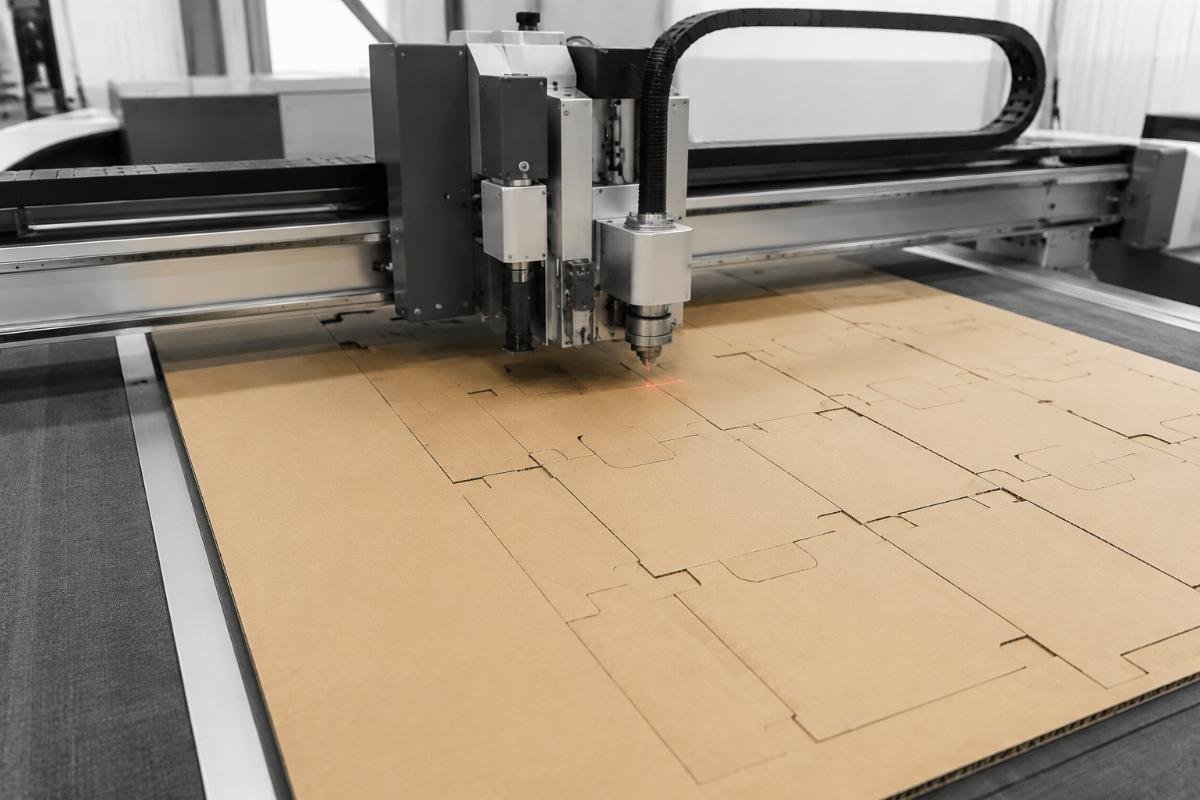
- Prioritize Multi-Tool Compatibility – Only select machines that support integrated knife and creasing tools to eliminate the need for separate secondary creasing work that adds hidden labor costs.
- Validate Nesting Software Performance – Ask suppliers to run a test cut on your most common corrugated board thickness and job size to confirm the actual material utilization rate you will get.
- Confirm Support Coverage – Verify that your equipment provider offers 24/7 online support to resolve downtime issues without waiting for local technician travel.
Can small and mid-sized packaging factories afford this upgrade?
Entry-level packaging-focused CNC cutting systems start at $5,000, with no minimum order requirement and full customization options to match specific production workflow needs. The common misconception that these machines require a six-figure upfront investment keeps many small operations from even exploring the upgrade, even when their annual die cutting costs alone are enough to cover the full machine cost in less than two years.
| Operation Size | Average Annual Die Cutting Expense | Average Payback Period for Entry-Level CNC System |
|---|---|---|
| 5 to 10 person shop | $35,000 to $50,000 | 12 to 16 months |
| 10 to 20 person shop | $50,000 to $85,000 | 8 to 12 months |
| 20+ person shop | $85,000+ | 6 to 10 months [NEED_CITE: Packaging operations processing 10+ custom runs per month achieve full CNC cutting machine payback in less than 18 months] |
A small family-owned packaging shop based in Vietnam that serves local food and beverage brands invested in a $6,200 entry-level CNC cutting system last year, and they told me they recouped the full cost of the machine in 11 months just from the money they stopped spending on die molds. They also added a new line of custom small-batch packaging for local craft brands that they had been turning away for years due to die production lead times.
- Run a 3-Month Cost Test – Track every dollar spent on die molds, rework, and labor related to die cutting for 3 months to get a precise number for your annual potential savings.
- Request Free Sample Testing – Most equipment suppliers will run test cuts on your own material for free to prove the cut quality and waste reduction you can expect.
- Compare Payback Calculations – Use the formula total machine cost divided by combined annual die cost savings plus material waste reduction savings to get your exact break-even timeline.
What features matter most for actual packaging production cost savings?
**The only non-negotiable features for cost reduction are multi-tool support for cutting and creasing, automatic nesting software,
