

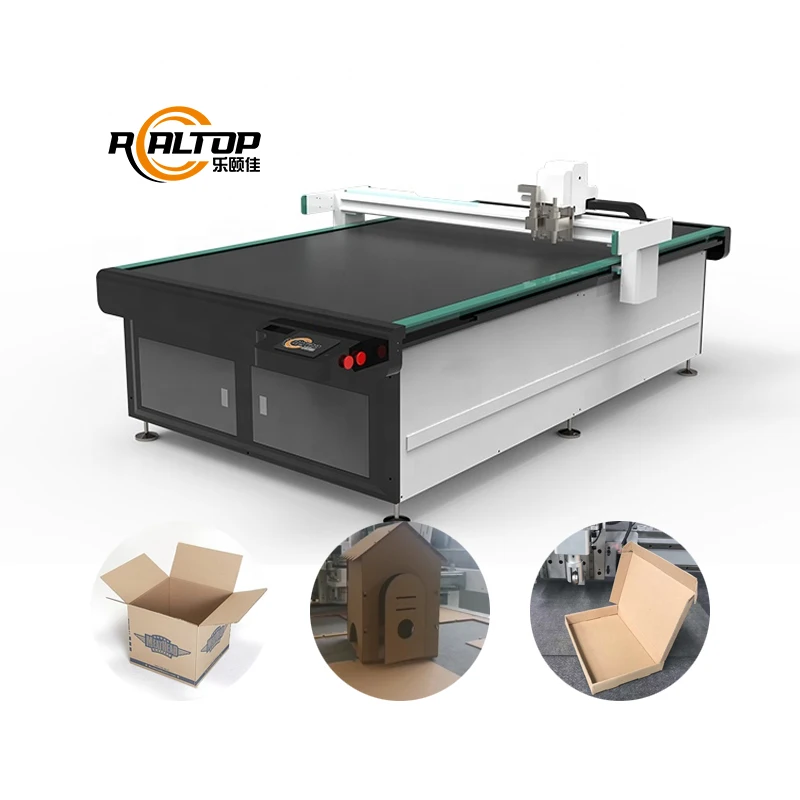
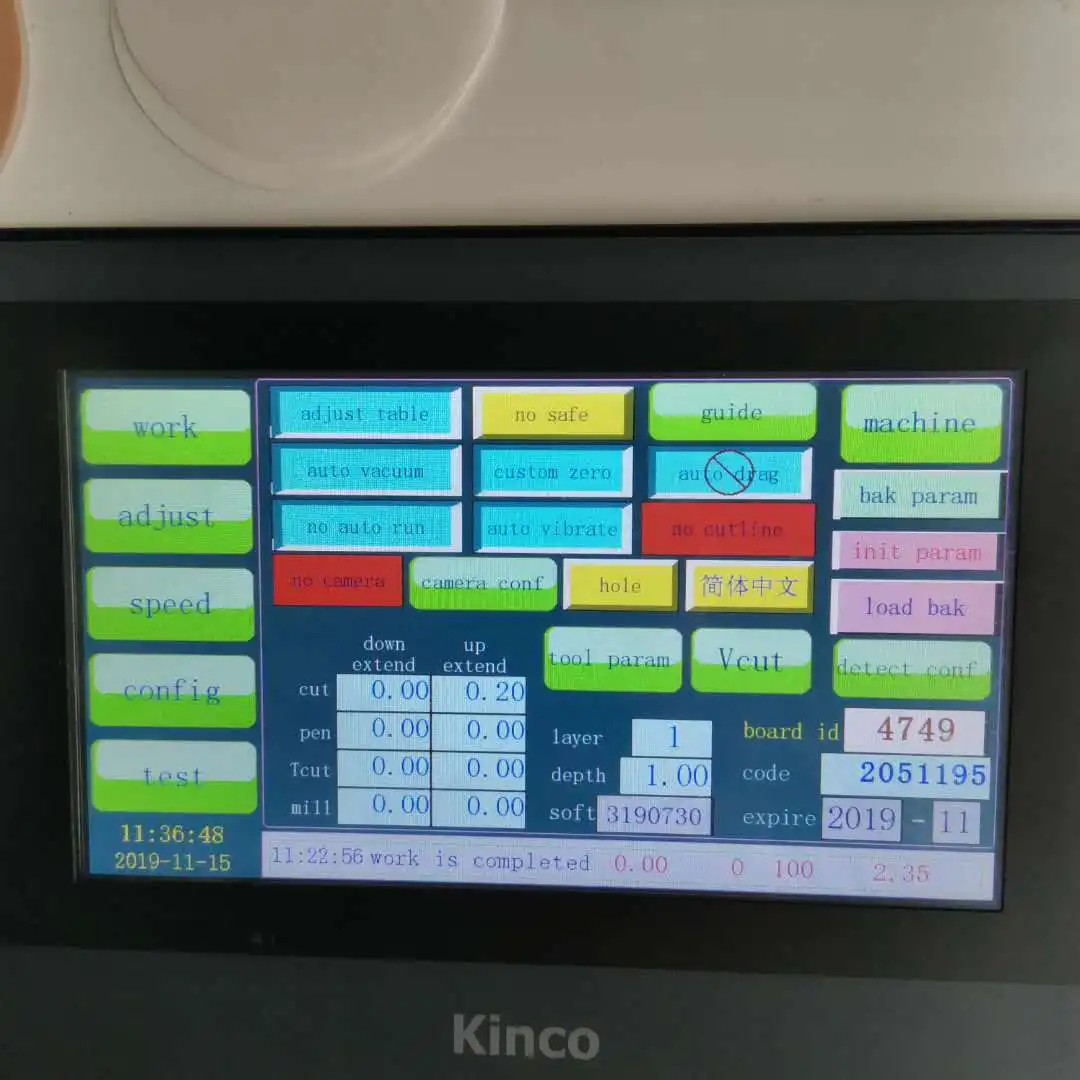




Carton Box Making Machine for Corrugated Cutting – OEM Available
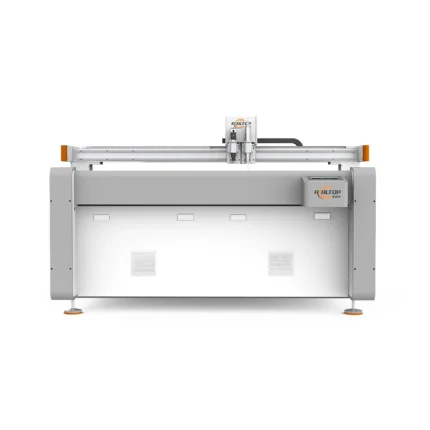
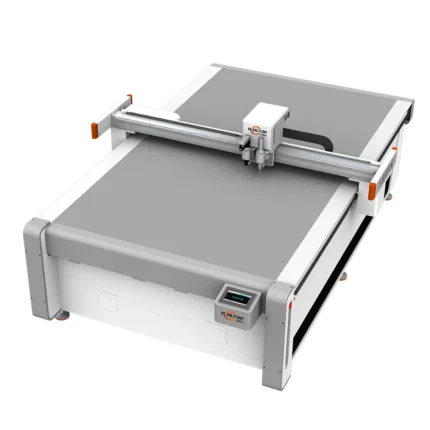
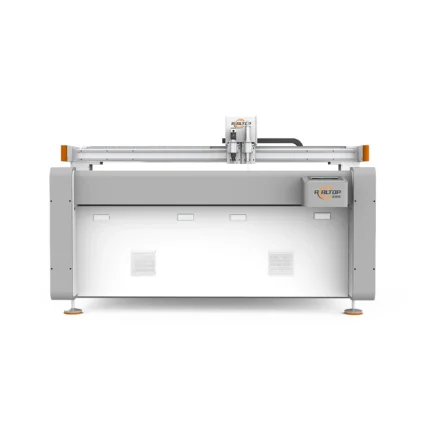
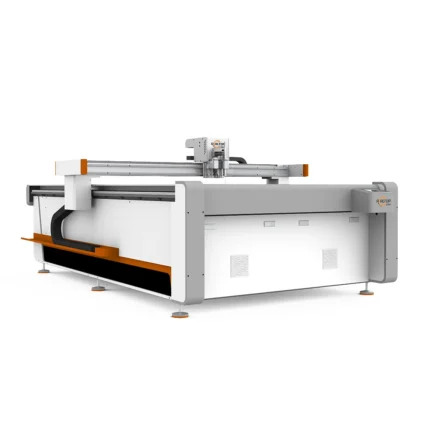
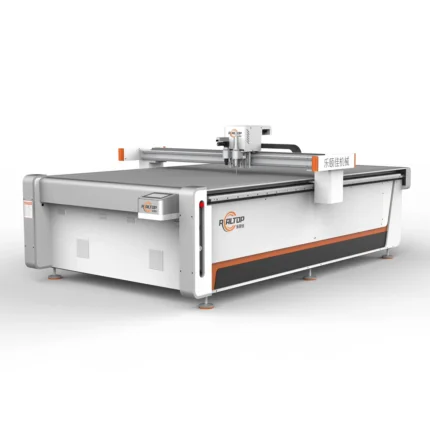
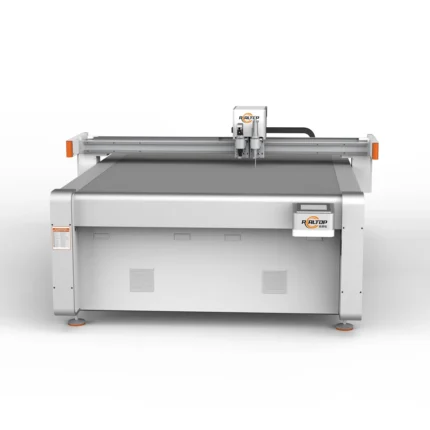
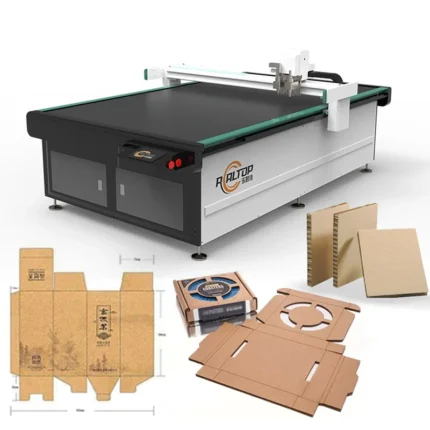
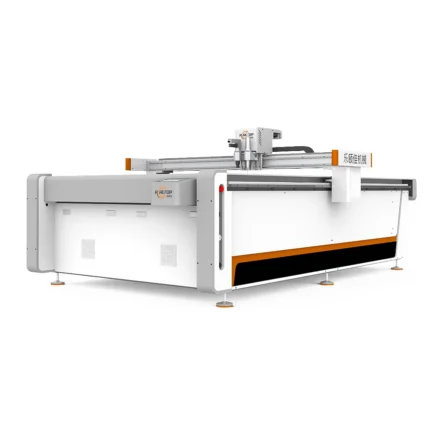
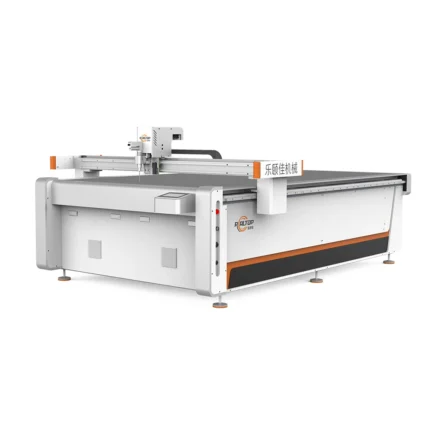
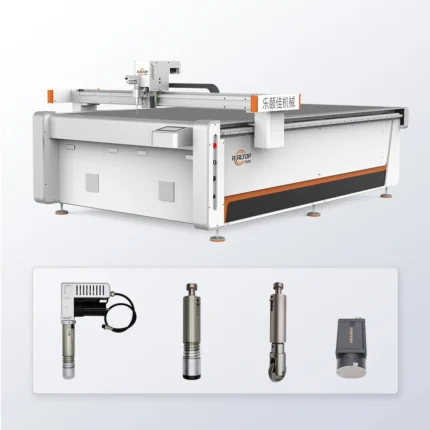
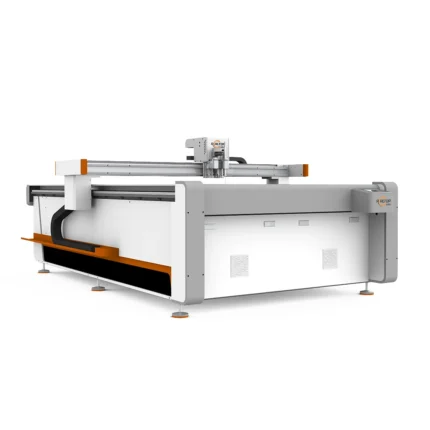
RT-D2516/RT-S2516 CNC Oscillating Knife Carton Cutting Machine, 1600×2500mm, 9kW — configured for corrugated board, cardboard, PVC and flexible materials.
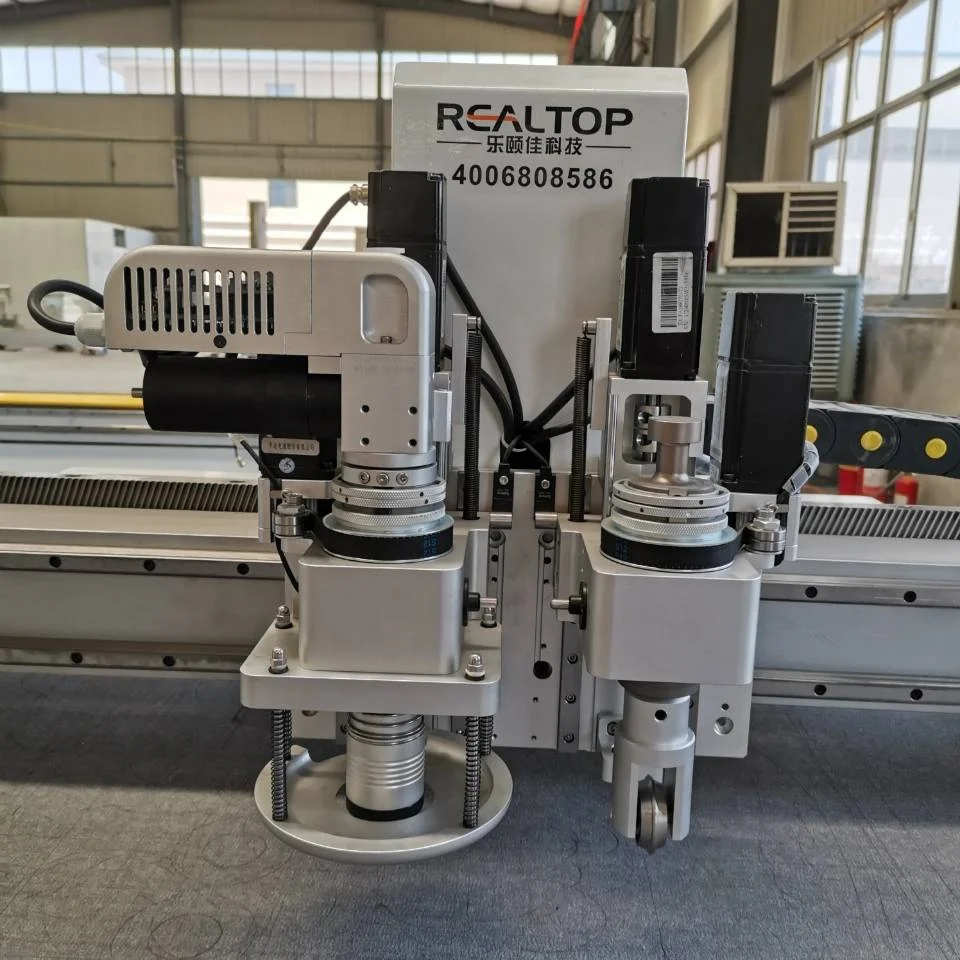
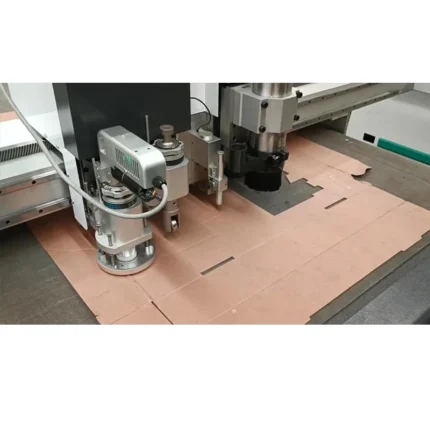
- Swiss oscillating knife head delivers full-cut, half-cut and creasing in one pass, avoiding charred edges typical of CO2 laser processing on paper substrates
- 7.5kW vacuum pump with aluminum honeycomb table holds corrugated sheets flat; HP-GL compatible software supports multi-format import
- Translational velocity 800–1200 mm/s; cutting speed and thickness depend on material grade and flute profile
Sample cutting on your own corrugated stock confirms edge quality, crease accuracy and real throughput before commitment — request a test report on your specific board.
Swiss Knife Precision — A vibration-driven oscillating head replaces thermal processing for corrugated board, eliminating charred edges and fume extraction requirements across packaging sample workflows.
Technical Specifications
| Parameter | Value |
|---|---|
| Model | RT-D2516/RT-S2516 |
| Product Type | CNC Oscillating Knife Carton Cutting Machine |
| Working Area | 1600 × 2500 mm |
| Machine Size | 3450 × 2300 × 1250 mm |
| Rated Power | 9 kW |
| Translational Velocity | 800–1200 mm/s |
| Cutting Speed | 200–800 mm/s (basis not stated in source — confirm material type / thickness / corrugated flute) |
| Cutting Thickness | ≤100 mm (varies with material) |
| Repeated Accuracy | ≤0.1 mm |
| Table Type | Flatbed aluminum alloy honeycomb vacuum adsorption platform |
| Vacuum Pump | 7.5 kW with automatic follow cutting area adsorption |
| Multifunctional Head | Swiss imported knife; vibration full cutting, vibration half cutting, cursor location function |
| Transmission System | Imported digital servo motor, linear guide, synchronous belt, ball screw |
| Guide Rail | Imported straight-line square guide (Taiwan Hiwin) |
| Drive | Rack transmission |
| Servo Motor | Taiwan Delta servo motors and drivers |
| Conveyor Belt | Germany imported conveyor belt |
| Felt Belt | Wear-resistant anti-pull composite fiber felt (tension strength increased by 35%) |
| Safety Device | Infrared sensors and emergency stop devices |
| Instruction System | HP-GL compatible format |
| Voltage | 380V ±10% |
| Software | Professional carton cutting software; supports multiple file format imports; automatic positioning for cutting, marking, creasing |
| Language Options | English, Russian, Italian, Chinese; special languages customizable |
| Assembly State | Fully assembled welded thick square seamless steel structure with high-temperature treatment |
| Standards | CE declaration where applicable |
Application Suitability
| Application | Material or Output |
|---|---|
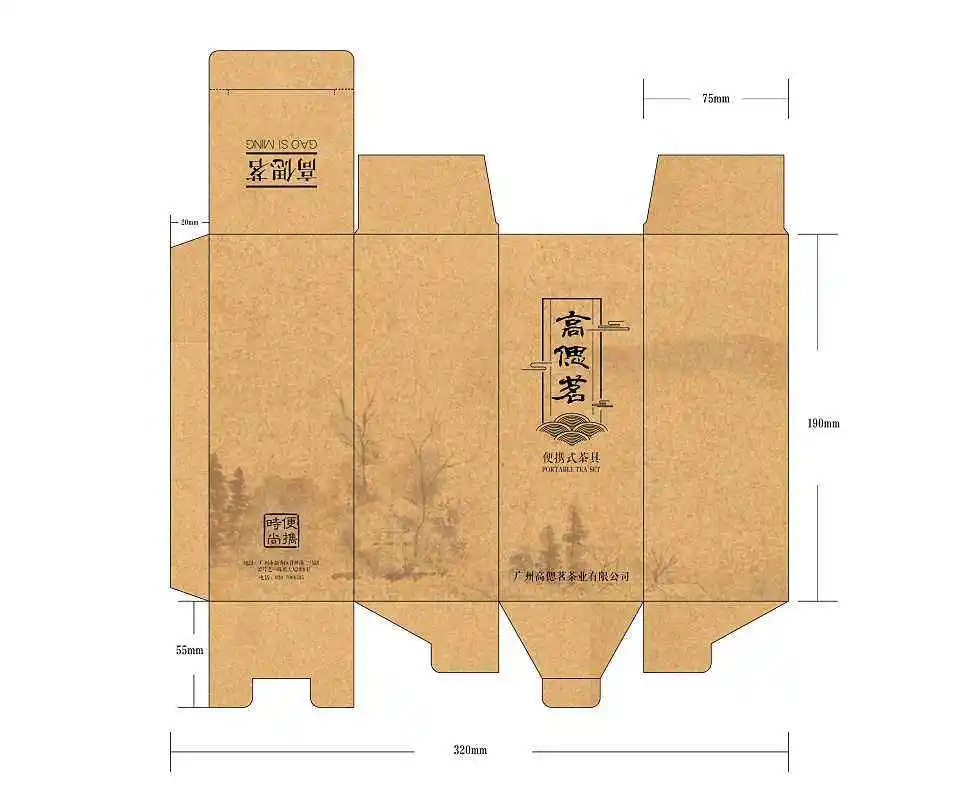
| Packaging carton sample making | Corrugated board across multiple flute profiles, cardboard, greyboard |
| Short-run corrugated packaging production | Large electrical cartons, express paper boxes, snack food packaging, high-end gift boxes |
| Sticker and label contour cutting | Self-adhesive vinyl, sticker stock with intelligent pattern recognition |
| Card and tag production | Billboards, business cards, tags, card stock |
| Flexible non-metal cutting | Leather, clothing fabric, sponge composite leather, PVC, soft glass, silicone, rubber |
Why Burnt Edges Ruin Packaging Samples and What a laser cutting and engraving machine Cannot Solve on Board
Knife-based digital cutting removes thermal damage from the carton prototyping equation entirely.
Packaging producers running CO2 laser systems on corrugated board know the problem: charred edges on prototype cartons, persistent smoke odor on samples presented to brand clients, and the overhead of fume extraction infrastructure. The laser cutting and engraving machine excels at edge sealing on synthetics and fine engraving, but corrugated fibers combust rather than melt, leaving carbonized margins that compromise presentation quality and create airborne particulates [NEED_CITE: fume extraction compliance requirements for laser processing of cellulose-based materials]. For operations where sample aesthetics and clean production environments matter, the oscillating knife approach sidesteps these thermal trade-offs without sacrificing contour accuracy.
Thermal Process Versus Mechanical Cutting on Cellulose Substrates
When corrugated board meets a focused laser cutting and engraving machine beam, the cellulose fibers vaporize and leave a visible heat-affected zone along every cut path. On white-top liner and kraft surfaces, this discoloration is immediately apparent to packaging buyers evaluating sample quality. The Swiss imported oscillating knife on the RT-D2516/RT-S2516 shears through fluted media without thermal contact, producing edges that match the unprocessed board surface and require no post-cut cleaning before client presentation.
Fume Extraction Infrastructure and Compliance Burden
CO2 laser processing of corrugated and cardboard materials generates continuous smoke that demands extraction systems, filtration media replacement, and compliance with workplace air quality standards. A knife-based system eliminates the combustion byproduct entirely. Production floors running the RT-D2516/RT-S2516 for carton sample work operate without extraction ducting tied to the cutting station, reducing both capital outlay and ongoing filter maintenance cycles [NEED_CITE: workplace air quality standards for particulate-generating fabrication equipment].
Creasing Accuracy Without Scorch Lines
The multifunctional head integrates vibration full cutting, half cutting, and creasing functions in a single pass. Laser scoring on corrugated board creates a micro-burn line that weakens fiber structure unevenly, sometimes producing inconsistent fold behavior across flute directions. The mechanical creasing wheel compresses fibers along a controlled path, yielding fold lines that behave predictably during manual assembly of sample cartons and short-run packaging.
Throughput on Non-Sealed-Edge Applications
Translational velocity between 800 and 1200 mm/s positions this system for rapid traversal between cut paths on nested carton layouts. Where a laser cutting and engraving machine must modulate power and speed to manage heat input on thick fluted board, the oscillating knife maintains consistent cutting speed regardless of flute profile, making throughput comparisons favorable for high-mix packaging sample environments where edge sealing is not required.
Vacuum Hold-Down and Material Behavior on Fluted Board
The 7.5 kW vacuum pump paired with an aluminum alloy honeycomb platform addresses a specific corrugated cutting challenge: fluted board warps and lifts at sheet edges, causing dimensional drift during long cut paths. The automatic follow cutting area adsorption concentrates vacuum force where the knife is actively working, maintaining flat registration without the scorch marks that laser honeycomb beds can transfer onto paper substrates during extended dwell. Repeated accuracy of ≤0.1 mm holds crease-to-cut relationships tight across the full 1600 × 2500 mm working area, which matters when fold tabs and slot positions must align during carton assembly [NEED_CITE: vacuum hold-down principles for porous and fluted sheet materials].
Servo Drive Selection and Path Fidelity at Production Speed
Taiwan Delta servo motors driving a rack transmission with Hiwin linear guides determine how faithfully the machine follows complex carton geometry at cutting speeds of 200–800 mm/s. On carton layouts with tight radii, reverse-cut corners, and glue tab profiles, servo response time and guide rail stiffness directly affect corner accuracy. The 9 kW rated power allocation covers both the cutting head oscillation motor and the vacuum system simultaneously, so power cycling between cut and crease operations does not introduce path deviation mid-sheet.
The Hidden Cost of Choosing Laser for Board Work
A packaging sample shop that standardizes on a laser cutting and engraving machine for all substrates eventually encounters limits on corrugated throughput, extraction costs, and client complaints about sample odor. Retrofitting fume extraction after installation adds ductwork routing and fan capacity calculations that were not part of the original floor plan. More critically, the thermal process cannot crease — it can only cut or score — meaning a separate mechanical creasing station or manual fold-line scoring becomes necessary for functional carton prototypes. The RT-D2516/RT-S2516 consolidates cut, half-cut, and crease into a single machine cycle, removing the secondary operation and the registration error that accumulates when a sheet moves between stations [NEED_CITE: registration tolerance accumulation in multi-station sheet processing workflows].
What In-House Process Coverage Means for Packaging Buyers
Realtop manufactures both knife and laser systems under one roof, which shapes how the RT-D2516/RT-S2516 gets specified for a given buyer. Rather than defaulting to one process technology, the configuration conversation starts with your material stack: corrugated flute profile, board grammage, whether you also run PVC blisters or synthetic gaskets that benefit from laser edge sealing. Sample cutting on your own corrugated grade before order commitment verifies that the cutting speed and edge quality match your production expectations, not a generic brochure claim.
Documentation & Verification
- Machine specification sheet confirming working area, servo brand, and vacuum pump rating matched to your order
- Electrical schematic and voltage confirmation for 380V ±10% supply at destination market
- Tool head and table configuration list detailing knife type, creasing wheel, and vacuum zoning layout
- Sample cutting report on buyer-supplied corrugated grade documenting cut speed and edge condition
- Software licence and file format compatibility note covering HP-GL and your existing CAD workflow
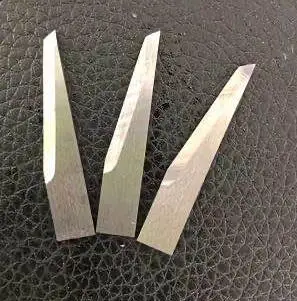
- Spare parts list specifying Swiss knife blades, felt belt sections, and vacuum seal consumables
Installation, Commissioning & Support
- Floor space allocation for 3450 × 2300 mm footprint with clearance for sheet loading on the 1600 × 2500 mm table
- Dedicated 380V ±10% circuit rated for 9 kW machine load plus 7.5 kW vacuum pump startup surge
- Machine ships fully assembled in welded steel frame; positioning requires overhead crane or forklift access
- First-run commissioning includes vacuum zoning calibration for your smallest carton blank dimensions
- Operator training covers tool head changeover between oscillating knife, creasing wheel, and cursor location functions
- Preventive maintenance schedule addresses Hiwin guide rail lubrication, rack inspection, and felt belt tension checks
What We Need to Specify Your Configuration
Before quotation, share your primary corrugated flute profiles and board grammage range so we can validate cutting speed on your actual material. Confirm your local voltage and frequency supply, preferred control language, and the CAD file formats your design team currently outputs. If you produce sticker or label work alongside cartons, note whether intelligent pattern recognition is required for printed contour following.
Frequently Asked Questions
Q: When should I choose knife cutting over a laser cutting and engraving machine for corrugated work?
A: Knife cutting wins when edge appearance on board matters, when fume extraction is a compliance burden, and when creasing must happen in the same pass as cutting. Laser remains preferable for synthetic materials requiring edge sealing, fine engraving on wood or acrylic, and applications where a heat-affected zone is acceptable or invisible on the finished product.
Q: What corrugated flute profiles and board thicknesses can the RT-D2516/RT-S2516 handle?
A: The system accommodates cutting thickness up to 100 mm depending on material density and flute structure. Common packaging flutes including B, C, E, and BC double-wall profiles fall within working range, though cutting speed varies with board grammage and layer count. Request a sample cutting report on your specific board grade to confirm throughput expectations.
Q: Does knife cutting eliminate the need for fume extraction entirely?
A: On cellulose-based materials like corrugated board, cardboard, and paper stock, the oscillating knife produces no combustion byproducts and therefore no smoke or particulate emissions. This removes the extraction infrastructure requirement associated with CO2 laser processing of the same substrates, simplifying workshop ventilation planning.
Q: How does creasing quality from the oscillating knife head compare to laser scoring?
A: Mechanical creasing compresses fibers along a controlled path without burning through the board structure, producing fold lines that behave consistently across different flute directions. Laser scoring creates a micro-combustion line that can weaken fibers unevenly, sometimes resulting in unpredictable fold behavior on prototypes assembled by hand or on automated carton erecting equipment.
Q: What must be confirmed before shipment regarding voltage, language, and software?
A: Voltage must match destination supply at 380V ±10% with correct plug configuration. Control software language is selectable from English, Russian, Italian, Chinese, or customizable to other languages. File format compatibility between your existing CAD output and the HP-GL compatible instruction system should be verified during the pre-order sample cutting stage.


Related products
Automatic Digital Cardstock Cutter 2026 CNC Cutter
Product Introduction
Automatic Digital Cardstock Cutter 2026 is a CNC cutting machine ideal for white cardboard and kraft paper. It offers precise and efficient cutting performance, suitable for various paper processing needs in manufacturing and craft applications.Key Specifications
| Type | CNC Digital Cutting Machine |
| Material Compatibility | White Cardboard, Kraft Paper |
| Operation | Automatic |
| Application | Paper Cutting & Processing |
Automation CNC Pizza Box Machine 2026 Rotary Die Cutting
Product Parameters
| Type | Automation CNC Pizza Box Machine |
| Model Year | 2026 |
| Cutting Technology | Rotary Die Cutting |
| Operation | Automated CNC Control |
Introduction
This 2026 Automation CNC Pizza Box Machine features advanced rotary die cutting technology, ensuring precise and efficient pizza box production. With automated CNC control, it offers high productivity and accuracy for professional manufacturing needs.
CNC Flatbed Oscillating Knife Cutting Machine 2026
Product Introduction
High-performance CNC Flatbed Oscillating Knife Cutting Machine 2026, ideal for precision cutting of various materials with advanced oscillating knife technology, ensuring efficient and accurate operations for industrial manufacturing needs.Specifications
| Model | 2026 |
| Type | CNC Flatbed Oscillating Knife Cutting Machine |


Digital CNC Cardboard Cutting Machine 2026
Product Introduction
High-precision Digital CNC Cardboard Cutting Machine 2026, ideal for efficient cardboard processing with advanced CNC technology, ensuring precise and fast cutting performance for various packaging and craft applications.
Key Specifications
| Model | 2026 |
| Type | Digital CNC Cutting Machine |
| Material | Cardboard |
| Feature | High Precision, Efficient Cutting |

Realtop CNC Carton Box Cutter 2026 CCD Camera Honeycomb Cutting
Product Introduction
Realtop CNC Carton Box Cutter 2026 is a professional cutting solution featuring CCD Camera and Honeycomb Cutting technology, ideal for precise carton box processing with efficient performance.Product Parameters
| Model | Realtop CNC Carton Box Cutter 2026 |
| Vision System | CCD Camera |
| Cutting Technology | Honeycomb Cutting |
商品评价
There are no reviews yet.