



Oscillating Knife Cutting Machine for Packaging – Laser Alternative
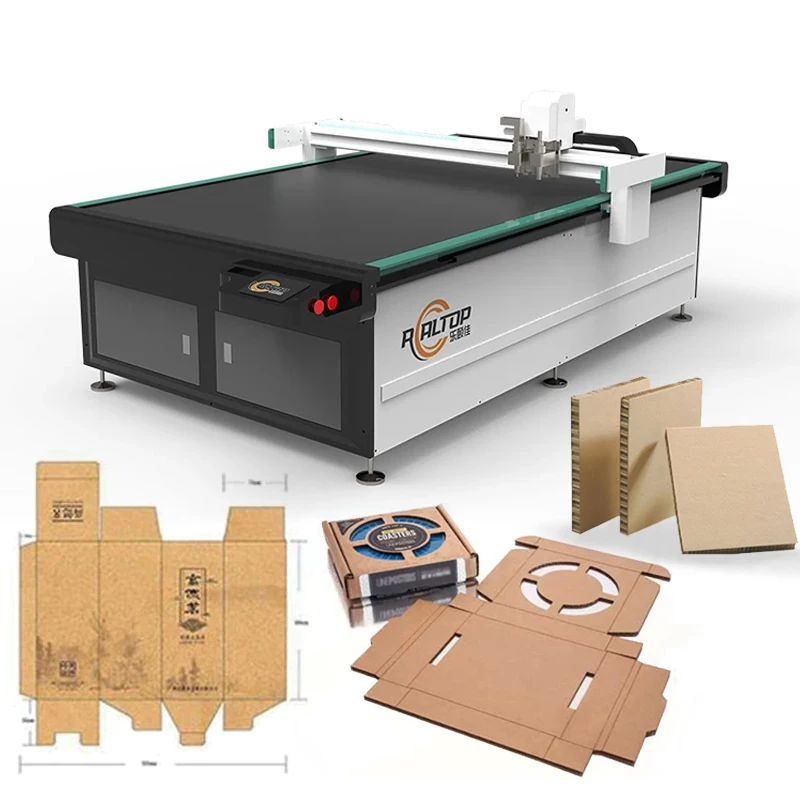
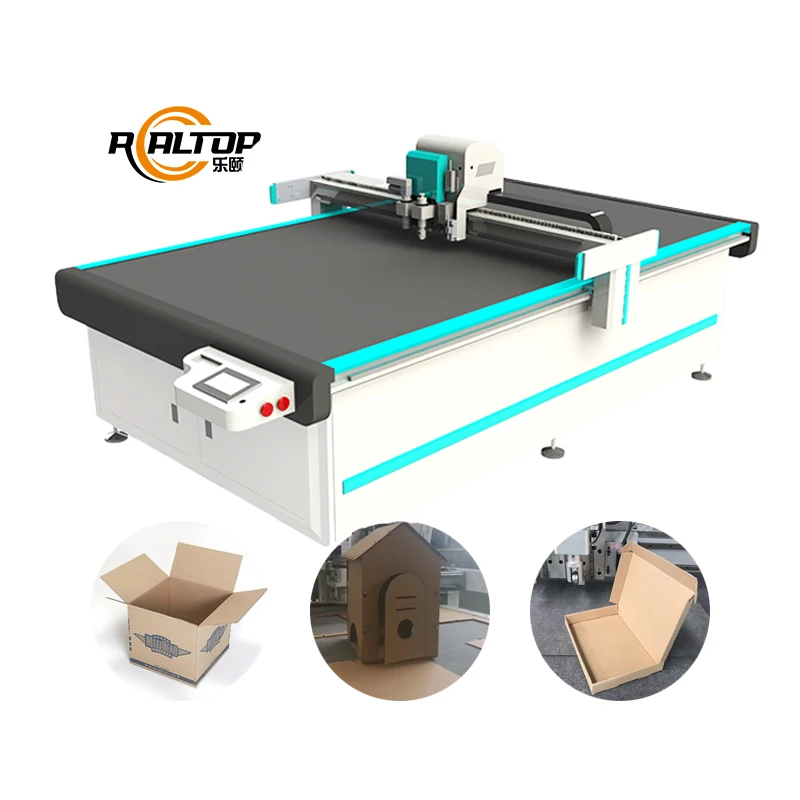
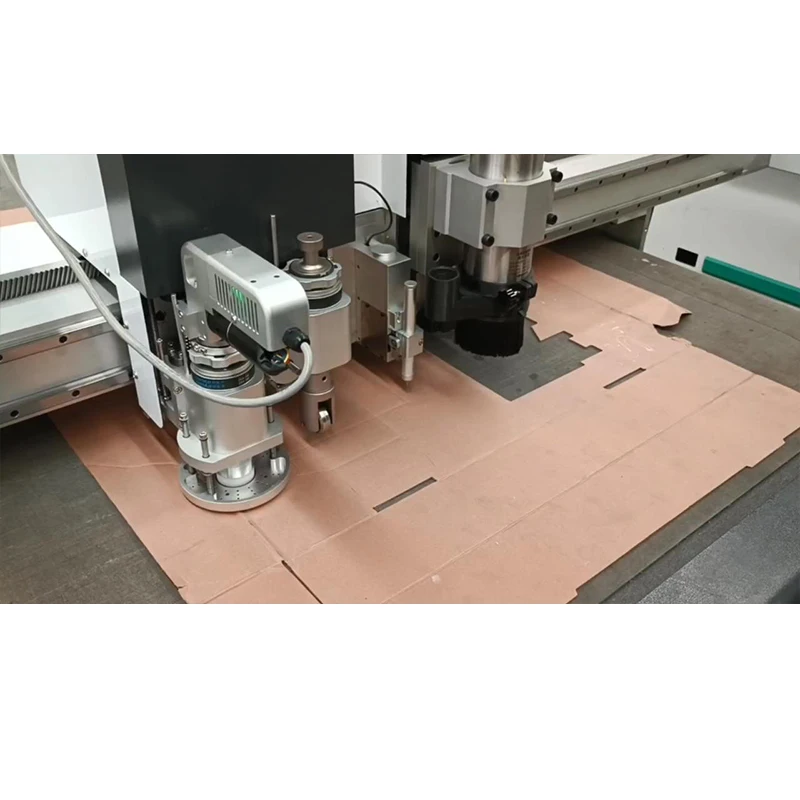
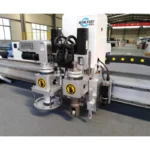
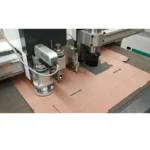
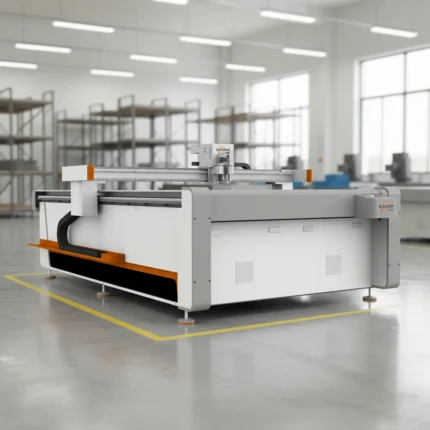
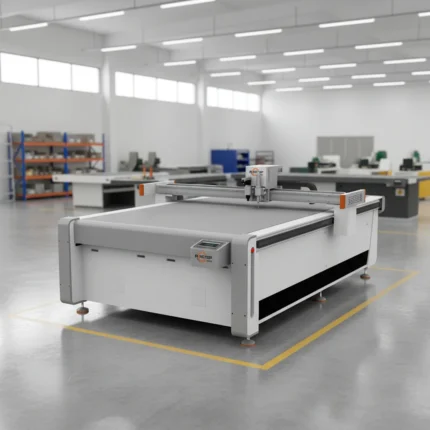
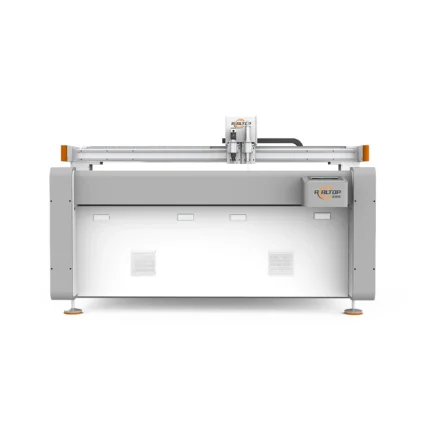
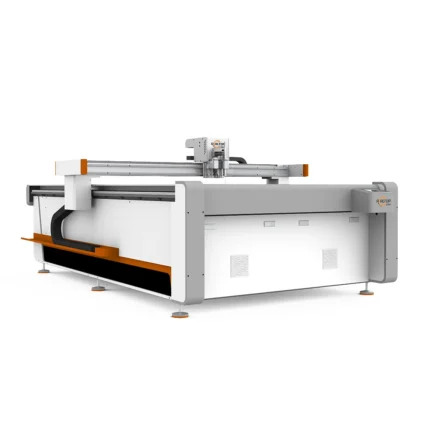
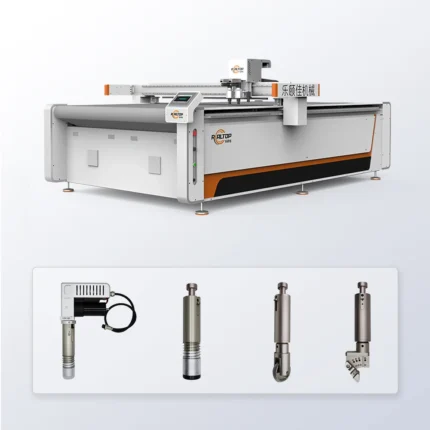
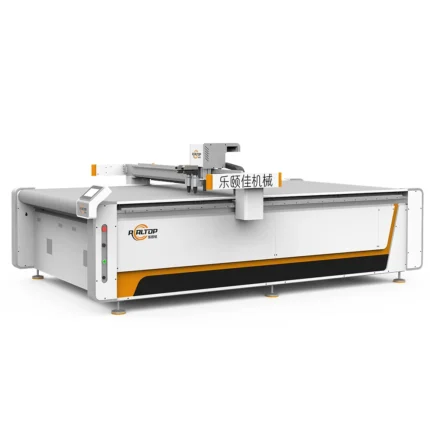
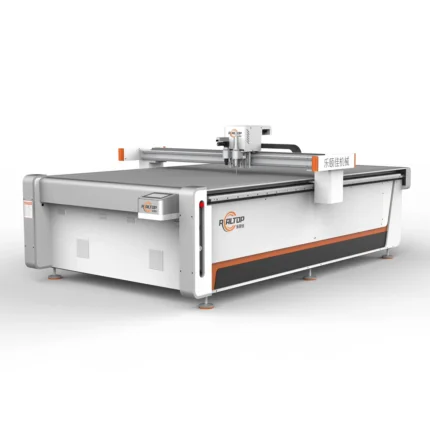
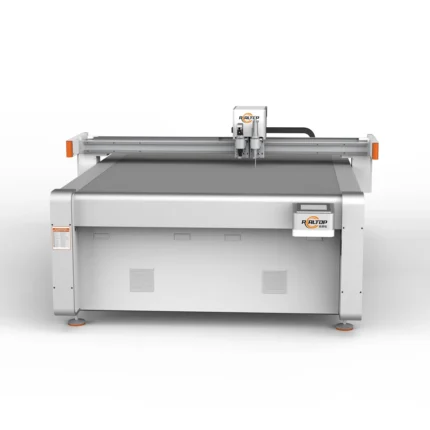
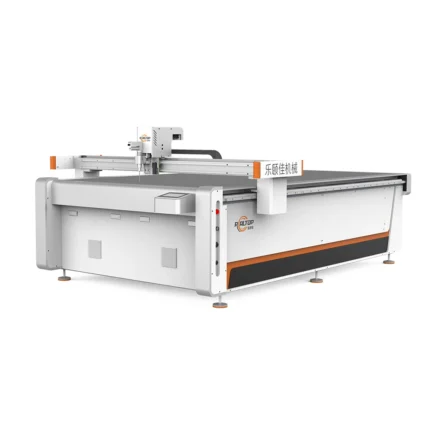
CNC Oscillating Knife Cutting Machine, ≤18mm Cutting Thickness, <0.05mm Repeated Accuracy — positioned as a no-burn, no-fume alternative for packaging and sticker producers who have outgrown CO2 laser on thick corrugated board or adhesive-backed stock. Aluminum honeycomb vacuum platform with zoned hold-down keeps small parts flat, while DXF/PDF/AI file compatibility aligns with existing laser nesting workflows. Request sample cutting on your own material with factory test record before commitment, and confirm vacuum zoning layout matches your smallest part geometry.
Process-Flexibility First — An in-house engineering team pairs knife and laser cutting platforms under one roof, letting packaging and non-metal processors choose the right thermal or mechanical method for each substrate without forcing a compromise.
Technical Specifications
| Parameter | Value |
|---|---|
| Product Type | CNC Oscillating Knife Cutting Machine |
| Working Area | 2500×1300mm / 1600×2500mm |
| Machine Size | 3550×1910×1400mm (RT–R2513) / 3450×2300×1250mm (RT-D2516 / RT-S2516) |
| Rated Power | 9 kW |
| Voltage | 380V (50Hz/60Hz to be confirmed per market) |
| Transmission | Ethernet port |
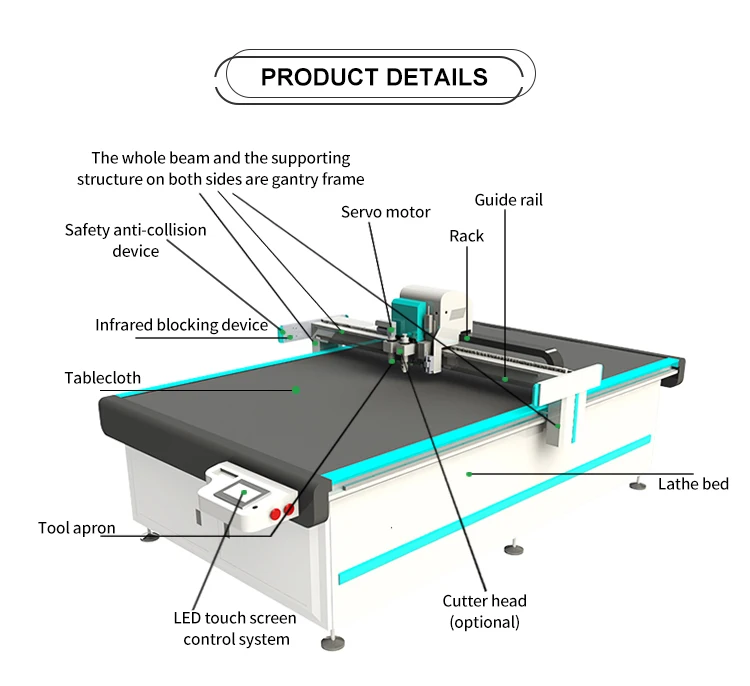
| Servo Motor | Dongling servo (Delta servo motor available as alternate configuration) |
| Guide Rail | Taiwan Hiwin straight-line square guide |
| Drive System | Rack transmission |
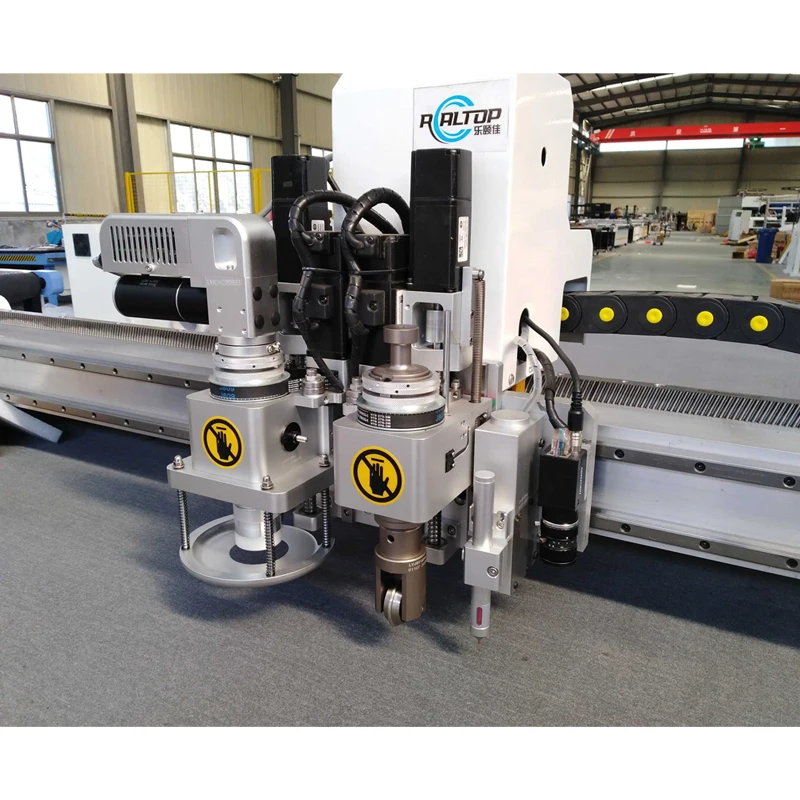
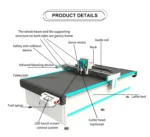
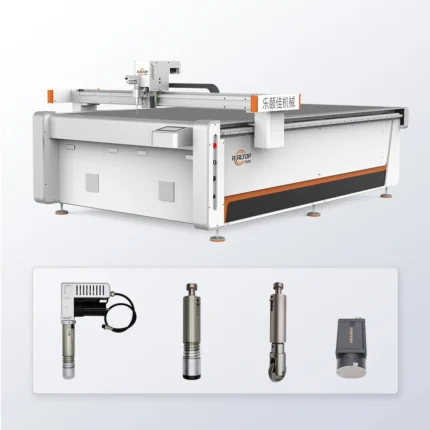
| Cutting Tools | Oscillating knife, creasing tool, kiss-cut knife, round punch |
| Cutting Thickness | ≤18mm on listed packaging materials (up to ≤100mm depending on material — basis to be confirmed) |
| Repeated Accuracy | <0.05mm |
| Fixing Method | Aluminum alloy honeycomb vacuum adsorption platform |
| Vacuum Pump | 7.5 kW |
| Conveyor Belt | Germany-imported belt with auto-feeding function |
| Felt Belt | Wear-resistant composite fiber (tension strength increased by approximately one third) |
| Safety Devices | Infrared sensors and emergency stop |
| Profile Formats | DXF, OLT, PDF, AI |
| Software | Professional carton nesting software (language customizable) |
| Language Options | English, Russian, Italian, Chinese (special languages customizable) |
| Blades Included | 10 pieces of oscillating blades |
| Warranty | 1 year (excluding felt and knife blades) |
| Delivery Time | <30 working days |
| Assembly State | Fully assembled |
| Standards | CE declared |
Application Suitability
| Application | Material or Output |
|---|---|
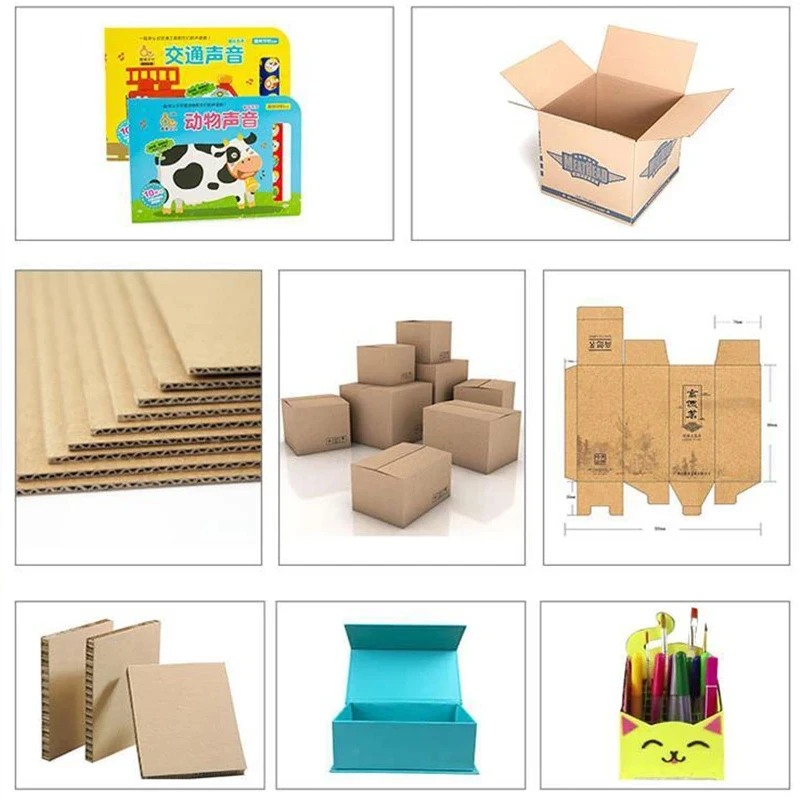
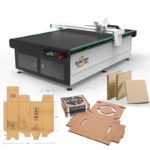
| Packaging carton sample making and short-run production | Corrugated board, thick cardboard, specialty box stock |
| Sticker and label contour cutting | Adhesive-backed vinyl, PP paper, printed label sheets |
| Gift box and premium packaging | Paperboard, coated cardboard, composite flexible sheets |
| Express paper box and snack food packaging | Single-face corrugated, lightweight paper stock |
| Leather and flexible material cutting | Genuine leather, synthetic leather, soft PVC |
| Billboard and business card finishing | Board, card stock, laminated paper |
Why Laser Processors Are Adding an Oscillating Knife Cutting Machine for Laser and Engraving Processors to Their Line
When heat is the problem, a blade is the answer.
For any shop already running CO2 or fiber lasers, adding a CNC oscillating knife cutting machine for laser and engraving processors means solving edge-burn, adhesive melt-back, and fume extraction headaches that a thermal process simply cannot fix. I once watched a customer try to push thick corrugated board through a CO2 laser at production speeds — the edges charred, the extraction system choked on smoke, and the operator had to slow down to a crawl just to get a clean cut. That is the moment a mechanical blade earns its place on the floor. [NEED_CITE: thermal limitations of CO2 laser cutting on thick corrugated substrates]
Many packaging producers discover this the hard way. They buy laser power rated at peak output and find the continuous cutting depth falls short on real board stock. Switching to a knife process removes the heat variable entirely, but only if the machine is specified correctly for the material thickness and part geometry in question.
Where Thermal Process Hits a Wall on Packaging Materials
A CO2 laser excels at sealing edges on synthetics and engraving fine detail, but corrugated board and adhesive-backed sticker stock present a different challenge. The air gaps inside fluted board scatter the beam, demanding more power than a typical mid-range laser delivers. Adhesive layers on sticker stock melt under the beam, leaving residue on the cutting bed and requiring frequent downtime for cleaning. A CNC oscillating knife cutting machine for laser and engraving processors handles these materials mechanically — the blade slices through flutes and adhesive without generating heat, so edge quality stays consistent regardless of board density or glue formulation.
Fume Extraction and Workshop Air Quality
Laser cutting cardboard, stickers, and coated paper generates particulate and volatile organic compounds that must be captured by a dedicated extraction system. In workshops where multiple laser machines already run, adding another thermal source can overload existing filtration. The oscillating knife process produces no combustion byproducts. Dust from the cutting action is minimal compared to laser smoke, and standard workshop ventilation is typically sufficient. This is a practical advantage for facilities that cannot expand their extraction infrastructure. [NEED_CITE: industrial ventilation requirements for laser versus mechanical cutting processes]
How the Vacuum Platform and Drive Train Affect Real Output
The aluminum alloy honeycomb vacuum adsorption platform holds material flat across the entire working area. The 7.5 kW vacuum pump provides enough suction to keep corrugated board and sticker sheets from lifting during the cut cycle — a common problem on lighter vacuum systems when cutting small parts or narrow strips. Combined with the Taiwan Hiwin square guide rails and rack transmission, the repeated accuracy stays below 0.05mm, which matters when kiss-cutting stickers where the blade must stop at the backing paper without cutting through it. The Germany-imported conveyor belt with auto-feeding allows continuous sheet loading, reducing idle time between cuts.
What Happens When the Wrong Configuration Ships
A buyer who selects a working area without matching the vacuum zoning to their smallest part size will watch those parts lift and shift mid-cut, producing scrap. Choosing a creasing tool that does not match the board flute profile yields crushed folds instead of clean score lines. I have seen workshops receive machines with control panels and software locked to a language the operators cannot read, because the language requirement was never confirmed before shipment. Voltage mismatches are another silent problem — a 380V machine arriving in a facility wired for a different supply sits idle until a transformer is sourced. [NEED_CITE: common configuration mismatches in international machinery procurement]
Why Source This Platform Here
The manufacturer designs and builds both knife and laser cutting systems in-house, which means a buyer evaluating this oscillating knife platform can get honest guidance on whether a knife or a laser better suits their specific material — rather than being sold one technology for every application. Tool head and table configurations are specified per material and production volume, not quoted from a generic price list. CCD camera positioning for printed contour work can be discussed if the application requires it. Software compatibility is confirmed before the order is placed, so DXF, PDF, AI, or OLT files integrate with the buyer’s existing workflow. Voltage, plug type, and control language are documented and locked before production starts. Sample cutting on the buyer’s actual material is available, producing a report with edge-quality photos and cycle-time data before any commitment is made.
Documentation & Verification
- Machine specification sheet listing each tool head and table configuration option
- Electrical schematic with voltage and frequency confirmed for your market
- Sample cutting report on your packaging board or sticker stock with edge photos
- Factory test record showing repeated accuracy and cutting cycle data before dispatch
- Software licence and file format compatibility note matching your nesting workflow
- Spare parts list with blade and felt belt specifications and reorder references
Installation, Commissioning & Support
- Fully assembled delivery — the 9 kW rated power requires a dedicated 380V circuit with confirmed frequency
- Working areas up to 2500×1600mm need a level floor with clearance for the conveyor belt auto-feeding system
- First-run parameter setting on your material thickness, with vacuum zoning adjusted to your smallest part
- Operator training covers tool head changes between oscillating knife, creasing tool, and kiss-cut knife
- Ten oscillating blades included; felt belt is wear-resistant composite fiber with documented reorder specs
- Warranty covers one year on mechanical and electrical components, excluding consumable blades and felt
Before You Request a Quote
To match the right configuration to your production, share the material type and thickness range you cut most often, the smallest and largest sheet dimensions, and the daily volume you need to hit. Confirm your facility voltage and frequency, preferred control panel language, and whether your current nesting software exports in DXF, PDF, AI, or OLT format. If you have adhesive-backed or coated stock, mention the specific adhesive type so the tool head can be selected accordingly.
Frequently Asked Questions
Q: When should I use knife cutting instead of CO2 laser for packaging materials?
A: Knife cutting is the better choice when the material is thick corrugated board, adhesive-backed sticker stock, or any substrate where laser heat causes edge burn, glue melt-back, or excessive fumes. CO2 lasers still outperform on fine engraving and edge sealing of synthetics. The decision depends on material composition and edge-quality requirements, not on machine price alone.
Q: How does edge quality compare between knife-cut and laser-cut cardboard?
A: A knife produces a clean mechanical slice through corrugated flutes with no thermal discoloration. Laser-cut cardboard edges often show charring, especially on thicker board or recycled stock with higher impurity content. For food-contact packaging or premium gift boxes where burnt edges are unacceptable, knife cutting consistently delivers a cleaner finish.
Q: What are the fume management differences between knife and laser cutting?
A: Laser cutting generates smoke and volatile compounds from burning organic material, requiring dedicated extraction and filtration. Knife cutting produces minimal dust — mostly paper fiber particles — and standard workshop ventilation is normally adequate. This difference matters when adding capacity to a shop that already runs multiple laser machines with existing extraction systems.
Q: Can this machine share nesting software and file workflows with my laser line?
A: The professional carton nesting software accepts DXF, PDF, AI, and OLT file formats, which overlaps with most laser cutting workflows. If your existing nesting software outputs in one of these formats, file transfer between laser and knife stations is straightforward. Language and software compatibility should be confirmed during the specification stage to avoid post-delivery integration issues.
Q: How do I verify cutting speed claims for my specific material?
A: Request a sample cutting test on your actual board or sticker stock before placing an order. The resulting report includes cut-edge photographs and cycle-time data measured on your material, not on a generic reference stock. This is the only reliable way to confirm whether the cutting thickness and speed figures apply to your production conditions.


Related products
2026 Digital Flatbed Cutting Plotter Auto Corrugated Box Die Cutter
Product Introduction
Digital Flatbed Cutting Plotter 2026, ideal for auto corrugated box die cutting, offering precision and efficiency for professional packaging production.Specifications
| Type | Digital Flatbed Cutting Plotter |
| Model | 2026 |
| Application | Auto Corrugated Box Die Cutting |
| Function | Precision Cutting & Plotting |
Automatic Digital Cardstock Cutter 2026 CNC Cutter
Product Introduction
Automatic Digital Cardstock Cutter 2026 is a CNC cutting machine ideal for white cardboard and kraft paper. It offers precise and efficient cutting performance, suitable for various paper processing needs in manufacturing and craft applications.Key Specifications
| Type | CNC Digital Cutting Machine |
| Material Compatibility | White Cardboard, Kraft Paper |
| Operation | Automatic |
| Application | Paper Cutting & Processing |

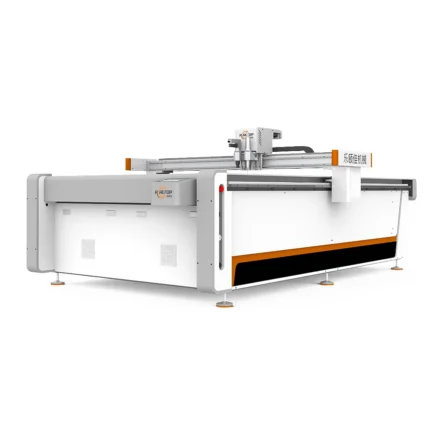
CNC Flatbed Oscillating Knife Cutting Machine 2026
Product Introduction
High-performance CNC Flatbed Oscillating Knife Cutting Machine 2026, ideal for precision cutting of various materials with advanced oscillating knife technology, ensuring efficient and accurate operations for industrial manufacturing needs.Specifications
| Model | 2026 |
| Type | CNC Flatbed Oscillating Knife Cutting Machine |
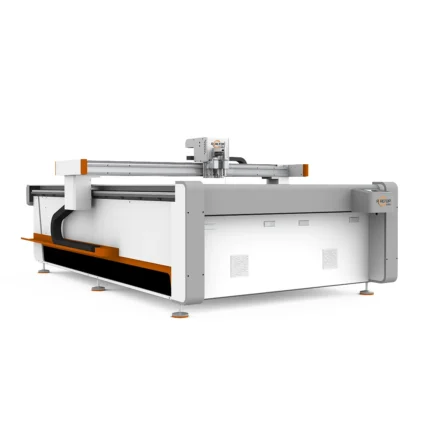
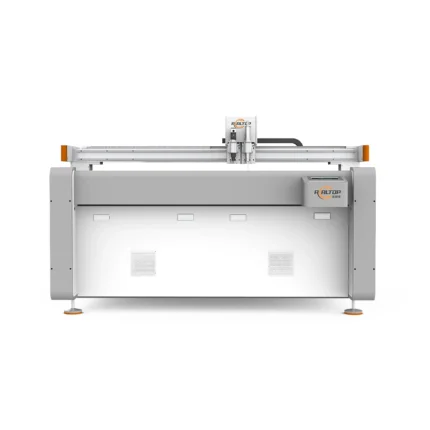
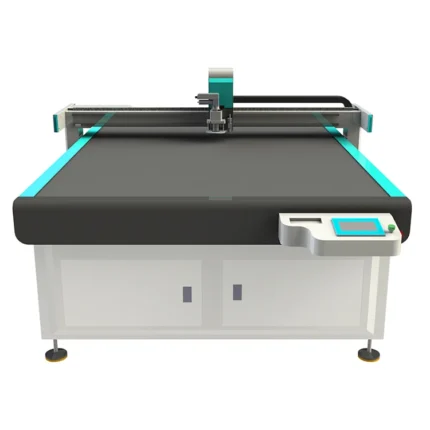
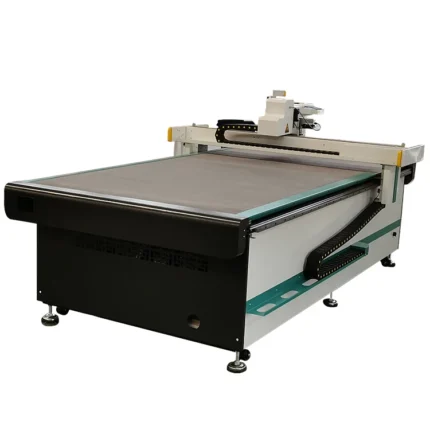
CNC Oscillating Knife Cutting Machine 2026 for Corrugated Cardboard & Honeycomb
Product Introduction
2026 CNC Oscillating Knife Cutting Machine, ideal for corrugated cardboard and honeycomb materials, offering precise and efficient cutting solutions for your production needs.Specifications
| Model | 2026 |
| Type | CNC Oscillating Knife Cutting Machine |
| Applicable Materials | Corrugated Cardboard, Honeycomb |
| Cutting Method | Oscillating Knife |
商品评价
There are no reviews yet.