

Cloth CNC Cutting Machine for Fabric and Foam – Factory Supply
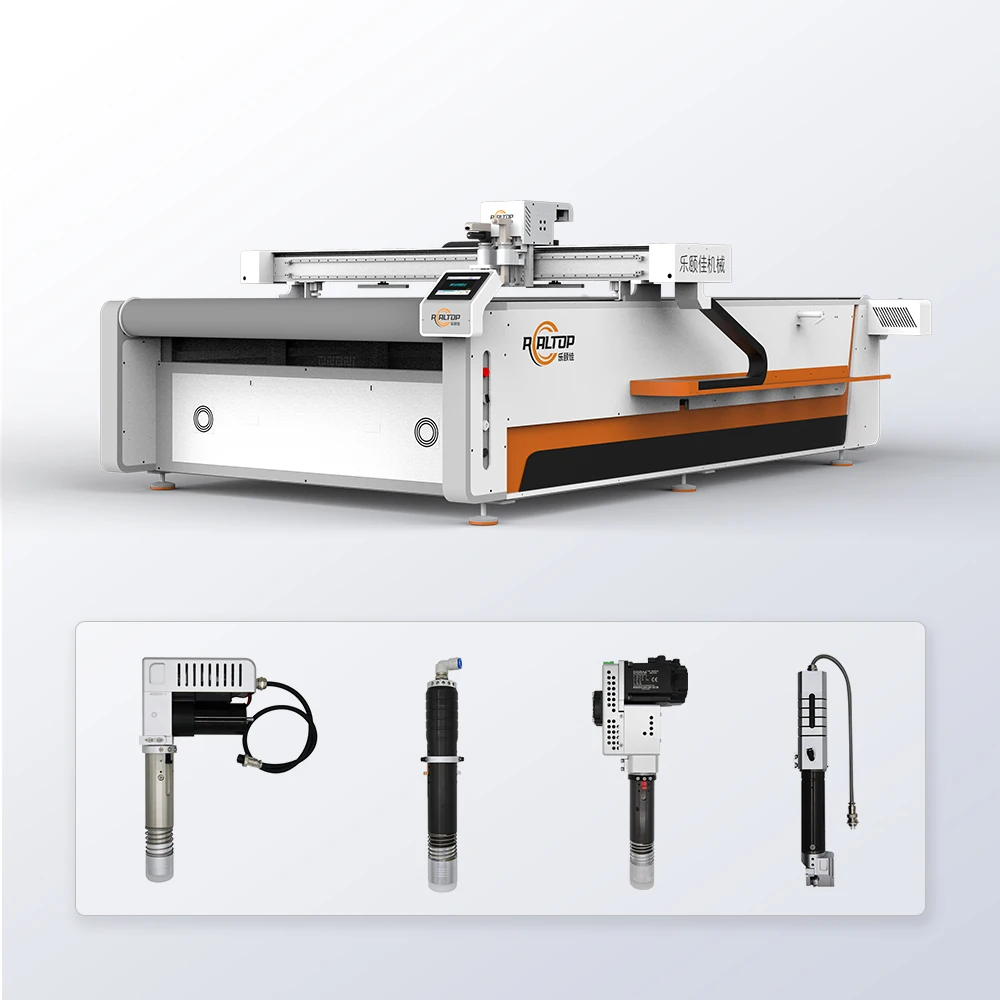
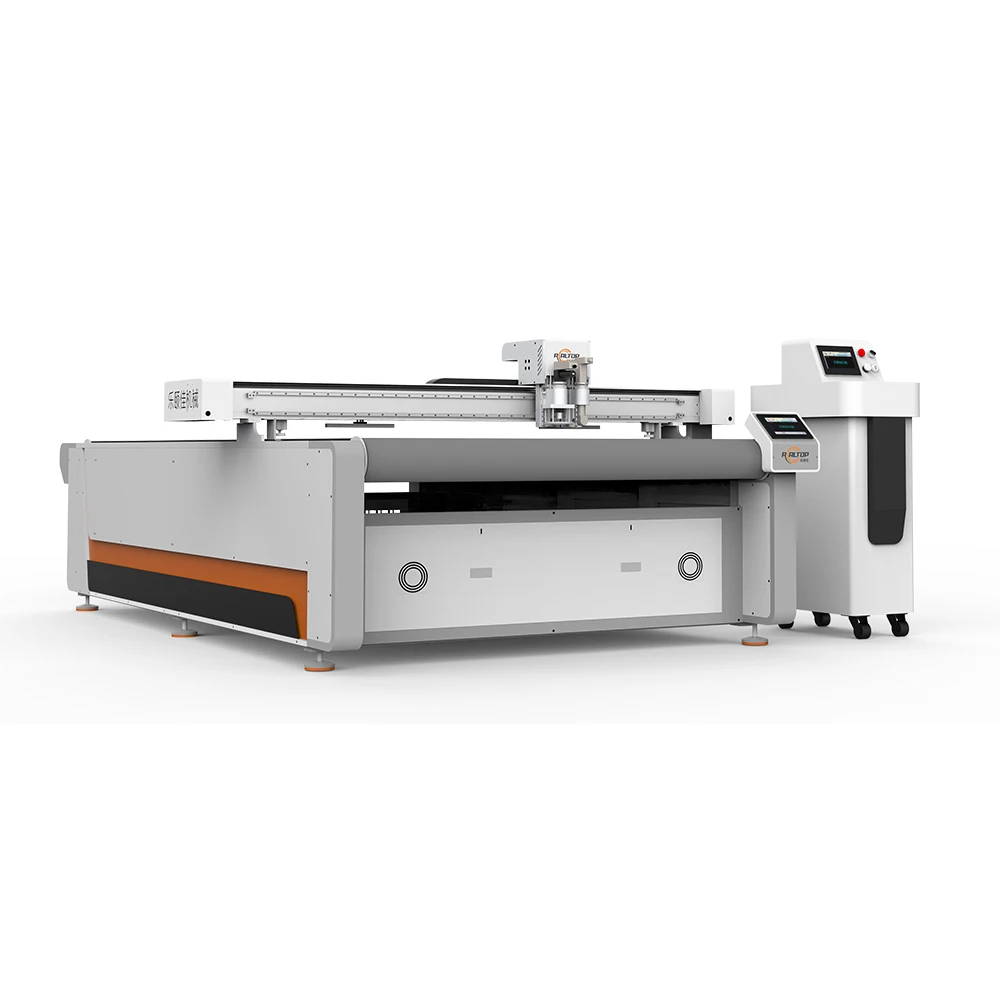
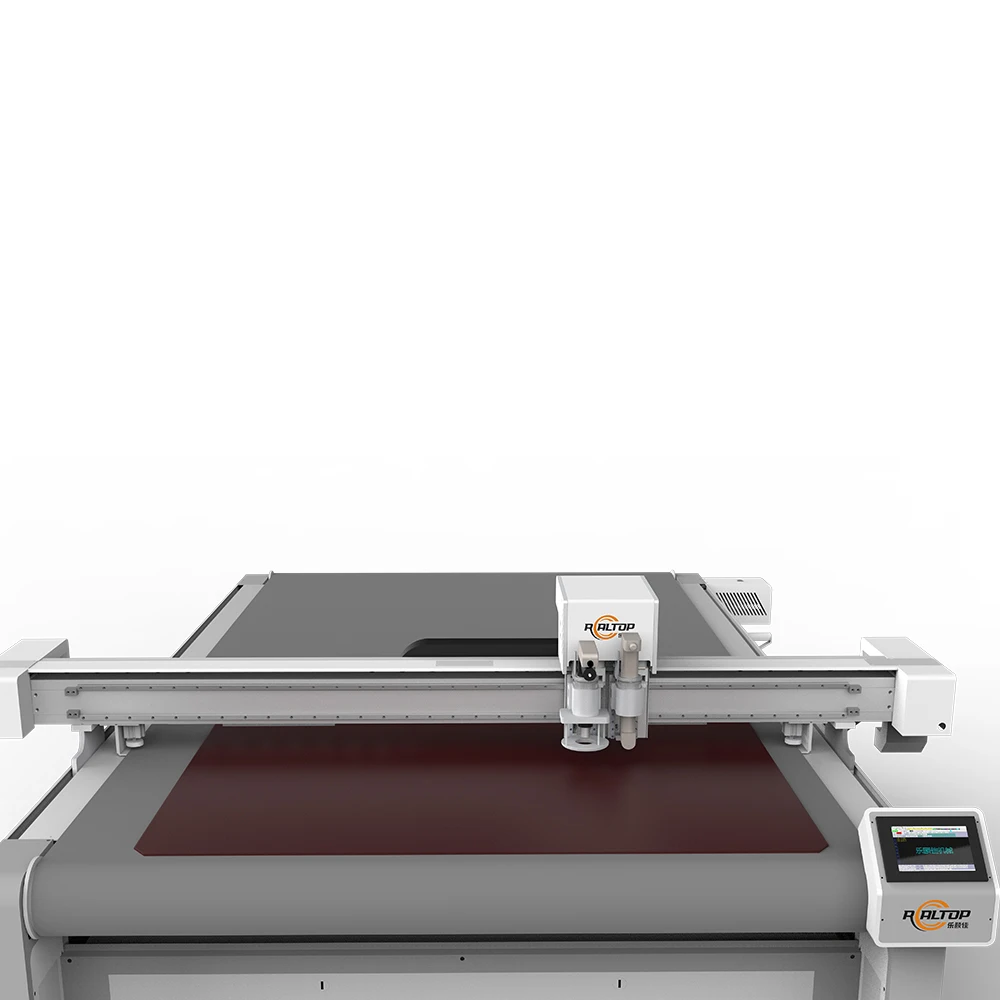
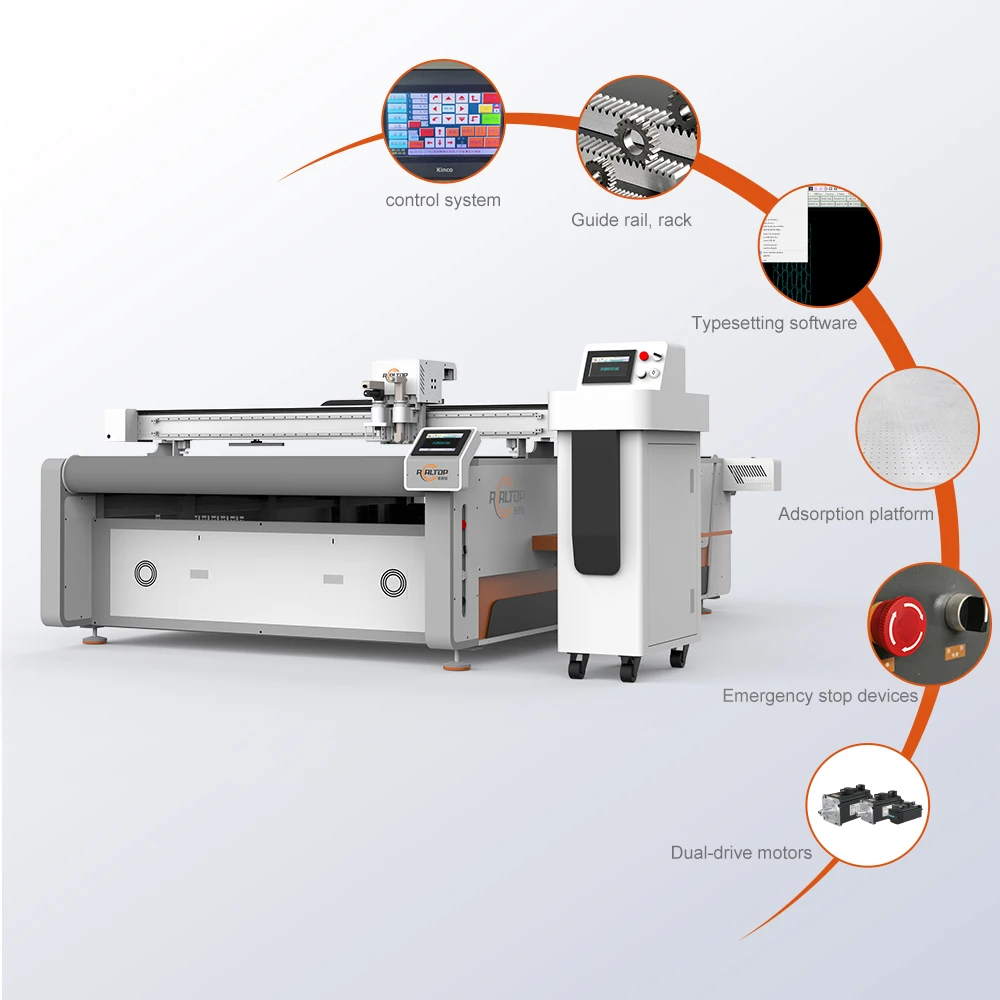
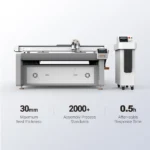
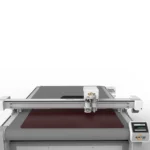
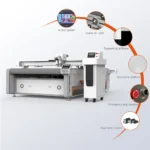
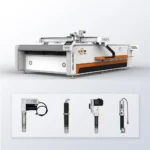
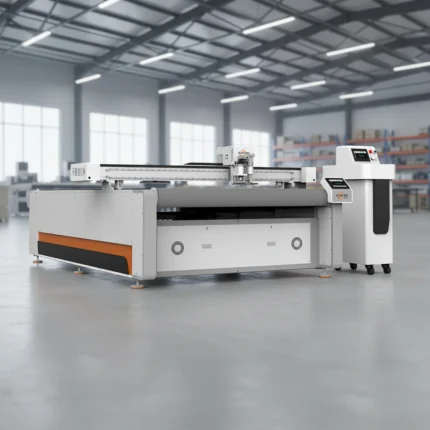
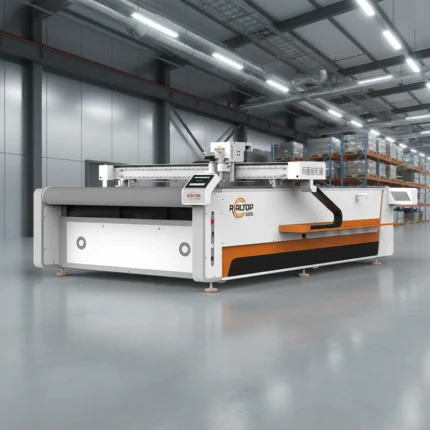
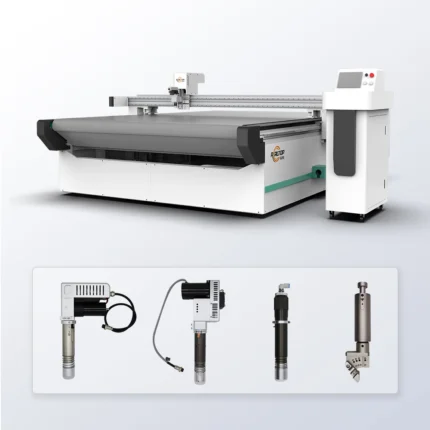
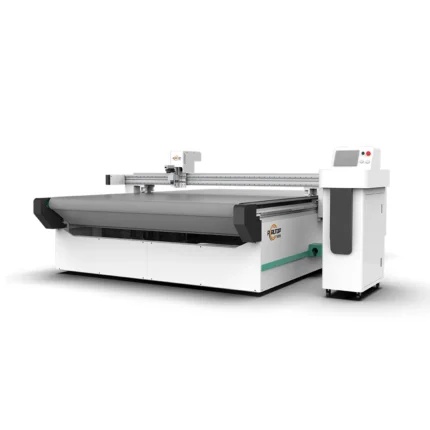
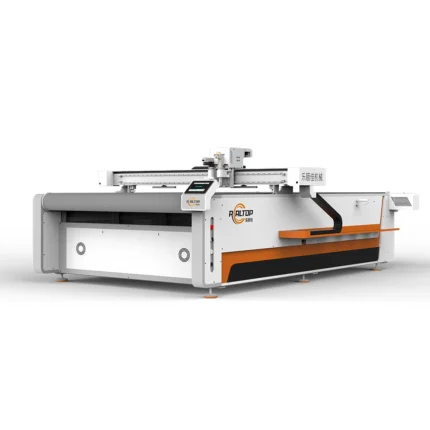
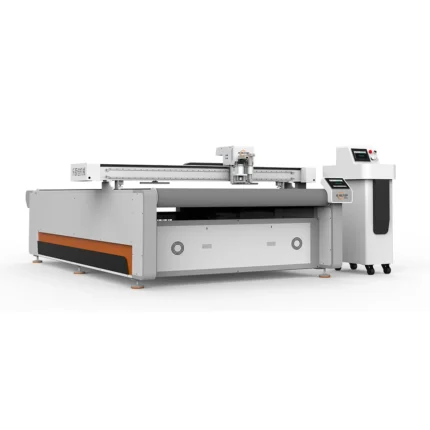
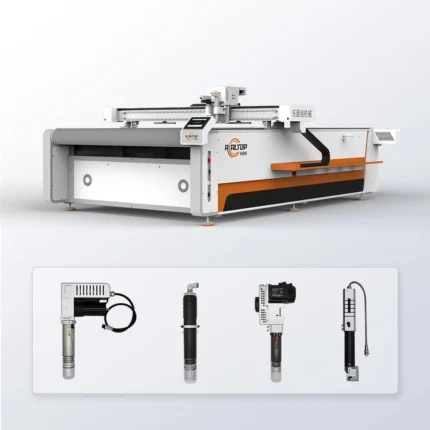
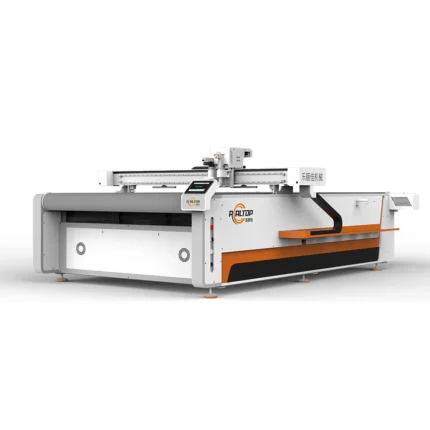
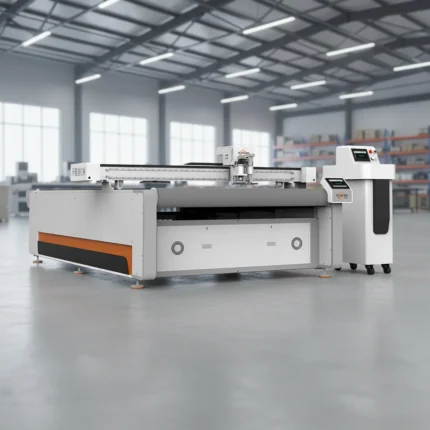
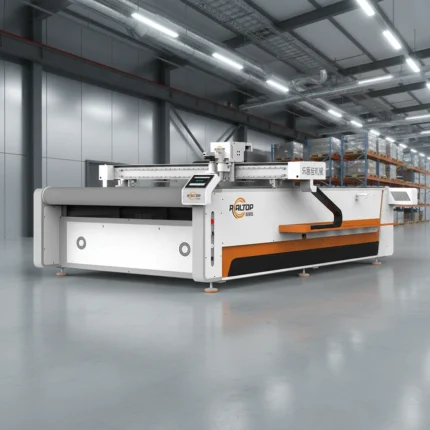
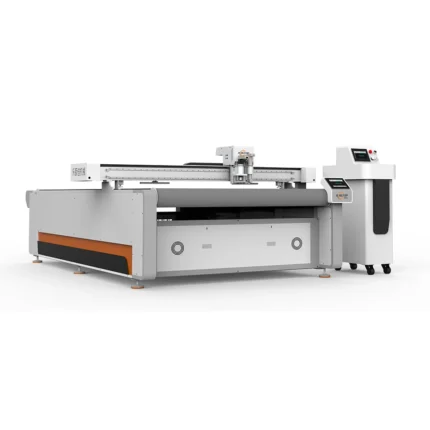
1625 CNC Oscillating Knife Cutting Machine, 1600×2500mm, 0-1500mm/s Speed, ±0.1mm Accuracy — configured with interchangeable tool heads including oscillating knife, driven rotary knife, creasing wheel and CCD camera for fabric, foam and packaging board processing.
- Aluminum bellows vacuum table ensures full-surface adsorption and prevents material lift during high-speed cutting
- PLC control panel supports multiple display languages with voltage options from 110V to 380V
- Compatible with PLT, DXF, AI and PDF file formats for seamless workflow integration
Sample cutting tests performed on your actual material before order confirmation to verify edge quality and production throughput.
Precision tool head matching — every 1625 configuration is validated on the buyer’s actual fabric, foam or board sample before the order is confirmed, eliminating guesswork between oscillating knife, rotary knife and creasing wheel setups.
Technical Specifications
| Parameter | Value |
|---|---|
| Product Type | CNC Oscillating Knife Cutting Machine |
| Working Area | 1600×2500 mm |
| Tool Head Options | Oscillating knife, Driven rotary knife, Creasing wheel, Kiss cutting tool, Pneumatic knife, Milling tool, V groove knife, CCD camera |
| Cutting Speed | 0–1500 mm/s |
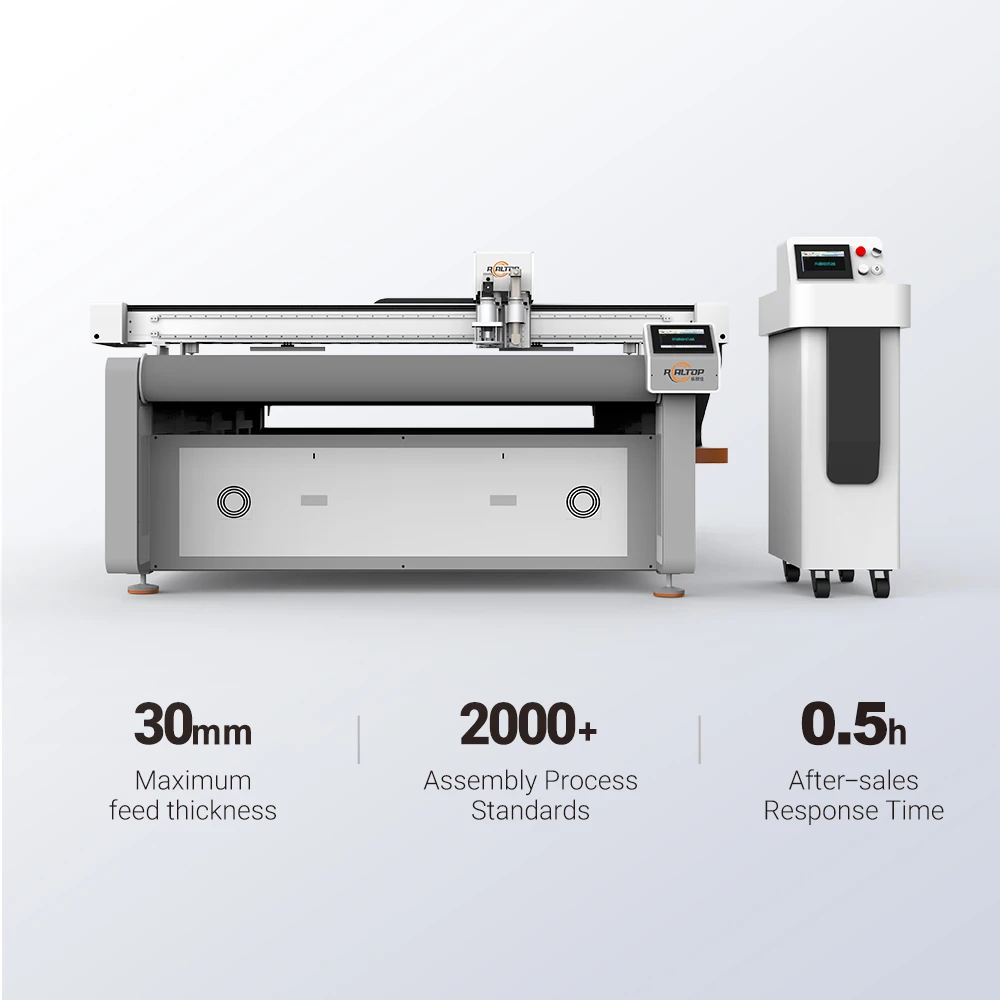
| Cutting Thickness | ≤ 40 mm (basis not stated in source — confirm material and density) |
| Positioning Accuracy | ±0.1 mm |
| Vacuum Pump Power | 9 kW |
| Vacuum Table | Aluminum bellows vacuum table with full-surface adsorption |
| Machine Frame | Heavy-duty frame with precision-ground surface |
| Servo Drive Options | Panasonic, Delta, Dorna |
| Control Panel | PLC control panel with optional display languages |
| Voltage Options | 110V, 220V, 380V |
| File Format Compatibility | PLT, DXF, AI, PDF |
| Safety Device | Infrared sensor device and emergency stop device |
| Overall Dimensions (L×W×H) | 3300×2100×1350 mm |
| Language Options | English, Russian, Italian, Chinese (custom languages available) |
| Assembly State | Fully assembled |
| Certification | CE |
Application Suitability
| Application | Material or Output |
|---|---|
| Packaging sample making | Corrugated board (E-flute, B-flute, BC-flute), greyboard, cardstock |
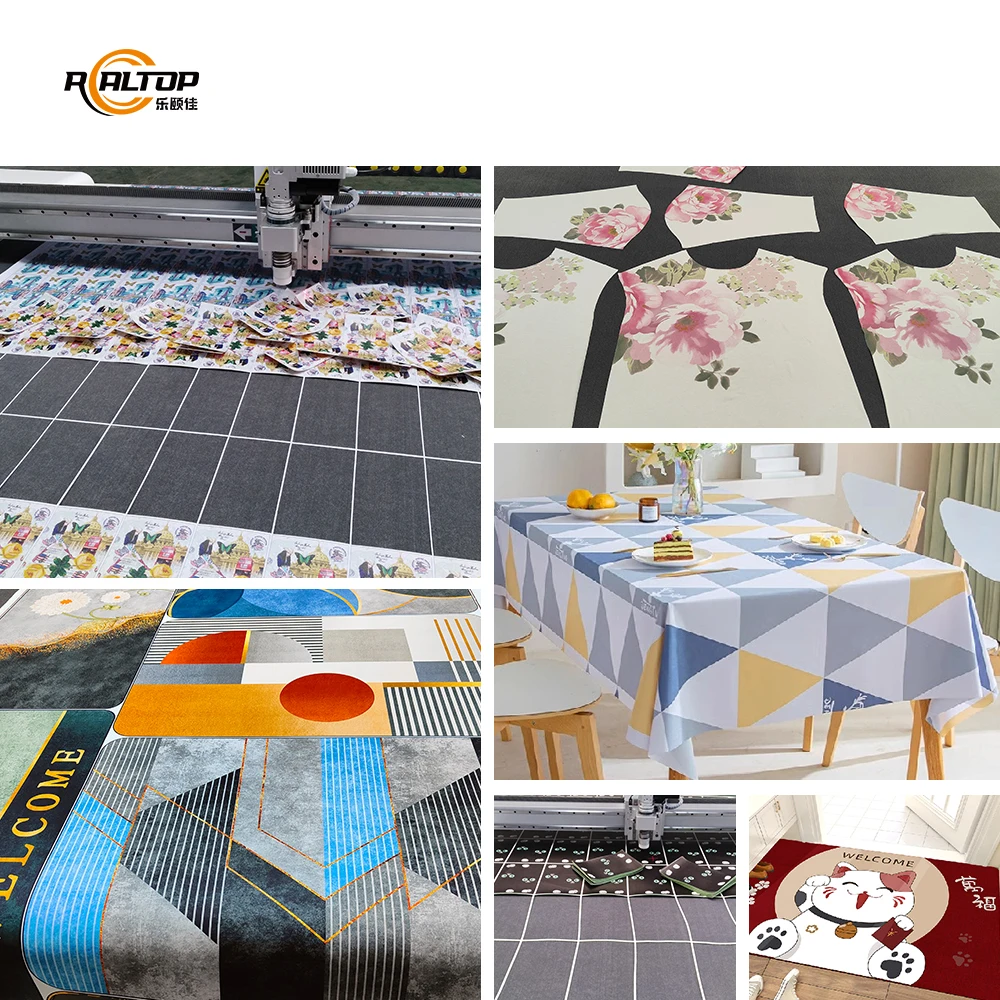
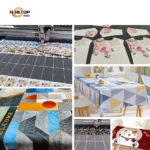
| Garment and footwear cutting | Woven fabric, non-woven textile, fleece, synthetic leather |
| Foam and gasket fabrication | EVA, EPE, PU foam, rubber mats |
| Automotive interior trimming | Composite panels, sound-deadening mats, headliner fabric |
| Thin plastic sheet processing | PVC, PET sheets for signage and blister packaging |
Why Material Density Matters More Than a Single Thickness Number
A Cloth CNC Cutting Machine for Fabric and Foam rated at a blanket cutting thickness can still fail on your shop floor if the material structure is ignored. Thickness capacity shifts with density, layer count and internal reinforcement — always verify on your actual stock.
I once saw a workshop specify a cutting table purely by working area and quoted thickness, only to discover on delivery that the oscillating knife could not push through a five-layer fleece layup at production speed. The foam cores compressed ahead of the blade, leaving ragged trailing edges that the downstream sewing line rejected outright. That kind of mismatch rarely surfaces in a brochure [NEED_CITE: oscillating knife cutting behavior on multi-layer technical textiles].
Laser Versus Knife: Where Each Process Wins
On synthetic textiles and foam, cold knife cutting avoids the thermal sealing that a CO2 beam leaves along the edge. That sealed edge is desirable for acrylic or polyester webbing where fraying is a concern, yet it stiffens the seam allowance on garment panels and alters the hand-feel of upholstery fabric. The 1625 platform keeps the cutting method matched to the material rather than forcing every job through a single process. For buyers comparing a CO2 and fiber laser cutting and engraving machine manufacturer catalogue against knife options, the dividing line is straightforward: thermal processes suit non-fraying synthetics and engraving work, while oscillating and rotary knives handle layered natural fibres, open-cell foams and corrugated board without heat distortion.
How the Vacuum Table Holds Small Pattern Pieces
Full-surface aluminum bellows vacuum adsorption keeps lightweight pattern pieces flat across the 1600×2500 mm bed, even when the cutting path creates narrow off-cuts that tend to lift under head travel. On loosely woven fleece and single-ply silk, edge lift at the kerf is a constant nuisance; a strong, evenly distributed vacuum zone reduces that lift before the oscillating knife finishes its stroke. The 9 kW vacuum pump provides the static pressure needed to hold dense corrugated board against the table during high-speed contour work, though operators should still segment the table zones when running very small gasket or appliqué parts [NEED_CITE: vacuum hold-down requirements for thin flexible materials on flatbed cutting tables].
Reading the Specs That Actually Affect Your Cut Quality
Positioning accuracy of ±0.1 mm sets the tolerance envelope for repeat marks and CCD contour registration on pre-printed fabric — tight enough for most garment and packaging applications, yet still dependent on the material staying flat under vacuum. The 0–1500 mm/s cutting speed range is meaningful only when paired with the correct tool head: a driven rotary knife can sustain higher linear speeds on woven textiles than an oscillating knife can on the same fabric without fraying the ply. PLC control with multi-language support (English, Russian, Italian, Chinese and custom options) shortens operator training in mixed-language workshops, while file format compatibility with PLT, DXF, AI and PDF means existing nesting files can be imported without an intermediate conversion step that might distort curve geometry.
The Hidden Cost of Skipping the Sample Cut
Choosing the wrong tool head for a material rarely reveals itself in the first hour of operation. Ragged edges on foam show up only after the batch reaches the assembly bench; crushed corrugated flute becomes visible once the sample box is folded and the crease line splits. I have watched buyers accept a machine on spec-sheet thickness alone, then spend the first commissioning week swapping knives, adjusting oscillation frequency and re-tuning vacuum zones — all costs that a pre-shipment sample cut on the buyer’s own stock would have surfaced before the crate left the factory [NEED_CITE: typical commissioning delays from unverified material-toolhead pairing].
Why Sourcing This Cloth CNC Cutting Machine for Fabric and Foam Here
In-house design covers both knife and laser cutting technologies, so the 1625 configuration can be specified with the exact tool head and table layout your material demands instead of being forced into a single-method compromise. CCD camera positioning is available for printed contour work on pre-printed fabric and packaging stock, verified on your artwork before build. Voltage (110V, 220V or 380V), plug type and control language are confirmed before production so the machine arrives wired for your shop. Sample cutting on your own material is standard before order commitment, producing a written report that documents edge quality, cycle time and tooling wear. Factory test records accompany every unit, matching the dispatched configuration rather than a generic benchmark.
Documentation & Verification
- Machine specification sheet listing the exact tool head combination configured for your material
- Electrical schematic confirming voltage, phase and plug type before production starts
- Sample cutting report produced on your fabric, foam or board stock with edge and speed data
- Factory test record documenting positioning accuracy and vacuum pressure at acceptance
- Software licence and file format compatibility note matching your nesting workflow
- Spare parts list covering knives, blades, creasing wheels and vacuum table seals
Installation, Commissioning & Support
- Fully assembled 3300×2100×1350 mm frame requires a level floor with adequate overhead clearance for gantry access
- Dedicated circuit matching confirmed 110V, 220V or 380V supply with correct phase and breaker rating
- Vacuum pump wiring and ducting routed per supplied electrical schematic before first power-on
- PLC control panel configured in chosen display language during on-site commissioning
- Operator training covers tool head changeover between oscillating knife, creasing wheel and rotary knife
- Spare knife and blade inventory scaled to your daily cutting volume and material abrasiveness
Preparing a Useful Inquiry
Share the exact material type, thickness and layup structure along with your typical sheet size and daily cutting volume so the tool head and vacuum zoning can be specified accurately. State your local voltage, frequency and preferred control language to avoid rewiring after delivery. If you run printed contour work, send a sample of the printed stock so CCD registration can be verified before build.
Frequently Asked Questions
Q: How is cutting thickness verified for my specific material?
A: Thickness capacity varies with density and internal structure, so a single blanket figure is unreliable. We run a sample cut on your actual fabric, foam or board and issue a written report covering edge quality, achievable speed and tool wear. That report, not a brochure line, becomes the agreed performance baseline.
Q: Which tool head should I choose for my material?
A: Oscillating knife suits most fabrics and foams; driven rotary knife handles thick textiles at higher speed; creasing wheel produces clean fold lines on carton; kiss cutting tool works on adhesive-backed laminates. The selection is confirmed on your sample material before the order enters production.
Q: Can the CCD camera track printed marks at production speed?
A: CCD contour recognition is available and supports registration-mark-based cutting on pre-printed fabric and packaging board. Send us a sample of your printed stock so we can verify mark detection accuracy and tracking stability at the cutting speed your volume requires.
Q: What voltage and control language will the machine ship with?
A: Voltage is configurable at 110V, 220V or 380V, and the PLC display language defaults to English, Russian, Italian or Chinese with custom languages available. Both are confirmed before production so the machine arrives electrically and linguistically ready for your shop.
Q: What software file formats does the machine accept?
A: The control system imports PLT, DXF, AI and PDF directly. If you run third-party nesting software, we confirm file format compatibility before order so curve geometry and registration marks survive the transfer without manual correction on the shop floor.


Related products
2026 CNC Knife Cutting Machine for Fabric Leather PVC Hot Sale
Product Introduction
2026 Hot Sale CNC Knife Cutting Machine for Fabric, Leather, PVC. Ideal for precise cutting of various materials with advanced CNC technology, perfect for manufacturing needs.
Product Parameters
| Application | Fabric, Leather, PVC |
| Type | CNC Knife Cutting Machine |
| Feature | Precision Cutting |
| Year | 2026 Model |
2026 Flatbed Oscillating Knife Cutter 1600x3500mm Auto-Feeding Textile
Product Overview
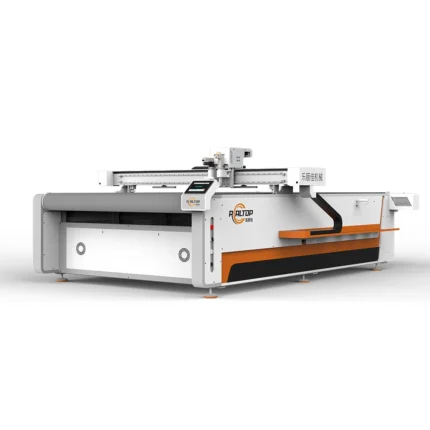
Flatbed Oscillating Knife Cutting Machine 2026 is a high-precision textile fabric cutter with auto-feeding function, ideal for efficient and accurate cutting tasks in textile manufacturing. It combines advanced oscillating knife technology with a large working area to meet industrial production needs.Key Specifications
| Model | 2026 |
| Working Area | 1600x3500mm |
| Feeding System | Auto-Feeding |
| Cutting Type | Oscillating Knife |
| Application | Textile Fabric |
CNC Oscillating Knife Cutting Machine 2026 3000¡Á1600mm High-Speed
Product Parameters
| Model | CNC Oscillating Knife Cutting Machine 2026 |
| Working Area | 3000mm¡Á1600mm |
| Cutting Type | Oscillating Knife |
| Application | Fabric Cutting |
| Feature | High-Speed |
Introduction
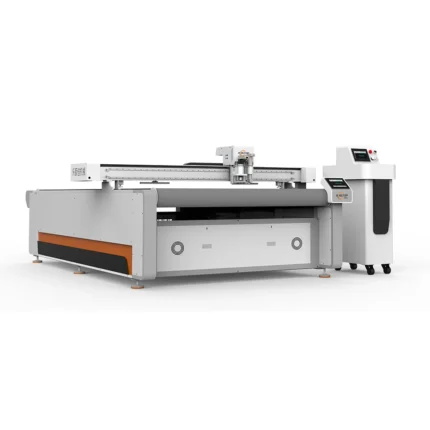
High-performance CNC oscillating knife cutting machine with 3000mm¡Á1600mm working area, ideal for high-speed fabric cutting. Precision and efficiency for professional textile processing needs.
CNC Vibration Knife System 2026 for Polyester Nylon Non-Woven Prepreg
Product Introduction
CNC Vibration Knife System 2026 is ideal for cutting polyester, nylon, non-woven fabrics, and prepreg materials with precision and efficiency, suitable for industrial manufacturing needs.Product Parameters
| Model | 2026 |
| Cutting Technology | CNC Vibration Knife |
| Materials | Polyester, Nylon, Non-Woven, Prepreg |

Electric Fabric Rotary Cutter 2026 12V Auto-Cut Industrial
Product Introduction
Industrial-grade Electric Fabric Rotary Cutter designed for precise cutting of scan-printed cloth. Features 12V auto-cut functionality for efficient, automated operation, ideal for professional textile processing.Product Parameters
| Power Supply | 12V |
| Function | Auto-Cut |
| Application | Scan-Printed Cloth |
| Type | Industrial Electric Rotary Cutter |
Jinan Realtop CNC Fabric Slitting Cutter 2026: Advanced Flexible Material Cutter
Product Introduction
Jinan Realtop CNC Fabric Slitting Cutter 2026 is a high-performance cutting equipment designed for precise fabric processing, ideal for industrial manufacturing needs with reliable CNC technology.Specifications
| Model | 2026 |
| Type | CNC Fabric Slitting Cutter |
| Manufacturer | Jinan Realtop |
| Application | Fabric Processing |
| Control System | CNC |
商品评价
There are no reviews yet.