

CNC Vibration Knife System for Polyester Nylon Non-Woven Prepreg – Factory Direct
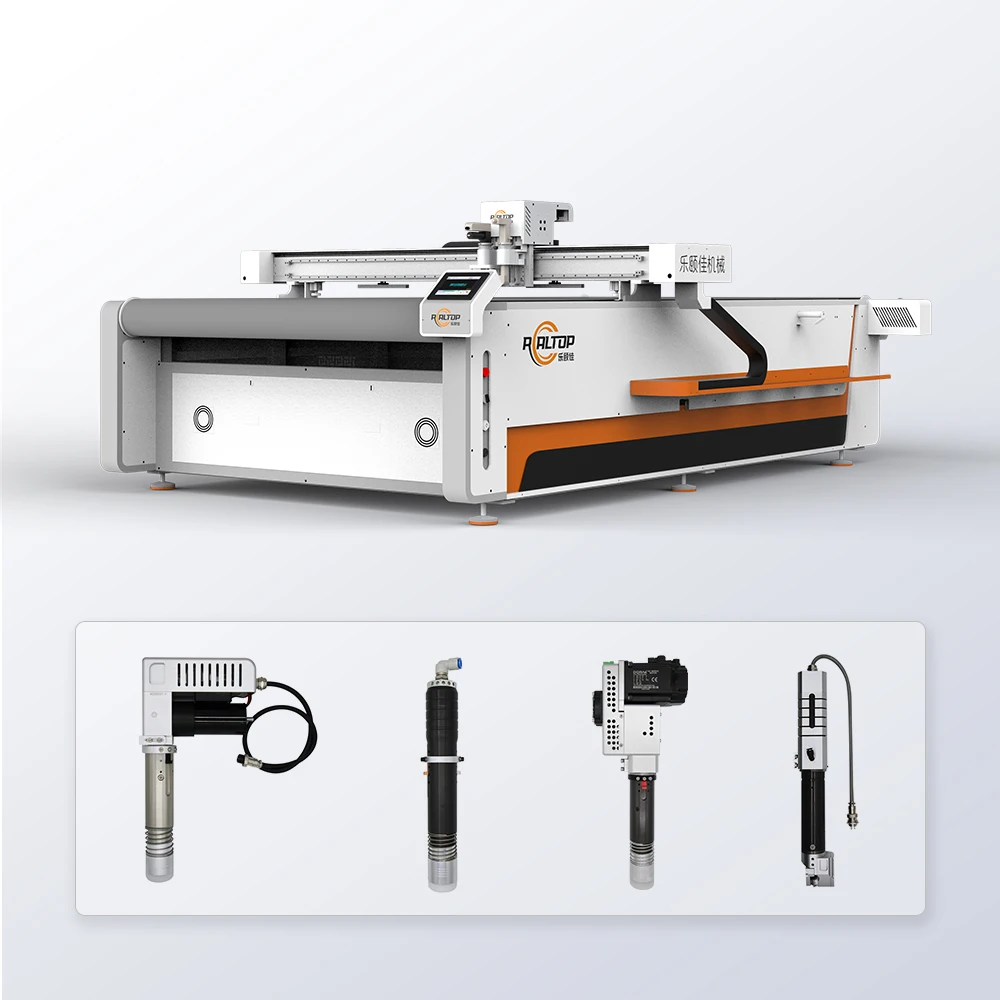
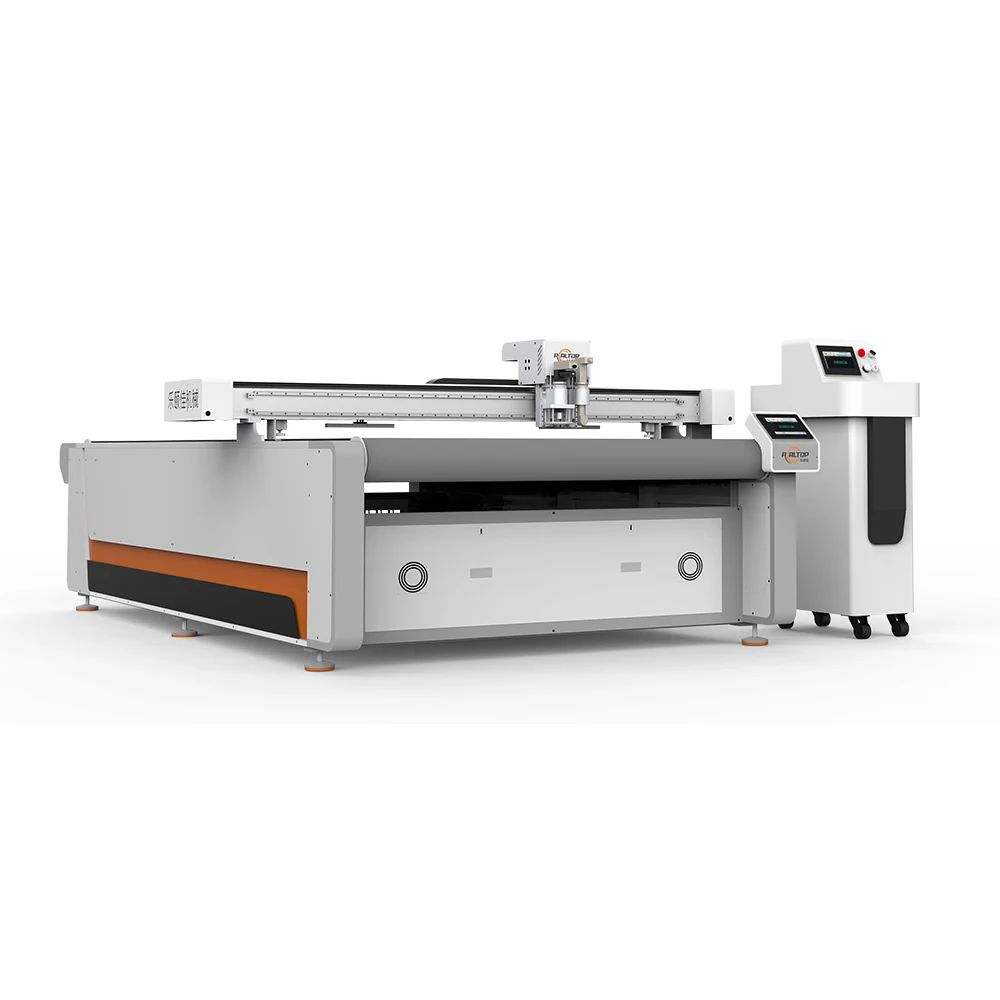
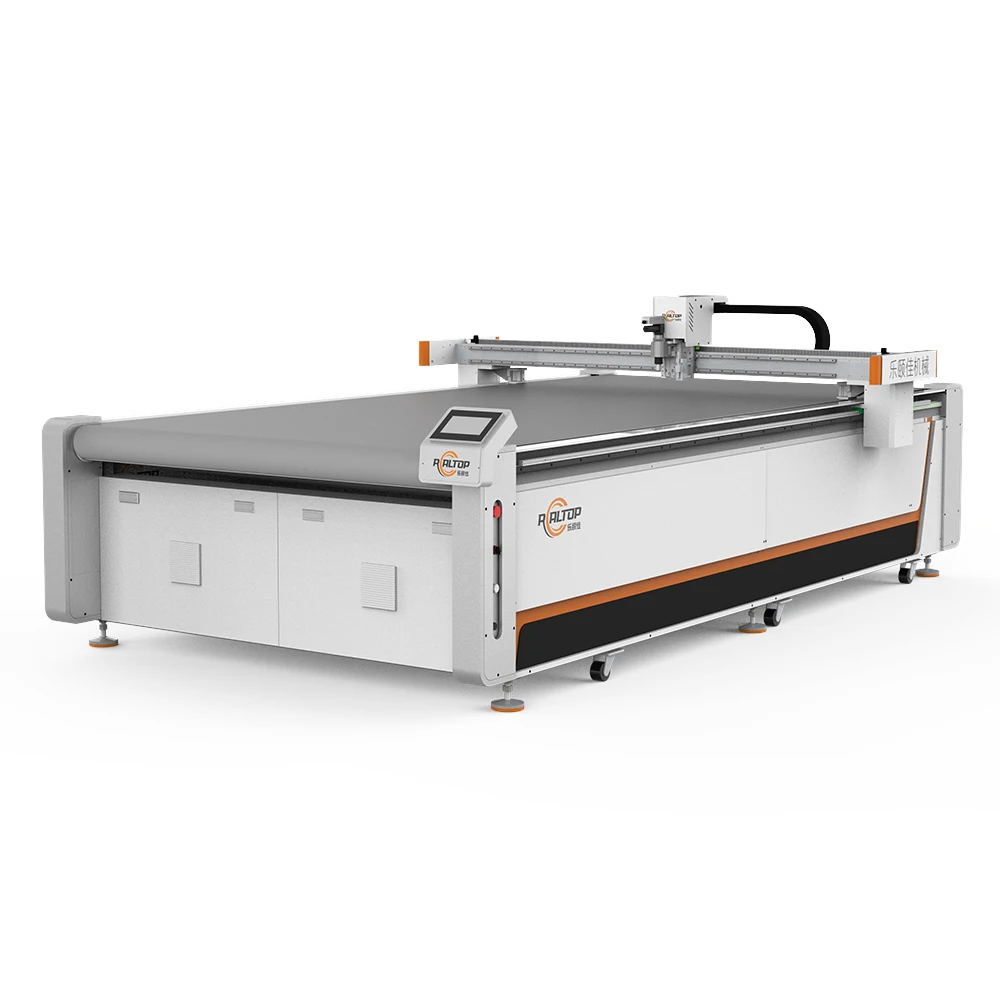
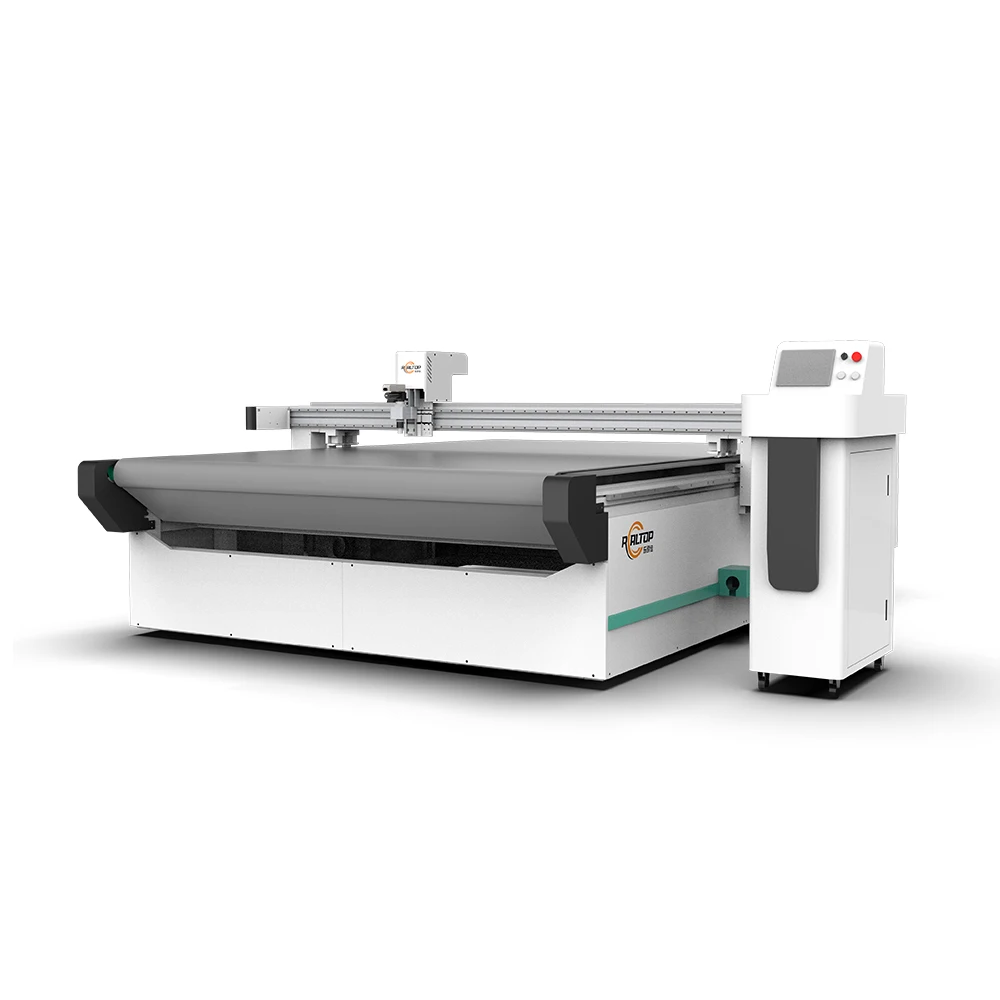
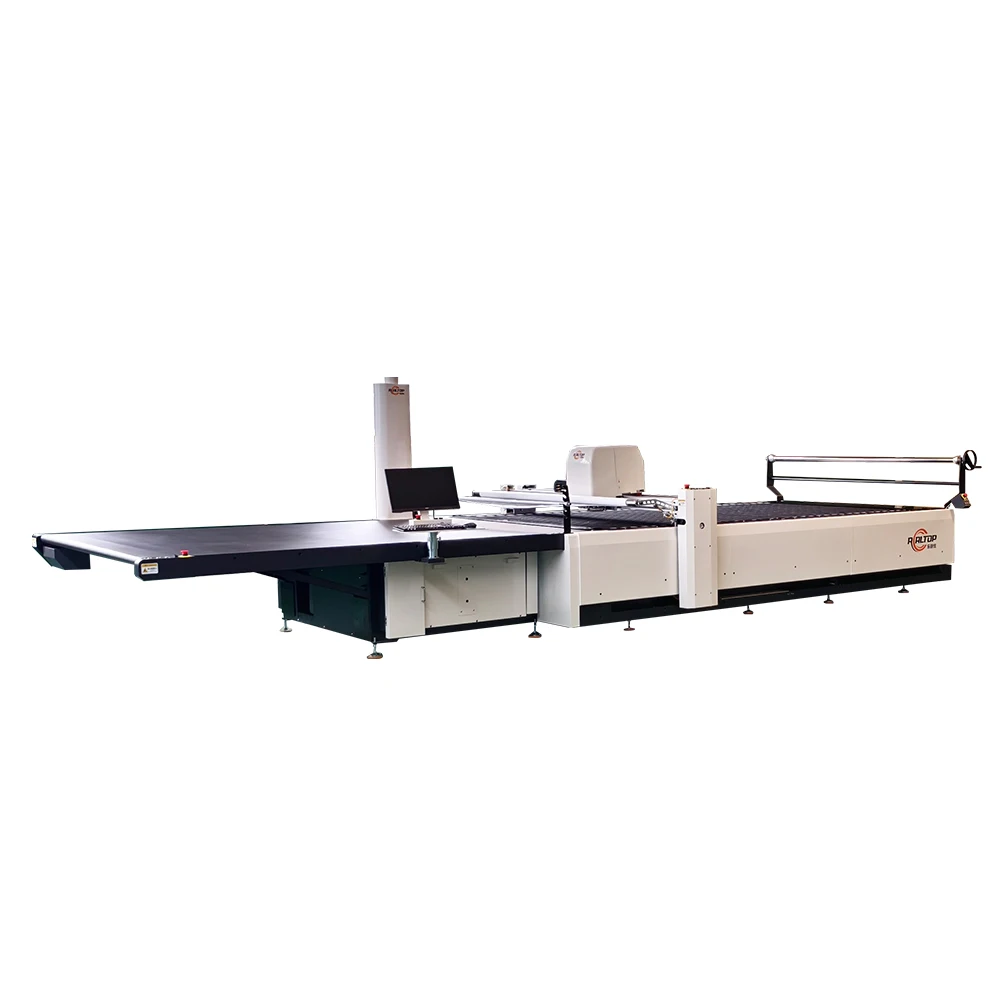
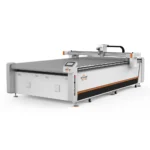
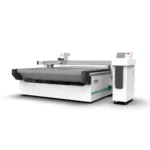
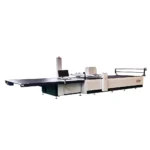
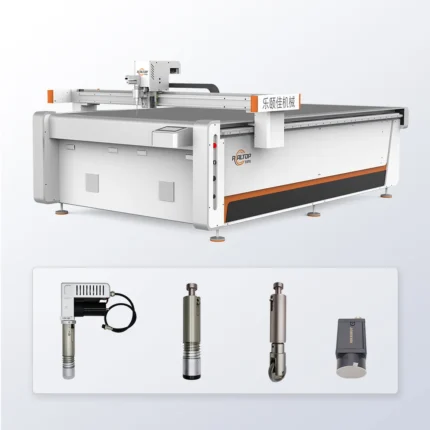
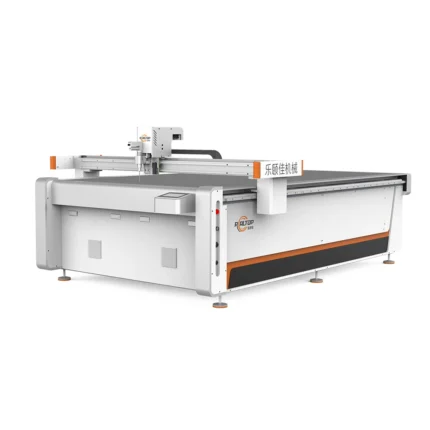
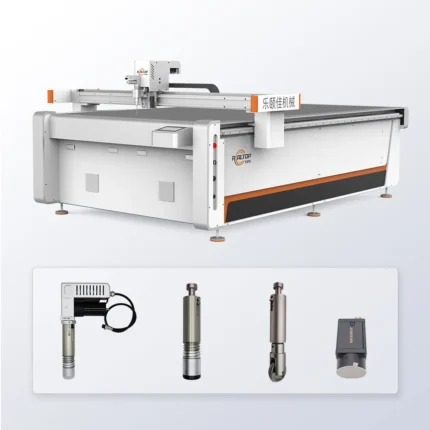
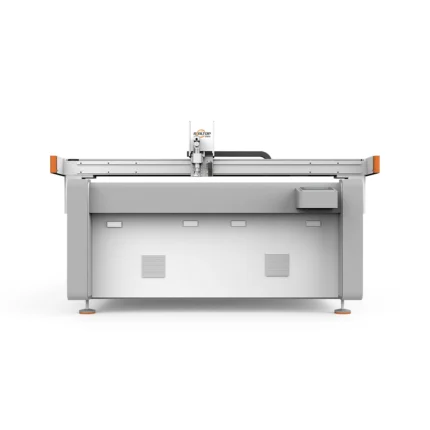
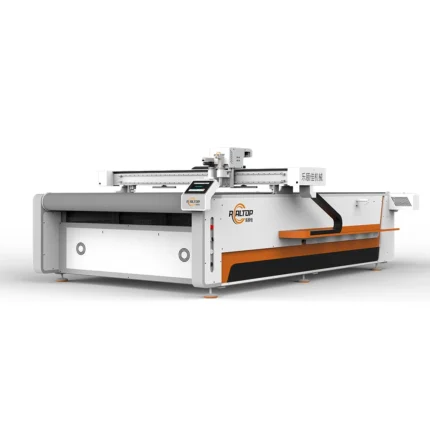
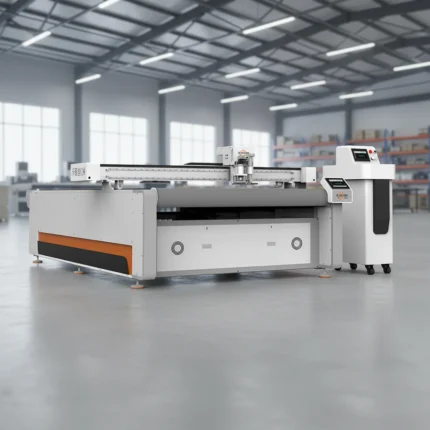
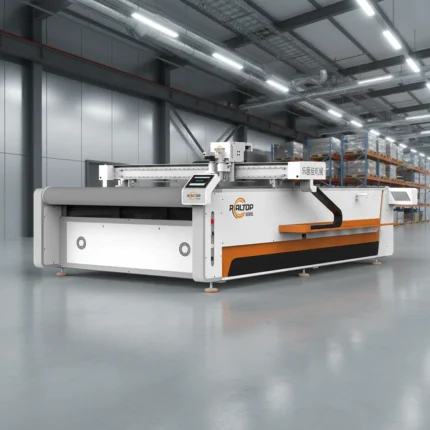
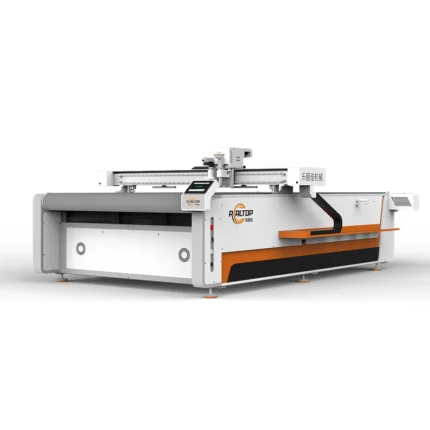
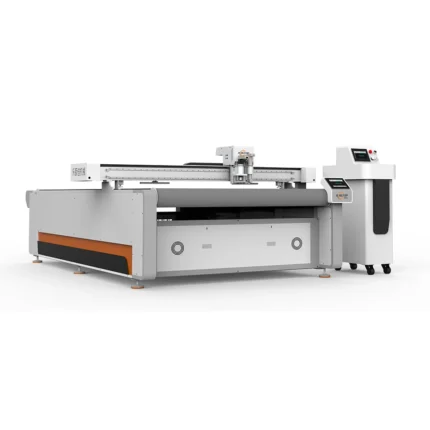
RT-D2516/RT-S2516 CNC Oscillating Knife Cutting Machine, 1600×2500mm, 7.5kW Vacuum — configured for polyester, nylon, non-woven and prepreg with Swiss imported vibration knife head and CCD camera mark point positioning for printed contour accuracy.
- Repeatability ≤0.1mm on Taiwan Hiwin linear guides with Delta/Panasonic IP67 servo motors
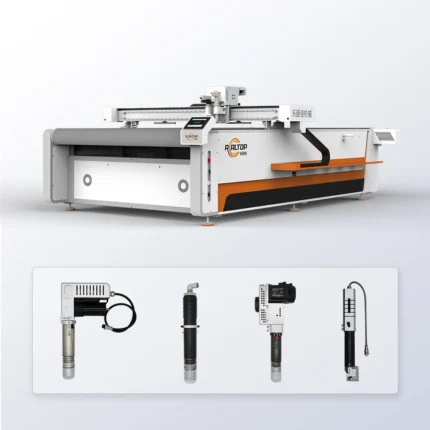
- Multi-tool head supports full cut, half cut, creasing and punching in one work unit
- Magnesium-aluminum vacuum table with PVDF coating secures small parts during high-speed cutting
Send your material for sample cutting before commitment — we match tool head, table zoning and software workflow to your specific production volume and confirm voltage, plug and control language in writing before shipment.
Multi-Method Cutting Match — in-house design covers both knife and laser technologies, so polyester, nylon, non-woven and prepreg fabrics are cut by blade stroke and tool geometry rather than forced through a single thermal process.
Technical Specifications
| Parameter | Value |
|---|---|
| Product Type | CNC Oscillating Knife Cutting Machine |
| Model | RT-D2516 / RT-S2516 |
| Working Area | 1600 × 2500 mm |
| Overall Dimensions | 3450 × 2300 × 1250 mm |
| Rated Power | 9 kW |
| Voltage | 380V ±10% |
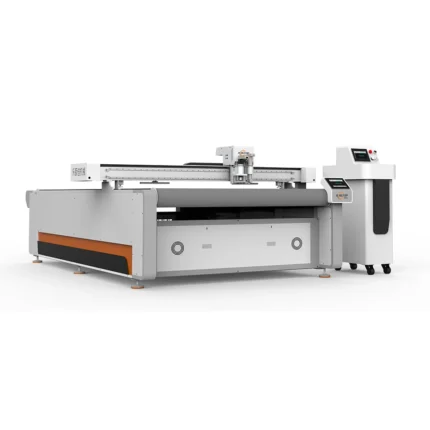
| Control System | CNC with touch screen panel |
| Language Options | English, Russian, Italian, Chinese (customizable) |
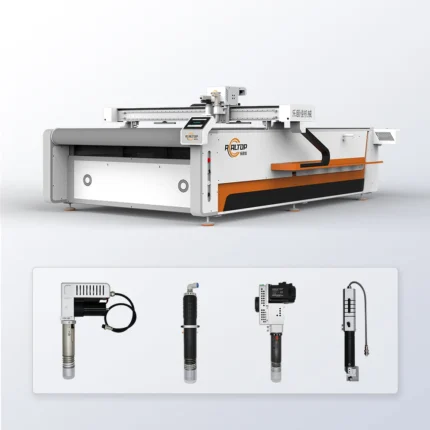
| Tool Head | Multifunctional: Swiss imported knife with vibration full/half cutting and cursor location; options include oscillating knife, pneumatic knife, high-power vibrating knife, circular knife, V-cutting knife, drag knife, creasing wheel, dotted line knife, punching, brush |
| Translational Velocity | 800–2000 mm/s |
| Cutting Speed | 200–800 mm/s (varies by material) |
| Cutting Thickness | ≤100 mm (varies by material) |
| Repeatability | ≤0.1 mm |
| Transmission | Digital servo motor (Delta or Panasonic, IP67), linear guide, synchronous belt, ball screw (Taiwan Hiwin rail) |
| Table Type | Magnesium-aluminum alloy vacuum adsorption (flat or auto-feeding); PVDF fluorocarbon powder sprayed, anodized, hard oxidized |
| Vacuum Pump | 7.5 kW, integrated aviation aluminum shell with built-in silencer sponge |
| Conveyor Belt | Germany imported |
| Positioning | CCD camera mark point, panoramic camera recognition, projection positioning |
| Software & File Formats | Auto typesetting; supports PLT, DXF, AI, HP-GL |
| Safety Devices | Infrared induction blocking, anti-collision on beam sides, emergency stop |
| Assembly State | Fully assembled |
| Cutting Method | Blade physical cutting (no laser) |
| Standard | CE |
Application Suitability
| Application | Material or Output |
|---|---|
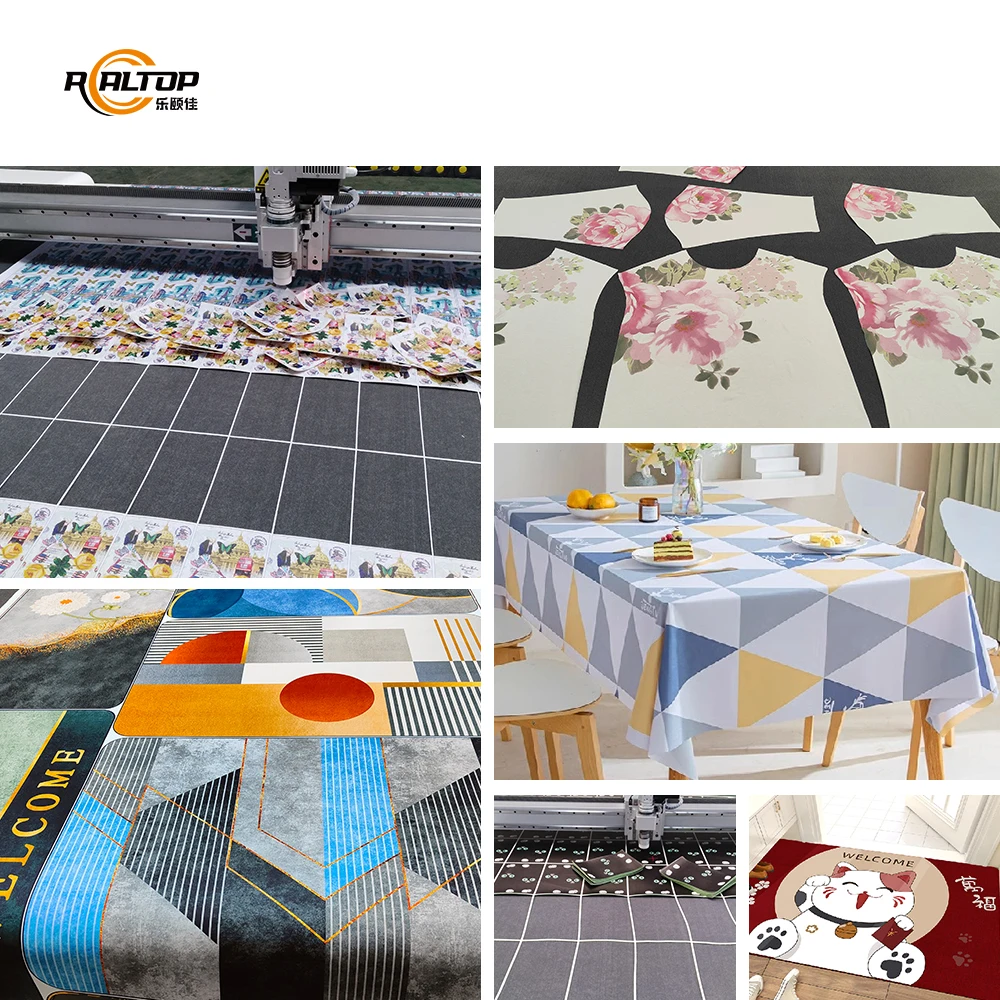
| Garment and footwear cutting | Polyester woven fabric, nylon lining, non-woven interlining, shoe upper leather, luggage textile |
| Automotive interior trimming | Composite panel, gasket material, sponge padding, sound-deadening mat |
| Soft furnishing production | Sofa upholstery fabric, carpet, floor mat, high-density foam |
| Packaging sample making | Corrugated cardboard, plastic box sheet, sticker film, vinyl |
| Composite and technical textile | Prepreg carbon fiber sheet, fiberglass cloth, PTFE, ETFE, rubber, PU, EVA, XPE |
| Advertising and signage | Self-adhesive vinyl, reflective film, banner material |
Why Laser Wattage Claims Miss the Point on Fabric
The right CNC oscillating knife cutting machine for laser cutting and engraving shops expanding into textiles solves a recurring disappointment: thermal power ratings that look strong on paper but leave frayed edges or scorch marks on synthetic cloth.
Blade cutting determines edge quality through knife geometry and oscillation stroke, not wattage.
When a garment workshop switches from woven cotton to polyester or nylon, laser heat seals the edge but often leaves a hard, melted bead that irritates skin contact. Non-woven and prepreg materials are worse — resin in the prepreg burns, releasing fumes and altering the curing chemistry of the remaining sheet [NEED_CITE: thermal degradation of epoxy resin during CO2 laser cutting]. A vibrating blade severs the fiber cleanly at room temperature. The cut depth is governed by the knife penetration and the number of passes, which are set on the touch screen, so a 3 mm neoprene pad and a single-layer silk lining each receive the stroke they need without a power guess.
Tool Head Selection Drives the Cut, Not the Frame
The multifunctional head carries a Swiss imported knife that oscillates vertically for full cutting and half cutting, plus a cursor location function for mark alignment. For polyester knits that tend to shift, the oscillating stroke severs fibers without dragging the weave. Thicker non-woven stacks or prepreg plies benefit from the high-power vibrating knife option, while drag knife and creasing wheel slots remain available when the same job requires scoring corrugated board for packaging prototypes.
CCD Positioning on Printed Contours at Line Speed
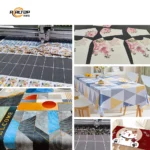
Panoramic camera recognition reads registration marks on dye-sublimated polyester sportswear panels and routes the blade path around each printed shape. The system holds ≤0.1 mm repeatability because Delta or Panasonic IP67 servo motors travel on Taiwan Hiwin linear rails. Without this loop, operators spend time manually aligning each sheet against a projected outline, and any stretch in the fabric throws the contour off by several millimeters [NEED_CITE: registration mark tracking accuracy in textile contour cutting].
What the 1600 × 2500 Table Actually Holds
The magnesium-aluminum vacuum table, coated with PVDF fluorocarbon and hard-anodized, resists the knife tip scoring that wears ordinary aluminum beds within months. A 7.5 kW vacuum pump with built-in silencer pulls small pattern pieces — collar panels, shoe tongues, gasket rings — flat enough that the blade does not lift the edge mid-stroke. For roll goods, the auto-feeding variant pairs with a Germany-imported conveyor belt to advance fabric between nests without an operator pulling by hand.
The Cost of Skipping the Tool Head Conversation
Specifying a vibrating knife machine by working area alone is a common mistake. A buyer cutting 2 mm polyester fleece on a flat table with a single oscillating head may discover that the standard blade dulls within a shift when the fabric contains glass fiber reinforcement, leaving ragged edges that fail downstream sewing inspection. The tool head and blade grade must be named on the configuration list before the order is signed, not after the container ships [NEED_CITE: abrasive fiber effect on carbide knife life].
Why Buyers Source This Build Here
In-house engineering covers both knife and laser methods, so the cutting technology is chosen for the material instead of being forced. The tool head, vacuum zoning and blade type are specified against the buyer’s own sample before production starts. Voltage, plug type and control panel language are confirmed in writing before the machine leaves the floor, avoiding the rewiring delays that idle imported equipment. Every unit ships fully assembled with factory test records on the buyer’s material thickness range.
Documentation & Verification
- Machine specification sheet matching agreed tool head and table configuration
- Electrical schematic with confirmed voltage, frequency and plug type
- Sample cutting report run on buyer-supplied polyester or prepreg stock
- Software licence note with accepted PLT, DXF, AI, HP-GL file list
- Spare parts list covering blades, presser feet and vacuum seals
- Factory test record documenting repeatability and edge quality
Installation, Commissioning & Support
- Requires level floor pad to support 9 kW load and full 3450 mm footprint
- Dedicated 380V ±10% circuit with earth, breaker sized to rated draw
- Arrives fully assembled — position, connect power and vacuum, run homing cycle
- First-day parameter set: blade stroke, vacuum zone, servo tuning per material
- Operator training on nesting software, CCD mark teach and tool change routine
- Initial spare blade and seal kit included; replenishment schedule agreed at handover
What to Send with Your Inquiry
Share the fabric type, thickness, maximum sheet or roll width, and the daily panel volume your line must sustain. Confirm your workshop voltage and frequency, plus the control language your operators read. If you work with printed contour panels, send a sample sheet so the CCD tracking can be verified on your registration mark layout before the quotation is finalized.
Frequently Asked Questions
Q: How do I choose the right tool head for my material type and thickness?
A: The selection depends on fiber type, thickness and edge requirement. Oscillating knife suits woven polyester and nylon; high-power vibrating knife handles multi-layer non-woven or prepreg; drag knife scores board. Send a sample so we can run a cutting test and name the exact blade on the configuration sheet before order.
Q: Can the CCD camera track printed contour marks at full production speed?
A: Yes. The panoramic camera reads registration marks on dye-sublimated or screen-printed panels and adjusts the cut path in real time. Repeatability stays within 0.1 mm on Delta or Panasonic servos. Send several printed sheets with your actual mark size so we verify tracking on your ink and substrate combination.
Q: What voltage and control language options are available for my market?
A: The standard supply is 380V ±10%, configurable for other industrial voltages on request. Control panel languages include English, Russian, Italian and Chinese, with special languages customizable. Confirm the exact voltage, frequency and plug type in writing before production so the transformer and wiring match your local grid.
Q: Can I send my material for sample cutting before placing an order?
A: Yes. Ship a roll or sheet of your polyester, nylon, non-woven or prepreg stock and we return a sample cutting report covering edge quality, achievable thickness and recommended tool head. This step prevents the common situation where a machine arrives configured for the wrong material and production stalls while blades are exchanged.
Q: What software file formats does the system accept, and does it support my existing nesting workflow?
A: The auto typesetting software accepts PLT, DXF, AI and HP-GL compatible files. If your current workflow uses another nesting package, we confirm file exchange compatibility before the order so your operators can continue with familiar nesting logic and avoid duplicating pattern libraries.


Related products
2026 Auto Fabric Cutter Round Knife High Efficiency
Product Introduction
High Efficiency 2026 Auto Fabric Cutter with Round Knife is a professional cutting equipment designed for fabric processing. It features advanced automation and high cutting efficiency, suitable for various fabric materials in industrial production.Product Parameters
| Model | 2026 |
| Type | Auto Fabric Cutter |
| Blade Type | Round Knife |
| Feature | High Efficiency |
2026 Carbon Fiber Cloth Cutting Machine – China Manufacturer
Product Introduction
Fabric Sample Cutter Pillow Machine ¨C 2026 Carbon Fiber Cloth Cutting Machine, ideal for precise cutting of carbon fiber cloth and fabric samples, suitable for pillow production and related textile applications.Product Parameters
| Name | Fabric Sample Cutter Pillow Machine |
| Model | 2026 |
| Material | Carbon Fiber Cloth |
| Application | Pillow Fabric Cutting |
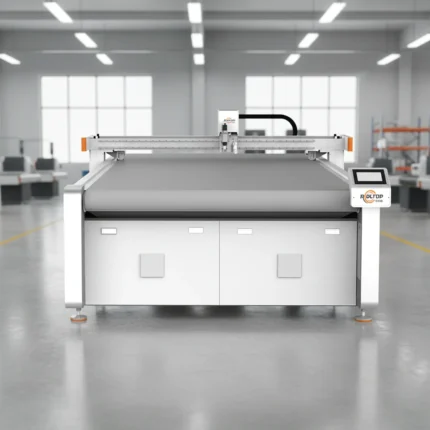
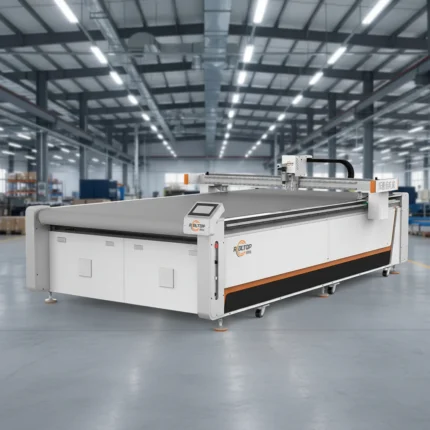
Automatic Multi-Layer Vibrating Knife Cutter 2026
Product Introduction
Automatic Multi-Layer Vibrating Knife Cutter 2026, ideal for precise cutting of various materials with multi-layer processing capability, enhancing production efficiency.
Key Specifications
| Type | Automatic Vibrating Knife Cutter |
| Layer Capacity | Multi-Layer |
| Model | 2026 |
| Function | Precision Cutting |
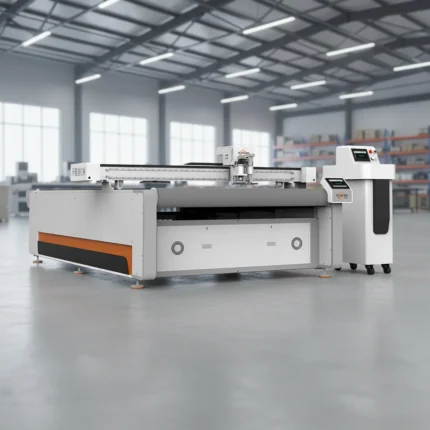
Jinan Realtop CNC Fabric Slitting Cutter 2026: Advanced Flexible Material Cutter
Product Introduction
Jinan Realtop CNC Fabric Slitting Cutter 2026 is a high-performance cutting equipment designed for precise fabric processing, ideal for industrial manufacturing needs with reliable CNC technology.Specifications
| Model | 2026 |
| Type | CNC Fabric Slitting Cutter |
| Manufacturer | Jinan Realtop |
| Application | Fabric Processing |
| Control System | CNC |
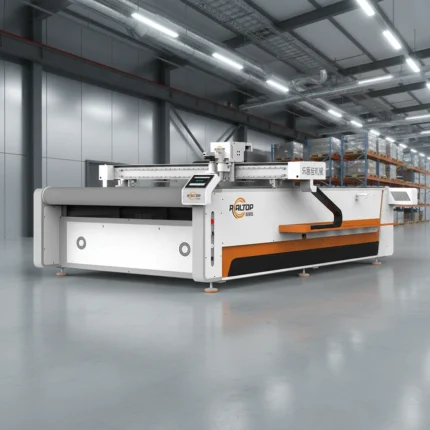
Jinan Realtop CNC Oscillating Knife Cutter 2026
Product Introduction
Jinan Realtop CNC Oscillating Knife Cutter 2026, a precision cutting solution from China's leading welding & cutting equipment manufacturer, ideal for efficient material processing with advanced CNC technology.
Key Specifications
| Model | 2026 |
| Type | CNC Oscillating Knife Cutter |
| Manufacturer | Jinan Realtop |
商品评价
There are no reviews yet.