

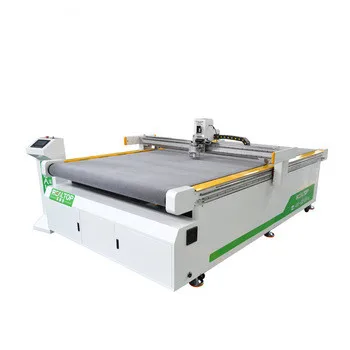
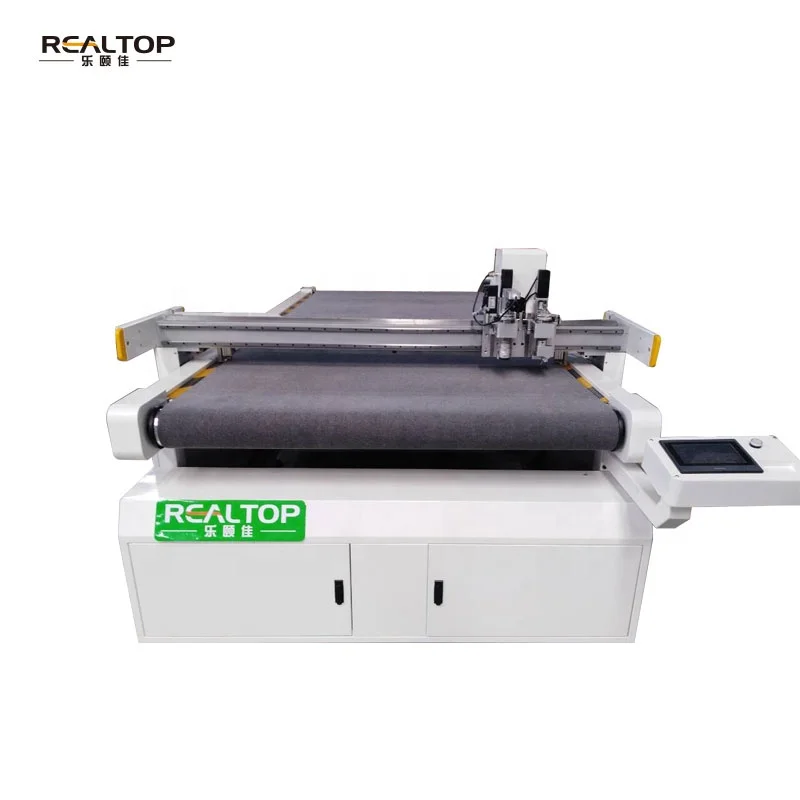
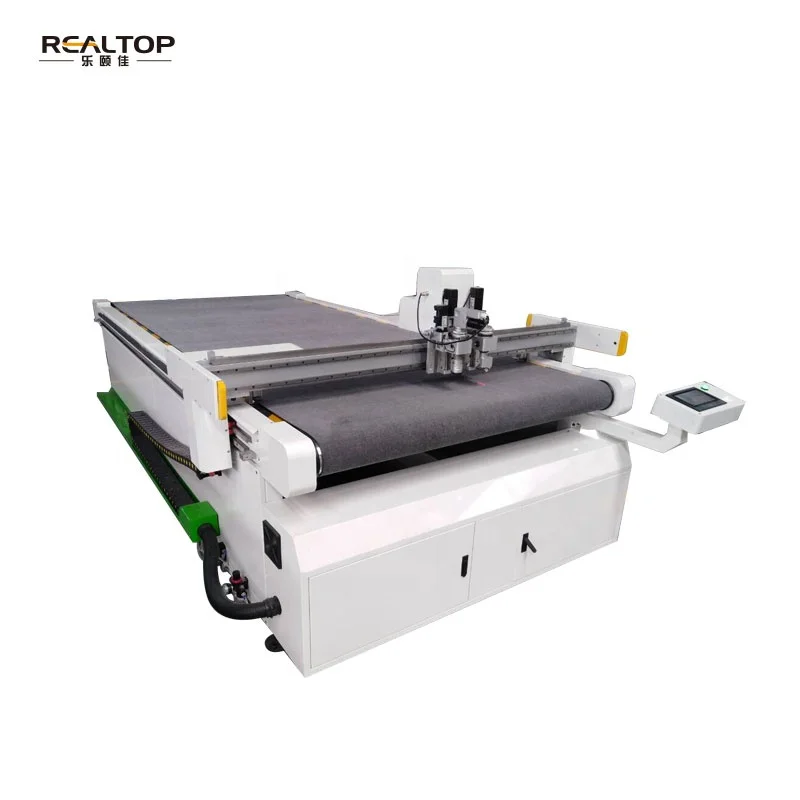
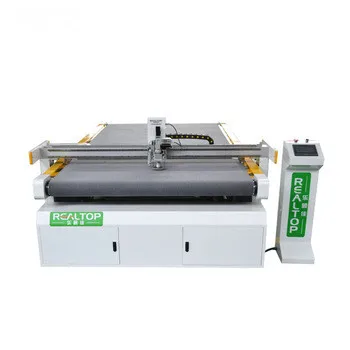
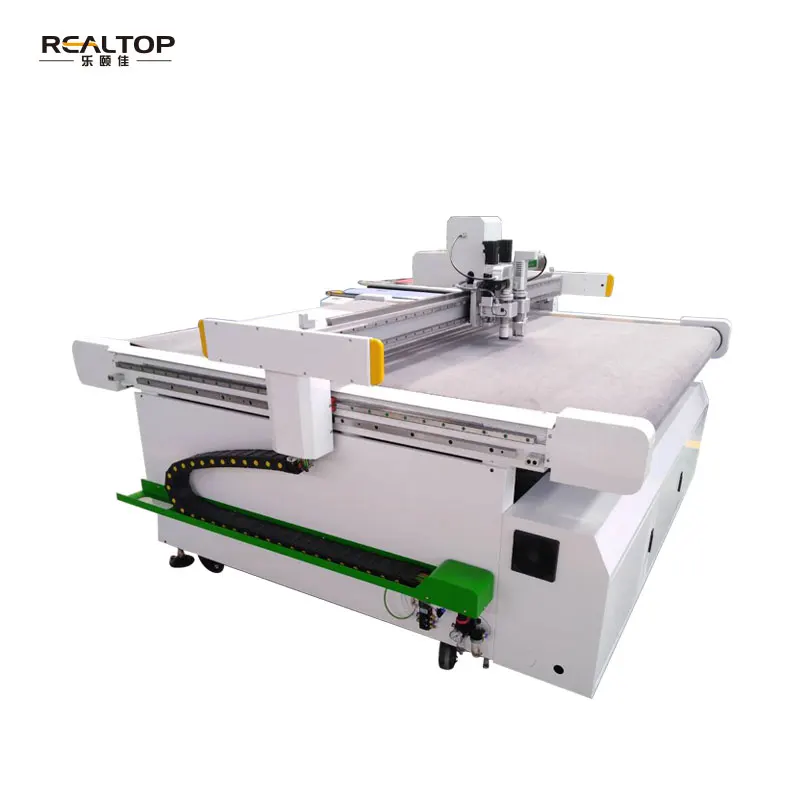
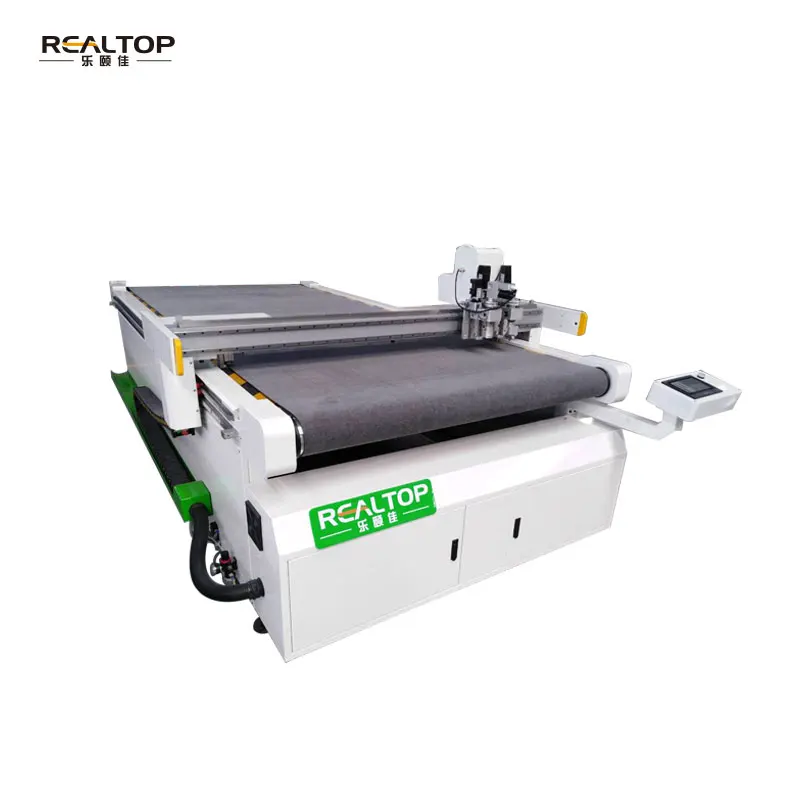

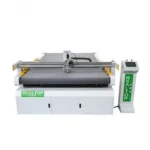
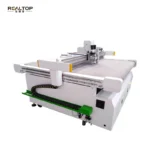
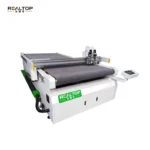

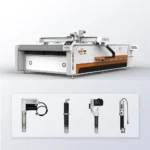
Multi-layer CNC Fabric Cutting Machine for Garments – Turnkey Solution
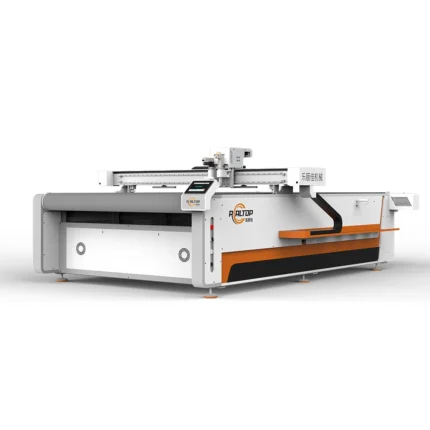
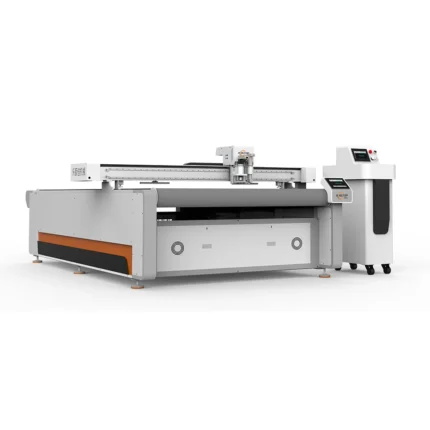
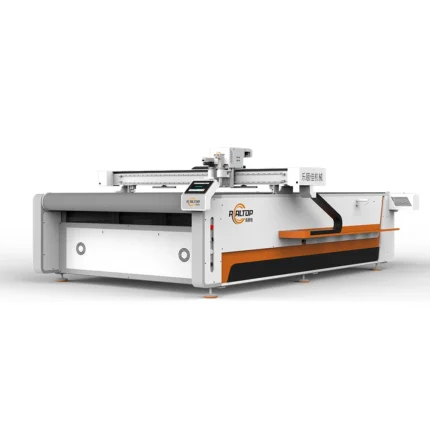
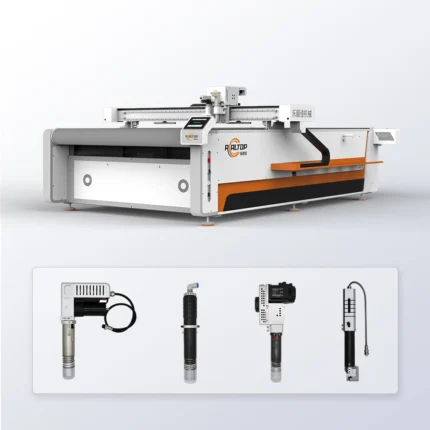
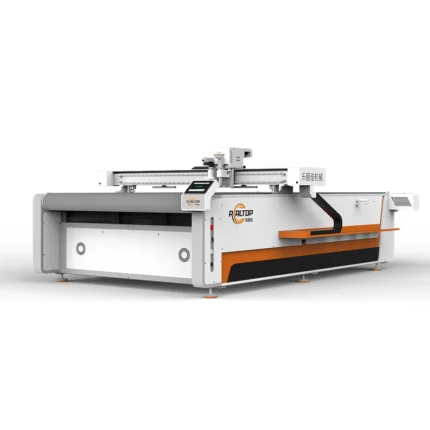
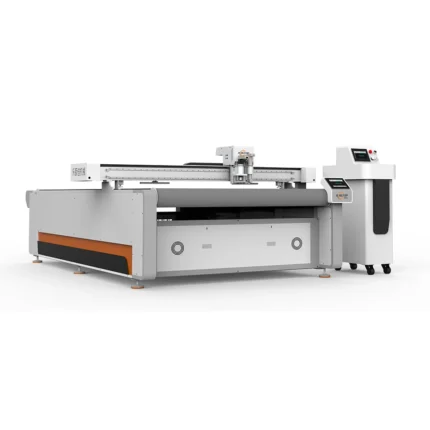
RT-D2516/RT-S2516 CNC Multi-layer Fabric Cutting Machine, 1600×2500mm Working Area, Swiss Oscillating Knife, 7.5kw Vacuum Pump — engineered for high-volume garment and flexible material processing.
- Tool head and vacuum table zoning configured per fabric weight and stack height to prevent layer shift and ragged edges
- Yaskawa servo with Hiwin linear guide delivers ≤0.1mm repeatability across continuous auto-feeding workflow
Sample cutting on your own fabric, full tool head configuration list and software format compatibility confirmed before order.
Matched tool head and vacuum zoning — We test your fabric weight and stack height before specifying the Swiss oscillating knife setup and vacuum zone map, so edge quality holds up from the first ply to the last.
Technical Specifications
| Parameter | Value |
|---|---|
| Product Type | CNC Multi-layer Fabric Cutting Machine |
| Model | RT-D2516/RT-S2516 |
| Working Area | 1600 × 2500 mm |
| Machine Size | 3450 × 2300 × 1250 mm |
| Rated Power | 9 kW |
| Table Type | Flat working table with vacuum and auto-feeding |
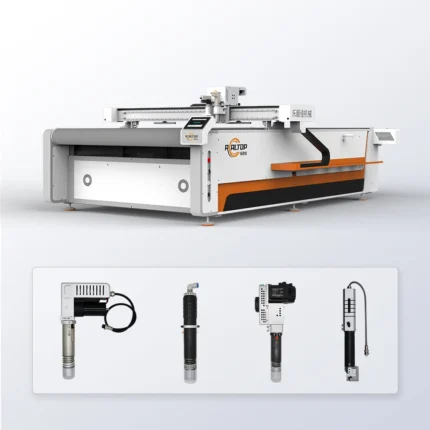
| Tool Head | Swiss imported knife (vibration full cutting, half cutting, cursor location) |
| Cutting Speed | 200–800 mm/s (varies with material and layer count) |
| Translational Velocity | 800–1200 mm/s |
| Repeated Accuracy | ≤0.1 mm |
| Transmission System | Imported digital servo motor, linear guide, synchronous belt, ball screw |
| Servo Motor | Japanese Yaskawa |
| Linear Guide | Taiwan Hiwin rail |
| Conveyor Belt | Germany imported |
| Vacuum Pump | 7.5 kW |
| Voltage | 380V ± 10% |
| Safety Device | Infrared sensors |
| Instruction System | HP-GL compatible format |
Application Suitability
| Application | Material or Output |
|---|---|
| Garment and suit manufacturing | Multi-layer cotton, polyester, blended woven and knit fabrics |
| Leather goods production | Natural leather, PU leather, sponge composite leather |
| Flexible material processing | PVC, soft glass, silicone, rubber sheets |
| Automotive interior components | Foam laminates and flexible composite panels |
Why "Cutting Speed" Means Nothing Without Your Fabric in the Clamp
A quoted 800 mm/s on the nameplate tells you nothing about how the blade behaves on your 40-layer cotton stack.
Every fabric type reacts differently to oscillating knife pressure and frequency. A setting that slices cleanly through single-ply polyester will crush and drag on a 30-layer denim lay, leaving ragged edges that force your sewing line to rework every panel. I once watched a garment factory in Southeast Asia run coated technical fabric on a machine configured for standard lining cloth — the blade heated up within an hour, coating residue built on the edge, and every third panel had frayed seams. That stoppage cost them a full shift. CNC fabric cutting machine specifications only matter when they are validated on the exact material and lay height you plan to run day after day [NEED_CITE: multi-layer fabric cutting validation practices in garment manufacturing].
How the Swiss Knife Assembly Handles Stacked Fabric Plies
The oscillating knife on this system runs full cutting and half cutting modes with cursor location for mark reference. Full cutting drives through the entire lay in one pass, while half cutting scores the top plies for controlled peel-back — useful when you need to separate panels without cutting the bottom marker paper. The knife oscillation frequency is tuned to the stack density so the blade does not deflect mid-stroke, which is where most edge deviation comes from in thick lays.
Vacuum Hold-Down Is Not One Size Fits All
The 7.5 kW vacuum pump under the flatbed pulls air through zoned channels. Small pattern pieces near the table edges tend to lift during high-speed knife travel if the vacuum zone is not matched to the nest layout. We configure the zone map after reviewing your marker plan, closing off sections that sit empty and concentrating suction where the fabric actually lies. This prevents ply shifting on lightweight knits and keeps the bottom ply anchored during full-depth cuts [NEED_CITE: vacuum table zoning principles for CNC flatbed cutting systems].
Reading the Specs That Actually Affect Your Cut Quality
The ≤0.1 mm repeated accuracy comes from the Yaskawa digital servo and Hiwin linear rail combination — the servo closes position loops at high resolution while the rail eliminates lateral play across the 2500 mm travel. When you are cutting collar pieces that must match within half a millimeter across hundreds of lays, this stack-up tolerance is what keeps panels interchangeable on the sewing line. The German-imported conveyor belt on the auto-feeding table advances fabric into the cutting zone without stretching, which matters for knits that distort under tension. At 9 kW rated power, the spindle and vacuum system run on a dedicated 380V circuit; dropping to a shared line causes voltage sag that shows up as inconsistent blade depth.
What a Mismatched Configuration Costs on the Floor
When a buyer selects tool head and vacuum configuration based on catalog defaults rather than material samples, the first sign of trouble is usually edge fuzzing on the bottom ply. The operator slows the cutting speed to compensate, throughput drops, and the cutting room starts running overtime shifts to meet shipment dates. On coated or laminated fabrics, a standard blade dulls within hours, generating heat that melts synthetic fibers into the knife seat — the machine needs a full blade and holder swap before it can resume. These stoppages compound across a production run and are invisible in a spec-sheet comparison [NEED_CITE: blade wear patterns on coated textile cutting operations].
What You Get by Sourcing the RT-D2516/RT-S2516 Directly
We design and build both knife and laser cutting systems in-house, so when your material falls between methods — for example, a foam-backed textile that needs knife cutting on top and laser sealing on the edge — we can specify a combined workflow instead of forcing one technology. Every tool head and table configuration is locked in after a sample cut on your actual production fabric, not a catalog swatch. Software compatibility with your existing HP-GL nesting files is confirmed before the order enters production. Voltage, plug type, and control panel language are set to match your destination market so there is no rewiring or re-labeling when the crate arrives. You receive a sample cutting report showing edge quality, layer count, and cutting speed on your material before you commit.
Documentation & Verification
- Machine specification sheet matching your confirmed tool head and vacuum zone layout
- Electrical schematic with 380V ± 10% circuit and breaker requirements
- Factory test record showing cutting speed and edge result on your fabric sample
- HP-GL file format compatibility note for your nesting software
- Spare parts list covering Swiss knife blades, holders, and conveyor belt sections
- Packing photographs of RT-D2516/RT-S2516 before crate sealing
Installation, Commissioning & Support
- Dedicated 380V ± 10% circuit with proper grounding for the 9 kW rated power draw
- Level floor space of at least 3450 × 2300 mm for the machine footprint and operator clearance
- Table re-leveling and Hiwin rail alignment check after transport vibration
- First-run parameter tuning: oscillation frequency and vacuum zone map set to your fabric
- Operator training on HP-GL file loading, blade change, and conveyor feed adjustment
- Scheduled blade rotation and linear rail lubrication intervals documented in the manual
What We Need to Quote the Right Configuration
Send us your fabric type, weight per square meter, and the number of plies you plan to cut in a single lay. Tell us your local voltage and frequency, preferred control panel language, and whether your nesting software outputs HP-GL or another format. If you have an existing cutting line upstream or downstream, let us know the conveyor height and feed direction so the auto-feeding table aligns with your workflow.
Frequently Asked Questions
Q: How do you determine the maximum layer count for my fabric?
A: We cut sample lays at increasing ply heights using your actual production fabric and measure edge deviation on the bottom ply. The maximum count is set where deviation stays within your sewing tolerance, not where the blade can barely push through. Results are documented in the sample cutting report before order confirmation.
Q: Can the vacuum table hold small pattern pieces without shifting?
A: The 7.5 kW vacuum system is divided into zones that we configure based on your marker layout. Zones under empty table area are closed off so suction concentrates where fabric lies. For very small pieces like collar stays or pocket flaps, we add localized zone boundaries to prevent lift during high-speed knife travel.
Q: Will my existing nesting files run on this system without conversion?
A: The instruction system accepts HP-GL compatible format. We test your actual nesting files on the machine during the pre-order sample phase and confirm import, cut path, and output match. If your software exports in a different format, we identify the conversion step before the order is finalized.
Q: Is CCD camera contour recognition available for printed fabrics?
A: CCD camera positioning is an option for printed contour work. We evaluate whether your print marks are detectable at production speed on your specific fabric and ink type. If the camera cannot reliably track marks on your material, we recommend a mechanical registration method instead.
Q: Can you adapt the voltage and control language for my factory?
A: Voltage is configurable to match your local supply, and control panel language is set before shipment. We confirm plug type, frequency, and breaker specifications with your electrical team. All settings are recorded in the electrical schematic included with the documentation package.


Related products
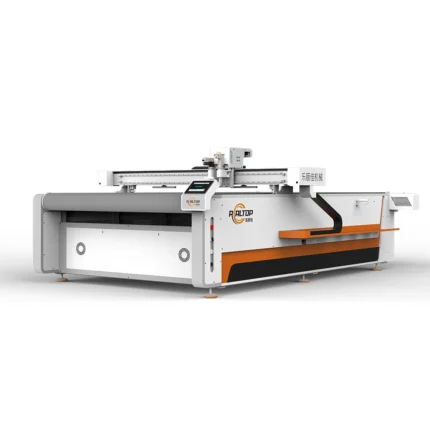
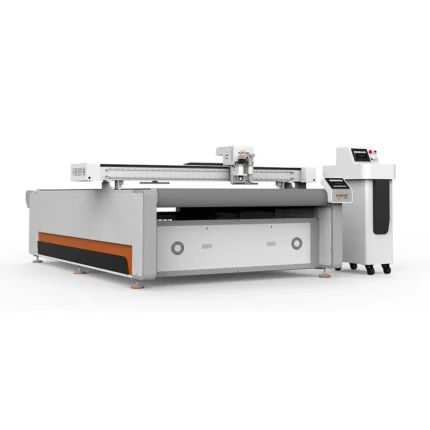
2026 Auto CNC Cloth Cutting Machine High-Precision Fabric Leather Plotter
Product Introduction
2026 Auto CNC Cloth Cutting Machine, a high-precision fabric & leather plotter designed for efficient cutting. Ideal for textile and leather industries with advanced CNC technology.
Key Specifications
| Model | Auto CNC Cloth Cutting Machine 2026 |
| Application | Fabric & Leather |
| Precision | High-Precision Cutting |
| Type | CNC Plotter |
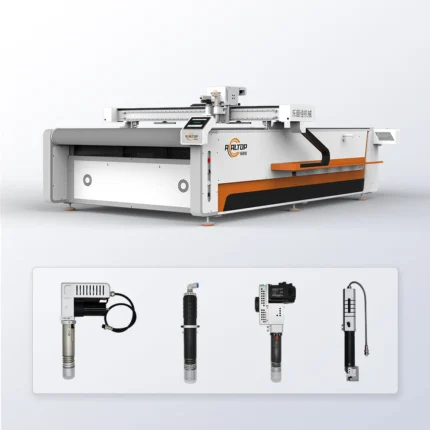
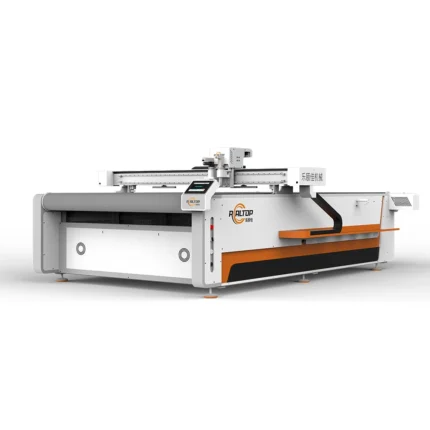
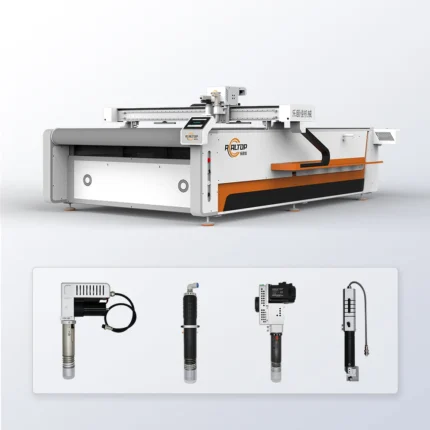
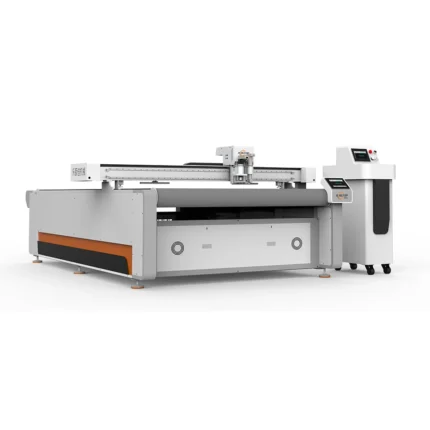
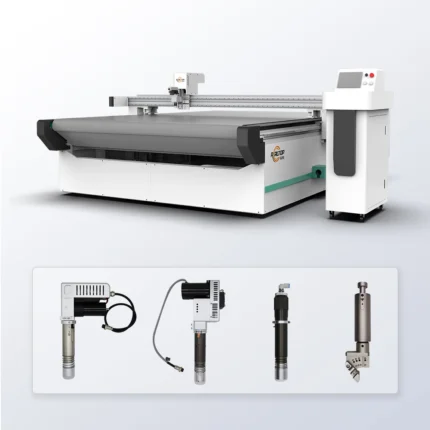
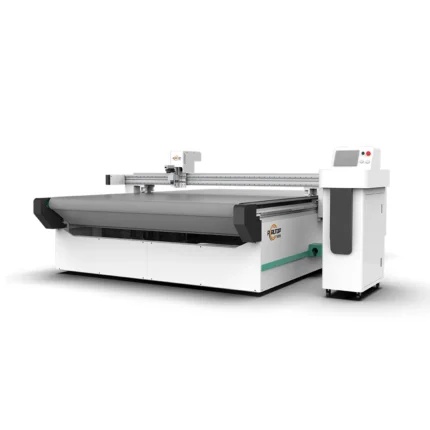
2026 Flatbed Oscillating Knife Cutter 1600x3500mm Auto-Feeding Textile
Product Overview
Flatbed Oscillating Knife Cutting Machine 2026 is a high-precision textile fabric cutter with auto-feeding function, ideal for efficient and accurate cutting tasks in textile manufacturing. It combines advanced oscillating knife technology with a large working area to meet industrial production needs.Key Specifications
| Model | 2026 |
| Working Area | 1600x3500mm |
| Feeding System | Auto-Feeding |
| Cutting Type | Oscillating Knife |
| Application | Textile Fabric |
High Speed Fabric Cutting Machine 2026 Round Oscillating Knife
Product Overview
High Speed Fabric Cutting Machine 2026 with round and oscillating knife for efficient fabric cutting. Ideal for textile manufacturing and related industries.Key Specifications
| Cutting Type | Round & Oscillating Knife |
| Model Year | 2026 |
| Application | Fabric Cutting |
| Feature | High Speed Performance |

Jinan Realtop PVC Cutting Machine 2026 CE Certified
Product Introduction
Jinan Realtop PVC Cutting Machine 2026 is a CE-certified cutting solution, ideal for precise PVC material processing. Designed for efficiency and reliability in industrial applications.Product Parameters
| Model | 2026 |
| Certification | CE Certified |
| Application | PVC Cutting |
| Manufacturer | Jinan Realtop |
商品评价
There are no reviews yet.