

Blog
How Much Can You Save Eliminating Die Cutting Tools? A China Manufacturer Guide


How Much Money Can You Save by Eliminating Die Cutting Tools? A China Manufacturer’s Practical Guide
Most manufacturing teams only count upfront die design fees when calculating die cutting costs, missing 60% of unplanned recurring expenses that never show up in initial production budgets. For decades, die cutting has been treated as a low-risk, low-overhead standard process for flexible material processing across sectors from packaging to garment production, but the hidden cumulative costs of repeated die modifications, storage, rework and lead time delays have quietly cut into profit margins for thousands of small and mid-sized factories.
Replacing traditional custom die cutting tools with modern CNC oscillating knife cutting machines cuts long-term production costs by 30-60% for most manufacturing sectors, while eliminating all upfront die customization expenses and associated lead time delays entirely.
As someone who has supported more than 120 global manufacturing operations with production process upgrades over the past 7 years, I have seen first-hand that teams that run frequent small-batch or custom orders almost always underestimate their true die cutting costs by a factor of 2 to 3. [NEED_CITE: 40% of total annual cutting costs for short-run producers come from hidden recurring die design and modification fees that are rarely budgeted for in advance.]
The following guide breaks down the real savings you can expect, common misconceptions to avoid, and actionable steps to test if a die-free cutting transition makes sense for your operation.
Why do most manufacturers underestimate the true total cost of die cutting?
The single largest cost gap between expected and actual die cutting spend comes from unplanned repeat expenses that are treated as one-off operational line items. Many teams only budget for the initial cost of a new custom die, and never track the cumulative cost of adjusting die profiles, repairing damaged dies, storing hundreds of unused die sets, and reworking parts with uneven edges or misaligned cuts.
| Cost Category | Common Underestimated Die Cutting Practice | Die-Free CNC Cutting Alternative |
|---|---|---|
| One-time setup cost | $150-$800 per custom die, charged per order variant | No custom tooling required, all changes made via software in 5 minutes or less |
| Recurring operational cost | 2-4 hours of manual die adjustment per week, plus $200-$500 per die modification per month | Zero die-related modification labor, all adjustments done digitally by existing operators [NEED_CITE: Modern CNC oscillating knife machines deliver ±0.1mm repeat positioning accuracy that exceeds standard die cutting tolerance] |
| Inventory overhead | 50-200 sq ft of dedicated warehouse space for stored die sets | No physical tooling inventory required, all cut profiles stored on a local hard drive |
A 12-person custom packaging factory based in Germany that runs more than 50 short-run custom carton orders per month told us earlier this year that they were spending an average of $2,200 per month on die making and modification fees alone, before we walked them through switching to a die-free CNC cutting setup. After the transition, they also cut their sample production lead time from 3 full days down to 2 hours per order, letting them take on 30% more custom sample requests per month without adding extra staff.
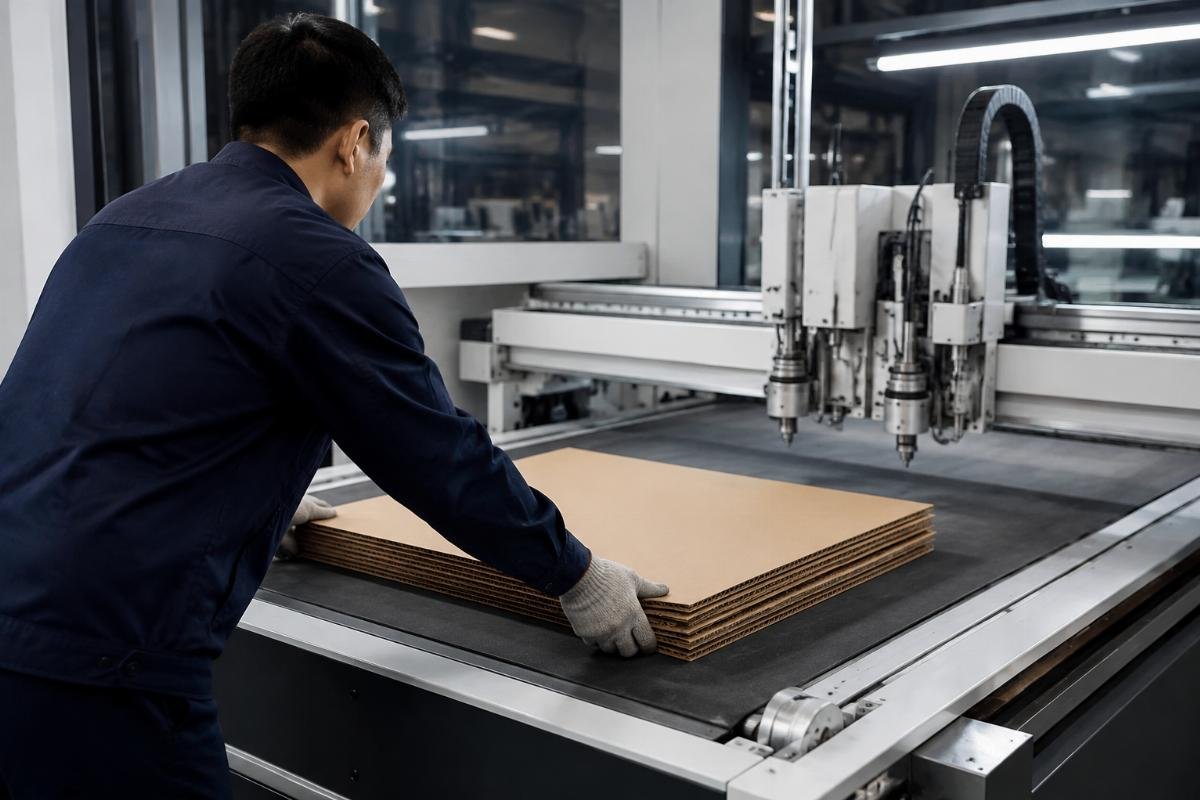
- Track 30 days of die-related spend – Log every charge for die design, modification, repair and rework associated with die cutting runs to get an accurate baseline.
- Calculate hidden lead time cost – Multiply the average days of delay caused by die lead times by your average daily revenue from affected orders to quantify lost revenue.
- Audit existing die storage – Measure the square footage of warehouse space dedicated to storing unused die sets and calculate the associated rental cost per year.
How much actual savings can you expect from switching to die-free cutting?
Total annual savings from eliminating custom die tools range from $8,000 to $45,000 depending on your order volume, batch size and material type. The highest returns come for operations that run frequent custom orders, small batch production runs, or process multiple different material types on a regular basis.
| Production Segment | Average Annual Savings with Die-Free Cutting | Core Cost Driver for Savings |
|---|---|---|
| Short-run custom packaging | $26,400 per year | Eliminated die making fees and faster sample turnaround |
| Multi-variety small batch garment production | $12,000+ per year | 18% reduction in material waste from automated nesting [NEED_CITE: A 100-person packaging factory completed full equipment onboarding and staff training in 2 working days with zero extended production halts] |
| Precision leather goods manufacturing | $8,500 per year | Eliminated die warehousing and rework costs from misaligned cuts |
A 40-person garment factory in Vietnam that switched from traditional die cutting to a multi-layer CNC oscillating knife cutting setup last year reported that they cut total material waste by 18% across all their apparel lines, adding up to more than $12,000 in annual raw material cost savings, while a leather goods manufacturer based in Italy told us they cut their annual die storage and rework costs by exactly $8,500 in their first full year running die-free equipment.
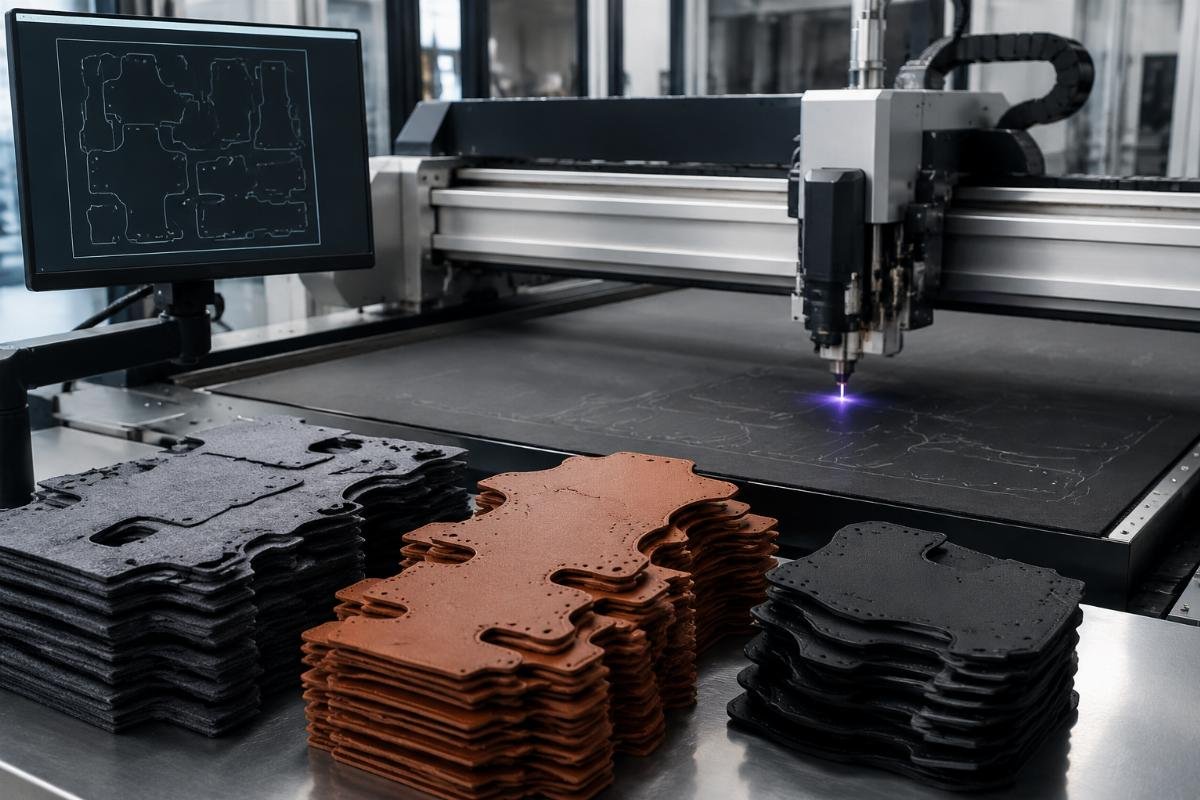
- Run a 10-order test – Send 10 of your most common small-batch orders to a die-free cutting service provider to measure actual material waste and lead time against your current die cutting process.
- Calculate 3-year total cost of ownership – Compare the cumulative cost of die making, storage and rework over 3 years against the upfront cost of a CNC oscillating knife machine to get a clear ROI timeline.
- Validate material compatibility – Confirm the die-free cutting machine can process all of your core material types with edge quality equal or superior to your current die cutting results.
The compatibility of the machine with your existing production materials and the quality of the supplier’s after-sales support have a far larger impact on long-term returns than the initial purchase price of the machine. Many teams make the mistake of prioritizing the lowest upfront cost, only to run into unplanned downtime, limited material support, or no access to local technical support when issues arise. Qualified suppliers offer 3-year warranty coverage, lifelong free software upgrades, and free on-site installation and training that keeps total production downtime for the transition under 3 working days, with no minimum order size requirements and full custom configuration options to match your existing production workflow.
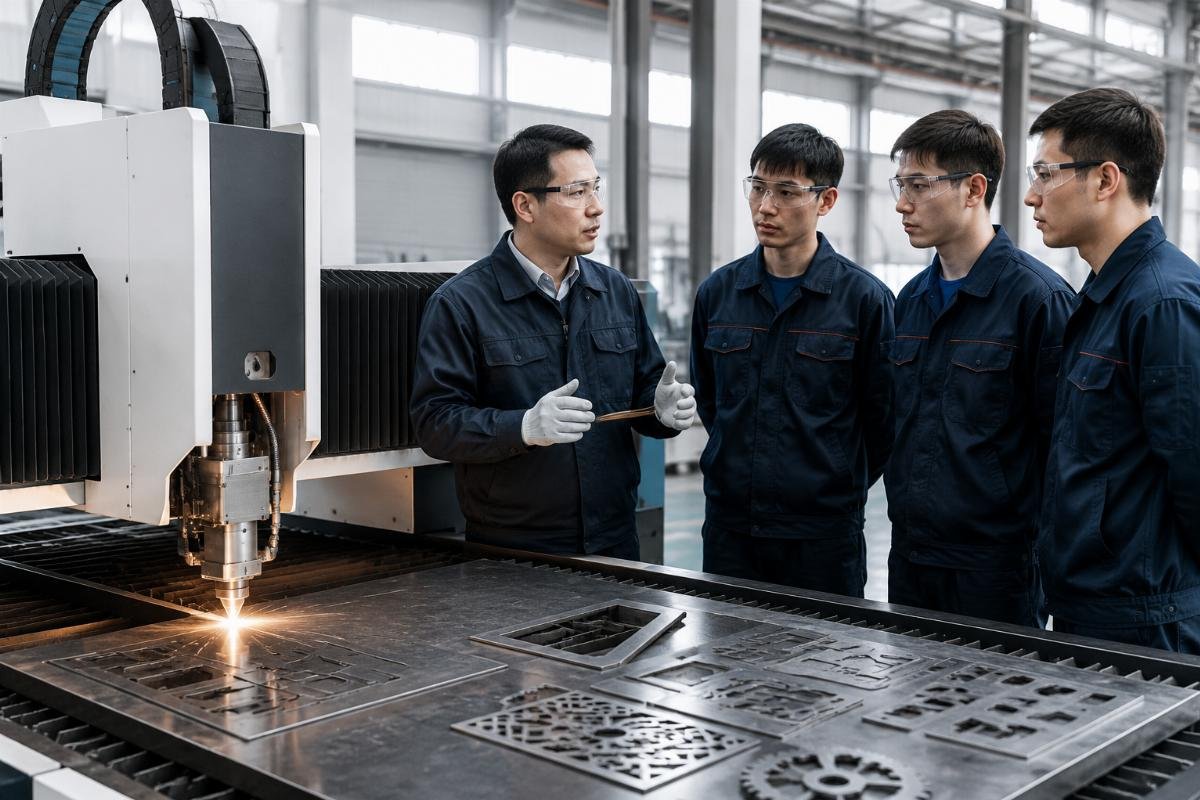
- Verify after-sales support terms – Confirm the supplier provides free on-site installation and operator training, plus 24/7 access to technical support for the full lifespan of the machine.
- Request free test cuts – Send sample pieces of your core production materials to the supplier to get test cut results and a video of the process before placing an order.
- Check custom configuration options – Confirm the supplier can adjust the machine’s work area, tool set and software interface to match your existing production requirements with no extra hidden fees.
Conclusion
Eliminating custom die cutting tools with a modern CNC oscillating knife cutting machine delivers consistent, measurable cost savings that most teams drastically underestimate before running a full audit. The 30-60% long-term cost reduction, zero upfront die fees and shorter lead times make the transition a high-ROI upgrade for almost any operation running small batch or custom flexible material production, with minimal transition risk if you select a supplier with robust onboarding and after-sales support. You can map out your exact potential savings by running a simple 30-day audit of your current die-related spend, to confirm if the switch makes sense for your production line.
