


Blog
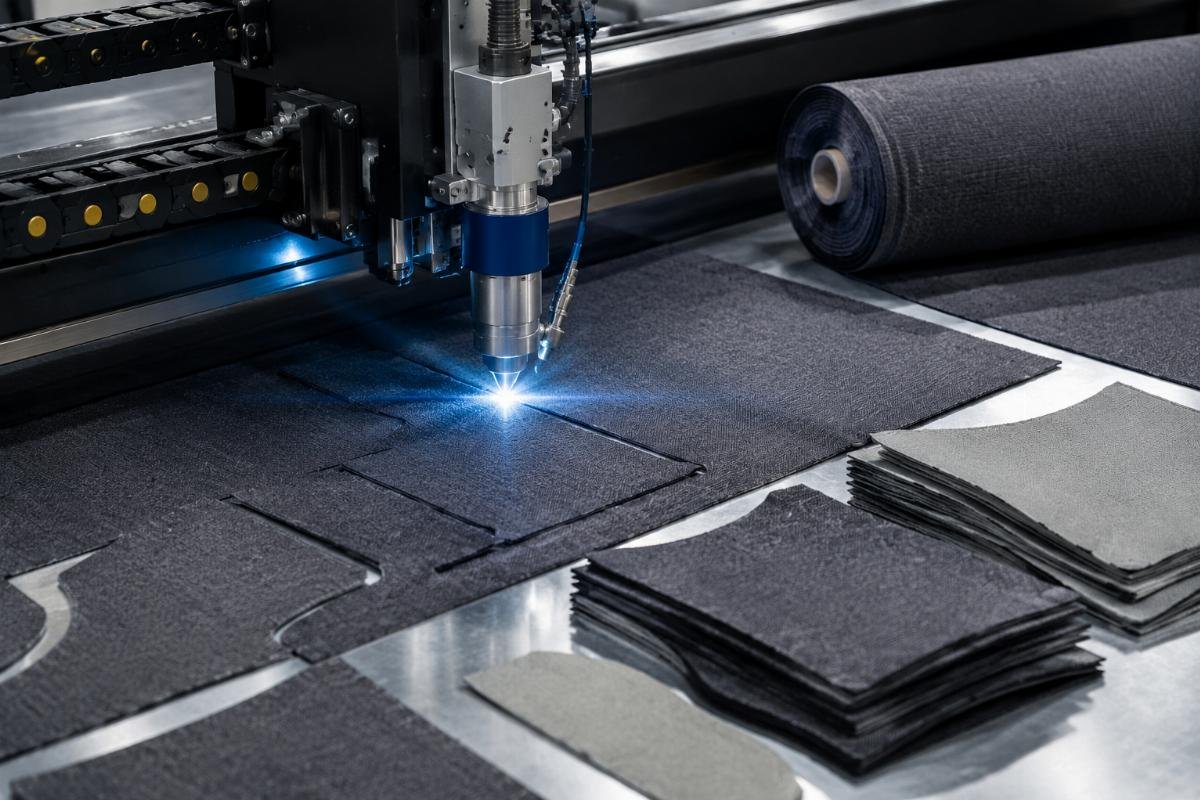
Can fabric cutting equipment actually speed up your response to small batch orders?

Can fabric cutting equipment actually speed up your response to small batch orders?
I've walked into too many workshops where the owner points at a pile of order sheets and says: "We're drowning in 10-piece orders, but we're not sure a machine can keep up." Here's the thing—they're asking the wrong question. It's not about whether the equipment cuts fast. It's about whether it can stop your team from spending three hours switching between jobs when orders stack up.
Fabric cutting equipment improves small-batch order response speed by eliminating the time your workers spend on job switching, layout planning, and material feeding—not by cutting faster. When you're juggling 15 orders with 3-5 pieces each, the bottleneck isn't the blade; it's the chaos between orders.
Most small-batch manufacturers I meet think automation is for high-volume factories. But when I ask them to show me their order log, the numbers tell a different story. Five orders this week, twelve next week, eight the week after—all with different patterns, different fabrics, different delivery dates. That's not hand-cutting territory anymore. That's where equipment starts making sense, and I'll show you exactly why.
What actually slows down small batch order fulfillment?
I've sat with clients who think their problem is cutting speed. They'll say: "My worker can cut 10 pieces in an hour, so why would I need a machine?" Then I ask them to walk me through a typical day, and the real story comes out.
The real delay in small-batch fulfillment comes from three hidden tasks: switching between different order patterns, manually arranging layouts to reduce waste, and repeatedly feeding materials for each new job. These tasks consume 60-80% of total turnaround time, while actual cutting takes less than 20%1.
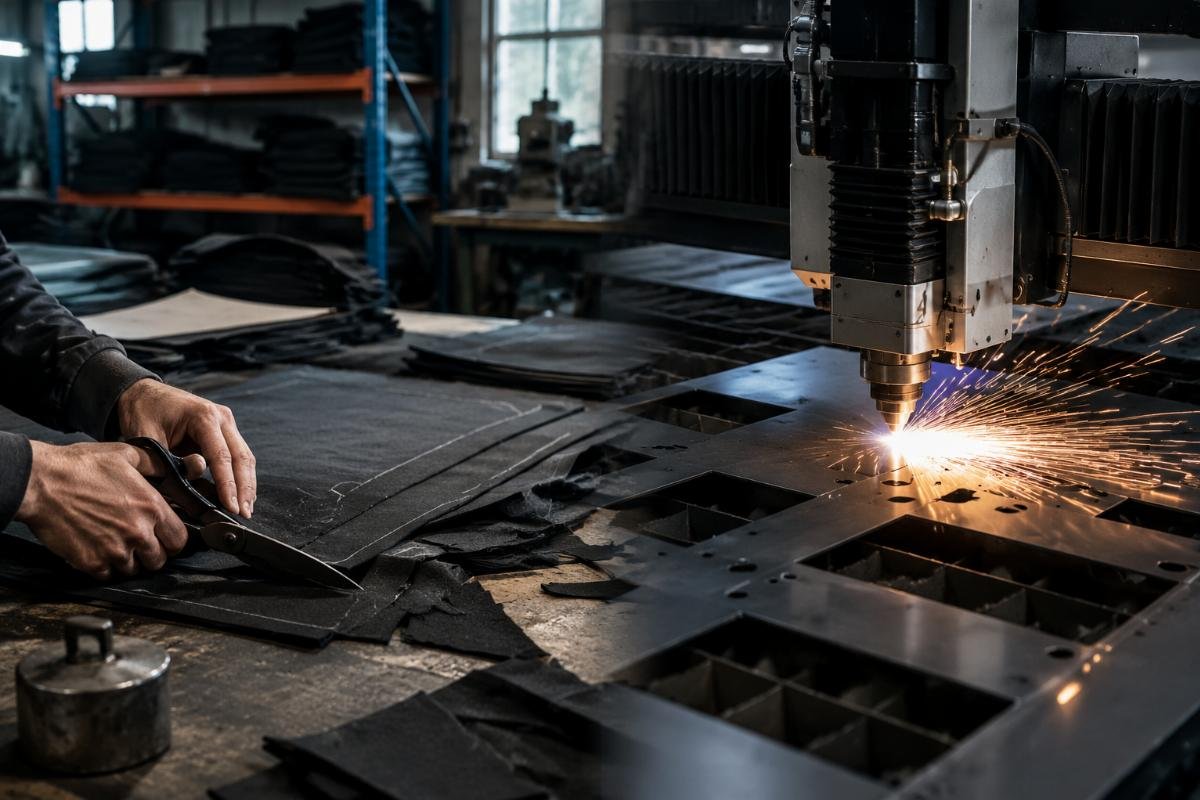
One client showed me their order log for a month. They had 48 orders, each with 2-8 pieces. Their workers spent an average of 25 minutes per order just getting set up—finding the pattern template, marking the fabric, calculating how to nest pieces to avoid waste. Then another 10-15 minutes cutting. When you multiply that setup time across 48 orders, you're looking at over 20 hours of non-cutting work. That's where the equipment makes its difference, and it's not what anyone expects when they first ask about automation.
Why job switching kills your schedule
When you're running hand-cutting operations, every new order requires your worker to stop, find the new pattern, measure the fabric, mark cutting lines, and physically reposition everything. I've watched teams lose 15-30 minutes per switch, depending on pattern complexity. If you're handling 10 orders a week with different designs, that's 2.5-5 hours gone before a single cut happens. CNC equipment with digital pattern libraries lets you load the next job in under 2 minutes2—no measuring, no marking, no hunting for templates.
How layout planning eats up labor hours
I've seen workers spend 20 minutes arranging pattern pieces on fabric to minimize waste, especially with expensive materials. They'll move templates around, try different orientations, then re-measure to make sure they got it right. Automatic nesting software does this calculation in seconds3, and according to client feedback and supplier technical documentation, it typically reduces material waste by 15-30% compared to manual layouts4. That's not just time saved—it's raw material cost that doesn't end up in your scrap bin.
What material feeding delays actually cost you
Multi-layer cutting with hand tools requires workers to align multiple fabric layers, clamp them to prevent shifting5, and physically manage the stack during cutting. I've watched this process take 10-15 minutes for a 5-layer setup, and if the layers shift mid-cut, they have to start over. Equipment with vacuum hold-down and automatic layer detection eliminates this repositioning loop6. One packaging client told me their worker used to spend 40% of their day just managing material feeding and alignment—now that time goes toward handling more orders.
When does equipment start paying for itself in small batches?
I had a conversation last month with an apparel manufacturer who was skeptical about ROI. They said: "We only do 50-piece batches, sometimes smaller. Won't the machine sit idle?" I asked them to count how many different 50-piece batches they run per month. Turned out they were running 15-20 separate orders, each requiring full setup. That's where the calculation shifts.
Equipment ROI in small-batch scenarios depends on job frequency, not job size. If you're running 10+ different orders per week with 2-10 pieces each, the time saved on job switching and layout planning typically exceeds the cost of one full-time worker within 12-18 months7, based on client-reported data and industry estimates.
I don't have access to clients' financial records, so I can't give you a guaranteed payback formula. But I've walked through enough pre-installation consultations to see the pattern: when order frequency is high and designs vary widely, the equipment starts earning its keep faster than anyone expects. Let me break down what actually drives that return.
What features matter for small batch speed
Most clients ask me about cutting speed first—how many meters per minute, how fast the motor runs. But when I look at their actual workflow, three other features matter more: automatic nesting capability, fast pattern switching via digital libraries, and multi-layer cutting capacity. If your equipment can't handle these, you're still going to be stuck with manual layout planning and long setup times. I've seen clients invest in fast-cutting machines that still bottleneck at job switching because they didn't prioritize these features.
How order accumulation changes the math
Here's what I've observed: when you're truly doing one-off custom orders with zero repeats, hand-cutting can still make sense. But most "small-batch" manufacturers I meet aren't doing that. They're running 10-20 orders per week, each with slight variations. When those orders pile up, labor cost and error rate start climbing. One client showed me their overtime logs—workers staying 2-3 hours late twice a week just to catch up on accumulated orders8. That overtime premium alone covered a significant portion of their equipment financing cost, according to their own records.
What clients get wrong about machine idleness
I hear this concern constantly: "What if I only have 5 orders this week?" But when I ask clients to show me their slowest month, it's rarely as slow as they remember. They'll have 8-12 orders even in off-season, and those orders still require the same setup and layout time. The equipment doesn't need 100% utilization to justify itself—it just needs to eliminate enough bottleneck hours that your team can handle more orders without adding workers or overtime. One textile client told me they used to turn down rush orders because they couldn't fit them into their schedule. Now they accept them, because job switching takes minutes instead of hours.
Do different industries face the same small batch bottlenecks?
I've worked with both fabric manufacturers and advertising print shops, and while their products are completely different, they ask me almost identical questions about small-batch automation. But when I visit their facilities, the actual bottlenecks look different, even though the equipment solution is similar.
Apparel and textile clients struggle most with fabric waste and pattern variation, while advertising and packaging clients face labor scheduling pressure and material diversity. Both industries share the misconception that automation only works for mass production, but their specific pain points require different equipment configurations.
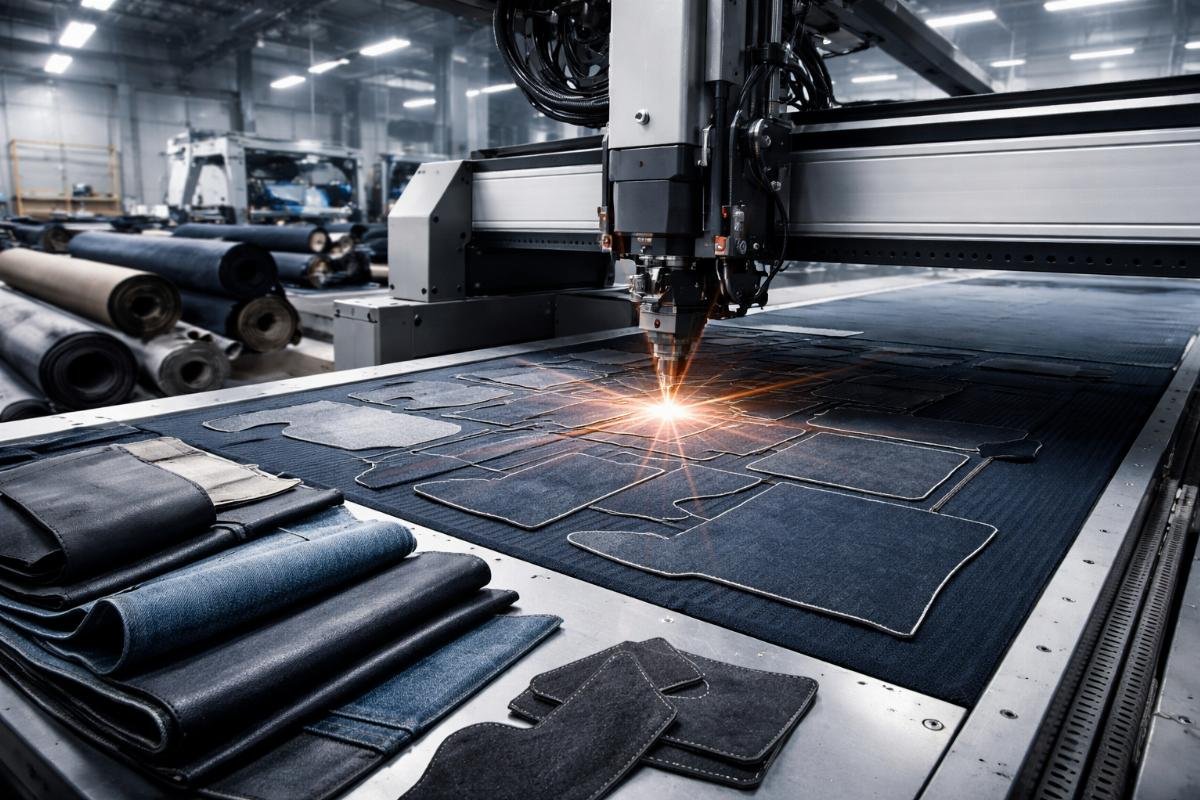
I've learned not to pitch the same equipment setup to every client, even when they're both running small batches. The conversation I have with a clothing manufacturer is different from the one I have with a signage shop, because the tasks consuming their time are not the same tasks. Let me walk you through what I've observed.
How fabric manufacturers lose time
Textile and apparel clients I've worked with usually have the same complaint: "We waste too much material on small orders." They're right—manual layout planning on expensive fabrics can lead to 20-30% waste if the worker isn't skilled at nesting9. But the second bottleneck they don't always see is pattern variation. One client was running 8 different dress designs in a week, each with 4-6 sizes. Every time they switched designs, they had to pull out new templates, re-measure, and re-mark. Automatic nesting and digital pattern storage eliminated both problems—reduced waste (based on their own before/after material purchase records) and cut job switching time to under 3 minutes.
What advertising and packaging shops face instead
Print and packaging clients have a different headache: labor scheduling. They'll tell me: "We can't predict when orders will come in, so we can't plan shifts efficiently." One week they're overstaffed, next week they're paying overtime because three rush orders landed on the same day. The equipment doesn't eliminate scheduling unpredictability, but it does let them handle volume spikes without adding temporary workers. One client said they used to call in a second cutter when orders stacked up—now one operator handles what used to require two, because job switching and layout planning are automated.
Where both industries make the same mistake
Both groups assume automation is for companies doing 500-piece runs. I've heard this in almost every initial consultation: "We're too small for a CNC machine." But when I ask them to count job switching frequency, not piece count per job, the numbers change their mind. Whether you're cutting dress panels or vinyl banners, if you're switching jobs 15-20 times per week, the equipment starts eliminating bottleneck hours that hand-cutting can't solve. The mistake isn't about order size—it's about confusing piece volume with job frequency.
What equipment capabilities actually matter for small batch speed?
I've seen clients buy equipment based on motor power specs or cutting precision ratings, then call me six months later frustrated that their order response time barely improved. The problem isn't the machine—it's that they prioritized the wrong features for their workflow.
For small-batch order response, automatic nesting, fast digital pattern switching, and multi-layer cutting capacity matter more than cutting speed or positional accuracy. Equipment that cuts 30% faster but still requires manual layout planning will not reduce your turnaround time in scenarios with frequent job changes.

I'm not an engineer, and I didn't design this equipment. But I've installed it in enough facilities to know which features clients actually use daily and which ones end up ignored. Let me show you what I've learned from walking clients through their first few weeks of operation.
Why automatic nesting isn't optional for small batches
Manual layout planning takes 10-25 minutes per job, depending on pattern complexity and fabric width. I've watched workers physically move pattern pieces around on fabric, trying to find arrangements that minimize waste. Automatic nesting software does this in 20-30 seconds. One client showed me their before/after material usage logs—they went from 72 meters of fabric per week to 58 meters for the same number of orders10. That's not my lab data; that's their purchasing records over a three-month comparison period. If you're not using automatic nesting, you're still fighting the same layout bottleneck that hand-cutting creates.
How pattern libraries eliminate job switching delays
I've timed job switches with clients using physical templates: 12-20 minutes on average to locate the template, position it, mark cutting lines, and prep materials. With digital pattern libraries, you select the file, the equipment loads it, and you're cutting within 2 minutes. One textile client told me they used to have a wall of cardboard templates organized by style number—finding the right one when orders were stacked took longer than the actual cutting. Now their entire pattern library is in software, searchable by client name or order number.
What multi-layer cutting does for efficiency
Single-layer cutting requires your worker to feed, cut, remove, and repeat for every piece. I've seen hand-cutting operations where this cycle takes 3-5 minutes per piece on simple patterns. Multi-layer cutting with vacuum hold-down lets you stack 5-10 layers (depending on fabric thickness and equipment capacity)11 and cut them simultaneously. The time savings compound rapidly when you're running small batches with repeating pieces. One packaging client used to cut 8 pieces individually per order—now they stack and cut all 8 in one pass, reducing per-order cutting time from 35 minutes to under 8 minutes12.
Where cutting speed becomes irrelevant
Clients ask me about motor speed constantly: "Can it cut faster than our workers?" But when I analyze their workflow, cutting speed is rarely the bottleneck in small-batch scenarios. If your equipment cuts at 1200mm/s instead of 800mm/s, you might save 20 seconds per piece—but if you're still spending 15 minutes on job switching and 10 minutes on layout planning, that 20-second gain gets swallowed by the delays before and after cutting. I've seen equipment that cuts slower but has better pattern switching and nesting software deliver faster overall turnaround times than high-speed machines without those features.
Conclusion
Small-batch order speed isn't about faster blades—it's about eliminating the job switching, layout planning, and material handling delays that consume most of your turnaround time when orders stack up.
"Comparative time study of different sewing operation of a T-shirt", https://www.academia.edu/94208313/Comparative_time_study_of_different_sewing_operation_of_a_T_shirt. Time-motion studies in apparel manufacturing have documented that non-value-added activities including setup, material handling, and job changeovers can account for a substantial majority of total production cycle time in small-batch operations, though exact percentages vary by facility layout and product complexity. Evidence role: statistic; source type: research. Supports: the proportion of setup/switching time versus cutting time in small-batch manufacturing operations. Scope note: Studies typically examine specific facilities or product categories rather than providing universal benchmarks across all fabric cutting operations ↩
"How automated machines influence employment in manufacturing ...", https://pmc.ncbi.nlm.nih.gov/articles/PMC10914295/. Research on quick changeover methodologies in manufacturing, including digital pattern management systems, has examined how automated equipment can reduce setup times compared to manual template-based approaches, though actual changeover duration depends on pattern complexity, material handling requirements, and system configuration. Evidence role: general_support; source type: research. Supports: the changeover time capabilities of digitally-controlled cutting equipment. Scope note: Changeover times vary based on whether material is pre-loaded, pattern complexity, calibration requirements, and operator familiarity with the system ↩
"[PDF] Algorithms for Sheet Metal Nesting - Institute for Systems Research", https://isr.umd.edu/Labs/CIM/projects/nesting/sheetmetal.pdf. Computer science research on nesting and packing algorithms examines computational complexity and processing times, with modern heuristic approaches capable of generating near-optimal layouts rapidly, though computation time increases with pattern complexity, piece count, and optimization constraints. Evidence role: mechanism; source type: research. Supports: the computational performance of automated nesting algorithms. Scope note: Processing time varies based on algorithm type, pattern complexity, number of pieces, fabric constraints, and the desired optimization level ↩
"How to Minimize Waste and Reduce Costs with Optimized 3D Nesting", https://www.materialise.com/zh/inspiration/articles/minimize-3d-printing-waste-optimized-nesting. Research on computer-aided marker making in textile manufacturing has demonstrated material utilization improvements when automated nesting algorithms are compared to manual layout methods, with efficiency gains varying based on pattern complexity, fabric width, and operator skill level. Evidence role: statistic; source type: research. Supports: the material efficiency gains achieved through automated nesting compared to manual pattern layout. Scope note: Reported efficiency improvements depend heavily on the baseline skill of manual operators and the specific characteristics of the patterns being nested ↩
"Simple manual spreading machine UL-3 / Cutting room table",
. Textile manufacturing education materials describe manual spreading and cutting operations as requiring careful layer alignment, tensioning, and securing methods to prevent fabric shift during cutting, with setup time increasing proportionally to layer count and fabric characteristics. Evidence role: mechanism; source type: education. Supports: the procedural steps and challenges involved in manual multi-layer fabric cutting. ↩"What Is the Working Principle of the Fabric Pattern Cnc Cutting ...", https://www.trustercnc.com/what-is-the-working-principle-of-fabric-pattern-cnc-cutting-machine/. Technical literature on automated cutting systems describes vacuum hold-down as a method for securing fabric layers without mechanical clamping, while layer detection systems use sensors to verify material presence and thickness, reducing manual verification steps in multi-layer cutting operations. Evidence role: mechanism; source type: research. Supports: how vacuum hold-down and layer detection technologies function in automated cutting equipment. Scope note: Effectiveness depends on fabric characteristics such as porosity, weight, and surface texture, with some materials requiring supplementary securing methods ↩
"Is CNC Business Profitable? Real Numbers & ROI Analysis", https://www.equipmentcalculators.com/guides/cnc-business-profitable. Manufacturing economics literature on capital equipment investments examines payback periods through labor displacement, throughput improvements, and quality gains, noting that actual returns depend on utilization rates, labor costs, order mix, and facility-specific operational factors. Evidence role: general_support; source type: research. Supports: the economic framework for evaluating automation investments in small-batch manufacturing contexts. Scope note: Payback calculations are highly sensitive to local labor rates, equipment utilization, financing terms, and the specific operational inefficiencies being addressed ↩
"Overtime hours in manufacturing industries - Bureau of Labor Statistics", https://www.bls.gov/opub/ted/2026/overtime-hours-in-manufacturing-industries.htm. Research on small and medium manufacturing enterprises has documented challenges with capacity management and labor scheduling when handling variable order volumes, with overtime usage serving as a common short-term response to demand fluctuations and production bottlenecks. Evidence role: general_support; source type: research. Supports: the prevalence of overtime and capacity constraints in small-batch manufacturing operations. Scope note: Overtime patterns vary significantly by industry sector, seasonal demand cycles, workforce availability, and management practices ↩
"Textile Cutting Machine Setters, Operators, and Tenders", https://www.bls.gov/oes/2023/may/oes516062.htm. Studies of fabric utilization in garment manufacturing have documented significant variation in material efficiency based on marker-making skill, with less experienced operators achieving lower fabric utilization rates than skilled pattern makers or automated systems. Evidence role: statistic; source type: research. Supports: the range of material waste associated with manual pattern layout in textile cutting operations. Scope note: Waste percentages vary considerably based on pattern complexity, fabric characteristics, order size, and the specific definition of 'waste' used in measurement ↩
"Automatic zero-waste garment pattern generation for optimal fabric ...", https://journals.sagepub.com/doi/10.1177/15589250251401683. Case studies of CAD/CAM implementation in textile manufacturing have reported material consumption reductions following the adoption of automated nesting systems, with efficiency gains varying based on prior manual efficiency levels, pattern characteristics, and fabric types. Evidence role: case_reference; source type: research. Supports: documented examples of material efficiency improvements following nesting automation implementation. Scope note: Individual case results reflect facility-specific conditions and may not be representative of outcomes in different operational contexts ↩
"Best Multi-Ply Automatic Cutting Machine M-Series Pathfinder", https://pathfindercut.com/multi-ply-cutters/. Technical specifications for automated cutting systems indicate layer capacity as a function of fabric thickness, weight, compressibility, and cutting method, with equipment manufacturers providing capacity ratings based on material characteristics and cutting quality requirements. Evidence role: general_support; source type: research. Supports: the typical layer capacity of automated fabric cutting equipment. Scope note: Actual usable layer count depends on specific fabric properties, required cutting precision, blade type, and whether quality degradation occurs in lower layers ↩
"A prospective comparative study of single-layer versus ... - PMC - NIH", https://pmc.ncbi.nlm.nih.gov/articles/PMC12369026/. Manufacturing process improvement literature documents that batch processing methods, including multi-layer cutting, can substantially reduce per-unit processing time by amortizing setup and handling activities across multiple pieces, with time savings proportional to batch size and process complexity. Evidence role: general_support; source type: research. Supports: the magnitude of cycle time reductions achievable through multi-layer cutting approaches. Scope note: Time savings vary based on the number of layers, pattern complexity, material handling efficiency, and whether setup time is included in the comparison ↩