

Blog
Enclosed Fiber Laser Cutter Spare Parts Wholesale Supplier for Sign Makers

Enclosed Fiber Laser Cutter Spare Parts Wholesale Supplier for Sign Makers
Keeping a few critical spares on the shelf is cheaper than losing a week of production during peak season.
For advertising sign makers, the most effective strategy to avoid costly downtime is maintaining a strategic inventory of high-wear optical components and motion parts. Unplanned stops due to missing lenses or nozzles cost significantly more in lost revenue and rushed shipping fees than the holding cost of these small items. A disciplined approach to stocking fiber laser cutter spare parts ensures consistent cutting precision and protects your profit margins from the hidden costs of emergency logistics.
I still remember the silence in a workshop in Dubai. It was not the peaceful quiet of focused work, but the heavy silence of a stopped machine. The owner had swapped out a damaged lens with a cheap, unbranded alternative to save a few dollars. Within hours, the beam quality degraded, the focal point shifted, and an entire batch of premium acrylic sheets was ruined. The edge quality was rough, the kerf width inconsistent, and the material was unsellable. That incident was not just about a broken part; it was about the false economy of skipping proper inventory planning. Since then, I have seen this pattern repeat across multiple regions, from Southeast Asia to Europe. The lesson is clear: your inventory list is as important as your maintenance schedule.
Understanding which components fail first and why is the foundation of a smart stocking strategy. Let us break down the critical elements that keep your enclosed fiber laser running smoothly.
Why Do Sign Makers Face Unexpected Downtime?
The primary cause of extended downtime is not mechanical failure, but the delay in sourcing specific optical consumables.
Many shop owners operate under the assumption that their machine will run indefinitely until a major component breaks. However, in high-volume signage production, wear is cumulative and predictable. The reality is that minor consumables degrade long before they catastrophically fail. When a protective window becomes contaminated or a nozzle tip wears out, the machine does not always stop immediately. Instead, it begins to produce subpar cuts. Operators often continue running jobs, hoping the quality will hold, until the part finally fails completely. At that point, if the replacement is not in stock, the machine sits idle while waiting for delivery.
This delay is exacerbated by global logistics variability. For shops located far from major manufacturing hubs, lead times for standard shipping can stretch into weeks. Even expedited air freight takes days, during which your production line is stagnant. By treating fiber laser cutter spare parts as critical operational assets rather than afterthoughts, you shift from a reactive model to a proactive one. This shift prevents the "panic buying" scenario where you pay premium prices for rush delivery because a five-dollar nozzle was not in your drawer.
[NEED_CITE: impact of unplanned downtime on manufacturing productivity]
Which Parts Are Critical for Acrylic and KT Board Cutting?
Focus nozzles, protective windows, and lenses directly impact edge quality and cutting speed, making them non-negotiable stock items.
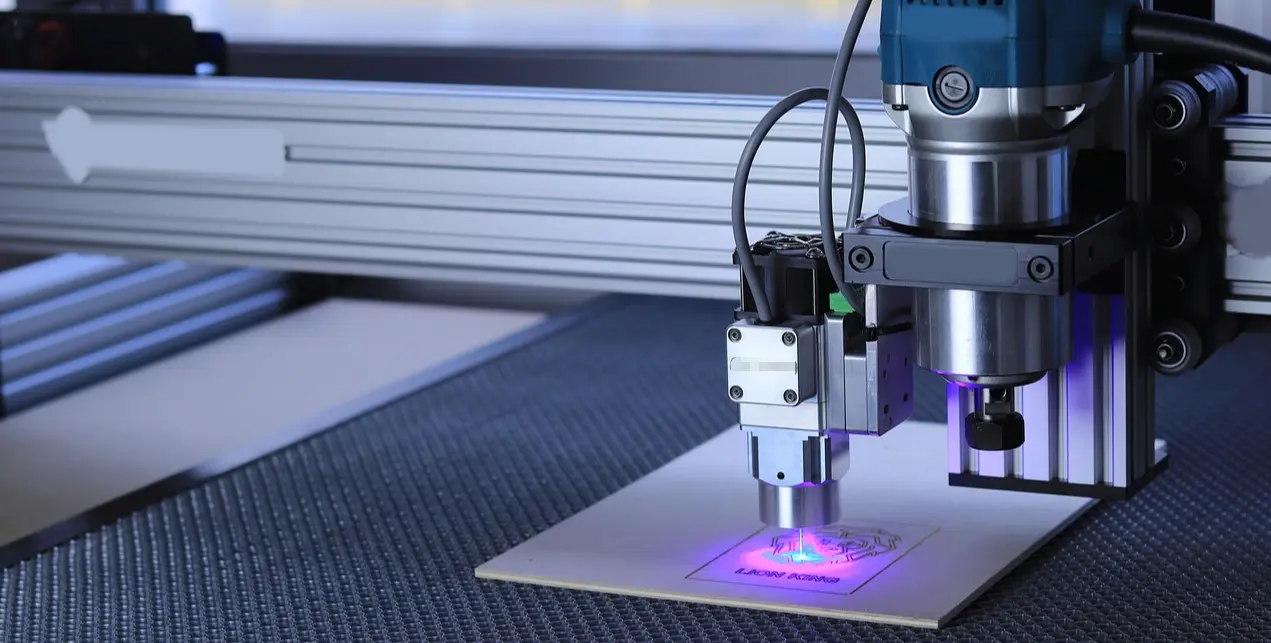
Not all spare parts are created equal. Some components, like the main frame or the chiller unit, are designed to last for years. Others, however, are in the direct path of the laser beam or the assist gas flow, subjecting them to intense thermal and mechanical stress. For sign makers working primarily with acrylic and KT board, the optical train is the heart of the system.
Consider the following classification of critical versus non-critical parts for your inventory planning:
| Component Category | Specific Part | Wear Rate | Impact on Quality | Stock Priority |
|---|---|---|---|---|
| Optical Train | Protective Window | High | Direct beam contamination, power loss | Critical |
| Optical Train | Focus Lens | Medium | Beam divergence, focal shift | Critical |
| Gas Delivery | Cutting Nozzle | High | Assist gas flow turbulence, slag adhesion | Critical |
| Motion System | Guide Rails | Low | Positioning accuracy over time | Moderate |
| Electrical | Control Board | Very Low | Machine functionality | Low (Keep one backup) |
The protective window is the first line of defense. It shields the expensive focus lens from splatter and fumes generated during cutting. In acrylic processing, vaporized material can quickly coat this window, absorbing laser energy and causing thermal lensing. This leads to a loss of power at the workpiece and inconsistent cut edges. Similarly, the nozzle shape and diameter determine how effectively the assist gas clears molten material from the kerf. A worn nozzle creates turbulent flow, leaving behind dross that requires secondary cleaning—a step that kills efficiency in high-volume sign shops.
Maintaining a ready supply of these fiber laser cutter spare parts allows you to perform preventive swaps during scheduled maintenance windows, rather than emergency repairs during job runs. This practice ensures that every sheet of KT board or acrylic leaves the machine with the same pristine edge quality.
Original vs. Compatible: How to Spot the Difference?
Verify coating quality and dimensional tolerance to avoid beam deviation and hidden recalibration costs.
A common misconception in the industry is that "compatible" parts are a safe way to cut costs. While the upfront price is lower, the long-term implications can be severe. Genuine components are manufactured to strict tolerances that ensure optimal beam transmission and gas dynamics. Counterfeit or low-quality alternatives often lack the precise anti-reflective coatings found on original optics.
Without these specialized coatings, the lens or window absorbs more laser energy than it should. This absorption generates heat, which distorts the optical element. The result is a shifting focal point that ruins cut precision. In my experience, I have seen shops spend hours recalibrating their machines, trying to compensate for the poor performance of a cheap lens, only to find that the root cause was the component itself. The labor cost of that troubleshooting far exceeds the savings from buying the non-genuine part.
Furthermore, dimensional accuracy matters. A nozzle with even a slight deviation in its concentricity will cause the assist gas to blow unevenly. This leads to asymmetric cuts, where one side of the acrylic edge is smooth and the other is rough. For sign makers who pride themselves on ±0.1mm precision, such inconsistencies are unacceptable.
When evaluating suppliers, look for those who provide certification and traceability. At Realtop, we emphasize the importance of using CE-certified components that match the original equipment specifications. Our remote diagnostic support can help identify if a quality drop is due to a failing part or a calibration issue, ensuring you do not waste time guessing. By choosing verified fiber laser cutter spare parts, you protect the integrity of your machine’s optical path.
[NEED_CITE: effects of optical coating quality on laser beam stability]
How to Build a Cost-Effective Inventory Strategy?
Balance holding costs against potential revenue loss from machine idle time by calculating safety stock based on usage intensity.
Building an inventory is not about hoarding every possible screw and bolt. It is about strategic selection based on your specific production volume and material mix. A shop cutting mostly thin vinyl will have different wear patterns than one processing thick acrylic blocks.
Start by analyzing your daily operating hours. If your machine runs two shifts a day, your consumables will deplete twice as fast as a single-shift operation. Create a simple tracking log for each critical part. Note the date of installation and the date of replacement. Over a few months, a pattern will emerge. You might find that protective windows need changing every two weeks, while nozzles last a month. Use this data to set your reorder points.
Next, consider your location. If you are in a remote area with slow logistics, your safety stock needs to be higher. The cost of keeping an extra box of lenses on the shelf is negligible compared to the cost of flying in a single replacement via express courier. For shops in major industrial hubs with next-day delivery options, you can afford to keep leaner inventory.
Finally, factor in the material types. Mixed-material shops that switch between reflective metals and non-metals like wood or acrylic place different stresses on the optics. Reflective materials pose a higher risk of back-reflection damage, making it wise to keep spare lenses on hand just in case.
By aligning your stock levels with your actual usage data, you create a buffer that absorbs supply chain shocks without tying up excessive capital. This balanced approach ensures that when you need fiber laser cutter spare parts, they are already there, ready to keep your business moving.
Conclusion
Strategic stocking transforms spare parts from a cost center into a reliability asset.
Unplanned downtime is the silent killer of profitability in the signage industry. By identifying critical wear components, distinguishing between genuine and compatible quality, and aligning inventory with usage patterns, you secure your production capacity. Keep your essential fiber laser cutter spare parts within reach, and you keep your promises to your customers intact.

