

Blog
How Do Distributors Pitch Fabric Cutting Solutions to Garment Factories?

How Do Distributors Pitch Fabric Cutting Solutions to Garment Factories?
I've spent years walking factory floors with owners who stare at CNC cutters like they're looking at a gamble, not a tool. They want certainty but get spec sheets. The real pitch isn't about the machine—it's about matching their risk profile to the right configuration.
Garment factories don't fail because they buy bad machines. They fail because they buy the wrong solution for their actual order mix, labor structure, and material rotation. The pitch that works isn't "this cuts fabric"—it's "this fits how you actually run orders."
Most distributors lose deals in the first ten minutes because they answer the wrong question. When a factory asks "Can this cut my fabric?", they're not asking about capability—they're asking "Will this reduce the chaos in my cutting room without creating new problems?"
What Do Different Factory Types Actually Need From Cutting Equipment?
Small custom shops, large-scale producers, and export OEMs all say they want "automation," but they mean completely different things. I've watched deals die because the distributor sold throughput to a factory that needed flexibility, or sold multi-material capability to a shop that runs the same two fabrics all year.
Small-batch custom garment shops need reconfiguration speed and material versatility. High-volume factories need uninterrupted throughput and consistent quality. Export OEMs need deadline reliability and auditable waste metrics. Wrong match kills ROI faster than wrong brand.
How Factory Type Determines Equipment Configuration
I track every deal I close and every deal I lose. The pattern is clear: factories that choose equipment based on production model keep the machine, factories that choose based on price or brand reputation often resell within two years.
| Factory Type | Primary Concern | Configuration Priority | Common Mistake |
|---|---|---|---|
| Custom/Sample Shops | Order variety | Fast material changeover, multi-blade capability | Buying high-speed systems they can't fully utilize |
| Stable Large-Scale | Consistent output | Uninterrupted run time, layer capacity | Underspeccing vacuum system for thick stacks |
| Export OEM | Deadline reliability | Redundancy, proven uptime records | Choosing lowest-cost option without service network |
| Mixed-Model Mid-Size | Operational flexibility | Modular upgrades, training simplicity | Buying maximum capability "for future growth" that never comes |
Small shops switching between cotton, polyester, and stretch knits weekly need machines that reconfigure in under 30 minutes without calling a technician. I've seen $80K cutters sit idle because changing from woven to knit requires a service visit. That's not a machine problem—it's a mismatch between equipment design and order pattern.
Large factories running the same denim weight all month don't need material versatility. They need a system that can cut 50-layer stacks without quality drop-off and can run two shifts without unexpected stops. I lost a deal last year because I pitched multi-material capability to a factory that cared more about vacuum consistency across 12-hour runs.
Export OEMs face a different risk. Missing a container deadline costs thousands in air freight and customer penalties. They don't buy the machine with the best specs—they buy the machine with the service network that can get parts in 24 hours. I've closed deals where we weren't the cheapest or the fastest, but we could prove response time with service records from other clients in the region.
The factories that regret their purchase usually made the decision in a conference room looking at brochures, not on the production floor mapping their actual workflow. Equipment looks identical in photos. It's not identical when you're switching between four fabric types in one day versus running one type all month.
How Do You Calculate Real ROI Beyond Initial Machine Cost?
Every factory compares automation to manual cutting by asking "How much does the machine cost versus hiring another cutter?" That question guarantees bad math. The real cost isn't the purchase—it's the operational difference over 36 months.
Real ROI depends on three variables most factories don't measure before buying: percentage reduction in material waste, labor hours saved per typical order, and training cost when staff turns over. Comparing only purchase price to worker salary hides the actual financial impact.
The Three ROI Variables That Actually Matter
I ask every prospect the same questions before I quote equipment: "What's your current fabric waste percentage?" "How many labor hours does your team spend marking and cutting per order?" "How long does it take to train a new cutting room worker to full productivity?"
Most can't answer. They know they waste fabric, but they don't measure it. They know cutting takes time, but they don't track hours per order. They know training new staff is expensive, but they don't calculate the cost.
| Cost Factor | Manual Cutting Reality | Automated Reality | Where Factories Miscalculate |
|---|---|---|---|
| Material Waste | 8-15% depending on pattern complexity and worker skill | 2-5% with optimized nesting software | Assuming current waste is "normal" without measuring |
| Labor Hours Per Order | 3-8 hours for marker making, spreading, cutting, bundling | 0.5-2 hours for file prep and machine operation | Not counting prep time, only cutting time |
| Training/Turnover Risk | 3-6 months to full productivity, restart with each new hire | 1-2 weeks basic operation, software handles complexity | Not valuing consistency across worker skill levels |
| Setup Time Per Style | 45-90 minutes for marker making and table prep | 10-20 minutes for file load and material setup | Not tracking cumulative setup time across order volume |
Material waste is the biggest hidden cost. A factory cutting 10,000 meters of fabric monthly at 12% waste loses 1,200 meters. At $8 per meter, that's $9,600 monthly in material cost that doesn't become product. Drop waste to 4% with optimized nesting and you save $9,600 monthly. The machine pays for itself in material savings before you count labor.
Labor hours matter more in high-mix environments. A custom shop running 50 different styles monthly spends massive time on marker making and table setup. Manual marker making takes 45-90 minutes per style. Automated nesting does it in 5 minutes. That's 37 hours saved monthly on a 50-style mix—almost a full-time worker's time just in setup.
Training cost hits factories that don't think about it until a key worker quits. Training a manual cutter to handle complex patterns takes 3-6 months. They need to understand grain lines, pattern matching, and fabric behavior. An automated system with CAD software does the technical work. New operators learn basic machine operation in 1-2 weeks. Quality stays consistent because the software handles complexity, not the worker's judgment.
The factories that calculate ROI correctly measure current state first, then project automated state. The ones that regret purchase compared brochure specs without measuring their actual operational costs.
Why "Can It Cut My Fabric?" Is The Wrong Question To Ask
I hear "Can this machine cut denim?" or "Will it handle knit?" in every initial call. It's a trap question. The answer is always "yes, with the right configuration"—which tells you nothing about whether it will work in your factory.
Material thickness, elasticity, layer count, and edge quality requirements determine blade type, vacuum strength, conveyor speed, and software settings—not simple yes/no machine capability. Wrong match doesn't mean the machine can't cut, it means you bought capacity you don't need or lack capacity for your actual mix.
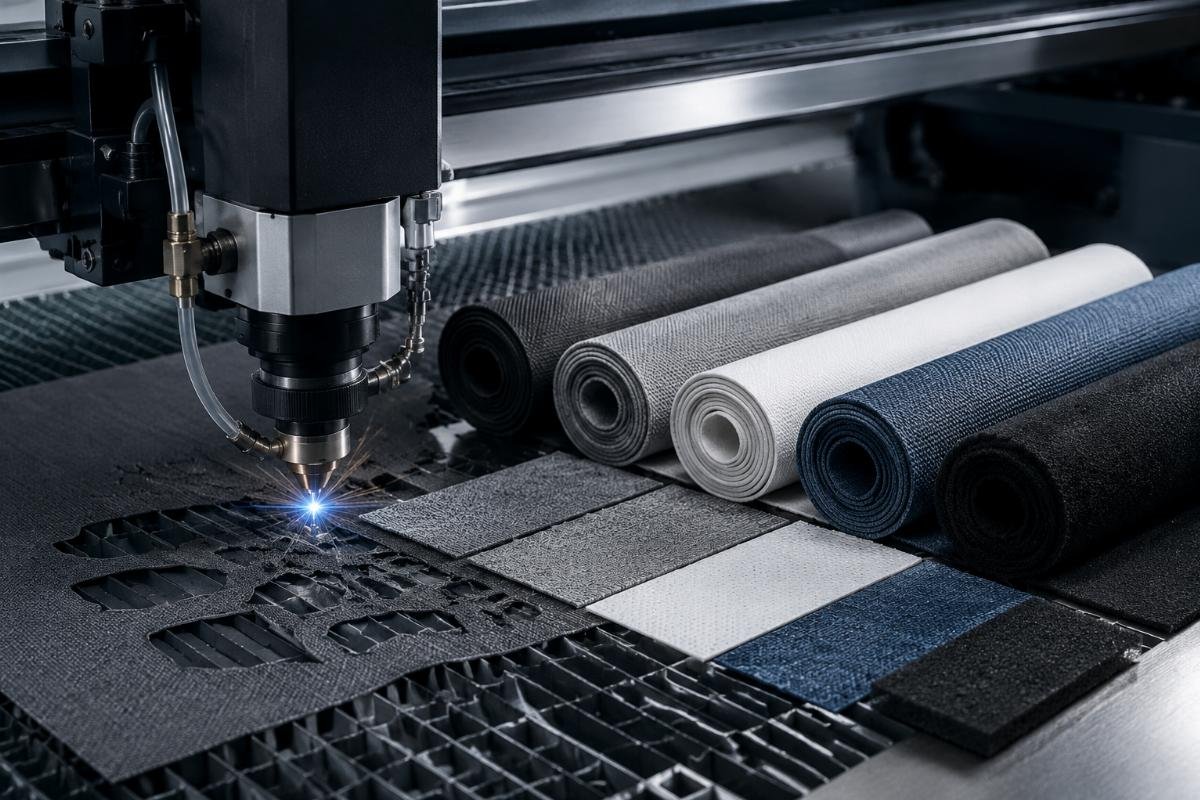
How Material Properties Determine System Configuration
I've seen factories buy general-purpose cutters for specialized materials and wonder why results are inconsistent. The machine works—it's just not configured for their specific material challenges.
Material behavior determines system requirements:
Denim and heavy wovens need high downforce blades and strong vacuum to hold thick stacks flat. Layer count matters more than cutting speed. A system that can cut 30 layers of denim cleanly is more valuable than one that cuts 50 layers of cotton but struggles with dense fabric. I've closed deals where we spec'd lower top speed but higher vacuum and blade pressure specifically for heavy materials.
Knits and stretchy fabrics need vacuum consistency and edge control, not cutting power. Knit edges distort under blade pressure if vacuum isn't uniform across the cutting surface. The material pulls and stretches during cutting, creating inaccurate pieces. Blade sharpness and cutting speed matter more than downforce. I lost a deal to a competitor with better vacuum zoning for a factory running mostly jersey knit. They made the right choice even though our machine was faster on paper.
Layered composites and technical fabrics need precise depth control and specialized blade geometry. Cutting through multiple material types in one pass—like insulated jacket panels with outer shell, batting, and lining—requires blade depth that stops exactly at layer boundaries. Standard blades drag or catch. I work with factories on blade selection before purchase, not after, because getting it wrong means buying replacement tooling.
Delicate or slippery materials like silk or polyester lining need conveyor systems that feed material without distortion and vacuum that holds without marking. High vacuum on lightweight fabric creates compression marks. Insufficient vacuum lets material shift during cutting. The configuration window is narrow.
The question isn't "Can the machine cut this?" The question is "Does the machine's vacuum system, blade options, and material handling match my fabric mix?" A factory that runs 80% cotton and 20% stretch knit needs a system optimized for the 80%, with blade options for the 20%. A factory that switches between woven and knit daily needs fast reconfiguration, even if it costs more upfront.
What "Multi-Material Capability" Actually Means
Sales literature says "cuts all materials." Real operation is more specific. Multi-material capability means the system can handle different materials—but not all configurations can handle all materials equally well.
I ask prospects: "Do you run one material continuously with occasional switches, or do you rotate materials daily?" The answer determines whether they need true multi-material flexibility or single-material optimization with occasional reconfiguration.
| Material Challenge | System Requirement | Cost Implication | When It Matters |
|---|---|---|---|
| Thick stack cutting | High-power vacuum, rigid cutting surface | 15-25% cost premium | High-volume factories stacking 30+ layers |
| Material variety | Quick-change blade system, adjustable vacuum zones | 10-20% premium | Custom shops switching materials daily |
| Stretch/distortion control | Uniform vacuum distribution, tension-free feed | Specialized conveyor system | Knit-focused or activewear production |
| Edge quality on delicate goods | Precision blade depth, gentle material handling | Slower cutting speed, premium blades | High-end garments or visible seams |
Factories regret purchase when they pay for multi-material capability they don't use or buy single-material optimization when their order mix actually varies. I've taken back machines from factories that bought maximum capability "for flexibility" but ran the same two fabrics for three years. They paid for features they didn't need and the machine sat at 40% utilization.
I've also lost deals to cheaper single-purpose machines when the factory's order mix changed six months later and they needed material flexibility. They saved money upfront and spent more replacing equipment.
The pitch that works is honest about material limitations. If a factory mostly cuts denim but occasionally does poly lining, I tell them: "This system is optimized for your primary material. Lining will cut fine but you'll reconfigure blade depth and vacuum settings. That takes 20 minutes. If you're switching daily, this isn't the right match."
What Operational Changes Does Your Factory Need Before Installation?
The question that predicts purchase regret is one factories don't ask: "What happens to the rest of my workflow when cutting speeds up?" I've seen fast cutters create bottlenecks in spreading and bundling because the factory didn't prepare downstream processes.
The operational barrier isn't whether workers can learn the machine—it's whether pattern-making, spreading, and post-cut workflows can absorb the speed increase. A cutter that processes orders in 2 hours instead of 8 just moves the bottleneck if spreading still takes 6 hours.
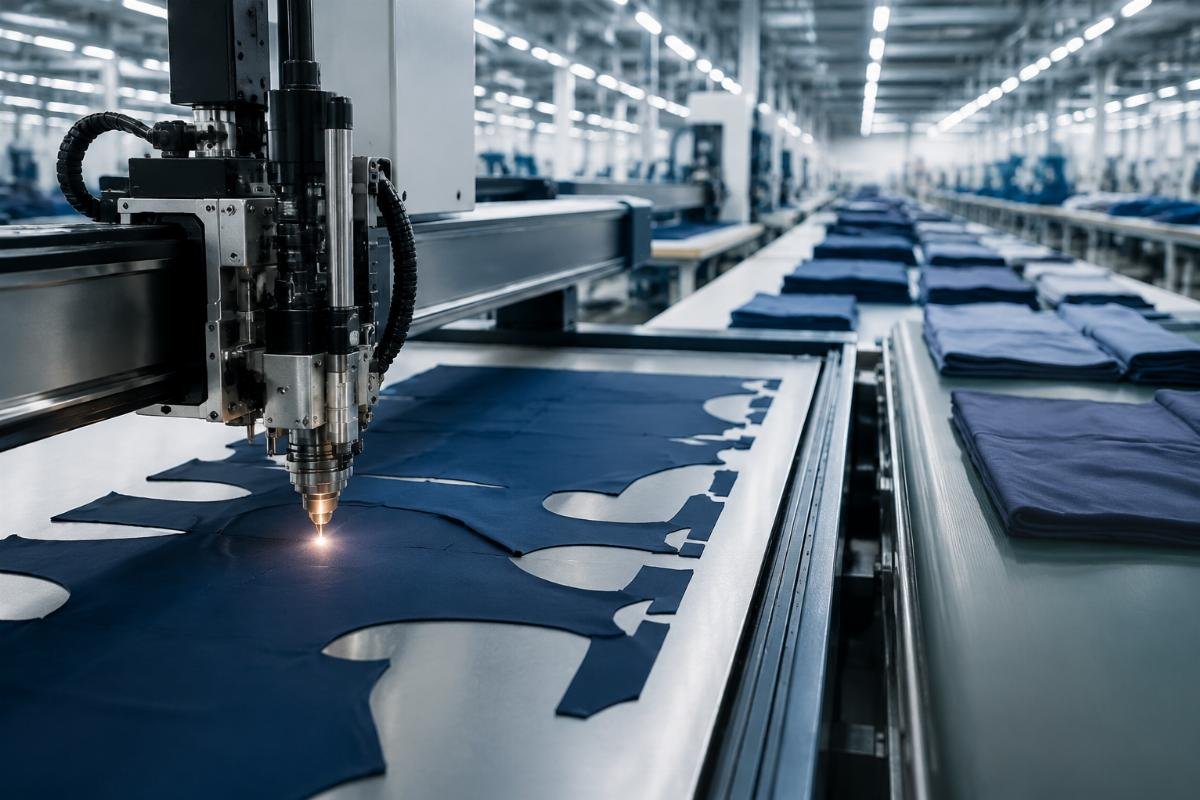
How Workflow Integration Determines Equipment Success
I visit factories after installation and the successful ones all made the same preparation: they mapped their entire workflow before buying, not after. They identified where cutting speed would create new bottlenecks and addressed those before installation.
Pattern preparation is the first bottleneck. Manual marker making takes 45-90 minutes per style. Automated cutting software does nesting in 5 minutes—but only if someone trained in CAD prepares the digital patterns. I've watched $100K cutters sit idle for hours because the factory didn't train a pattern maker in digital file preparation. The machine was ready, the files weren't.
Fabric spreading is the second bottleneck. Manual spreading for 20-30 layers takes 30-60 minutes depending on fabric width and length. Automated cutting processes that stack in 2 hours. If your spreading team needs 4 hours, the cutter waits. High-volume factories add spreading tables or train additional workers before installation. Low-volume factories accept that spreading limits capacity and size equipment accordingly.
Post-cut handling is the third bottleneck. Automated cutting produces neat stacks of pieces faster than manual bundling and ticketing can process them. Pieces pile up at the cutting table waiting for bundlers. I've seen cutting productivity drop because the factory ran out of floor space for cut goods waiting for the next process.
Successful installations follow a pattern:
-
Map current state hours per process: Measure how long pattern prep, spreading, cutting, and bundling actually take for typical orders. Most factories guess. Measurement shows reality.
-
Calculate where automation shifts the bottleneck: If cutting drops from 6 hours to 2 hours but spreading stays at 4 hours, spreading becomes the constraint. Fast cutting doesn't increase output—it just creates waiting time.
-
Address new bottlenecks before installation: Add spreading capacity, train additional workers, reorganize post-cut handling. If you can't or won't address downstream bottlenecks, right-size the cutting equipment to match current workflow capacity.
-
Plan worker transition explicitly: Current cutters become machine operators, but someone still needs manual cutting skill for samples, repairs, and small custom work. Plan the transition, don't assume it happens automatically.
The factories that struggle installed fast equipment into slow workflows and expected the machine to fix everything. Factories that succeed treated installation as workflow redesign, not equipment swap.
When Does Manual Cutting Still Make More Business Sense?
The pitch that builds trust isn't "automate everything." It's "automate where it lowers risk and skip automation where manual is smarter." I've talked factories out of purchases when their situation doesn't support ROI.
Manual cutting is still better for low-volume production, single-material shops with stable skilled staff, prototype/sample work, and repair operations. Automation makes sense when order volume, material variety, or labor turnover creates measurable operational risk.
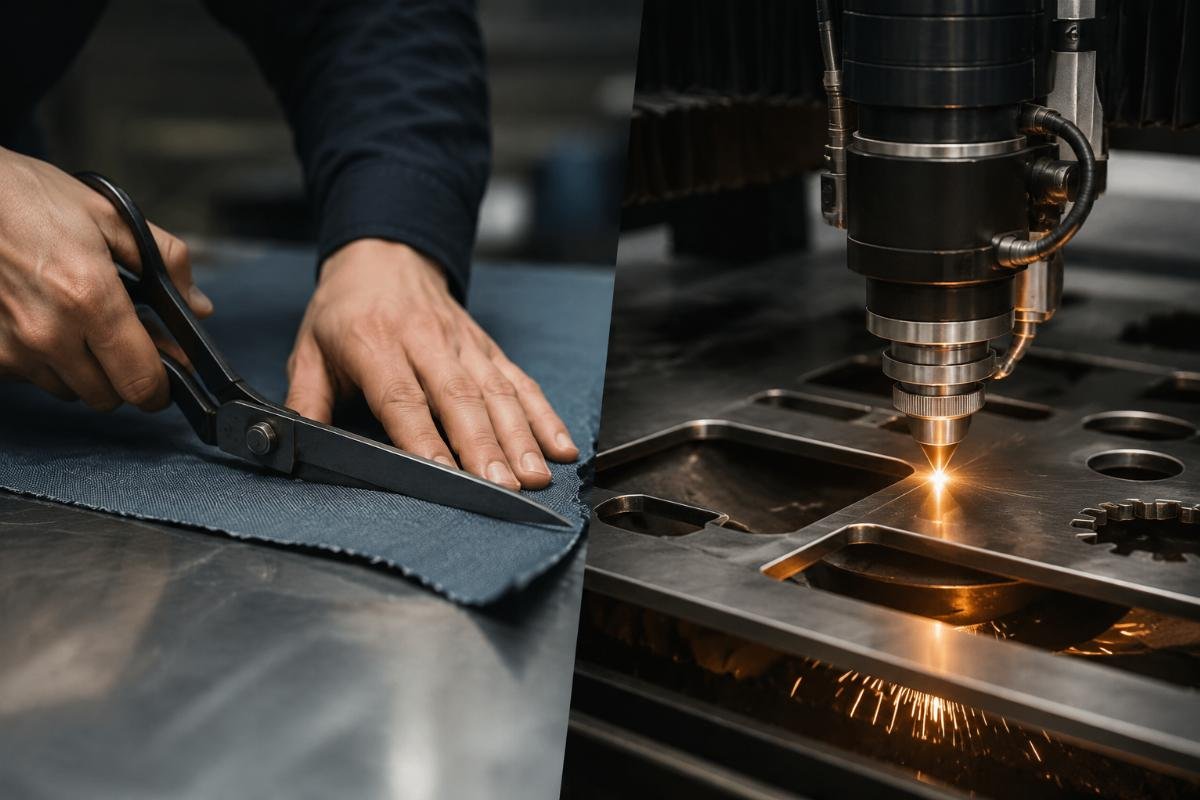
Decision Framework For Manual Versus Automated
I use a simple framework with prospects: if you answer "yes" to at least three of these, automation probably fits. If you answer "no" to most, manual cutting is likely still more efficient.
Order volume and variety: Do you cut more than 20 different styles monthly? Does monthly fabric usage exceed 5,000 meters? High volume and variety create setup time that automation eliminates. Low volume means setup time is small relative to total time.
Material waste and cost: Is your fabric cost more than $5 per meter? Is measured waste above 8%? Expensive materials make waste reduction valuable quickly. Cheap materials mean waste matters less than labor efficiency.
Labor stability and skill: Do cutting room workers turn over more than once every 18 months? Does training new cutters take longer than 2 months? Unstable labor makes automation valuable because machine operation trains faster than manual cutting skill. Stable skilled staff means training cost is already paid.
Deadline pressure and penalties: Do you face container deadlines or customer penalties for late delivery? Does missing deadlines cost more than $5,000 per incident? Automation reduces deadline risk through consistency and speed. If delivery flexibility exists, manual cutting's variable pace is less risky.
Growth trajectory and capacity constraint: Is cutting currently your production bottleneck? Are you turning down orders due to cutting capacity? Bottlenecks justify automation. If sewing or finishing constrains output, faster cutting just creates waiting inventory.
Factories that should stay manual often share characteristics: low order volume, single material, skilled stable staff, low fabric cost, flexible delivery timelines. They're profitable with manual cutting and automation creates costs without measurable return.
I walked a small bridal shop owner through this framework last year. She cut 8-12 gowns monthly, mostly silk and lace, with two experienced cutters who had worked there for 5+ years. Her material waste was under 5%, delivery timelines were flexible, and she wasn't turning down orders. Automation would have cost $60K and saved maybe 10