

Blog
Realtop Oscillating Knife Cutter vs Trumpf: OEM Manufacturer Price

Realtop Oscillating Knife Cutter vs Trumpf: OEM Manufacturer Price
You are likely paying for the logo, not the laser source.
The core technology inside many high-end European cutting systems is often identical to that found in Chinese OEM units. The price difference of two to three times is primarily driven by brand premiums, regional distribution margins, and proprietary software licensing rather than superior mechanical performance or cutting precision.
I remember standing at a booth in Hanover, watching a procurement manager from a German packaging firm stare at a quote for a flexible material cutting solution. He held the paper tightly, knowing the price was steep but feeling he had no other option for the reliability his production line demanded. Later, he discovered that the same oscillating knife configuration we offered as an OEM manufacturer came in at less than one-third of the branded competitor’s cost. The regret on his face was palpable. That moment reinforced a truth I have seen repeatedly on exhibition floors from Cologne to Chicago: the window paper of brand premium remains unbroken for most buyers, keeping them from accessing true factory-direct pricing.
This gap exists because the global supply chain for core components has consolidated. Many top-tier brands source their laser sources, galvanometers, and even control boards from the same few global suppliers as Chinese manufacturers. The differentiation lies in integration, software interface, and after-sales support structures, not necessarily in the raw cutting capability. For factory owners and procurement managers, understanding this distinction is critical to making a cost-effective decision without sacrificing operational reliability.
Why Is There Such a Huge Price Gap?
Brand premiums inflate equipment costs significantly without proportional gains in physical cutting performance.
When comparing a Realtop Oscillating Knife Cutter vs Trumpf Cost, it is essential to dissect the cost structure. A significant portion of the final price tag on European machinery covers marketing budgets, extensive dealer networks, and localized service infrastructure. These are valuable services, but they do not enhance the machine’s ability to cut corrugated cardboard or leather with precision. [NEED_CITE: breakdown of industrial machinery pricing components including R&D amortization and distribution margins]
In contrast, Chinese OEMs operate with a leaner structure. By selling directly or through streamlined distributor channels, manufacturers can offer factory-direct prices. The savings are not achieved by using inferior steel or motors but by eliminating the multi-layer markup inherent in traditional international distribution models. A regional distributor might see a doubled return on investment by sourcing OEM units, allowing them to compete aggressively on local pricing while maintaining healthy margins.
Consider the case of a packaging facility that switched from a branded unit to an OEM model for mold maintenance and sample making. The capital expenditure dropped by a substantial margin, yet the cleaning speed and cutting accuracy remained consistent with their previous high-end setup. This demonstrates that the core mechanical value is often decoupled from the brand name.
Core Technology: Are Chinese Lasers Really Different?
Most assume higher price equals better laser source; reality is many top brands source identical cores from shared global suppliers.
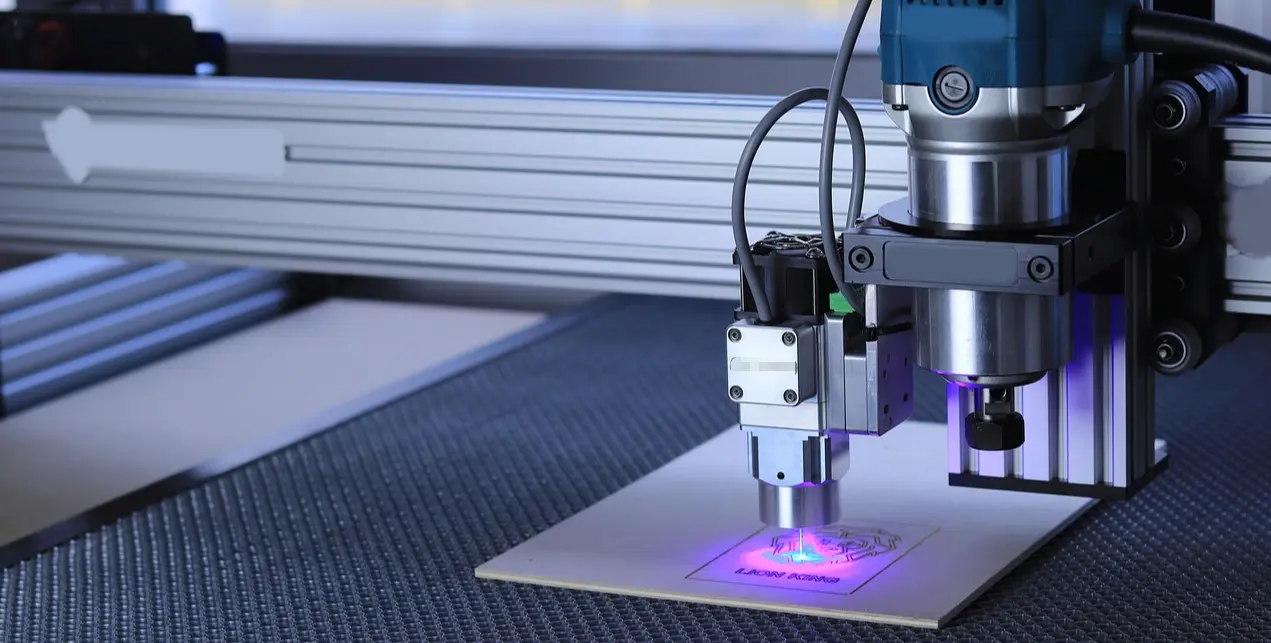
The heart of any digital die-less cutting system is its control system and cutting tool mechanism. For oscillating knife cutters, the precision depends on the servo motors, the rigidity of the gantry, and the sophistication of the nesting software. In the realm of laser-assisted or pure mechanical cutting, the source quality is paramount. However, the market for high-power laser sources and precision servos is global. Brands like IPG or Raycus supply components to manufacturers worldwide, regardless of their headquarters’ location. [NEED_CITE: global supply chain data for industrial laser sources and motion control components]
When evaluating a Realtop Oscillating Knife Cutter vs Trumpf Cost, buyers should look at the component list rather than the badge on the front. A Chinese OEM machine may use the same grade of linear guides and the same type of high-frequency oscillating head as its European counterpart. The difference often lies in the proprietary software interface. European brands invest heavily in user-friendly, closed-loop software ecosystems. Chinese manufacturers, while improving rapidly, may offer more open-source compatible systems that require slightly more initial setup but provide greater flexibility for custom integrations.
An automotive parts supplier once compared the operational stability of both types. They found that the pulse frequency stability and cutting edge quality were comparable, with the Chinese machine offering similar performance at a fraction of the imported brand’s price. The key is verifying the specific components used in the build. Requesting a detailed bill of materials can reveal whether the machine uses recognized international brands for critical parts like sensors and drives.
Hidden Costs: Maintenance and After-Sales Support
Proprietary parts create long-term dependency, whereas modular Chinese designs often allow faster, cheaper replacements.
The initial purchase price is only one part of the total cost of ownership. Maintenance and after-sales support represent a significant ongoing expense. Branded machines often use proprietary parts that can only be sourced through authorized dealers. This creates a monopoly on repairs, leading to higher costs and longer downtime waiting for specific components. In contrast, many Chinese OEMs design their machines with modular compatibility. Standardized bearings, belts, and electronic boards can often be replaced with locally available equivalents, reducing both cost and wait time. [NEED_CITE: comparative analysis of maintenance costs for proprietary vs open-standard industrial machinery]
However, this advantage comes with a caveat. The quality of after-sales support from an OEM can vary. It is crucial to verify the manufacturer’s commitment to support. Does it offer remote diagnostics? Is there a clear warranty policy? Realtop, for instance, provides a three-year warranty and twenty-four-seven online technical support. This level of commitment helps bridge the trust gap that often deters buyers from choosing OEM solutions.
A distributor in Europe noted that switching to OEM units allowed them to stock common spare parts locally, drastically reducing response times for their clients. This local empowerment is a hidden benefit of the OEM model that is often overlooked when focusing solely on the upfront price. The ability to perform minor repairs in-house without waiting for a certified technician from abroad can save weeks of production delay.
How to Verify Quality Before Buying?
Trust but verify through rigorous testing and certification checks rather than relying on brand reputation alone.
Buying from an OEM requires a different due diligence process than buying from a established brand. Without the safety net of a global brand name, buyers must take proactive steps to ensure quality. Start by checking for international certifications. CE certification is a minimum requirement for selling into the European market, indicating compliance with health, safety, and environmental protection standards. ISO standards further demonstrate a commitment to quality management systems. [NEED_CITE: importance of CE and ISO certifications in international machinery trade]
Request free sample cutting services. Reputable manufacturers like Realtop offer this service to help buyers verify quality independently. Send your specific materials—whether it is multi-layer textile, carbon fiber, or corrugated cardboard—and evaluate the cut edges, speed, and nesting efficiency. Look for burnt edges on fabrics, which would indicate poor laser control if applicable, or fraying on textiles, which suggests improper knife frequency.
Another critical step is to ask for video demonstrations of the machine running under load. A static brochure cannot convey the vibration levels, noise, or smoothness of operation. Ask for references from existing clients in your region. Speaking to a peer who has already integrated the machine into their production line provides invaluable real-world insights.
Making the Switch: A Buyer’s Decision Matrix
Choose brand for turnkey simplicity and local legal recourse; choose OEM for cost efficiency and customization flexibility.
Deciding between a branded solution and an OEM alternative depends on your specific business needs and risk tolerance. If your priority is minimal setup effort, guaranteed local service presence, and you have the budget to absorb the premium, a branded machine like Trumpf may be the right choice. It offers a polished experience and established legal protections in your jurisdiction.
However, if you are looking to maximize return on investment, have in-house technical capability, or require custom modifications, an OEM solution is superior. The cost savings can be reinvested into other areas of your business, such as material inventory or marketing. For distributors, offering an OEM line allows for competitive pricing against big-brand dealers, capturing a segment of the market that is price-sensitive but quality-conscious.
| Feature | Branded Machine | Chinese OEM Machine |
|---|---|---|
| Initial Cost | High | Low to Moderate |
| Component Source | Often Global Top-Tier | Often Global Top-Tier |
| Software Interface | Polished, Proprietary | Functional, Often Customizable |
| Spare Parts | Proprietary, Expensive | Modular, Standardized |
| After-Sales Support | Local, Structured | Remote, Direct from Factory |
| Customization | Limited, High Cost | Flexible, Lower Cost |
This matrix highlights that the choice is not about good versus bad, but about fit. For a high-volume packaging studio needing rapid prototyping, the flexibility and lower cost of an OEM machine can be a game-changer. For a large automotive supplier with strict compliance protocols and dedicated maintenance teams, the structured support of a brand might be preferable. Understanding these nuances allows buyers to make informed decisions that align with their operational realities.
Conclusion
Price does not always equal performance in industrial cutting machinery.
The comparison between a Realtop Oscillating Knife Cutter vs Trumpf Cost reveals that significant savings are possible without compromising on core technology. By understanding the source of brand premiums and verifying quality through certifications and sample tests, buyers can unlock value that was previously hidden behind marketing budgets. Whether you choose the security of a brand or the efficiency of an OEM, the key is to align your purchase with your specific operational needs and technical capabilities.

