

Blog
Buy Shoe Material Cutting Machine Manufacturer Price 2026

Buy Shoe Material Cutting Machine Manufacturer Price 2026
The sticker price on a quotation sheet is rarely the true cost of ownership. The best price for a shoe material cutting machine is determined by calculating the cost per pair cut over three years, factoring in material yield, labor efficiency, and machine uptime—not just the initial invoice amount.
I remember loading a single-head machine onto a container bound for Riyadh years ago. The buyer had chosen the lowest quotation available, prioritizing the upfront capital outlay above all else. Within months, they were cutting EVA midsoles on a bed that lacked the vacuum hold-down power for multi-layer stacks, and the nesting software could not handle complex grain-direction constraints on genuine leather. They ended up ordering a dual-head configuration from us shortly after, not because the first machine failed mechanically, but because the throughput could not justify the floor space it occupied. This pattern repeats across footwear manufacturing hubs from Dongguan to Dhaka: procurement teams optimize for the wrong variable. [NEED_CITE: footwear manufacturing efficiency benchmarks from industry associations on labor-to-output ratios in manual vs automated cutting]
Understanding what actually drives pricing helps buyers separate marketing claims from engineering reality.
What Factors Actually Determine the Price of a Shoe Material Cutting Machine?
The cutting area matters far less than most buyers assume; the configuration of the cutting head and the capability of the control system are the primary cost drivers.
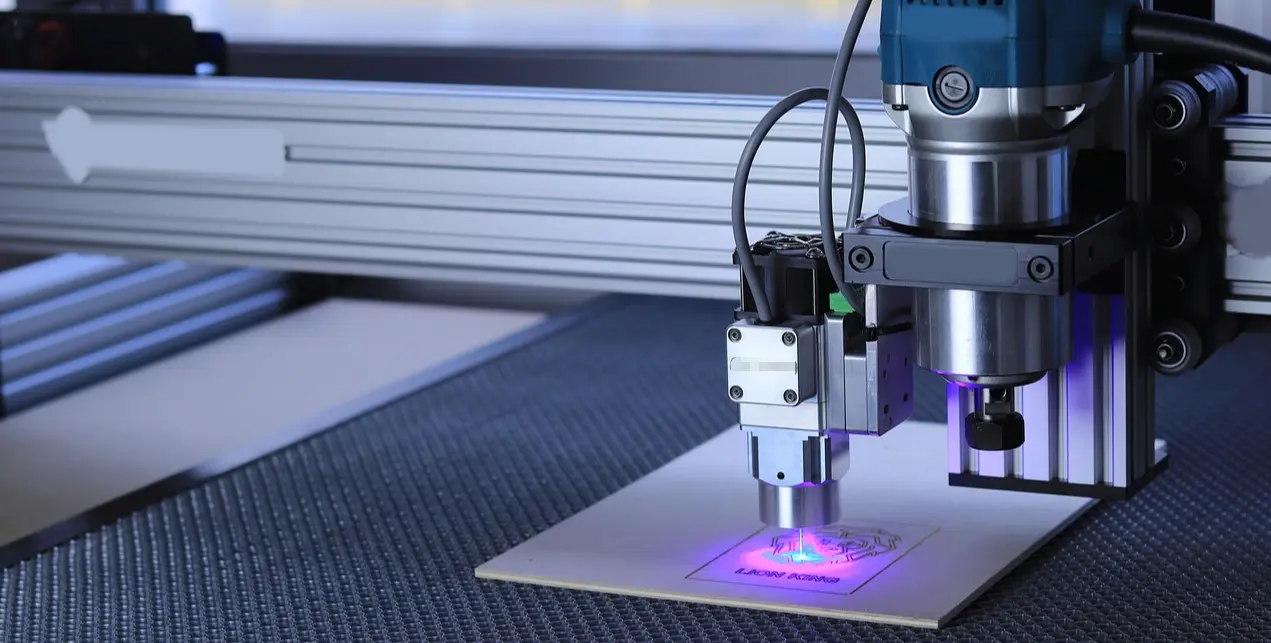
When a factory manager requests a quotation for a shoe material cutting machine, the first question is almost always about bed size. A larger cutting surface does increase the base frame cost and the linear guideway length, but the incremental expense is modest compared to what happens when you specify the tooling package. A machine equipped with a single oscillating knife module will always quote lower than one carrying an oscillating knife, a drag knife, a creasing wheel, and a pneumatic tool changer—yet the multi-tool configuration may eliminate the need for two additional standalone machines on the shop floor.
| Specification Tier | Cutting Head Configuration | Nesting Software Capability | Vacuum Zone Control | Typical Application Fit |
|---|---|---|---|---|
| Entry-Level | Single oscillating knife | Manual import, basic auto-nest | Single-zone manual valve | Low-volume sample rooms, single-material workshops |
| Mid-Range | Oscillating knife plus drag knife | Semi-auto nest with grain constraints | Dual-zone with pressure sensing | Small-to-medium shoe upper production, mixed material runs |
| Production-Grade | Multi-tool turret with quick-change | Smart nesting with part pairing and yield tracking | Multi-zone adaptive vacuum with bed segmentation | High-volume footwear factories, multi-material EVA and leather lines |
The control system is another hidden cost center. Machines running proprietary closed-loop servo architectures cost more to develop and calibrate, but they maintain registration accuracy across long production runs where thermal drift would otherwise shift cut paths. [NEED_CITE: global CNC cutting machine market trends on control system architecture differences in flexible material processing]
A buyer evaluating a shoe material cutting machine should request a demonstration cut using their own DXF files. Watching how the machine handles inside corners on thick foam, or how the software nests a size run with grain-direction locks on leather, reveals more about true capability than any spec sheet.
How to Calculate the Real ROI, Not Just the Sticker Price?
A machine that costs more upfront but delivers higher material yield and faster cycle time typically achieves payback well within the first production year.
The total cost of ownership formula for automated cutting is straightforward in concept but frequently ignored in procurement practice. It combines the machine price, the ongoing material cost adjusted by waste percentage, and the labor cost divided by output volume. When you model this over a multi-year horizon, the machine invoice becomes a fraction of the total.
Consider a mid-size factory producing athletic shoe uppers. Manual clicking teams generate substantial waste because human nesters cannot optimize across dozens of size variants simultaneously. Switching to a shoe material cutting machine with smart nesting software routinely recovers material that would otherwise become scrap. On genuine leather, where hides carry natural defects and variable grain, the software projects defect maps and nests around them—a capability that directly compresses the cost per pair. [NEED_CITE: material yield improvement data in automated versus manual leather cutting from footwear production studies]
Labor tells a similar story. A single operator loading material and unloading cut parts can keep a dual-head machine running continuously, whereas manual clicking requires multiple skilled workers whose output varies with fatigue and shift length. When you divide total labor cost by pairs produced, the automated path wins decisively at scale.
We supplied a factory in Southeast Asia that was spending a significant portion of its material budget on leather waste alone. After installing a production-grade unit with adaptive nesting, their scrap rate dropped to a level that paid for the machine upgrade within the first year of operation. The factory manager later told us he wished he had run the numbers properly before buying the cheaper alternative two years earlier.
Single-Head vs. Dual-Head: Which Configuration Offers the Best Value for Your Production Volume?
Dual-head machines double throughput without doubling floor space, making them the economically rational choice for any factory running more than a single shift on mixed materials.
The decision between single-head and dual-head configurations is fundamentally a question of production volume and material diversity. A single-head shoe material cutting machine serves sample rooms, prototyping studios, and small workshops where flexibility matters more than raw output. It can handle leather, mesh, foam, and textile in sequence, provided the daily volume stays within a manageable range.
Once a factory commits to full production shifts on shoe uppers, midsoles, and linings, the math shifts. A dual-head configuration allows one head to cut leather uppers while the other processes EVA foam inks or mesh linings, with independent tool paths running simultaneously. The bed length remains the same; the gantry simply carries two cutting modules. This arrangement effectively doubles pairs-per-hour without requiring additional operators or additional floor footprint.
| Production Scenario | Recommended Configuration | Rationale |
|---|---|---|
| Sample room, under fifty pairs daily | Single-head with quick-change tooling | Maximum flexibility, lower capital commitment |
| Medium factory, mixed materials, single shift | Single-head or entry dual-head | Depends on material changeover frequency |
| High-volume factory, multi-shift, diverse materials | Dual-head with independent tool paths | Throughput per operator reaches optimal range |
We built a dual-head unit for a South American footwear manufacturer that was running three separate machines—one for leather, one for foam, one for mesh. Consolidating onto a single dual-head platform with automatic tool recognition reduced their equipment count, freed up floor space, and simplified maintenance scheduling. The per-pair cost dropped noticeably because the machine rarely sat idle waiting for a tool change.
What Hidden Costs Should You Watch for in a Low Price Quote?
The cheapest quotation often excludes the components that determine whether the machine actually performs in production conditions.
When comparing quotations for a shoe material cutting machine, certain line items reveal whether the manufacturer has engineered for real-world durability or simply minimized bill-of-material cost to win the order.
Vacuum pump capacity is the most common area where budget machines fall short. Cutting multi-layer foam or slippery mesh requires strong, segmented hold-down across the entire bed. Under-specification here means material shifts during cutting, producing out-of-tolerance parts that get scrapped. A production-grade vacuum system with zone control costs more but prevents the waste it is designed to avoid. [NEED_CITE: technical specifications for vacuum hold-down requirements in flexible material CNC cutting applications]
Software licensing is another trap. Some manufacturers quote an attractive machine price but lock the nesting software behind annual subscription fees or charge per-seat for additional operator stations. Over three years, these recurring costs can exceed the initial savings. Others provide software that lacks grain-direction constraints or defect mapping—features that are essential for leather cutting but absent from generic textile nesting packages.
Technical support structure matters equally. A machine sitting idle because of a servo fault costs the factory far more per hour than the amortized price difference between a well-supported unit and an unsupported one. Manufacturers offering remote diagnostics, multilingual support teams, and readily available spare parts catalogs reduce unplanned downtime meaningfully.
We once received a machine back for refurbishment that had been purchased from a competitor at a deep discount. The vacuum pump had failed within months because it was rated for intermittent duty, not continuous production. The control board used consumer-grade components that could not handle the thermal environment of an unclimatized factory floor. The buyer had saved on the invoice but lost far more in downtime and scrapped material.
Conclusion
The lowest invoice price and the lowest cost per pair are rarely the same number. Evaluating a shoe material cutting machine requires modeling material yield, labor productivity, and uptime over the full production lifecycle—not just comparing line items on a quotation. Factories that invest in proper head configuration, capable nesting software, and robust support structures consistently achieve lower per-unit costs than those chasing the cheapest sticker price.

