

Blog
Small Format Laser Engraver for Qatar Aerospace Supplier

Small Format Laser Engraver for Qatar Aerospace Supplier
Higher wattage does not mean better marking for aerospace composites.
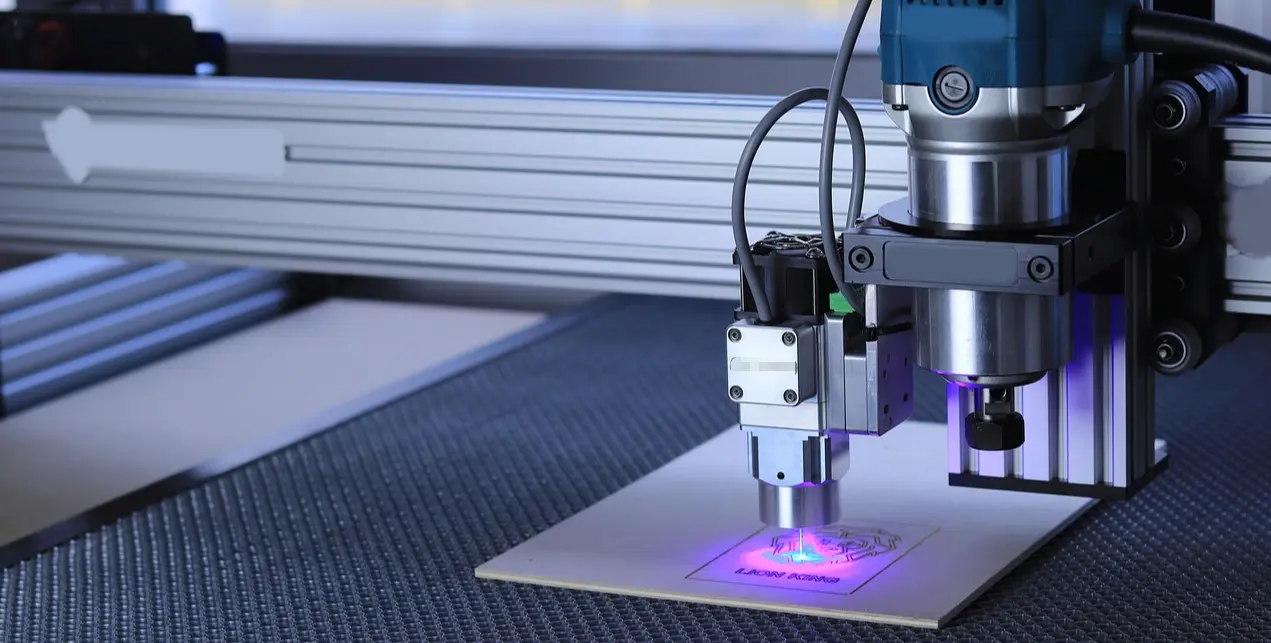
For a small format laser engraver Qatar aerospace operations rely on, the priority is not raw power but cleanroom compatibility and precise pulse control. The right machine ensures compliance with aviation material standards without disrupting sterile production environments through inadequate dust extraction or thermal damage to sensitive substrates.
I remember standing in a climate-controlled workshop in Doha, watching a production line grind to a halt. The air was still, filtered, and silent, except for the frantic beeping of a newly installed laser marker. A local supplier had purchased a standard industrial unit based on its speed and price, assuming it would handle composite gasket marking just fine. Within thirty minutes, particulate sensors triggered an alarm. The machine’s open optical path had allowed micro-dust from carbon fiber reinforced polymers to escape into the ISO-classified environment. The entire batch was quarantined, and the line shut down for deep cleaning. That incident cost far more than the savings from choosing the cheaper equipment. It taught me that in this sector, you are not just buying a laser; you are buying integration with a controlled ecosystem. [NEED_CITE: ISO 14644 cleanroom classification requirements for particulate control]
Selecting a small format laser engraver Qatar aerospace facilities require involves navigating a minefield of technical specifications that look similar on paper but behave very differently on the shop floor. The following sections break down why standard industrial lasers fail in these settings, how to match specs to composite materials, and what environmental factors in the Gulf region demand specific engineering solutions.
Why Standard Industrial Lasers Fail in Aerospace Cleanrooms?
Most buyers assume that an enclosed industrial laser is sufficient for any factory setting. This is a dangerous misconception when dealing with aerospace supply chains. The core issue is not the laser beam itself, but what happens to the material removed during the marking process.
When a laser marks carbon fiber or specialized polymers, it ablates microscopic particles. In a general manufacturing plant, these particles settle on the floor or are caught by a basic exhaust fan. In an aerospace cleanroom, they become contaminants that can compromise the structural integrity of adjacent components or violate strict air quality standards. [NEED_CITE: Impact of particulate contamination on aerospace composite integrity]
| Feature | Standard Industrial Laser | Cleanroom-Compatible Laser |
|---|---|---|
| Extraction System | Basic fan exhaust | Integrated HEPA/ULPA filtration |
| Enclosure Seal | Gapped for ventilation | Negative pressure sealed design |
| Particulate Control | Uncontrolled release | Captured at source |
| Certification Readiness | Self-reported | Verifiable ISO compliance data |
A Middle East aviation parts manufacturer once faced repeated audit failures because their marking station could not maintain the required air exchange rates. The laser’s exhaust was pulling conditioned air out of the room faster than the HVAC system could replace it, causing pressure differentials that allowed unfiltered air to leak in from corridors. The solution was not a bigger AC unit, but a small format laser engraver Qatar aerospace engineers could trust, featuring a closed-loop extraction system that recirculates filtered air back into the room. This maintains negative pressure within the enclosure while keeping the room’s overall balance stable.
How to Match Laser Specs with Composite Materials?
The second major pitfall is treating all non-metals as the same. Aerospace composites, such as CFRP (Carbon Fiber Reinforced Polymer) and PTFE-based gaskets, are highly sensitive to heat. A high-power continuous wave laser might mark quickly, but it introduces a large Heat Affected Zone (HAZ). This can cause micro-cracking in the resin matrix or delamination of the carbon fibers, creating weak points that are invisible to the naked eye but catastrophic under stress. [NEED_CITE: AMS standards for thermal damage limits in composite marking]
The key is pulse frequency control, not wattage. A fiber laser with precise pulse modulation can "cold mark" the surface, changing the color or texture without penetrating deep enough to weaken the structure. This requires a laser source with high beam quality, often measured by the M² factor, which ensures the energy is focused tightly even on curved surfaces common in aerospace fittings.
| Material Type | Risk with High Power | Required Laser Approach |
|---|---|---|
| CFRP | Micro-cracking, delamination | Low HAZ, high frequency pulse |
| PTFE/Gaskets | Melting, toxic fume release | Controlled ablation, fast extraction |
| Anodized Aluminum | Coating burn-through | Precise depth control |
I recall a case where a buyer insisted on a higher wattage unit to increase throughput. They were marking serial numbers on thin composite panels. The resulting marks were dark and clear, but subsequent ultrasonic testing revealed subsurface fractures around each character. The production team had to scrap the entire lot. Switching to a lower power, higher precision source solved the issue immediately. The marks were slightly lighter but perfectly legible, and the material integrity remained intact. This is why a small format laser engraver Qatar aerospace suppliers choose must prioritize pulse stability over raw output.
What Environmental Factors in Qatar Affect Machine Longevity?
Operating in Doha presents unique challenges that do not exist in temperate climates. The combination of high ambient humidity and fine sand dust can wreak havoc on precision optical components. Standard lasers often have open or semi-open optical paths that allow airborne contaminants to settle on lenses and mirrors. Over time, this leads to scattering of the laser beam, reduced marking quality, and eventual component failure.
In coastal Gulf environments, humidity can also cause condensation inside the machine if the internal temperature differs significantly from the outside air. This moisture can corrode electronic boards and degrade optical coatings. Therefore, the mechanical design of the small format laser engraver Qatar aerospace facilities use must feature fully sealed optical paths. This is akin to the robust sealing found in precision CNC cutting systems designed for harsh environments, protecting the core technology from the external atmosphere.
Furthermore, maintenance cycles become critical. An open-system laser might require lens cleaning every week in a dusty environment, halting production. A sealed system can run for months without intervention. For a production manager, this reliability is worth more than a marginal difference in marking speed. The ability to operate consistently without frequent downtime for cleaning is a decisive factor in total cost of ownership.
Which Certification Documents Validate Supplier Compliance?
Procurement in the aerospace sector is driven by documentation. You cannot simply buy a machine and start using it; you must prove it meets international standards. When evaluating a small format laser engraver Qatar aerospace vendors offer, the first thing to request is not the brochure, but the certification package.
CE marking is the baseline, indicating compliance with European health, safety, and environmental protection standards. However, for aerospace, you need more. Look for evidence of compliance with ISO 14644 for cleanroom compatibility, specifically regarding particulate emission rates. Additionally, the laser source should have relevant safety certifications, such as IEC 60825, which classifies the laser hazard level. [NEED_CITE: IEC 60825 laser safety classification standards]
Beyond hardware, software compatibility is crucial. The marking software must integrate seamlessly with aerospace CAD formats like STEP and IGES. This allows for automated batch marking based on digital twins, reducing human error. A supplier that provides verifiable test reports for these integrations demonstrates a deeper understanding of the industry workflow than one that only offers generic drivers.
| Document Type | Purpose | Verification Level |
|---|---|---|
| CE Certificate | Basic safety compliance | Verifiable via notified body |
| ISO 14644 Test Report | Cleanroom particulate limits | Full batch-level data preferred |
| IEC 60825 Class | Laser safety hazard level | Standardized rating |
| Software Compatibility List | CAD format integration | Self-reported but testable |
A European distributor once shared how a lack of proper documentation delayed a project by months. The machine worked perfectly, but without the specific cleanroom test data, the end client’s quality assurance team refused to sign off. Ensuring your supplier can provide these documents upfront saves significant time and avoids costly delays.
Conclusion
Choosing the right laser is about risk management, not just marking capability.
For a small format laser engraver Qatar aerospace supply chains depend on, the focus must shift from speed to stability, cleanliness, and material preservation. By prioritizing cleanroom-compatible extraction, precise pulse control for composites, and sealed optics for the Gulf climate, buyers can avoid the hidden costs of downtime and non-compliance. The right equipment integrates silently into the production line, ensuring that every marked part meets the rigorous standards of the aviation industry without compromising the environment it is made in.

