

Blog
UV Laser Marker OEM Customization Manufacturer for Sale

UV Laser Marker OEM Customization Manufacturer for Sale
Higher power does not equal better marking on sensitive materials.
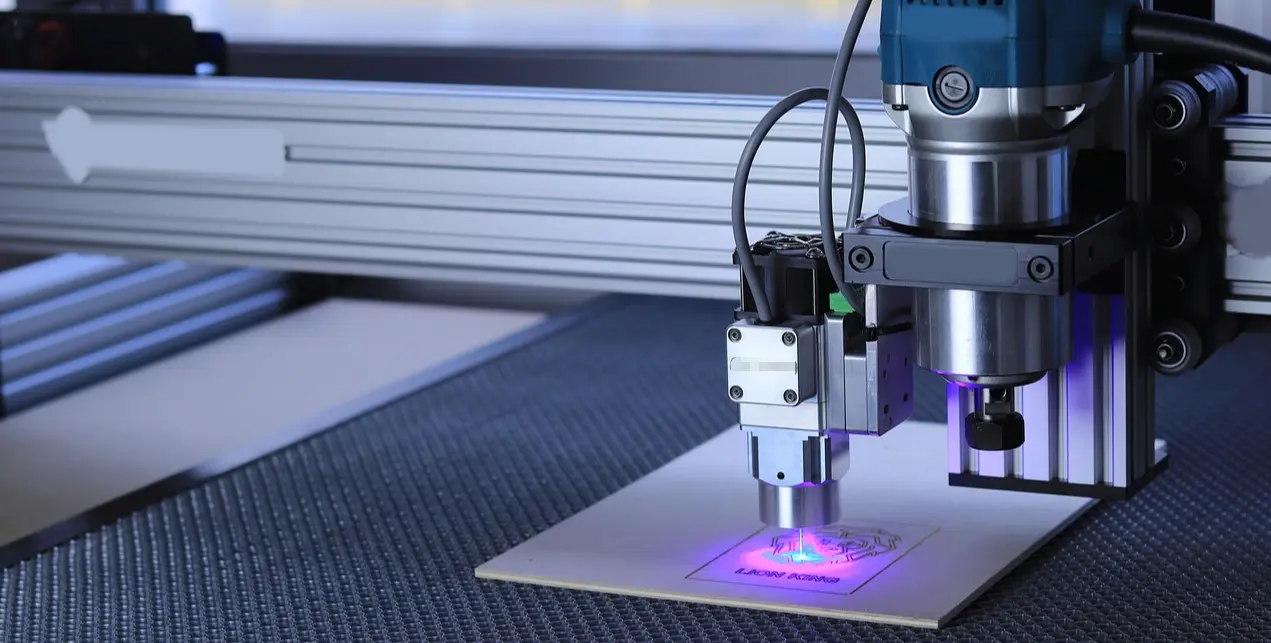
Successful UV Laser Marker OEM Customization depends on matching the 355nm wavelength and beam quality to the specific absorption rate of the substrate, rather than maximizing wattage. For heat-sensitive materials like PET film, glass, or thin PCBs, excessive average power causes thermal damage such as burn-through or micro-cracking. The critical path for distributors and brand owners is to validate optical stability and pulse control through pre-production sampling before committing to bulk orders. [NEED_CITE: thermal impact assessment methods for cold ablation lasers]
I still remember the smell of burnt plastic in a packaging factory in Shandong. A client had rushed to buy a standard UV marking machine to serialize PET film boxes. He assumed that since it was labeled "UV," it would work like the fiber lasers he used for metal. It did not. The machine’s high average power, suitable for deep engraving on metals, acted like a hot knife on the thin polymer. The film curled, melted, and the serial numbers became unreadable blobs. The entire batch was scrapped. When he finally brought samples to our workshop, we did not touch the power knob immediately. We first checked the focal length and reduced the pulse frequency. By lowering the average power significantly and increasing the scanning speed, we achieved a crisp, cold mark without any thermal distortion. That failure was not due to a bad machine, but a mismatched configuration. This is the core reality of UV Laser Marker OEM Customization: generic settings fail on specific materials.
Why Standard UV Lasers Fail on Sensitive Materials
The fundamental issue with off-the-shelf UV lasers is the lack of thermal management tailored to the material’s absorption spectrum. UV lasers at 355nm are designed for "cold ablation," breaking molecular bonds rather than melting material. However, if the pulse duration is too long or the repetition rate is too high, heat accumulates faster than it can dissipate. [NEED_CITE: IEC laser safety standards regarding continuous wave vs pulsed operation effects]
Consider the case of glass bottle serializing. A European distributor once reported that their private-label UV markers were causing micro-cracks on luxury perfume bottles. The marks looked fine initially, but the structural integrity was compromised. The root cause was the beam quality. The generic OEM unit had a poor M² factor, meaning the laser spot was not perfectly round or stable at the focal point. This irregular energy distribution created hot spots on the glass surface. To fix this, we had to optimize the galvanometer scanning speed to over 2000mm/s, ensuring the laser moved fast enough to prevent heat buildup in any single area.
Another common failure occurs in PCB marking. Electronics manufacturers require high-contrast codes on solder masks without damaging the underlying copper traces or components. A standard UV laser might have sufficient power, but if the spot size is larger than 0.02mm, it cannot resolve fine-pitch codes cleanly. More importantly, if the wavelength stability drifts, the absorption rate changes, leading to inconsistent mark depth. This is why UV Laser Marker OEM Customization must focus on optical path stability and precise spot size control, not just the power supply rating.
Key Parameters for OEM Customization
When sourcing a private-label UV laser, buyers often fixate on wattage. This is a mistake. For sensitive applications, lower power with higher precision is often superior. The key parameters to scrutinize during UV Laser Marker OEM Customization are wavelength stability, beam quality, and pulse control.
| Parameter | Generic OEM Specification | Premium Customized Specification | Impact on Sensitive Materials |
|---|---|---|---|
| Wavelength Stability | ±1nm drift over time | <±0.5nm strict control | Ensures consistent absorption on PET/Glass [NEED_CITE: material absorption spectrum analysis for 355nm] |
| Beam Quality (M²) | >1.5 | <1.3 | Reduces hot spots and prevents micro-cracking |
| Pulse Frequency Range | Fixed or narrow range | Wide adjustable range | Allows tuning for cold ablation vs. deeper engraving |
| Spot Size | ~0.03mm – 0.05mm | <0.02mm verified | Critical for fine-pitch PCB and small component marking |
| Cooling System | Basic air/water mix | High-efficiency temperature control | Maintains wavelength stability during long runs |
A Middle East packaging firm learned this the hard way. They ordered a batch of UV markers based solely on "5W power" specs. When they tried to mark transparent PET films, the marks were faint and uneven. The issue was not power, but the pulse frequency. The generic machine could not adjust the pulse width finely enough to interact with the transparent polymer without causing thermal stress. By switching to a customized unit with a wider pulse frequency range and better cooling, they achieved high-contrast marks at a lower average power. This demonstrates that UV Laser Marker OEM Customization is about tuning the laser’s interaction with the material, not just boosting output.
It is also vital to verify the origin of optical components. Lenses and galvanometers from reputable suppliers ensure long-term consistency. Cheap optics may degrade under UV exposure, leading to power loss and beam distortion over time. Ask your OEM partner for documentation on the optical path design and the source of key components. [NEED_CITE: industry standards for optical component durability in UV lasers]
The Critical Role of Pre-Production Sampling
Pre-production sampling is non-negotiable. No amount of datasheet review can replace physical testing on your specific material. Many buyers skip this step to save time, only to face costly batch failures later. The sampling process should mimic actual production conditions, including speed, environment, and material batch variations.
Start by sending representative samples of your target material to the manufacturer. Do not send ideal, lab-prepared samples. Send the actual rolls of PET film, the specific type of glass bottles, or the PCBs from your production line. Request a test report that includes not just images of the mark, but data on the heat-affected zone (HAZ). Measure the HAZ under a microscope. If there is any sign of melting, discoloration beyond the mark area, or micro-cracking, the parameters need adjustment.
For example, when working with a client marking silicone gaskets, the initial samples showed slight charring. By adjusting the focal length and reducing the power by approximately 30% compared to standard metal marking settings, we eliminated the charring. The key was to find the threshold where ablation occurs without thermal transfer. This iterative process is the heart of UV Laser Marker OEM Customization.
Also, test for consistency over time. Run the laser for several hours continuously. Check if the mark quality degrades. This tests the stability of the cooling system and the laser source. If the power drops or the beam shifts after an hour of operation, the machine is not ready for industrial use. [NEED_CITE: reliability testing protocols for industrial laser markers]
Selecting a Reliable OEM Partner
Choosing the right manufacturing partner is as important as the machine itself. A reliable OEM will not just sell you a box; they will engage in technical dialogue. They should ask about your material, your speed requirements, and your environmental conditions. If a supplier pushes a standard model without asking these questions, proceed with caution.
Look for partners who offer free sample cutting and remote diagnostics. At Realtop, although our core expertise lies in CNC oscillating knife cutting machines for flexible materials, the principle of material-specific validation is universal. We provide free sample cutting services to prove capability before any commitment. Similarly, a trustworthy UV laser OEM should be willing to run your samples and share the video results and parameter logs. This transparency builds trust and verifies their technical competence.
Check for software API openness. If you plan to integrate the laser marker into an automated production line, you need access to the software interface. Closed systems can become bottlenecks. A good OEM will provide documentation and support for integration. [NEED_CITE: best practices for industrial equipment software integration]
Furthermore, verify their after-sales support structure. Do they have engineers who understand the physics of UV marking, or just salespeople? Can they provide remote assistance to tweak parameters if issues arise post-installation? The ability to diagnose and solve problems remotely is a sign of a mature technical team.
Finally, consider the warranty and certification. CE certification is a baseline for safety, but look for evidence of rigorous quality control in their manufacturing process. A partner who invests in quality control is less likely to deliver inconsistent units. This attention to detail is what separates a true UV Laser Marker OEM Customization expert from a simple assembler.
Conclusion
Precision beats power in UV laser marking.
Success in UV Laser Marker OEM Customization comes from understanding the material, validating parameters through rigorous sampling, and partnering with a manufacturer who prioritizes technical accuracy over generic specs. Avoid the trap of assuming higher wattage is better. Focus on beam quality, wavelength stability, and thermal management. By treating each material as a unique challenge and demanding proof through testing, you ensure reliability and brand integrity.

