

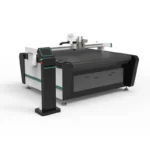
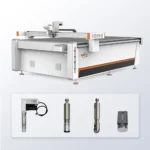
CNC Foam Cutting Machine EVA/PP for Advertising Printing – Manufacturer
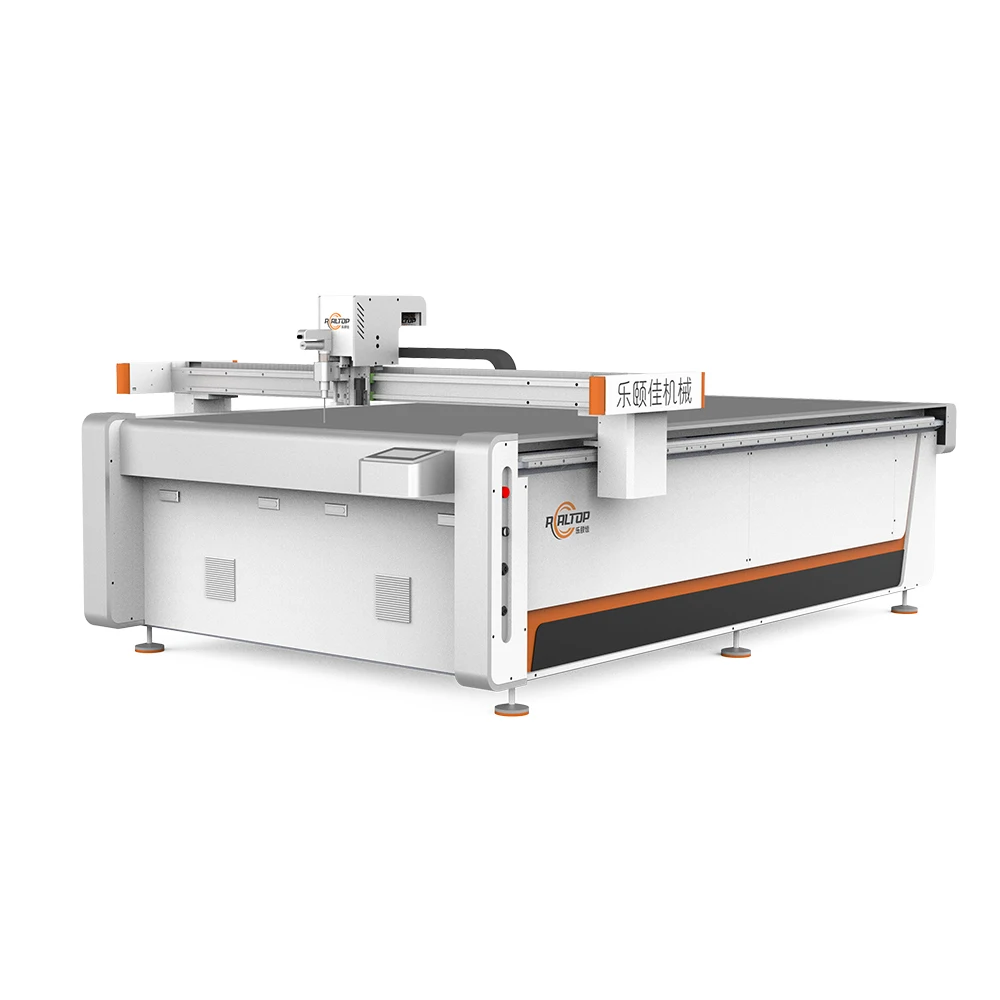
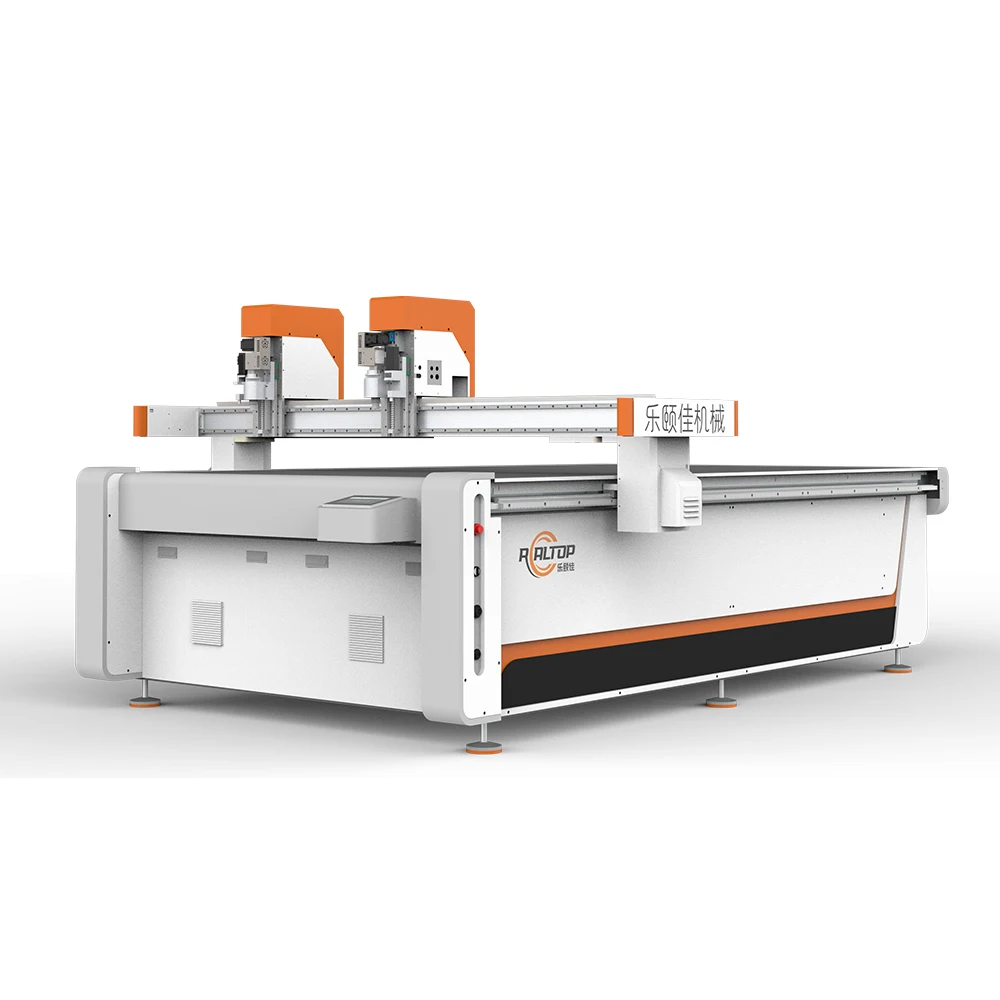
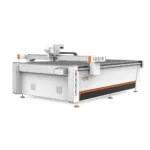
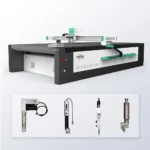
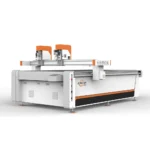
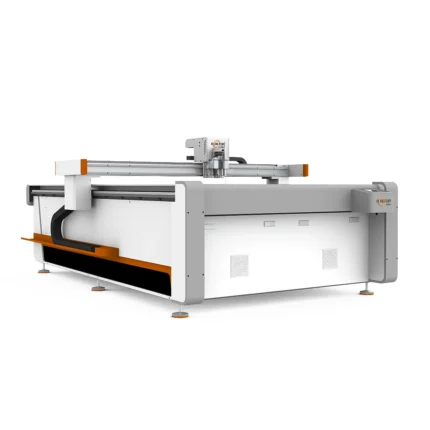
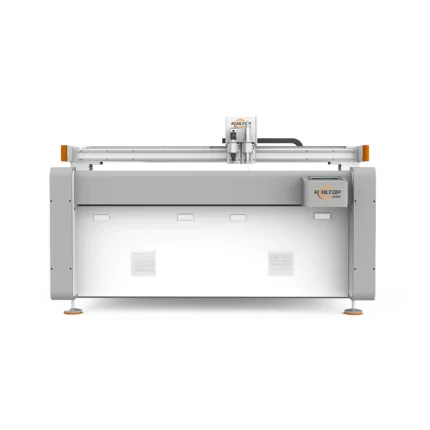
1625 CNC Oscillating Knife Cutting Machine, 1600×2500mm working area, ≤30mm cutting thickness — delivers cold-cutting precision for EVA, PP foam and composite boards used in advertising printing applications.
- Oscillating knife process avoids thermal damage and charring common with laser cutting on foam and resin-based materials
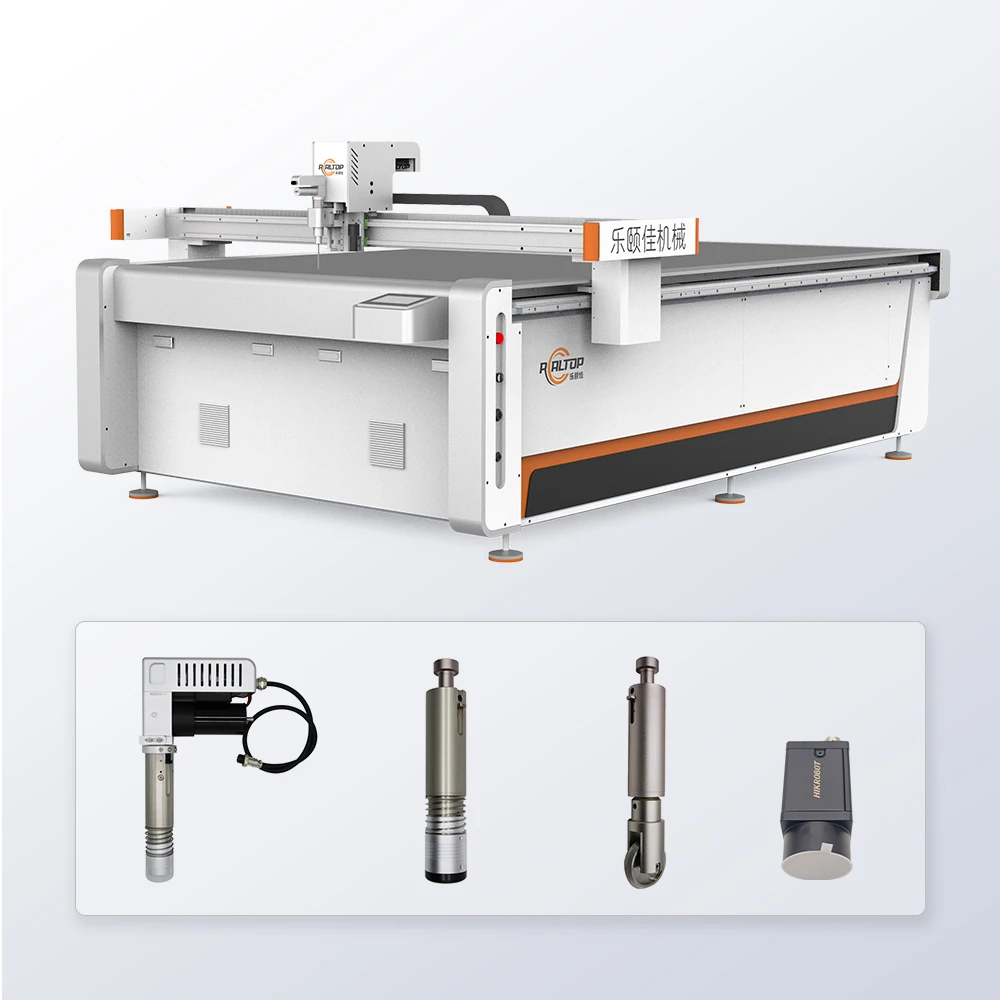
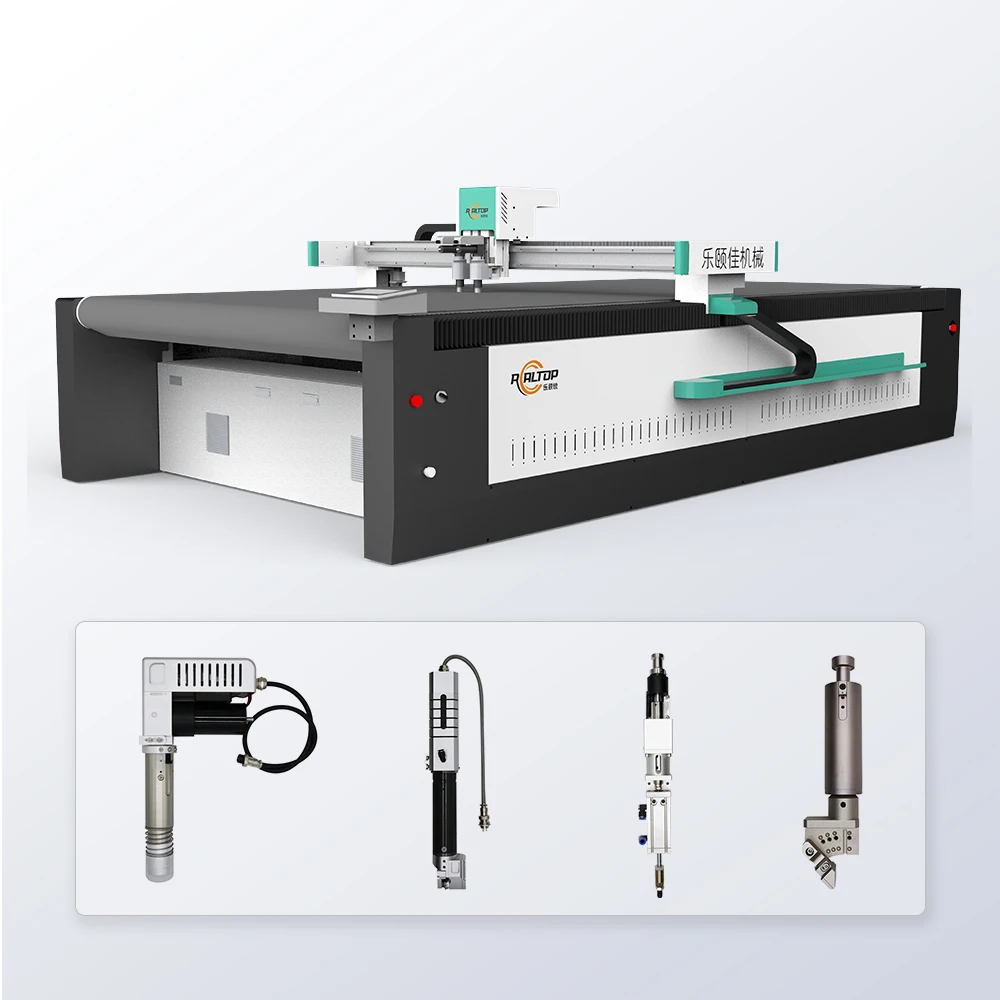
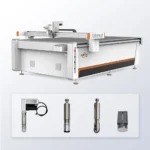
- Multi-tool head options including driven rotary knife, V-groove and milling tool allow quick adaptation across material types
- 9 kW vacuum pump with aluminum bellows table secures flexible sheets flat for consistent edge quality
Sample cutting on your specific EVA or foam stock available before commitment, with tool head matched to your material density and required edge finish.
Tool head matched to material stack — Oscillating, driven rotary, creasing, kiss cutting, pneumatic, milling and V-groove heads available on one 1625 platform, so EVA foam, PP composite and rigid board each get the correct physical cutting action rather than one forced compromise.
Technical Specifications
| Parameter | Value |
|---|---|
| Model | 1625 |
| Product Type | CNC Oscillating Knife Cutting Machine |
| Working Area | 1600×2500 mm |
| Cutting Speed | 0–2000 mm/s |
| Cutting Thickness | ≤ 30 mm (basis not stated in source — confirm material type and density) |
| Positioning Accuracy | ±0.1 mm |
| Tool Head Options | Oscillating knife, Driven rotary knife, Creasing wheel, Kiss cutting tool, Pneumatic knife, Milling tool, V-groove knife |
| Vacuum Pump | 9 kW |
| Vacuum Table | Aluminum bellows vacuum table |
| Voltage Options | 110V / 220V / 380V (frequency to be confirmed per destination) |
| Servo Motor Options | Panasonic, Delta, Dorna |
| Control System | PLC control panel with intuitive interface |
| Software File Formats | PLT, DXF, AI, PDF |
| Dedicated Software | Packaging box structure design software included |
| Safety Device | Infrared sensor and emergency stop |
| Machine Dimensions (L×W×H) | 3300×2100×1350 mm |
| Language Options | English, Russian, Italian, Chinese (special languages customizable) |
| Standards | CE (certificate availability to be verified) |
Application Suitability
| Application | Material or Output |
|---|---|
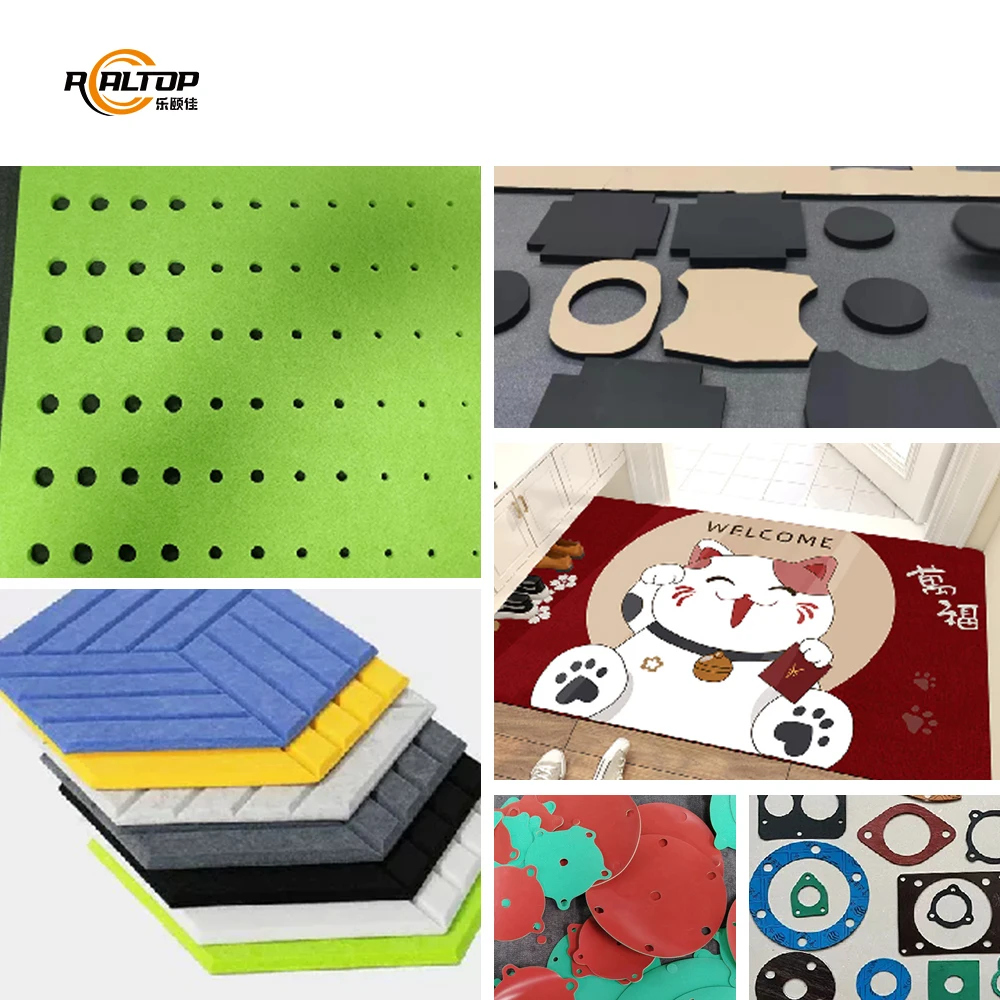
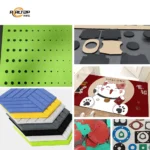
| Advertising and signage production | EVA foam letters, PP composite boards, PVC foam sheet, acrylic-backed vinyl |
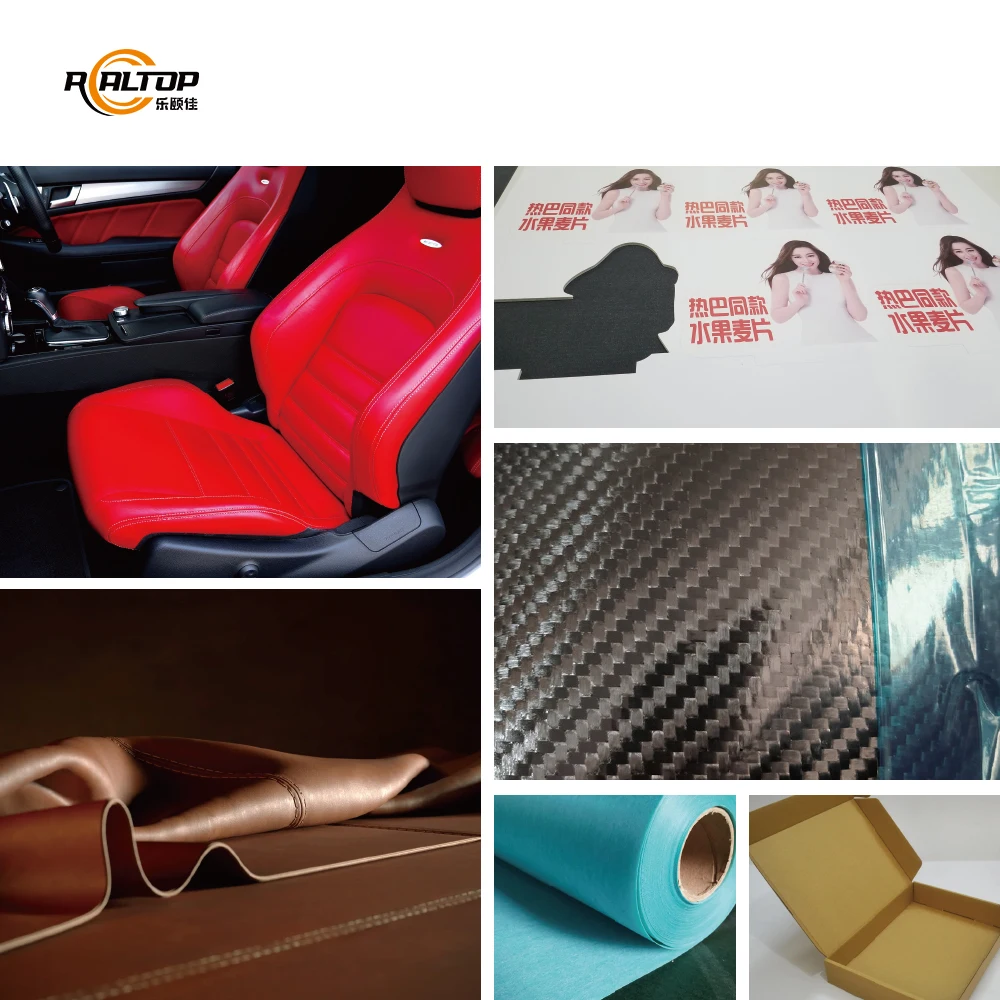
| Packaging and carton sample making | Corrugated cardboard, greyboard, folding carton stock with creasing and kiss-cut tools |
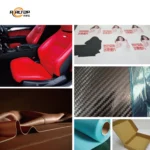
| Aerospace composite lay-up | Carbon fiber prepreg, aramid honeycomb (Nomex), thermal and acoustic insulation foam |
| Automotive interior trimming | Headliners, acoustic felt, damping pads, seat foam, carpet and sealing strips |
| Wind energy blade preforms | Fiberglass cloth, vacuum infusion mesh, PET/PVC foam core |
| Sporting goods fabrication | Carbon fiber sheets, Kevlar fabric, high-performance foam laminates |
Why Rated Laser Power Misses the Point on Composite Foam
A cold-cutting oscillating knife eliminates the thermal damage, charring and toxic fume problems that laser cutting and engraving machine manufacturer catalogs rarely address when the material is EVA, PP composite or resin-based foam.
I have watched advertising shops buy a CO2 laser rated at a peak wattage, only to find the continuous output falls short on 20 mm EVA. The edges melt, the resin separates, and the fumes require extraction ductwork nobody budgeted for. The laser cutting and engraving machine manufacturer specification sheet looks impressive until you run the actual board [NEED_CITE: continuous versus peak laser power ratings on industrial equipment]. Cold cutting sidesteps every one of those variables because the blade does the work mechanically, not thermally.
When Cold Cutting Outperforms Thermal Processes
A laser cutting and engraving machine manufacturer will specify edge sealing on synthetics as a benefit — and on thin acrylic or polyester it is. But once the substrate includes closed-cell EVA, cross-linked polyethylene foam or a PP composite core, that same heat creates a hardened recast layer along the cut edge. The edge becomes brittle, rejects paint adhesion, and delaminates under vibration. The 1625 oscillating knife cuts through these materials at up to 2000 mm/s without raising the temperature of the workpiece, leaving a clean mechanical edge that accepts adhesives and coatings immediately.
Holding Flatness Without Heat Distortion
Vacuum holding behaves differently under a laser beam versus a physical blade. A CO2 laser concentrates intense local heat that can cause thin composite sheets to curl away from the honeycomb zones of a vacuum table mid-cut. The 1625 aluminum bellows vacuum table paired with a 9 kW pump provides continuous full-surface adsorption across the 1600×2500 mm work area [NEED_CITE: vacuum table zoning and adsorption force on flexible composite sheets]. Because no heat enters the material, the sheet stays dimensionally stable from the first cut to the last nested part, which matters when tolerances are held to ±0.1 mm across aerospace insulation pads or automotive headliner blanks.
Reading the Spec Sheet Against Real Production Needs
The cutting speed range of 0–2000 mm/s is a servo-controlled envelope, not a single production rate. Actual throughput depends on the tool head chosen and the material density. Oscillating knife heads slice through soft EVA and acoustic felt at higher speeds, while driven rotary knives handle thicker PP composites by turning the cut rather than punching it. The PLC control panel stores separate profiles for each tool-material combination, so an operator switching from 5 mm EVA signage letters to 15 mm Nomex honeycomb cores loads the correct acceleration curve without manual tuning. File import from PLT, DXF, AI and PDF formats means the nesting layout created in the buyer’s existing design software arrives at the machine without re-drawing.
What Happens When the Wrong Tool Meets Your Material
A shop that specifies this machine on working area alone — seeing 1600×2500 mm and assuming it covers every advertising substrate — may discover on arrival that the oscillating knife head cannot penetrate 25 mm high-density PP composite at full speed. The edges fuzz, the knife deflects, and the dimensional tolerance drifts beyond ±0.1 mm. This is not a machine fault; it is a configuration mismatch. The driven rotary knife or pneumatic knife head would handle that stack, but if it was not specified at order stage, the tooling is not on the table [NEED_CITE: tool head selection criteria for composite material density and thickness]. I saw this exact scenario with a Middle East advertising fabricator who tested on standard EVA but ran production on a thicker PP composite board. The whole first batch nearly got rejected before we retrofitted the correct head.
Why Sourcing From This Production Floor Matters
In-house design and production cover both knife and laser cutting technologies under one roof, so a buyer evaluating a laser cutting and engraving machine manufacturer can compare thermal and cold processes on the same material before committing to either. Tool head and table configuration is specified per material and production volume rather than sold as a fixed package. CCD camera positioning is available for printed contour work on signage faces. Software file format compatibility is confirmed before the order is locked, and voltage, plug type and control language are verified against the destination facility. Sample cutting runs on the buyer’s own material before shipment — not on a generic demo sheet — provide the edge quality record that decides whether the configuration is correct.
Documentation & Verification
- Machine specification sheet listing every tool head and voltage option confirmed at order
- Electrical schematic with frequency and plug type matched to destination country
- Tool head and table configuration list tied to your specific material stack
- Sample cutting report produced on your EVA, PP or composite material before dispatch
- Factory test record with dimensional measurements at ±0.1 mm tolerance checkpoints
- Software licence and file format compatibility note covering PLT, DXF, AI and PDF
Installation, Commissioning & Support
- Floor space of approximately 3300×2100 mm with clearance for material loading on the 1600×2500 mm table
- Dedicated power circuit sized for the 9 kW vacuum pump plus servo drive load at confirmed voltage
- Machine arrives as a single-frame unit; table leveling and gantry alignment completed on site
- PLC control panel language set to operator preference before first power-on during commissioning
- Tool head changeover training covering oscillating, rotary and creasing tools for your material range
- Spare blade and knife holder list supplied for the specific heads on your configuration
Before You Request a Quote
Send a sample of the actual EVA foam, PP composite board or signage substrate you will run in production, including the thickness range and any lamination layers. Specify your local voltage and frequency so the transformer and plug are correct before the machine leaves the factory. If your nesting workflow uses a particular software package, share a sample file so format compatibility is verified on the PLC control system before commitment.
Frequently Asked Questions
Q: Oscillating knife versus CO2 laser — which method suits my composite advertising material?
A: CO2 lasers seal edges on thin synthetics but melt and char EVA foam, PP composite and resin-based cores, leaving a brittle recast layer and requiring fume extraction. The 1625 oscillating knife cuts mechanically with no thermal input, preserving material integrity and adhesive readiness on foams up to 30 mm thick. Send a material sample so both methods can be compared on your exact substrate.
Q: How is cutting depth verified on my specific foam or composite board?
A: Cutting thickness is rated at ≤ 30 mm, but actual capability depends on your material density and layer structure. A sample cutting report is produced on your supplied material before order confirmation, documenting edge quality, dimensional accuracy at ±0.1 mm and the tool head used. This report becomes the baseline for production configuration.
Q: What voltage, plug type and control language ship with the machine?
A: Voltage options include 110V, 220V and 380V, but frequency and plug type vary by destination and must be confirmed before shipment. The PLC control panel supports English, Russian, Italian and Chinese as standard, with special languages customizable. All three are verified against your facility specification before the machine leaves the factory.
Q: How do I select the correct tool head for different materials on one table?
A: The 1625 accepts oscillating knife, driven rotary knife, creasing wheel, kiss cutting, pneumatic knife, milling and V-groove heads. Oscillating handles soft foams and fabrics; driven rotary cuts thicker composites; V-groove scores folding carton. The PLC stores separate cutting profiles for each tool-material pair, so switching jobs is a profile load rather than a mechanical recalibration.
Q: Will the software accept my existing design files and nesting layouts?
A: The system imports PLT, DXF, AI and PDF formats directly. Packaging box structure design software is also included. Before order confirmation, a sample file from your current workflow is tested on the PLC control system to confirm that layers, cut lines and nesting parameters translate without manual re-drawing or geometry loss.


Related products
CNC 2026 Plotter Carton Box Cutting Machine – Custom Build
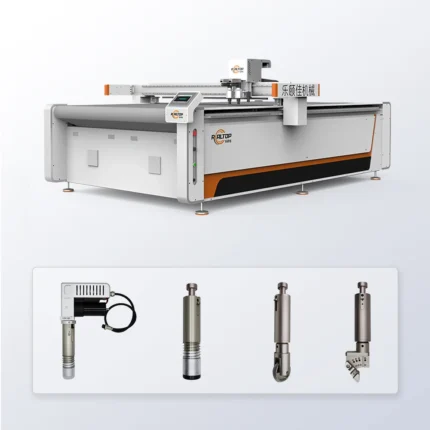
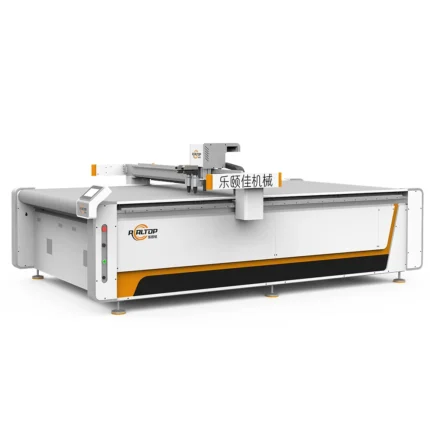
1625 CNC Oscillating Knife Cutting Table for Packaging, 1600×2500 mm Working Area, ≤40 mm Cutting Thickness — equipped with seven interchangeable tool heads including oscillating knife, driven rotary knife, creasing wheel, and V-groove knife for precise edge finishing on corrugated board, foam inserts, and composite packaging materials.
- Aluminum bellows vacuum table ensures consistent hold-down across the full work surface, with dedicated packaging box structure design software supporting PLT, DXF, AI, and PDF file formats
- PLC control panel offers customizable display languages and multiple servo drive options, validated through factory testing before shipment
Sample cutting on your specific board flute or foam type is available before commitment, with a full report on edge quality, cycle time, and recommended tool head configuration.
CNC Flatbed Cutter 2026 Digital Corrugated Box Making Machine | Manufacturer
RT-D2516/RT-S2516 CNC Flatbed Digital Cutting Machine, 1600×2500mm Working Area, 9kW Rated Power — engineered for corrugated box sample making and packaging prototype production.
- Swiss imported oscillating knife with vibration full/half cutting and creasing wheel for precise carton fold lines
- CCD camera mark-point positioning and panoramic recognition for printed contour cutting
- Magnesium-aluminum alloy vacuum table with zoned adsorption for small-part hold-down
- Touch screen control with multi-language support and auto typesetting accepting PLT, DXF, AI formats
Sample cutting on buyer's own corrugated stock confirms flute integrity and crease quality before order commitment.
CNC Oscillating Knife Cutter 2026 for Corrugated Foam Cutting – Manufacturer
CNC Oscillating Knife Cutting Machine, 1600×2500mm Working Area, 7-Tool Head Configuration — designed for corrugated board and foam packaging production.
Cutting method matched to material behavior: oscillating knife for clean E/B/BC-flute corrugated edges, creasing wheel for fold lines, driven rotary knife for fabric inserts. Aluminum bellows vacuum table with 9KW pump ensures consistent hold-down across the full bed, while PLC control and dedicated packaging structure software accept PLT, DXF, AI, and PDF files directly.
Sample cutting on your specific flute type and foam density performed before order confirmation, with tool head configuration list and electrical schematic verified for your voltage and frequency requirements.

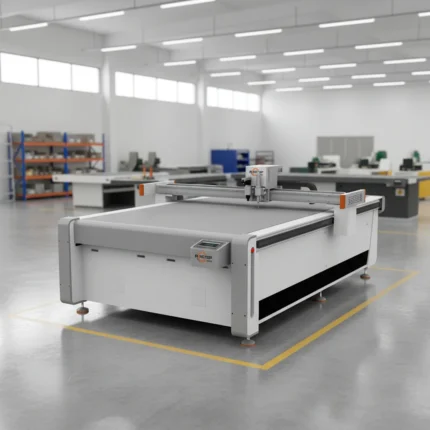
CNC Oscillating Knife Cutting Machine for Packaging – Manufacturer
1625 CNC Oscillating Knife Cutting Machine, 1600×2500mm working area, ±0.1mm accuracy — configured for packaging sample and non-metal processing.
- Tool heads: oscillating knife, driven rotary, creasing wheel, kiss cutting, pneumatic, milling, V-groove, matched to corrugated, foam, PVC and composites
- 9kW vacuum pump with aluminum bellows table for small-part hold-down at up to 1500mm/s cutting speed
- Dedicated packaging structure design software, PLT/DXF/AI/PDF import, multi-language PLC control
CO2 laser power verified at continuous rating — not peak — with a cutting test on your material before order, ensuring real depth on acrylic, wood and textile.
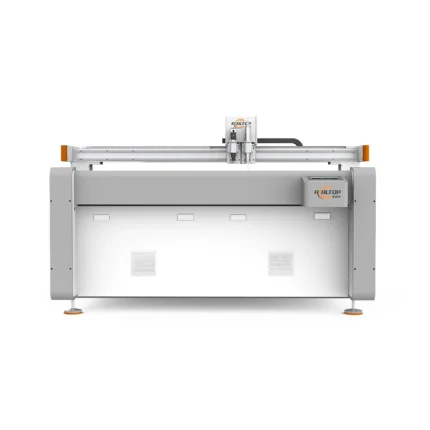
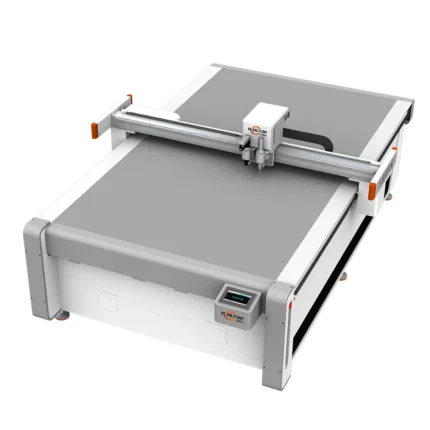
Intelligent CNC Box Maker Die-Free Cardboard Cutter 1625 – PLC Control
1625 CNC Oscillating Knife Cutting Machine, 1600×2500mm, PLC Control — configured for die-free packaging sample making and short-run corrugated board production.
- Seven interchangeable tool heads including oscillating knife, creasing wheel and V-groove, selected per material to prevent ragged edges or crushed foam
- Aluminum bellows vacuum table ensures secure holding across the full cutting area at ±0.1mm accuracy
- Accepts PLT, DXF, AI and PDF files with multi-language control panel options
Cutting method matched to your material stack with sample test report on your own board and foam before commitment.
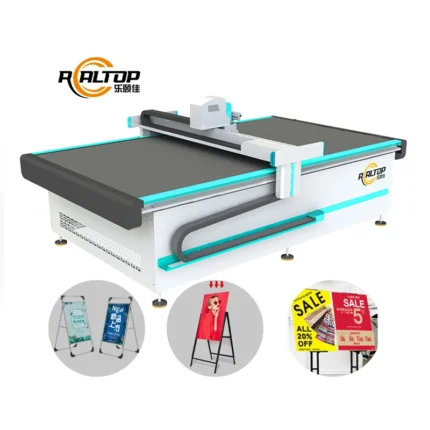
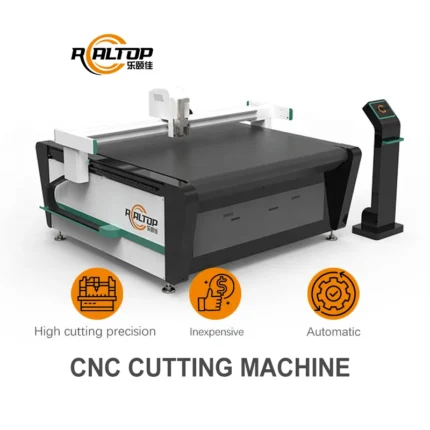
Realtop Digi Cuts 2026 CNC Oscillating Knife Cutter
Product Introduction
Realtop Digi Cuts CNC Oscillating Knife Cutting Machine 2026 is a precision cutting solution designed for various materials, ideal for industrial manufacturing needs with advanced CNC technology.Product Parameters
| Model | Digi Cuts 2026 |
| Type | CNC Oscillating Knife Cutting Machine |
| Manufacturer | Realtop (China) |
| Application | Industrial Material Cutting |

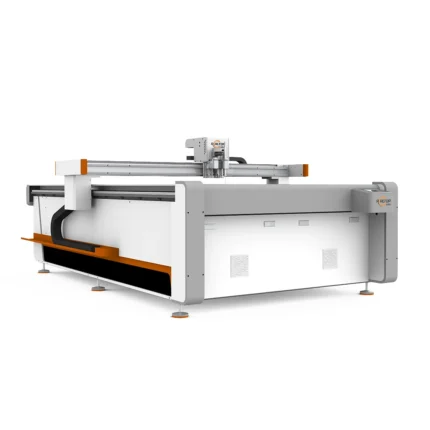
RT-D2516/RT-S2516 CNC Oscillating Knife Cutting Machine – Manufacturer
RT-D2516/RT-S2516 CNC Oscillating Knife Cutting Machine, 1600×2500 mm Working Area, Swiss Oscillating Knife Head, 7.5 kW Vacuum Pump — engineered for packaging sample making, signage and flexible material processing.
- Laser power is often quoted at peak rather than continuous, resulting in real cutting depth falling short of expectation. Realtop specifies continuous output and verifies actual cutting capacity on the buyer's own material before commitment, so the chosen method matches the material rather than forcing one approach.
- Taiwan Delta servo motors with Hiwin linear guides deliver ≤0.1 mm repeatability across the aluminum honeycomb vacuum table.
- HP-GL compatible CNC control with free carton nesting software and multi-language support.
Sample cutting performed on your own material before order, with tool head and table configuration confirmed per your material thickness and daily volume.
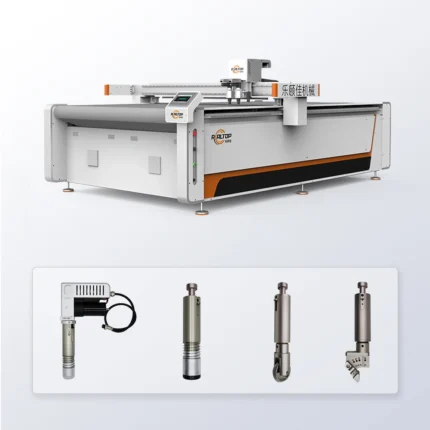
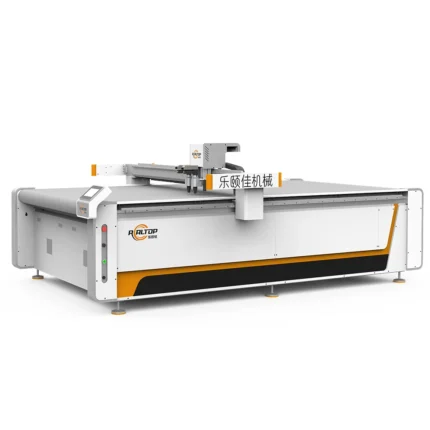
Technical Guide CNC Cutting Machine for KT Board and Packaging
1625 CNC Oscillating Knife Cutting Machine, 1600×2500mm working area, ≤40mm cutting thickness — configured for packaging board, foam and composite materials.
From a laser processor's perspective, this cold-cutting alternative handles thick corrugated board, dense EVA/EPE foam and fibre-reinforced panels that CO2 laser melts or distorts. Interchangeable tool heads — oscillating knife, creasing wheel, V-groove, driven rotary — let you match geometry to material density, while the aluminum bellows vacuum table holds rigid substrates flat without thermal edge sealing.
Sample cutting on your own material is completed before order commitment, with full tool configuration and voltage confirmation documented prior to shipment.
商品评价
There are no reviews yet.